



Community hub
Recent from talks
Contribute something to knowledge base
Content stats: 0 posts, 0 articles, 1 media, 0 notes
Members stats: 0 subscribers, 0 contributors, 0 moderators, 0 supporters
Subscribers
Supporters
Contributors
Moderators
Hub AI
Operation Loyton AI simulator
(@Operation Loyton_simulator)
Hub AI
Operation Loyton AI simulator
(@Operation Loyton_simulator)
Operation Loyton
Operation Loyton was the codename given to a Special Air Service (SAS) mission in the Vosges department of France during the Second World War.
The mission, between 12 August and 9 October 1944, had the misfortune to be parachuted into the Vosges Mountains, at a time when the German Army was reinforcing the area, against General George Patton's Third Army. As a result, the Germans quickly became aware of their presence and conducted operations to destroy the SAS team.
With their supplies running out and under pressure from the German army, the SAS were ordered to form smaller groups to return to Allied lines. During the fighting and breakout operations 31 men were captured and later executed by the Germans.
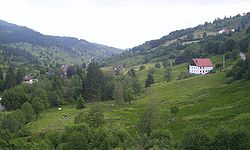
The Vosges is a region in north-eastern France close to the German border. In 1944 it was sparsely populated and consisted of wooded hills, valley pastures and small isolated villages, an ideal area for a small mobile raiding force to operate. In late 1944 it was also the area that General George Patton's Third Army was heading towards, but outrunning their supplies they had stopped at Nancy. To counter the American advance the Germans had moved reinforcements, including the 17th SS Panzergrenadier Division Götz von Berlichingen, into the area.
A small SAS advance party commanded by Captain Henry Druce was parachuted into the Vosges on 12 August 1944. The drop zone was in a deeply wooded mountainous area 40 miles (64 km) west of Strasbourg. The advance party's objective was to contact the local French resistance, carry out a reconnaissance of the area, identify targets for an attack and locate a suitable dropping zone for the main force.
The main party under the command of Lieutenant Colonel Brian Franks arrived 18 days after the advance party on 30 August 1944. Their landing was not without incident. A parachute equipment container filled with ammunition exploded on contact with the ground. A member of the resistance assisting to move the parachute containers died after eating plastic explosive, believing it was some sort of cheese. A Frenchman who was found in the area supposedly picking mushrooms, who the resistance believed was an informer, was detained. In the confusion following the explosion of the ammunition container, he managed to snatch up a Sten gun and was shot trying to escape.
The following day the SAS started patrolling and set up observation posts. Almost immediately they became aware that their presence had been betrayed to the Germans. There were far more Germans in the area than they expected and a force of 5,000 Germans were advancing up a valley near the village of Moussey just a short distance from the SAS base camp. The SAS's aggressive patrolling, sabotage attacks and the number of fire fights they had engaged in, led the Germans to believe they were up against a far larger force than there actually was. Over two nights, the 19 and 20 September, reinforcements were parachuted in which consisted of six Jeeps and another 20 men. The Jeeps, armed with Vickers K and Browning machine guns, allowed the SAS to change their tactics. The Jeep patrols shot up German road convoys and staff cars. A patrol under the command of Captain Druce even entered Moussey, just as a Waffen-SS unit was assembling. Driving through the town, they opened fire and inflicted many casualties.
The Germans, unable to locate the SAS base, were aware that they could not be operating without the assistance of the local population. To gain information about the location of the SAS camp, all the male residents of Moussey between the ages of 16 and 60, a total of 210 men, were arrested. After being interrogated they were transported to concentration camps, from which only 70 returned after the war. On 29 September 1944 Captain Druce was sent to cross back over into the American lines, with the order of battle for a Panzer division which had been obtained by a member of the resistance. Initially with F/O Fiddick, R.C.A.F 622 Sqn, but alone on the second and third occasions, Druce passed through the German lines three times before eventually reaching safety.
Operation Loyton
Operation Loyton was the codename given to a Special Air Service (SAS) mission in the Vosges department of France during the Second World War.
The mission, between 12 August and 9 October 1944, had the misfortune to be parachuted into the Vosges Mountains, at a time when the German Army was reinforcing the area, against General George Patton's Third Army. As a result, the Germans quickly became aware of their presence and conducted operations to destroy the SAS team.
With their supplies running out and under pressure from the German army, the SAS were ordered to form smaller groups to return to Allied lines. During the fighting and breakout operations 31 men were captured and later executed by the Germans.
The Vosges is a region in north-eastern France close to the German border. In 1944 it was sparsely populated and consisted of wooded hills, valley pastures and small isolated villages, an ideal area for a small mobile raiding force to operate. In late 1944 it was also the area that General George Patton's Third Army was heading towards, but outrunning their supplies they had stopped at Nancy. To counter the American advance the Germans had moved reinforcements, including the 17th SS Panzergrenadier Division Götz von Berlichingen, into the area.
A small SAS advance party commanded by Captain Henry Druce was parachuted into the Vosges on 12 August 1944. The drop zone was in a deeply wooded mountainous area 40 miles (64 km) west of Strasbourg. The advance party's objective was to contact the local French resistance, carry out a reconnaissance of the area, identify targets for an attack and locate a suitable dropping zone for the main force.
The main party under the command of Lieutenant Colonel Brian Franks arrived 18 days after the advance party on 30 August 1944. Their landing was not without incident. A parachute equipment container filled with ammunition exploded on contact with the ground. A member of the resistance assisting to move the parachute containers died after eating plastic explosive, believing it was some sort of cheese. A Frenchman who was found in the area supposedly picking mushrooms, who the resistance believed was an informer, was detained. In the confusion following the explosion of the ammunition container, he managed to snatch up a Sten gun and was shot trying to escape.
The following day the SAS started patrolling and set up observation posts. Almost immediately they became aware that their presence had been betrayed to the Germans. There were far more Germans in the area than they expected and a force of 5,000 Germans were advancing up a valley near the village of Moussey just a short distance from the SAS base camp. The SAS's aggressive patrolling, sabotage attacks and the number of fire fights they had engaged in, led the Germans to believe they were up against a far larger force than there actually was. Over two nights, the 19 and 20 September, reinforcements were parachuted in which consisted of six Jeeps and another 20 men. The Jeeps, armed with Vickers K and Browning machine guns, allowed the SAS to change their tactics. The Jeep patrols shot up German road convoys and staff cars. A patrol under the command of Captain Druce even entered Moussey, just as a Waffen-SS unit was assembling. Driving through the town, they opened fire and inflicted many casualties.
The Germans, unable to locate the SAS base, were aware that they could not be operating without the assistance of the local population. To gain information about the location of the SAS camp, all the male residents of Moussey between the ages of 16 and 60, a total of 210 men, were arrested. After being interrogated they were transported to concentration camps, from which only 70 returned after the war. On 29 September 1944 Captain Druce was sent to cross back over into the American lines, with the order of battle for a Panzer division which had been obtained by a member of the resistance. Initially with F/O Fiddick, R.C.A.F 622 Sqn, but alone on the second and third occasions, Druce passed through the German lines three times before eventually reaching safety.
Recent media
Recent media