
Recent from talks
Opium den
Knowledge base stats:
Talk channels stats:
Members stats:
Opium den
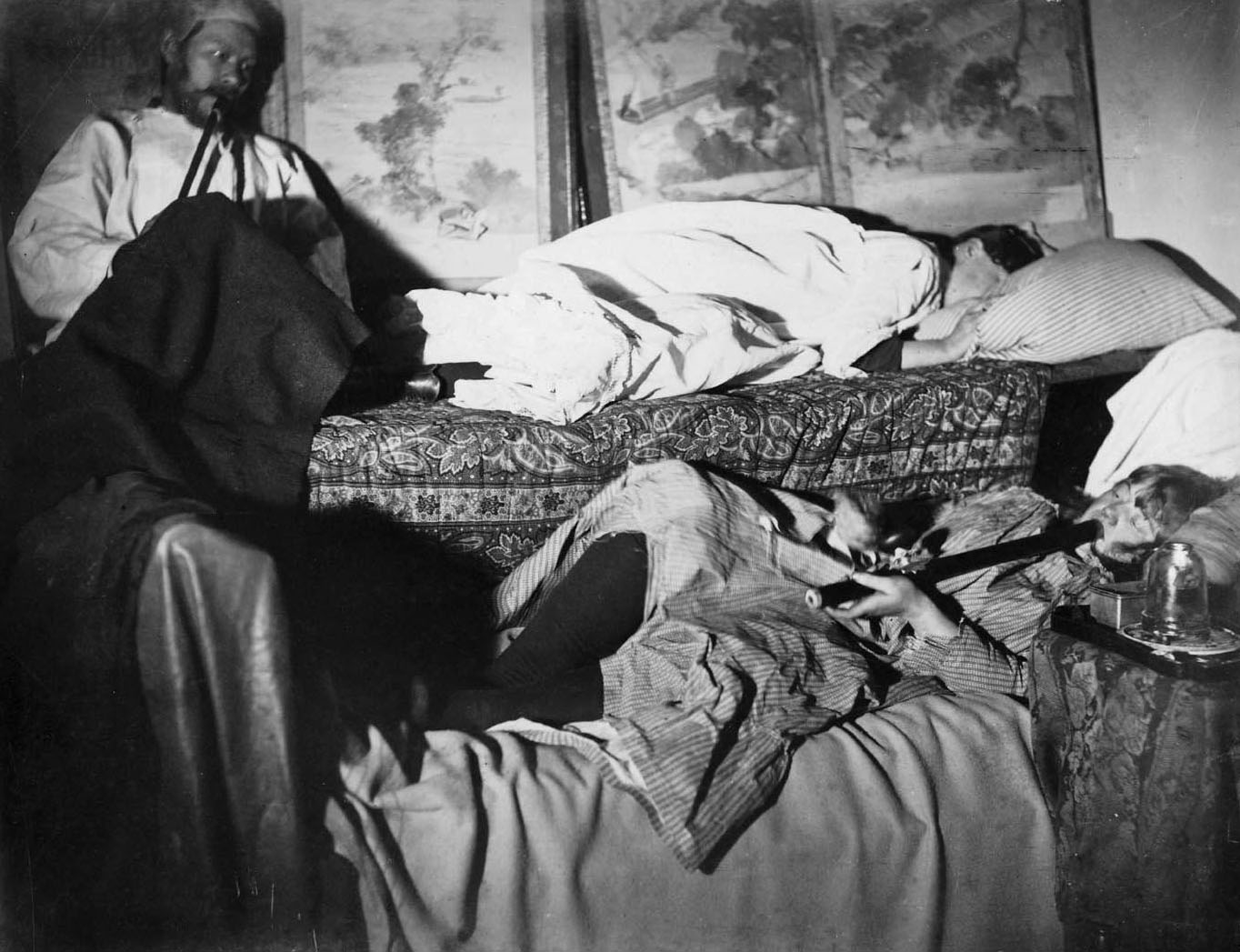
An opium den was an establishment in which opium was sold and smoked. Opium dens were prevalent in many parts of the world in the 19th century, most notably China, Southeast Asia, North America, and France. Throughout the West, opium dens were frequented by and associated with the Chinese because the establishments were usually run by Chinese mobsters, who supplied the opium and prepared it for visiting non-Chinese smokers. Most opium dens kept a supply of opium paraphernalia such as the pipes and lamps that were necessary to smoke the drug. Patrons would recline to hold the long opium pipes over oil lamps that would heat the drug until it vaporized, allowing the smoker to inhale the vapors. Opium dens in China were frequented by all levels of society, and their opulence or simplicity reflected the financial means of the patrons. In urban areas of the United States, particularly on the West Coast, there were opium dens that mirrored the best to be found in China, with luxurious trappings and female attendants. For the working class, there were many low-end dens with sparse furnishings.
19th–early 20th centuries: Opium smoking and opium dens were notably present in areas like Chinatowns in Australian cities such as Melbourne, Brisbane, and Mackay. For instance, in Mackay’s old Chinatown, opium dens were commonly visited by people of various ethnic backgrounds.
Opium smoking arrived in North America with the large influx of Chinese, who came to participate in the California Gold Rush. The jumping-off point for the gold fields was San Francisco, and the city's Chinatown became the site of numerous opium dens soon after the first Chinese arrived, around 1850. Some immigrants have stated they smoked opium to provide a mental escape from the loneliness and prejudice they experienced from living in a foreign environment. However, from 1863 to the end of the century, anti-vice laws imposed by the new municipal code book banned visiting opium rooms in addition to prostitution.[citation needed] Despite this, the 1870s attracted many non-Chinese residents to San Francisco's dens, prompting the city fathers to enact the nation's first anti-drug law, an 1875 ordinance banning opium dens. Other states followed suit, and by 1896, twenty-two states had prohibited opium dens. In the early 20th century, huge bonfires, fueled by confiscated opium and opium paraphernalia, were used to destroy opium and create a public venue to discuss opium use.
Opium-eradication campaigns drove opium smoking underground, but it was still fairly common in San Francisco and other North American cities until around World War II. A typical opium den in San Francisco might have been a Chinese-run laundry that had a basement, back room, or upstairs room that was tightly sealed to keep drafts from making the opium lamps flicker or allowing the tell-tale opium fumes to escape. Opium dens were sometimes described in fiction as sprawling maze-like networks underneath businesses. A photograph of one luxurious opium den in 19th-century San Francisco has survived, taken by I. W. Taber in 1886, but the majority of the city's wealthy opium smokers, both Chinese and non-Chinese, shunned public opium dens in favor of smoking in the privacy of their own homes.
However, as dens began to open up in "respectable" neighborhoods, the city witnessed an increase in communal smoking and a growing tendency for more middle and upper class white Americans to partake in opium use.[citation needed] An 1881 interview of police officer James Mahoney appearing in the San Francisco Chronicle affirms these developments. He observed that a majority of white smokers had previously been "hoodlums and prostitutes," but with the rise of "clean" dens, the habit of smoking opium soon extended further up the social hierarchy.
The opium dens of New York City's Chinatown were not as opulent as some of those to be found on the American West Coast. According to H. H. Kane, a doctor who spent years studying opium use in New York in the 1870s and 1880s, the most popular opium dens (or "opium joints" as they were known in the parlance of the day) were located on Mott and Pell Streets in Chinatown. At the time, all the city's opium dens were run by Chinese, except for one on 23rd Street that was run by an American woman and her two daughters. Kane remarked that New York's opium dens were one place "where all nationalities seem indiscriminately mixed".
As in San Francisco, New Yorkers of all races would come to Chinatown to patronize its opium dens. New York City's last known opium den was raided and shut down on June 28, 1957.
Chinese immigrants first established Chinatowns in Victoria and Vancouver in British Columbia, and here too, opium dens were common in the late 19th and early 20th centuries. When the city of San Francisco began taxing imported opium for smoking, the trade was diverted to Victoria, and, from there, much of the opium was smuggled south into the United States. However, a fair amount of opium was consumed in the opium dens to be found in the Chinatowns of Victoria and Vancouver. The latter city's "Shanghai Alley" was known for its rustic opium dens. As in the United States, non-Chinese often frequented the Chinese-run opium dens in Canadian Chinatowns.
Hub AI
Opium den AI simulator
(@Opium den_simulator)
Opium den
An opium den was an establishment in which opium was sold and smoked. Opium dens were prevalent in many parts of the world in the 19th century, most notably China, Southeast Asia, North America, and France. Throughout the West, opium dens were frequented by and associated with the Chinese because the establishments were usually run by Chinese mobsters, who supplied the opium and prepared it for visiting non-Chinese smokers. Most opium dens kept a supply of opium paraphernalia such as the pipes and lamps that were necessary to smoke the drug. Patrons would recline to hold the long opium pipes over oil lamps that would heat the drug until it vaporized, allowing the smoker to inhale the vapors. Opium dens in China were frequented by all levels of society, and their opulence or simplicity reflected the financial means of the patrons. In urban areas of the United States, particularly on the West Coast, there were opium dens that mirrored the best to be found in China, with luxurious trappings and female attendants. For the working class, there were many low-end dens with sparse furnishings.
19th–early 20th centuries: Opium smoking and opium dens were notably present in areas like Chinatowns in Australian cities such as Melbourne, Brisbane, and Mackay. For instance, in Mackay’s old Chinatown, opium dens were commonly visited by people of various ethnic backgrounds.
Opium smoking arrived in North America with the large influx of Chinese, who came to participate in the California Gold Rush. The jumping-off point for the gold fields was San Francisco, and the city's Chinatown became the site of numerous opium dens soon after the first Chinese arrived, around 1850. Some immigrants have stated they smoked opium to provide a mental escape from the loneliness and prejudice they experienced from living in a foreign environment. However, from 1863 to the end of the century, anti-vice laws imposed by the new municipal code book banned visiting opium rooms in addition to prostitution.[citation needed] Despite this, the 1870s attracted many non-Chinese residents to San Francisco's dens, prompting the city fathers to enact the nation's first anti-drug law, an 1875 ordinance banning opium dens. Other states followed suit, and by 1896, twenty-two states had prohibited opium dens. In the early 20th century, huge bonfires, fueled by confiscated opium and opium paraphernalia, were used to destroy opium and create a public venue to discuss opium use.
Opium-eradication campaigns drove opium smoking underground, but it was still fairly common in San Francisco and other North American cities until around World War II. A typical opium den in San Francisco might have been a Chinese-run laundry that had a basement, back room, or upstairs room that was tightly sealed to keep drafts from making the opium lamps flicker or allowing the tell-tale opium fumes to escape. Opium dens were sometimes described in fiction as sprawling maze-like networks underneath businesses. A photograph of one luxurious opium den in 19th-century San Francisco has survived, taken by I. W. Taber in 1886, but the majority of the city's wealthy opium smokers, both Chinese and non-Chinese, shunned public opium dens in favor of smoking in the privacy of their own homes.
However, as dens began to open up in "respectable" neighborhoods, the city witnessed an increase in communal smoking and a growing tendency for more middle and upper class white Americans to partake in opium use.[citation needed] An 1881 interview of police officer James Mahoney appearing in the San Francisco Chronicle affirms these developments. He observed that a majority of white smokers had previously been "hoodlums and prostitutes," but with the rise of "clean" dens, the habit of smoking opium soon extended further up the social hierarchy.
The opium dens of New York City's Chinatown were not as opulent as some of those to be found on the American West Coast. According to H. H. Kane, a doctor who spent years studying opium use in New York in the 1870s and 1880s, the most popular opium dens (or "opium joints" as they were known in the parlance of the day) were located on Mott and Pell Streets in Chinatown. At the time, all the city's opium dens were run by Chinese, except for one on 23rd Street that was run by an American woman and her two daughters. Kane remarked that New York's opium dens were one place "where all nationalities seem indiscriminately mixed".
As in San Francisco, New Yorkers of all races would come to Chinatown to patronize its opium dens. New York City's last known opium den was raided and shut down on June 28, 1957.
Chinese immigrants first established Chinatowns in Victoria and Vancouver in British Columbia, and here too, opium dens were common in the late 19th and early 20th centuries. When the city of San Francisco began taxing imported opium for smoking, the trade was diverted to Victoria, and, from there, much of the opium was smuggled south into the United States. However, a fair amount of opium was consumed in the opium dens to be found in the Chinatowns of Victoria and Vancouver. The latter city's "Shanghai Alley" was known for its rustic opium dens. As in the United States, non-Chinese often frequented the Chinese-run opium dens in Canadian Chinatowns.
Recent media