


Community hub
0 subscribers8 pages, 0 posts
Recent from talks
All channels
Be the first to start a discussion here.
Be the first to start a discussion here.
Be the first to start a discussion here.
Be the first to start a discussion here.
Contribute something
Welcome to the community hub built to collect knowledge and have discussions related to Spacecraft.
Nothing was collected or created yet.
Spacecraft
View on Wikipediafrom Wikipedia
Not found
Spacecraft
View on Grokipediafrom Grokipedia
A spacecraft is a human-engineered vehicle or machine designed to travel through or operate in outer space, typically propelled by rockets and equipped for tasks including scientific observation, communication relay, payload delivery, and human transport beyond Earth's atmosphere.[1] The era of spacecraft began with the Soviet Union's launch of Sputnik 1 on October 4, 1957, a 83.6-kilogram polished aluminum sphere that became Earth's first artificial satellite, orbiting for three weeks while transmitting radio signals that demonstrated the feasibility of space access.[2] Early spacecraft were rudimentary, but rapid advancements during the Cold War space race yielded crewed capsules like Vostok and Mercury, progressing to lunar landers and orbiters capable of interplanetary voyages.[3] NASA classifies robotic spacecraft into categories such as flyby, orbiter, atmospheric probe, lander, penetrator, and rover, reflecting their mission-specific designs for data collection across the solar system.[1] Key achievements include the Apollo program's six successful Moon landings between 1969 and 1972, which returned 382 kilograms of lunar samples and advanced propulsion technologies, alongside uncrewed probes like Voyager 1 and Voyager 2, launched in 1977, which continue to explore interstellar space.[4] Reusable systems, exemplified by the Space Shuttle fleet operational from 1981 to 2011, enabled satellite deployment, space station construction, and microgravity experiments, though marred by accidents like Challenger in 1986 and Columbia in 2003 that highlighted engineering risks in high-stakes environments.[4] Contemporary spacecraft encompass commercial crew vehicles like SpaceX's Crew Dragon, facilitating routine access to the International Space Station, and deep-space telescopes such as Hubble, operational since 1990 and revealing cosmic phenomena through ultraviolet, visible, and near-infrared imaging.[3]
Emerging crewed designs, such as NASA's Orion for Artemis lunar missions, integrate deep-space propulsion and solar electric variants, with initial uncrewed tests validating abort systems under high dynamic pressure. These prioritize radiation-hardened avionics and closed-loop life support for missions beyond low Earth orbit, contrasting shorter-duration orbital capsules.[109][105]
Contemporary commercial vehicles like Crew Dragon exhibit reliability through 10+ crewed flights with zero losses, bolstered by NASA human-rating processes, though overall benchmarks evolve with higher launch cadences reducing per-mission risk via empirical data accumulation.[167]
Deep space missions have primarily relied on robotic spacecraft to explore beyond Earth's orbit, with notable examples including NASA's Pioneer 10 and 11 probes, launched in 1972 and 1973, respectively, which were the first to traverse the asteroid belt and conduct flybys of Jupiter and Saturn.[155] These missions provided initial data on outer planet magnetospheres and heliospheric boundaries, demonstrating the feasibility of long-duration propulsion using radioisotope thermoelectric generators for power.[155] Subsequent Voyager 1 and 2 spacecraft, launched in 1977, expanded on this by imaging the gas giants and their moons in detail before crossing the heliopause into interstellar space; as of 2024, Voyager 1 operates at over 24 billion kilometers from Earth, transmitting faint signals via NASA's Deep Space Network.[154] New Horizons, launched in 2006, reached Pluto in 2015 for the first close-up study of the dwarf planet and continued to the Kuiper Belt object Arrokoth in 2019, now on a trajectory toward interstellar space. These uncrewed probes highlight the advantages of robotic exploration for extreme distances, where human presence remains impractical due to radiation exposure and propulsion limitations.[270] Human deep space missions culminated in NASA's Apollo program, which achieved six lunar landings between 1969 and 1972 using the Saturn V rocket and Apollo command-service-lunar module configurations; Apollo 17 in December 1972 marked the last crewed voyage beyond low Earth orbit, with astronauts traversing approximately 400,000 kilometers to the Moon. No subsequent manned missions have ventured past low Earth orbit, though the Artemis program aims to resume such exploration with Orion spacecraft atop the Space Launch System; Artemis II, planned as a crewed lunar flyby, targets launch no earlier than September 2025 to validate deep space systems for radiation and microgravity effects. Artemis III envisions a lunar landing using Starship Human Landing System, building toward sustained cislunar operations.[271] These efforts prioritize testing life support and abort capabilities in the Van Allen belts and beyond, informed by Apollo data on solar particle events. Deep space habitats address the need for prolonged human presence beyond Earth-Moon transit, with NASA's Lunar Gateway serving as the foundational concept: a cislunar station comprising habitation, propulsion, and logistics modules, enabling up to six-month stays for crews studying deep space radiation and preparing for Mars.[272] The Gateway's Power and Propulsion Element and Habitation and Logistics Outpost, targeted for launch in 2025 via Falcon Heavy, incorporate inflatable habitats and regenerative life support derived from International Space Station technologies, though scaled for higher radiation flux.[272] Concepts for Mars transit habitats emphasize closed-loop systems for water, air, and food, with radiation shielding via water walls or regolith analogs, as outlined in NASA's Artemis Deep Space Habitation studies; these prioritize empirical validation of psychological isolation effects from analog missions like HI-SEAS..pdf) International contributions, such as ESA's Habitation Module, integrate with Gateway to distribute costs and expertise, countering single-agency risks evident in historical program cancellations.[273] Realization depends on overcoming delays in module fabrication and propulsion testing, with full assembly projected post-2028.[272]
Fundamentals
Definition and Scope
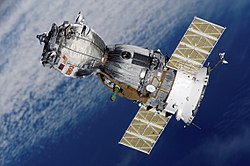
A spacecraft is a vehicle or device engineered for operation in outer space, beyond Earth's atmosphere, typically requiring propulsion systems to achieve and maintain trajectories in the vacuum of space.[3] Unlike launch vehicles, which are expendable rockets designed solely to transport payloads from Earth's surface into space, spacecraft are built to function independently post-separation, performing tasks such as data collection, communication, or human transport while enduring microgravity, extreme temperatures, and radiation.[3] This distinction ensures spacecraft prioritize endurance and mission-specific subsystems over ascent-only performance.[5] The scope of spacecraft includes both uncrewed and crewed variants, spanning missions from low Earth orbit (LEO) at altitudes above approximately 100 kilometers—the Kármán line conventionally marking the edge of space—to interplanetary and interstellar travel.[3] Uncrewed spacecraft, such as satellites and probes, dominate applications like Earth observation, telecommunications relays, and scientific exploration, with over 10,000 active satellites in orbit as of 2023 primarily serving these roles.[1] Crewed spacecraft, including capsules like the Apollo command module and orbital stations like the International Space Station (ISS), enable human presence for research, assembly, and long-duration habitation, with the ISS operational since November 1998 and supporting continuous human occupancy.[3] Classifications by mission profile further delineate scope: flyby spacecraft trajectory past targets without capture; orbiters achieve stable paths around celestial bodies; landers and rovers enable surface operations; and sample return vehicles retrieve extraterrestrial materials for Earth analysis.[1] Atmospheric entry vehicles, such as reentry capsules, incorporate heat shields for deceleration in planetary atmospheres, as demonstrated by the Soyuz TMA series returning crews since 1967.[1] Exclusions from this scope encompass suborbital vehicles without sustained space operations, atmospheric aircraft, and ground-based simulators, emphasizing spacecraft's reliance on non-aerodynamic control via thrusters and reaction wheels.[6]Physical Principles and Requirements
Spacecraft propulsion in the vacuum of space adheres to conservation of momentum, requiring expulsion of high-velocity exhaust to generate thrust via Newton's third law, independent of external medium.[7] The efficiency of this process is quantified by the Tsiolkovsky rocket equation, , where is the change in velocity, is the exhaust velocity, is the initial mass, and is the final mass after propellant expenditure; this equation underscores the exponential mass ratio needed for significant velocity gains, often necessitating over 90% of a launch vehicle's mass as propellant for orbital insertion.[7] Achieving low Earth orbit demands a total of approximately 9.4 km/s from Earth's surface, encompassing the 7.8 km/s orbital velocity plus allowances for gravitational losses, atmospheric drag during ascent, and steering inefficiencies; interplanetary missions require additional , such as 3-6 km/s for trans-Mars injection beyond initial orbit.[8] Orbital mechanics govern sustained free-flight, with trajectories determined by two-body gravitational interactions under Kepler's laws: elliptical paths conserving energy and angular momentum, where circular low Earth orbits at 300-400 km altitude maintain near-constant altitude via centripetal balance against gravitational acceleration of about 8.7 m/s². The space environment imposes stringent requirements, including operation in ultra-high vacuum (pressures below 10^{-6} Pa), which eliminates aerodynamic forces but induces material outgassing, potential sublimation, and necessitates sealed systems to prevent volatile loss.[9] Thermal control is critical absent atmospheric convection or conduction, relying solely on radiation for heat dissipation; spacecraft surfaces experience equilibrium temperatures from -150°C in shadow to +120°C in sunlight near Earth, with extremes up to 393 K in full solar exposure, demanding multi-layer insulation, radiators, and heaters to maintain component viability within -20°C to +60°C operational bounds.[10] Ionizing radiation from solar flares, galactic cosmic rays, and Earth's Van Allen belts penetrates structures, degrading electronics via total ionizing dose (up to 100 krad/year in low orbit) and inducing single-event upsets, thus requiring radiation-hardened components, shielding with materials like tantalum or polyethylene, and error-correcting redundancy.[9][11] Microgravity environments (accelerations below 10^{-6} g) eliminate buoyancy-driven fluid management, compelling designs for capillary or pressure-driven flows in propellants and coolants, while launch vibrations up to 10 g necessitate lightweight structures optimized for dynamic loads rather than static weight-bearing.[12] Power generation favors solar arrays or radioisotope thermoelectric generators, as atmospheric scattering is absent, with efficiency tied to distance from the Sun (e.g., 1.36 kW/m² at 1 AU).[13]Historical Development
Pre-20th Century Concepts
Early literary depictions of space travel appeared in ancient Greco-Roman texts, with Lucian of Samosata's second-century AD works True History and Icaromenippus providing the earliest detailed Western accounts of voyages to the Moon. In these satirical narratives, the protagonist ascends via eagles or whirlwinds, encountering lunar inhabitants and cosmic phenomena, though framed as fantastical parody rather than feasible engineering.[14] Similar motifs trace back further to Antonius Diogenes' second-century BC fragment The Incredible Things Beyond Thule, which describes lunar journeys amid mythical adventures, reflecting speculative curiosity about celestial realms without mechanical vehicles.[15] In the early modern period, concepts shifted toward proto-scientific frameworks. Johannes Kepler's Somnium (composed around 1608, published posthumously in 1634) imagined a lunar transit facilitated by "demons" harnessing evaporated water currents and shadows for propulsion, incorporating accurate astronomical observations like Earth phases visible from the Moon and tidal effects. This work, rooted in Kepler's empirical studies of planetary motion, emphasized physical challenges such as acceleration and vacuum exposure, marking an early blend of observation and hypothesis despite its dream-narrative guise.[16] Francis Godwin's The Man in the Moone (1638) proposed a mechanical ascent using harnessed gansas—swan-like birds—to carry a traveler in a basket-like apparatus, portraying the Moon as a habitable world with societal commentary, though reliant on implausible biology over physics.[17] Seventeenth-century French satire extended these ideas, as in Cyrano de Bergerac's The Other World: Comical History of the States and Empires of the Moon (1657), where protagonists reach the Moon via explosive machines or solar-heated dew bottles, critiquing earthly vices through extraterrestrial encounters while highlighting rudimentary propulsion notions like reaction forces. By the nineteenth century, Jules Verne's From the Earth to the Moon (1865) advanced ballistic concepts, detailing a 900-foot-long cannon in Florida to launch an aluminum capsule housing three passengers toward lunar orbit at 11,000 meters per second, with calculations approximating escape velocity but ignoring lethal g-forces on occupants. Verne's engineering-focused speculation, drawing from ballistics and artillery trends, influenced later rocketry by prioritizing enclosed vehicles for human transit, though the cannon method proved physically untenable.[18] These pre-1900 visions, primarily fictional, laid conceptual groundwork for spacecraft as isolated, propelled habitats navigating void, predating rigorous orbital mechanics.Rocket Pioneers and Early Flights (1920s–1950s)
In the 1920s, American physicist Robert H. Goddard advanced rocketry through theoretical and experimental work, launching the world's first liquid-propellant rocket on March 16, 1926, from a farm in Auburn, Massachusetts.[19] The device, fueled by gasoline and liquid oxygen, reached an altitude of 41 feet (12.5 meters), a duration of 2.5 seconds, and a distance of 184 feet (56 meters), demonstrating controlled thrust from liquid propellants despite its modest performance.[19] Goddard's prior patents, including one for a solid-propellant rocket in 1914 and liquid-fuel concepts by 1917, laid groundwork, though his efforts were largely self-funded and conducted in secrecy due to skepticism from contemporaries.[20] Concurrently in Europe, German physicist Hermann Oberth published Die Rakete zu den Planetenräumen (The Rocket into Interplanetary Space) in 1923, providing mathematical foundations for multi-stage rockets, liquid fuels, and orbital mechanics, influencing subsequent engineers.[21] Oberth's ideas spurred the formation of the Verein für Raumschiffahrt (VfR, Society for Space Travel) on July 5, 1927, in Breslau (now Wrocław), by enthusiasts including Johannes Winkler, Max Valier, and Willy Ley, who conducted early liquid-fuel static tests and subscale launches using mixtures like liquid oxygen and gasoline. The VfR's activities peaked with over 500 members by 1930 but dissolved in 1933–1934 amid financial strain and Nazi regime oversight, as amateur rocketry shifted to military control. Wernher von Braun, a young engineering student, joined the VfR around 1928 and tested early liquid-fueled engines, achieving his first static firing in 1930.[22] Recruited by the German Army in 1932, von Braun led development at Kummersdorf, then Peenemünde from 1937, focusing on large-scale liquid-propellant aggregates (A-series) for long-range missiles.[22] This culminated in the Aggregat-4 (A-4), redesignated V-2, with its first successful suborbital flight on October 3, 1942, from Peenemünde, reaching over 50 miles (80 km) altitude and demonstrating supersonic guidance via gyroscopes and radio commands. By 1944, over 3,000 V-2s were launched in combat, achieving speeds up to 3,500 mph (5,600 km/h) and ranges of 200 miles (320 km), though accuracy remained limited to about 4 miles (6.4 km) CEP due to inertial navigation constraints.[23] Post-World War II, Allied forces captured V-2 components and personnel, enabling rapid replication. In the U.S., the first V-2 launch occurred on April 16, 1946, at White Sands Proving Ground, New Mexico, with over 60 flights by 1952 informing designs like the Redstone (first launch 1953, reaching 70 miles/113 km).[24] The Soviet Union, via Operation Osoaviakhim in 1946, relocated over 2,000 German specialists and produced the R-1 (V-2 copy) by 1948, with initial launches achieving 50–70 km altitudes, paving the way for indigenous engines in the R-2 (1950, 600 km range).[25] These efforts in the late 1940s and 1950s emphasized sounding rocket applications for upper-atmosphere research, with U.S. programs like Viking (first liquid-fueled U.S. post-V-2, 1948, 158 km altitude) and Soviet tests validating clustered engine designs, though both nations prioritized military ballistic capabilities over pure spaceflight until the mid-1950s.[25]Space Race and Initial Achievements (1960s)
The Space Race, intensified after the Soviet Union's launch of Sputnik 1 in 1957, saw the 1960s marked by competing efforts to develop reliable crewed spacecraft capable of orbital flight, spacewalks, and ultimately lunar missions. Both the United States and Soviet Union prioritized human spaceflight to demonstrate technological superiority, with spacecraft designs evolving from single-seat capsules to multi-crew vehicles supporting rendezvous and extravehicular activity (EVA). These achievements relied on ballistic reentry capsules with ablative heat shields, retro-rockets for deorbit, and rudimentary life support systems, tested through uncrewed precursors before manned flights.[26] The Soviet Vostok program initiated crewed spaceflight with Vostok 1 on April 12, 1961, when cosmonaut Yuri Gagarin completed one orbit aboard a spherical capsule measuring 2.3 meters in diameter, launched by a Vostok-8K72K rocket from Baikonur Cosmodrome. This 108-minute mission confirmed human survivability in zero gravity and microgravity reentry stresses up to 4g, with the spacecraft using an ejection seat for Gagarin's parachute descent at 2.5 km altitude, while the capsule landed separately via its own parachutes. Subsequent Vostok flights, including Vostok 2 (August 6, 1961, Gherman Titov, 25-hour duration), Vostok 3 and 4 (August 1962, group flight with parallel orbits), Vostok 5 (June 14, 1963, Valentina Tereshkova, first woman in space for nearly three days), and Vostok 6 (June 16, 1963), validated extended durations up to 70 hours and manual attitude control, though designs lacked docking capability. Preceding manned missions, seven uncrewed Vostok tests from 1960–1961 refined telemetry and recovery, despite two launch failures. The Vostok's offset pilot couch and silver-zinc batteries supported basic functions like oxygen supply and temperature control between 10–25°C.[27][28][29] Transitioning to multi-crew operations, the Soviet Voskhod program modified Vostok hardware for larger cabins without pressure suits initially, achieving Voskhod 1 on October 12, 1964, with three cosmonauts—Vladimir Komarov, Konstantin Feoktistov, and Boris Yegorov—in a cramped 2.1-cubic-meter volume for 24 orbits, the first multiperson flight. Voskhod 2, launched March 18, 1965, featured an inflatable airlock for the world's first EVA by Alexei Leonov, who spent 12 minutes outside tethered to the spacecraft at 354 km altitude, demonstrating suit mobility limits and thermal challenges in sunlight. These missions, capped at one day due to life support constraints, highlighted risks like the Voskhod 1's omission of spacesuits for weight savings to fit three aboard. In response, the U.S. Project Mercury fielded six manned suborbital and orbital flights from 1961–1963 using cone-shaped capsules (1.8 meters base diameter) atop Redstone and Atlas rockets, with Alan Shepard's suborbital hop on May 5, 1961, reaching 187 km apogee for 15 minutes of weightlessness. John Glenn's Mercury-Atlas 6 on February 20, 1962, achieved three orbits, validating U.S. orbital capability with periscope views and retro-pack separation for reentry at 7.8 km/s, splashing down via main parachutes and posigrade rockets. Mercury's escape tower and tower jettison system ensured abort safety, with heat shield peak temperatures exceeding 1,600°C.[30][4] Project Gemini advanced to two-seat spacecraft (3.05 meters long, 1.9-meter base) on Titan II rockets, conducting 10 manned missions from 1965–1966 to master rendezvous, docking, and EVA essential for Apollo. Gemini 3 (March 23, 1965) tested orbital maneuvers, while Gemini 4 (June 3–7, 1965) included Ed White's 20-minute U.S. first spacewalk using a hand-held maneuvering unit. Gemini 5 (August 21–29, 1965) endured eight days on fuel cells generating 1–2 kW, simulating lunar transit times, and Gemini 6A/7 (December 1965) executed the first space rendezvous at 200 meters separation. Gemini 8 (March 1966) achieved the first docking with an Agena target but encountered control thruster failure, requiring emergency reentry. Later flights like Gemini 9A, 10, 11, and 12 refined tethered operations and 14-day stays, with the latter's EVA innovations using restraints for work efficiency. These titanium-hulled craft featured larger windows, onboard computers for navigation, and reentry g-forces up to 10g.[31][32] Culminating the decade, the U.S. Apollo program deployed command/service modules (CSM, 11-meter stack) and lunar modules (LM) via Saturn V rockets, with Apollo 7 (October 11–22, 1968) testing CSM Earth orbit for 11 days, the first U.S. three-man flight. Apollo 8 (December 21–27, 1968) orbited the Moon 10 times at 112 km altitude, verifying translunar injection and CSM performance without LM. Apollo 11 (July 16–24, 1969) landed Neil Armstrong and Buzz Aldrin on the lunar surface for 21.5 hours via LM Eagle, with the CSM Columbia orbiting; total mission duration was eight days, returning 21.5 kg of samples. Apollo's designs incorporated redundant systems post-Apollo 1 fire (January 27, 1967, killing three astronauts during ground test), with CSM heat shield withstanding 2,760°C and LM ascent stage providing 2.2 km/s delta-v for rendezvous. Soviet counterparts lagged in lunar efforts, with the N1 rocket failing all tests (1969–1972), though Soyuz 1 (April 23, 1967) tragically ended with Vladimir Komarov's death due to parachute failure, underscoring reliability gaps.[26][4]Shuttle Era and International Cooperation (1970s–2000s)
Following the Apollo program's conclusion, NASA repurposed the third stage of a Saturn V rocket to launch Skylab, the United States' inaugural space station, on May 14, 1973.[33] Three crews visited Skylab between May 1973 and February 1974, conducting 270 experiments over durations of 28, 56, and 84 days, respectively, to study long-duration human spaceflight effects and Earth observations.[34] In a landmark of détente-era collaboration, the Apollo-Soyuz Test Project united American and Soviet spacecraft on July 15, 1975, when Soyuz 19 launched from Baikonur Cosmodrome, followed by Apollo on July 17 from Kennedy Space Center; the vehicles docked in orbit, enabling crew transfers and joint experiments testing compatible rendezvous and docking systems.[35][36] NASA's Space Shuttle program, authorized in 1972, introduced a partially reusable spacecraft system comprising an orbiter, solid rocket boosters, and external tank, with the first orbital test flight, STS-1, occurring on April 12, 1981, aboard Columbia.[37] The fleet—Columbia, Challenger, Discovery, Atlantis, and Endeavour—completed numerous missions deploying satellites, conducting scientific research, and servicing spacecraft, though the Challenger disintegrated 73 seconds after liftoff on January 28, 1986, during STS-51L due to a failure in the right solid rocket booster's aft field joint seal, exacerbated by cold temperatures, resulting in the loss of all seven crew members.[38][39] Recovery efforts led to design modifications, resuming flights with STS-26 on September 29, 1988. Shuttle capabilities expanded international partnerships, including the deployment of the Hubble Space Telescope from Discovery during STS-31 on April 25, 1990, which provided unprecedented astronomical observations despite initial spherical aberration issues.[40] In the 1990s, the Shuttle-Mir Program fostered U.S.-Russian cooperation, with STS-71 achieving the first Shuttle-Soyuz docking to Mir on June 29, 1995, facilitating astronaut exchanges, technology transfers, and joint operations over nine missions through 1998.[41] This groundwork supported the International Space Station (ISS), whose assembly commenced with the launch of Russia's Zarya module on November 20, 1998, followed by the U.S. Unity node via STS-88 on December 6, 1998, integrating contributions from NASA, Roscosmos, ESA, JAXA, and CSA for a modular, habitable orbital laboratory.[42] By the early 2000s, subsequent Shuttle flights delivered key elements like the Destiny laboratory module in STS-98 on February 7, 2001, advancing multinational crewed missions and microgravity research.[43]Commercial Revolution (2010s–Present)
The commercial revolution in spacecraft development accelerated in the 2010s through NASA's Commercial Resupply Services (CRS) and Commercial Crew Program (CCP), which awarded contracts to private firms to deliver cargo and crew to the International Space Station (ISS), reducing U.S. reliance on Russian Soyuz vehicles after the Space Shuttle retirement in 2011.[44] SpaceX's Cargo Dragon spacecraft achieved the first private docking with the ISS on May 25, 2012, during the Dragon C2+ demonstration mission, followed by operational CRS flights carrying supplies, experiments, and equipment.[45] Northrop Grumman's Cygnus, first berthed to the ISS on October 7, 2013, via the Orb-1 mission, has since delivered over 159,000 pounds of cargo across multiple flights, with the enhanced Cygnus XL variant debuting in 2025 capable of hauling 33% more payload.[46] SpaceX pioneered spacecraft reusability, refurbishing and reflights of Cargo Dragon capsules starting with the June 3, 2017, CRS-11 mission, which enabled more frequent and cost-effective resupply operations compared to expendable designs.[47] This approach, combined with Falcon 9 rocket reusability first demonstrated on December 21, 2015, drastically lowered launch costs, with SpaceX achieving marginal per-flight expenses estimated at $15-17 million by 2021, versus historical figures exceeding $400 million for Shuttle missions.[48] [49] In crewed operations, SpaceX's Crew Dragon completed its Demo-2 test flight on May 30, 2020, marking the first U.S. crewed orbital launch since 2011 and the debut of a private human-rated spacecraft to the ISS.[50] Operational missions followed, including private ventures like Inspiration4 in September 2021, the first all-civilian orbital flight, and Axiom Space's Ax-1 in April 2022, transporting paying passengers. Boeing's Starliner, awarded a $4.2 billion CCP contract in 2014, faced repeated delays due to software failures, parachute issues, and propulsion problems; its uncrewed orbital test in December 2019 ended prematurely, and the crewed debut on June 5, 2024, encountered helium leaks and thruster malfunctions, leading to an uncrewed return on September 7, 2024, with astronauts repatriated via Crew Dragon.[51] [52] These developments expanded commercial spacecraft roles beyond government contracts, fostering satellite constellations like Starlink, deployed via Dragon trunks since 2019, and enabling emerging vehicles such as Sierra Nevada's Dream Chaser, certified for CRS-2 cargo in 2024 but awaiting its ISS debut.[53] Despite Boeing's overruns exceeding $1.5 billion on Starliner, SpaceX's fixed-price efficiency—developing Crew Dragon for under $3 billion—demonstrated private innovation's potential to outpace traditional aerospace contractors in reliability and cost control.[54] [55] By 2025, commercial spacecraft accounted for the majority of ISS logistics, with over 40 Crew Dragon missions and dozens of cargo flights, signaling a paradigm shift toward sustainable, market-driven space access.[56]Engineering and Subsystems
Propulsion Technologies
Chemical propulsion systems provide the high-thrust capabilities essential for rapid maneuvers, such as orbital insertion, trajectory corrections, and landing operations in spacecraft. These systems generate thrust through the combustion of propellants, typically bipropellants like nitrogen tetroxide (oxidizer) and monomethylhydrazine or hydrazine (fuel), achieving specific impulses of 300 to 330 seconds in vacuum conditions.[57] For instance, the Space Shuttle's Orbital Maneuvering System engines delivered 26.7 kN of thrust per engine with a specific impulse of 313 seconds using a hypergolic N2O4/MMH mixture, enabling precise orbital adjustments over 133 missions from 1981 to 2011.[58] Monopropellant hydrazine systems, which decompose over a catalyst, offer simpler, storable alternatives with specific impulses of 220 to 240 seconds but lower efficiency, commonly used for attitude control and station-keeping on satellites and probes.[57] Limitations include relatively low exhaust velocities compared to advanced alternatives, necessitating larger propellant masses for extended delta-v requirements. Electric propulsion technologies excel in fuel efficiency for long-duration missions, leveraging electrical power—often from solar arrays—to ionize and accelerate propellants, yielding specific impulses of 1,000 to 5,000 seconds but with thrusts typically in the millinewton range. Gridded electrostatic ion thrusters, such as those employing xenon gas, extract and accelerate ions through multi-grid electrodes; NASA's Dawn spacecraft utilized three such NSTAR-derived thrusters with 3,100 seconds specific impulse and 91 mN maximum thrust each, accumulating over 5.2 years of operation to rendezvous with asteroids Vesta and Ceres between 2011 and 2018.[59] Hall-effect thrusters, which use crossed electric and magnetic fields to trap electrons and ionize propellant like krypton or xenon, provide intermediate specific impulses of 1,200 to 2,000 seconds and have powered station-keeping on over 200 commercial satellites since the 1990s, including SpaceX's Starlink constellation for orbit maintenance.[60] These systems trade instantaneous thrust for exponential propellant savings, enabling missions like deep-space exploration where continuous low-acceleration thrusting minimizes mass. Nuclear propulsion remains in development for future high-performance applications, promising to bridge the gap between chemical thrust and electric efficiency. Nuclear thermal propulsion (NTP) heats hydrogen propellant via a fission reactor core, expelling it through a nozzle for specific impulses around 850 to 900 seconds—roughly double that of chemical systems—while maintaining high thrust suitable for crewed Mars transits. NASA's ongoing efforts, including reactor design contracts awarded to industry partners like BWX Technologies in 2021 and extended through 2025, build on 1960s NERVA tests that demonstrated ground operation but never flew due to program cancellation in 1973.[61] Nuclear electric propulsion (NEP) pairs a nuclear reactor with electric thrusters for even higher specific impulses exceeding 5,000 seconds, though at lower thrust; maturation studies since 2020 aim to enable rapid outer solar system missions.[61] Challenges include radiological safety, reactor miniaturization, and regulatory hurdles, with no operational spacecraft deployments as of 2025.Structural and Thermal Design
Spacecraft structural design prioritizes lightweight, high-strength materials to endure launch accelerations typically ranging from 3 to 6 g, with peaks exceeding 10 g in some upper stages, alongside vibrations and acoustic loads up to 140 dB.[62][63] Designs often utilize semi-monocoque or monocoque configurations, incorporating aluminum-lithium alloys, titanium, or carbon fiber composites for optimal strength-to-weight ratios, while accounting for factors like outgassing, atomic oxygen erosion, and hypervelocity impacts from micrometeoroids.[64][9] For pressurized crew modules, structures function as redundant pressure vessels with a minimum factor of safety of 1.4 for yield and 2.0 for burst, per NASA-STD-5001B, ensuring integrity against internal pressure differentials of up to 1 atm in vacuum.[65] Thermal design maintains component temperatures within operational limits—typically -20°C to +60°C for electronics—despite orbital environments cycling from -150°C in eclipse to +120°C in sunlight due to radiative imbalances.[10] Passive methods dominate, including multi-layer insulation (MLI) blankets with up to 20 layers of aluminized Kapton reducing heat transfer by factors of 100, low-emittance surface coatings, and phase-change materials for transient buffering.[10] Active systems supplement with electric heaters for cold survival, thermostatic louvers for variable radiation, and heat pipes using ammonia or propylene for efficient internal transport, rejecting waste heat via deployable radiators sized to dissipate 1-10 kW depending on mission power.[66] Reentry imposes peak aero-thermal loads, with heat fluxes reaching 10-15 MW/m² for low-Earth orbit capsules, necessitating protective thermal protection systems (TPS). Ablative materials, such as phenolic resins or carbon-phenolic composites, pyrolyze and erode to form a char layer that insulates and carries heat away via mass loss, as in the Apollo command module's 4.7 cm thick Avcoat shield, which ablated 1-2 cm during reentry at 11 km/s.[67][68] Reusable alternatives, like the Space Shuttle's 24,000 silica tiles withstanding 1650°C via low conductivity (0.1 W/m·K), required meticulous gap fillers to prevent hot gas intrusion, highlighting trade-offs in mass, inspectability, and refurbishment needs.[67] Modern designs, such as PICA on SpaceX Dragon, offer higher performance with densities around 0.27 g/cm³, enabling steeper entries and reduced mass.[67]Guidance, Navigation, and Control
Guidance, navigation, and control (GNC) systems in spacecraft integrate sensors, algorithms, and actuators to determine position, orientation, and velocity; compute optimal trajectories; and execute precise maneuvers for mission success, such as orbit insertion, attitude stabilization, and rendezvous. These subsystems operate autonomously or with ground support, compensating for the absence of atmospheric references and relying on onboard computations to mitigate errors from sensor noise and environmental disturbances like gravitational perturbations.[69][70] Navigation primarily employs inertial measurement units (IMUs), comprising accelerometers and gyroscopes that measure linear acceleration and angular rates to propagate state estimates via dead reckoning, with integration errors accumulating over time unless corrected by external references. In low Earth orbit, global navigation satellite systems like GPS provide periodic position updates with meter-level accuracy, while star trackers—optical devices imaging fixed star fields against catalogs—deliver attitude knowledge to within arcseconds (typically 1-10 arcseconds for modern units) by solving for spacecraft orientation via star pattern matching. For deep space missions, ground-based radio ranging and Doppler tracking from networks like NASA's Deep Space Network refine ephemeris data, as onboard autonomy limits real-time corrections. Horizon sensors and sun sensors serve as coarse backups for Earth-pointing or solar array alignment.[71][69][72] Guidance algorithms generate reference trajectories, often using predictive models of dynamics like two-body orbital mechanics or n-body perturbations, with techniques such as Lambert's problem for transfer orbits or real-time optimal control for fuel-efficient paths. Proportional-derivative-integral (PID) controllers or more advanced Kalman filters fuse sensor data for state estimation, enabling predictive guidance that anticipates disturbances.[69] Control actuators include reaction wheels, which store angular momentum via flywheel spin-up to produce torque without expending propellant, ideal for fine pointing with slew rates up to several degrees per second but requiring periodic desaturation to prevent saturation from external torques like magnetic fields. Chemical thrusters in reaction control systems (RCS), typically using hypergolic propellants like hydrazine, provide high-impulse corrections for large attitude changes or translations, with pulse durations in milliseconds for precision. Hybrid approaches combine wheels for efficiency with thrusters or magnetic torquers for unloading, as demonstrated in missions like the Hubble Space Telescope, where reaction wheels maintained gyroscopic stability until failures in 1990 and 2007 necessitated thruster backups.[73][74][75]Power and Communication Systems
Spacecraft power systems generate, store, and distribute electrical energy to support subsystems such as propulsion, avionics, and scientific instruments, with primary technologies limited to photovoltaics and radioisotope systems due to constraints on mass, reliability, and environmental endurance.[76] Solar photovoltaic arrays, consisting of deployable panels with multi-junction cells, convert sunlight to direct current electricity and dominate near-Earth missions, achieving efficiencies exceeding 30% in modern designs compared to 10% in early silicon-based systems like those on the 1958 Vanguard satellite.[77] These arrays often employ mechanisms like Roll-Out Solar Arrays (ROSA) for compact stowage and autonomous deployment, as demonstrated in tests yielding up to 53 W/kg specific power.[78][79] For missions beyond the inner solar system or in shadowed regions, radioisotope thermoelectric generators (RTGs) provide continuous power by converting decay heat from plutonium-238—chosen for its 87.7-year half-life and 0.56 W/g heat output—into electricity via thermocouples, bypassing solar limitations.[80] NASA's Multi-Mission RTG (MMRTG) on the Curiosity rover, launched in 2011, delivers about 110 W initially, enabling long-duration operations on Mars where dust storms obscure sunlight.[81] Earlier examples include the Voyager probes' three RTGs, which supplied 470 W at launch in 1977 but have decayed to roughly 220 W by 2025, sustaining interstellar data transmission.[82] Energy storage complements these sources via rechargeable batteries, such as nickel-hydrogen cells with over 50,000 cycles for high-orbit satellites or lithium-ion for small spacecraft, while crewed vehicles like the Space Shuttle employed hydrogen-oxygen fuel cells generating 12-16 kW alongside potable water.[83] Communication systems facilitate telemetry, command reception, and data downlink using radio frequency (RF) signals modulated onto electromagnetic waves, with spacecraft antennas interfacing to NASA's Deep Space Network (DSN) or equivalent ground facilities.[84] Standard bands include S-band (2-4 GHz) for near-Earth links, as in Apollo missions' unified S-band transponders; X-band (8-12 GHz) for deep-space reliability, used by Voyager; and Ka-band (26.5-40 GHz) for high-data-rate transfers up to gigabits per second in missions like Mars Sample Return concepts.[85][86] High-gain parabolic antennas, often gimbaled for tracking, provide directed beams with gains exceeding 40 dB, while low-gain omnidirectional backups ensure emergency contact; DSN's 70-meter dishes at Goldstone, Canberra, and Madrid detect signals from billions of kilometers, as with New Horizons' Pluto flyby in 2015.[87] Power amplifiers, typically traveling-wave tube types for X/Ka-band, boost signals to watts or tens of watts, with error-correcting codes like Reed-Solomon enabling recovery from cosmic interference.[88]Crewed Life Support Systems
Crewed life support systems, formally termed environmental control and life support systems (ECLSS), sustain human occupants by regulating cabin atmosphere, temperature, humidity, and consumables while managing metabolic byproducts in isolated, microgravity conditions. These systems evolved from expendable open-loop designs in early programs, which relied on stored gases and periodic resupply, to partially closed-loop architectures emphasizing recycling for missions exceeding weeks in duration, as resource mass becomes prohibitive for deep-space travel. Core functions include oxygen replenishment, carbon dioxide scrubbing, water purification from waste streams, solid/liquid waste isolation, and thermal homeostasis, with system redundancy critical to avert failures that could compromise crew survival within hours due to oxygen depletion or toxin buildup.[89][90][91] Atmospheric control centers on maintaining breathable air composition—typically 21% oxygen at 101 kPa total pressure—while mitigating hazards like fire and contaminants. Oxygen supply historically drew from cryogenic storage tanks in vehicles like Mercury and Gemini capsules, but modern implementations favor electrolytic dissociation of water via units such as the ISS Oxygen Generation Assembly (OGA), which yields 5.4-9 kg of O2 daily for a six-person crew by splitting H2O into O2 (retained) and H2 (vented or reacted). Carbon dioxide removal, essential to prevent hypercapnia above 0.5% partial pressure, employed non-regenerable lithium hydroxide (LiOH) canisters in Apollo missions, each absorbing CO2 equivalent to 12-24 man-hours before saturation, necessitating swaps during extended lunar stays. Contemporary regenerable alternatives, like the ISS Carbon Dioxide Removal Assembly (CDRA), use zeolite sorbents in dual-bed adsorption-desorption cycles with nitrogen purge, achieving 4-6 kg CO2 removal per cycle while venting the gas to space, though experimental systems such as NASA's Spacecraft Oxygen Recovery (SCOR) aim to boost closure by converting up to 75% of captured CO2 back to O2 via advanced catalysis, addressing the inefficiency where current ISS operations recover only about 50% of potential oxygen from metabolic loops. Trace contaminants and humidity are managed via charcoal beds and condensing heat exchangers, with fire suppression relying on detection sensors and inert gas discharge or cabin depressurization.[92][93][94] Water management subsystems recover potable water from diverse sources including urine (1.5-2 L/crewmember/day), cabin condensate (from respiration/sweat), and hygiene runoff, minimizing launch mass where 1 kg water equates to 10-15 kg total system delta including packaging. The ISS Water Recovery System (WRS) pretreats urine with oxydation to break urea, distills via vapor compression (85-93% efficiency per stage), and purifies via multifiltration, ion exchange, and iodine dosing, attaining 93-98% overall recovery as validated in June 2023 upgrades that processed residual brine from distillation. Early spacecraft like the Space Shuttle used simpler filtration without urine recycling, discarding waste overboard, but closed-loop designs now target near-100% efficiency for Mars transit, where forward osmosis and biofilm-resistant membranes counter distillation limitations in microgravity boiling dynamics.[95][96][97] Waste handling isolates urine for recycling, fecal matter via vacuum commodes (collecting 0.1-0.2 kg solids/crewmember/day), and non-metabolic refuse like packaging, with microgravity complicating separation to avoid aerosols or clogs. Feces on the ISS undergo microbial dehydration in airflow enclosures before bagging for storage and disposal via Progress or Cargo Dragon vehicles that reenter destructively; solid trash accumulates to 1-2 m³/month for six crew, compressed manually or via emerging automated compactors. The NASA Trash Compaction Processing System (TCPS), tested for ISS integration, densifies waste into 10-15 cm tiles using heat and pressure, yielding volume reduction by 80% and potential radiation shielding from densified polymers, while pyrolysis variants convert organics to syngas, water vapor, and char for resource loops, reducing odor and biological risks inherent in prolonged storage.[98][99][100] Thermal and humidity regulation interfaces with ECLSS via cabin air circulation fans (delivering 0.1-0.5 m/s velocities) and heat exchangers tied to ammonia-loop radiators, stabilizing temperatures at 20-25°C against internal loads (up to 10 kW from crew/equipment) and external fluxes varying 200-fold daily. Humidity control condenses excess moisture (target 50-65% RH) for water recovery while preventing condensation on surfaces, with challenges like uneven heat distribution in zero-g addressed by distributed sensors and variable-speed blowers. These integrated functions demand 90-99% reliability over mission spans, with ground testing simulating failures to quantify causal risks like pump cavitation or sorbent degradation from contaminants.[101][91]Classifications and Types
Uncrewed Spacecraft
Uncrewed spacecraft operate without human crew, relying on autonomous systems, remote control, or pre-programmed instructions to conduct missions ranging from Earth orbit to deep space exploration. These vehicles enable access to extreme environments, such as high-radiation zones or distant planets, where human presence would be impractical or impossible due to duration, distance, and risk factors. The Soviet Union's Sputnik 1, launched on October 4, 1957, via an R-7 rocket from Baikonur Cosmodrome, became the first uncrewed spacecraft to achieve Earth orbit, measuring 58 cm in diameter and transmitting telemetry signals for three weeks until battery failure.[102] [2] Classifications of uncrewed spacecraft emphasize mission objectives and interaction with targets, with NASA delineating categories including flyby, orbiter, lander, and rover types. Flyby spacecraft trajectory past celestial bodies for data collection during brief encounters without capture or landing; the Voyager 1 and 2 probes, launched in 1977 aboard Titan IIIE rockets, exemplify this by imaging Jupiter and Saturn systems before extending to Uranus, Neptune, and interstellar space.[1] Orbiter spacecraft achieve insertion into stable trajectories around planets or moons for prolonged study; NASA's Mars Reconnaissance Orbiter, launched August 12, 2005, has provided high-resolution imagery and atmospheric data since entering Mars orbit in 2006.[1] Lander spacecraft descend to surfaces for in-situ analysis, often deploying instruments or rovers; the Viking 1 mission, comprising an orbiter and lander launched August 20, 1975, achieved the first soft landing on Mars on July 20, 1976, transmitting soil analysis and panoramic images that confirmed a thin carbon dioxide atmosphere and detected no organic compounds.[1] Rover variants enhance mobility for regional sampling; building on predecessors like Viking, modern examples include NASA's Perseverance rover, which landed in Jezero Crater on February 18, 2021, to investigate habitability and collect samples for potential return. Atmospheric and penetrator types probe entry dynamics, with historical penetrators like NASA's Pioneer Venus small probes impacting Venus in 1978 to measure descent conditions. Earth-orbiting uncrewed spacecraft, such as reconnaissance and communication satellites, form the majority of launches, supporting navigation systems like GPS (operational since 1993 with 24 Block IIR satellites) and weather monitoring.[1] These classifications facilitate cost-effective, long-duration operations, with uncrewed missions accumulating over 10,000 satellite launches since 1957, predominantly for telecommunications and Earth observation, though deep-space probes like Pioneer 10 (launched March 2, 1972) first crossed the asteroid belt to Jupiter, validating radiation-hardened electronics for outer solar system travel.[1] Advances in autonomy, such as AI-driven hazard avoidance in rovers, extend capabilities, as seen in Perseverance's operation of the Ingenuity helicopter for aerial scouting during 2021–2023 flights.[103]Crewed Spacecraft
Crewed spacecraft are engineered to transport humans beyond Earth's atmosphere, incorporating specialized subsystems for life support, radiation shielding, microgravity adaptation, and emergency abort capabilities absent in uncrewed designs. These vehicles must withstand launch vibrations, vacuum exposure, thermal extremes, and reentry heating while sustaining crew physiological needs, such as oxygen supply, waste management, and temperature regulation, often for durations exceeding 24 hours. Human-rating demands rigorous testing, redundancy, and fault-tolerant architectures to minimize risk, as failure rates in early programs exceeded 10% before iterative improvements enhanced reliability.[104][105] The predominant form is the ballistic capsule, characterized by a blunt, non-lifting body for passive stability and heat shield ablation during reentry, followed by parachute descent and ground or water impact. Capsules prioritize simplicity and robustness, enabling compact integration with expendable launchers and lower development costs compared to reusable alternatives; for instance, their spherical or offset-center-of-gravity shapes generate offset drag for attitude control without complex thrusters. Early examples include the Soviet Vostok, which achieved the first human orbital flight on April 12, 1961, with cosmonaut Yuri Gagarin completing one orbit in a single-seat capsule atop an R-7 rocket.[106][107] The U.S. Mercury program followed with suborbital and orbital missions starting May 5, 1961, using similar conical capsules launched on Atlas and Redstone boosters, validating human endurance in space for up to 34 hours.[4] Subsequent capsules evolved for multi-crew and extended missions: NASA's Gemini (1965–1966) introduced rendezvous and extravehicular activity capabilities in a two-seat design, paving the way for Apollo's command module, which supported three astronauts on lunar voyages from 1968–1972, featuring a service module for propulsion and power. The Soviet Soyuz, operational since 1967 after initial fatalities prompted redesigns, remains in service with over 140 crewed flights to date, accommodating three cosmonauts in a modular configuration of descent, orbital, and reentry modules, emphasizing docking and long-duration reliability for Salyut and Mir stations. China's Shenzhou, derived from Soyuz architecture, began crewed operations in 2003, flying six missions to the Tiangong station by 2025 with three-person crews.[108][4][107] A divergent type is the winged orbiter, exemplified by NASA's Space Shuttle (1981–2011), which combined a reusable glider with expendable boosters and tank for partial reusability, carrying 2–8 crew members and up to 25 metric tons of payload on 135 missions. This design enabled precise runway landings and on-orbit construction, such as the International Space Station, but incurred higher complexity and vulnerability to debris-induced thermal failures, as in the 2003 Columbia disintegration killing all seven aboard. Post-Shuttle, commercial capsules like SpaceX's Crew Dragon (first crewed flight May 30, 2020) introduced autonomous docking, superdraco abort engines, and propulsive splashdown, supporting up to seven astronauts with demonstrated reusability for up to 10 flights per vehicle. Boeing's Starliner achieved its inaugural crewed mission in 2024, focusing on NASA-contracted ISS rotations with a similar capsule profile emphasizing abort safety and seven-day free-flight capability.[37][4][107]| Program | Nation | First Crewed Year | Nominal Crew | Reentry Type | Key Features |
|---|---|---|---|---|---|
| Vostok | USSR | 1961 | 1 | Ballistic capsule | Single orbit, ejection seat escape |
| Mercury | USA | 1961 | 1 | Ballistic capsule | Suborbital/orbital proof-of-concept |
| Gemini | USA | 1965 | 2 | Ballistic capsule | Rendezvous, EVA testing |
| Soyuz | USSR/Russia | 1967 | 3 | Ballistic capsule | Modular, long-duration docking |
| Apollo | USA | 1968 | 3 | Ballistic capsule | Lunar capability, service module |
| Space Shuttle | USA | 1981 | 2–8 | Winged glider | Reusable orbiter, payload bay |
| Shenzhou | China | 2003 | 3 | Ballistic capsule | Tiangong station access |
| Crew Dragon | USA (SpaceX) | 2020 | Up to 7 | Ballistic capsule | Reusable, propulsive landing option |
Hybrid and Emerging Types
Spacecraft designs that blur the distinctions between crewed and uncrewed categories often feature adaptable configurations, enabling the same platform to support human transport, cargo delivery, or autonomous operations depending on mission requirements. The Sierra Space Dream Chaser, a reusable lifting-body spaceplane, is primarily configured for uncrewed cargo resupply to the International Space Station, with a payload capacity of up to 5,500 kg and runway landings for rapid turnaround. Its design incorporates provisions for optional piloting, allowing future crewed variants to accommodate up to seven astronauts while maintaining compatibility with Vulcan Centaur launches. This flexibility reduces development redundancy and enhances cost-effectiveness for low-Earth orbit logistics.[110] Multi-role spacecraft further exemplify hybrid types by integrating modular elements for diverse payloads and functions within a single architecture. True Anomaly's Jackal spacecraft, for instance, employs a modular bus design scalable for cislunar and geosynchronous missions, supporting reconnaissance, maneuvering, and payload hosting in uncrewed configurations with thrust from high-impulse electric propulsion. Such systems prioritize operational versatility, enabling rapid reconfiguration for defense or commercial applications without full vehicle redesigns.[111] Emerging types increasingly incorporate hybrid propulsion to optimize performance across mission phases, combining high-thrust chemical stages for launch and escape with efficient electric or nuclear systems for transit. A 2020 review of multimode propulsion identified hybrid nuclear thermal-electric architectures as promising for crewed Mars transfers, where nuclear reactors power both high specific-impulse electric thrusters for efficient cruising and thermal rockets for planetary maneuvers, potentially halving transit times compared to all-chemical systems. These designs address causal trade-offs in delta-v requirements and radiation shielding, though ground testing remains limited by regulatory and safety constraints.[112] Reentry-capable spaceplanes represent another emerging hybrid, merging aerodynamic lift for controlled atmospheric entry with orbital propulsion for space operations. The U.S. Space Force's Boeing X-37B orbital test vehicle, operational since 2010, has completed seven missions totaling over 1.3 billion miles, autonomously reentering via runway landing after extended durations up to 908 days. Its uncrewed, reusable profile tests technologies like solar sails and cryogenic fluid management, paving the way for scalable hybrid vehicles that operate across atmospheric and vacuum regimes without traditional capsule parachutes.[113]Operations and Logistics
Launch Vehicles and Integration
Launch vehicles are multi-stage rockets that propel spacecraft from Earth's surface into space, delivering the required velocity increment to achieve orbit or escape trajectories while countering gravitational pull and atmospheric resistance.[3] These systems typically employ chemical propulsion, with solid or liquid propellants in sequential stages that separate post-burnout to reduce mass.[5] Launch vehicles are classified by payload capacity to low Earth orbit, encompassing small-lift (under 2,000 kg), medium-lift (2,000–20,000 kg), and heavy-lift (over 20,000 kg) categories, influencing spacecraft design constraints such as size, mass, and vibration tolerance.[114] Expendable launch vehicles, discarded after use, have historically dominated, exemplified by systems like the Atlas V and Delta IV, which prioritize simplicity and high reliability for one-time missions but incur higher per-launch costs due to full hardware replacement.[115] In contrast, reusable launch vehicles, such as SpaceX's Falcon 9—whose first stage has been recovered and reflown over 300 times by October 2025—incorporate landing legs, grid fins, and restartable engines, reducing costs by up to 65% through component reuse while necessitating additional mass for recovery systems and rigorous post-flight inspections.[116] Payload integration commences with spacecraft compatibility verification against the launch vehicle's interface standards, including structural adapters for secure mating and separation mechanisms like pyrotechnic bolts or frangible joints.[117] Electrical umbilicals provide pre-launch power, command links, and telemetry, while fueling operations for hypergolic or cryogenic propellants occur under strict safety protocols to mitigate risks of ignition or leaks.[118] Environmental qualification tests, including sine vibration up to 10 grms, acoustic exposure exceeding 140 dB, and electromagnetic compatibility checks, ensure the spacecraft withstands ascent stresses without structural failure or subsystem disruption.[119] For crewed spacecraft, integration emphasizes human-rating, incorporating launch escape systems testable via integrated vehicle hot-fires, as seen in NASA's Space Launch System (SLS) mating with the Orion capsule at Kennedy Space Center's Vehicle Assembly Building, where core stage stacking and solid rocket boosters are joined prior to payload encapsulation in composite fairings.[120] Commercial providers streamline integration via standardized dispensers and rideshare opportunities, enabling small spacecraft to share launches on vehicles like the Electron or Vega, though dedicated missions afford greater trajectory flexibility and reduced g-loads.[121] Overall, integration timelines vary from months for expendables to weeks for reusables, driven by refurbishment cycles and manifesting efficiency.[122]Trajectory Planning and Maneuvering
Trajectory planning for spacecraft entails computing optimal paths from launch to target destinations, leveraging principles of orbital mechanics such as Kepler's laws and the vis-viva equation to minimize propellant consumption or mission duration. Initial designs often employ simplified models like the patched conic approximation, which segments the trajectory into gravitational influences of multiple bodies, followed by numerical integration for perturbations including atmospheric drag, solar radiation pressure, and third-body effects.[123] Advanced techniques, such as variational calculus or simulated annealing, optimize multi-revolution transfers or low-thrust spirals for deep-space missions.[124][125] Orbital maneuvering executes these plans through controlled velocity changes (Δv), typically via chemical thrusters for impulsive burns or electric propulsion for continuous low-thrust arcs. Common maneuvers include Hohmann transfers, which use two-burn ellipses to shift between circular orbits with minimal Δv—approximately 3.2 km/s for low Earth orbit to geostationary transfer—for efficiency in circularization or apogee raising.[126] Plane changes adjust orbital inclination via burns at the nodes, costing Δv proportional to sin(Δi/2), often combined with transfers to reduce total expenditure, as in polar orbit insertions requiring up to 1-2 km/s for equatorial launches.[127] Bi-elliptic transfers can outperform Hohmann for large radius ratios, though they extend transfer time.[128] Rendezvous maneuvers enable proximity operations, such as docking with space stations, through phased approaches: ground-relative phasing to match orbits, followed by relative navigation using sensors like LIDAR or GPS for station-keeping within 10-100 meters. The Gemini program demonstrated manual and automated rendezvous in 1965-1966, with Agena target vehicles, establishing techniques like V-bar approaches along the target's velocity vector to conserve fuel.[129] Modern autonomous systems, refined for missions like Crew Dragon to the ISS, incorporate model predictive control to handle uncertainties, achieving contact velocities under 0.1 m/s. Historical achievements highlight trajectory ingenuity, such as the Voyager probes' 1977 grand tour, which exploited gravity assists from Jupiter and Saturn—Δv equivalents via planetary flybys—to extend reach to Uranus and Neptune, covering over 22 billion kilometers by 2025 without primary propulsion post-launch.[130] For interplanetary transfers, Lambert's problem solves the two-body boundary value for minimum-energy ellipses, as used in Mars missions requiring precise launch windows every 26 months for Hohmann-like paths with Δv budgets of 3-5 km/s from Earth orbit.[123] Collision avoidance incorporates real-time replanning, modeling debris as dynamic threats with probabilistic filters to execute evasive Δv under 0.1 m/s.[131] These methods ensure reliability, with success rates exceeding 99% for major maneuvers in recent NASA and ESA operations.On-Orbit and Surface Operations
On-orbit operations involve maintaining spacecraft position and orientation through station-keeping maneuvers that counter drag in low Earth orbit and other perturbations, typically requiring delta-v budgets of 1-2 meters per second per reboost event for facilities like the International Space Station, with annual totals accumulating to tens of meters per second depending on solar activity and configuration.[132] Rendezvous and proximity operations precede docking, where spacecraft execute phased approaches using ground-based tracking, onboard sensors, and thrusters to achieve relative velocities under 0.1 meters per second, as demonstrated in NASA-developed subsystems for missions including Shuttle-Mir dockings in 1995-1998 and ongoing ISS resupplies.[133][134] Docking mechanisms, such as probe-and-drogue systems on Soyuz or NASA's low-impact docking system, enable physical connection for propellant transfer, crew exchange, and module assembly, with over 200 successful ISS dockings recorded since 1998 by vehicles from multiple agencies.[135] Surface operations commence after entry, descent, and landing sequences tailored to target body atmospheres and gravity, such as parachute deployment followed by powered descent for Mars landers achieving touchdown velocities below 0.75 meters per second.[136] Uncrewed spacecraft like NASA's Perseverance rover, which landed in Jezero Crater on February 18, 2021, employ sky-crane delivery to lower the 1,025-kilogram vehicle intact, enabling subsequent mobility via six-wheeled rocker-bogie suspension for traversing up to 200 meters per Martian sol while conducting spectroscopy, drilling, and sample caching.[137] Crewed surface operations, exemplified by the Apollo Lunar Module, supported extravehicular activities lasting up to 22 hours on initial missions like Apollo 11 in July 1969, with later flights incorporating the Lunar Roving Vehicle for extended traverses covering 36 kilometers on Apollo 17 in December 1972, facilitating geological sampling and instrument deployment.[138] These activities prioritize hazard avoidance, power management from solar or radioisotope sources, and data relay to Earth, with mission durations ranging from days for landers to years for rovers enduring radiation and thermal extremes.[139]Deorbiting and End-of-Life Management
Deorbiting refers to the process of intentionally lowering a spacecraft's orbit to facilitate atmospheric reentry or relocation to a disposal orbit, primarily to mitigate the accumulation of orbital debris that could endanger operational assets. End-of-life management encompasses planning, design, and execution strategies to ensure spacecraft are disposed of responsibly after mission completion, adhering to international and national guidelines aimed at limiting post-mission orbital lifetimes. These practices stem from recognition that uncontrolled debris can lead to collision risks, as evidenced by the 2009 Iridium-Cosmos incident, which generated over 2,000 trackable fragments.[140] Key regulations include NASA's Procedural Requirements 8715.6, which mandate that low Earth orbit (LEO) spacecraft limit their post-mission lifetime to no more than 25 years through direct reentry, atmospheric drag augmentation, or maneuvers to a disposal orbit.[141] The U.S. Government Orbital Debris Mitigation Standard Practices similarly require LEO objects to decay within 25 years or achieve controlled reentry with at least 90% of the dry mass surviving reentry limited to less than 10 meters in any dimension to minimize ground risk.[141] For geostationary orbit (GEO), spacecraft must be maneuvered to a graveyard orbit at least 300 km above the GEO belt to avoid interference for 100 years.[141] The European Space Agency (ESA) has adopted stricter measures, reducing the maximum disposal phase duration in protected LEO regions from 25 years to 5 years for new missions, emphasizing guaranteed disposal success rates exceeding 90% and avoidance of intentional fragmentations.[142] Internationally, the United Nations Committee on the Peaceful Uses of Outer Space (COPUOS) endorses guidelines derived from the Inter-Agency Space Debris Coordination Committee (IADC), recommending passivation to prevent explosions and limiting LEO lifetimes to 25 years post-mission, though implementation varies by nation.[143] The U.S. Federal Communications Commission (FCC) enforces a 5-year deorbit rule for LEO satellites authorized after 2022, shortening the prior 25-year standard to address proliferation from mega-constellations.[144] Deorbit methods divide into passive and active categories. Passive approaches rely on atmospheric drag, often augmented by deployable sails or tethers to accelerate natural decay, suitable for small satellites lacking propulsion margins.[145] Active methods employ chemical or electric propulsion for targeted burns, enabling controlled reentries over remote oceanic sites like Point Nemo to confine surviving debris.[146] Controlled reentries demand precise guidance, with heat shields ensuring structural integrity during peak heating, as in crewed capsules like Soyuz or SpaceX Dragon, which use ablative materials and parachutes for splashdown recovery.[145] For large structures, such as the International Space Station (ISS), end-of-life plans involve a dedicated U.S. Deorbit Vehicle developed by SpaceX, scheduled to attach in 2030 and execute a final burn for targeted reentry into the Pacific Ocean, ensuring no significant ground casualties from an estimated 10% surviving mass.[147] Challenges include reserving sufficient propellant—typically 5-10% of launch mass for LEO deorbit—and ensuring system reliability against failures, with non-compliance risks escalating insurance costs or regulatory denial. Emerging technologies, like electrodynamic tethers or third-party removal services, aim to enhance compliance for propulsion-less relics, though scalability remains unproven amid growing launch cadences exceeding 2,000 objects annually.[142]Achievements and Milestones
Speed and Velocity Records
The Parker Solar Probe holds the record for the fastest speed attained by any spacecraft, reaching approximately 430,000 miles per hour (692,000 kilometers per hour or 192 kilometers per second) relative to the Sun during its perihelion on December 24, 2024, when it approached within 3.8 million miles of the solar surface.[148] This velocity, achieved through a series of gravity assists from Venus, represents about 0.064% of the speed of light and surpasses prior benchmarks set by solar probes exploiting orbital dynamics near the Sun's gravitational well. Earlier missions like Helios 2, launched in 1976, attained 70.2 km/s relative to the Sun, while Helios 1 reached 66 km/s, demonstrating the efficacy of deep-space trajectories in maximizing heliocentric speeds without propulsion at peak velocity.[149] For crewed spacecraft, the Apollo 10 command module set the enduring human speed record at 39,897 kilometers per hour (11.08 kilometers per second or 24,791 miles per hour) relative to Earth during its trans-Earth injection burn and subsequent coast on May 26, 1969, en route from lunar orbit.[150] This peak occurred as the Saturn V-launched vehicle, carrying astronauts Thomas Stafford, John Young, and Eugene Cernan, accelerated away from the Moon's influence toward atmospheric reentry, a velocity not exceeded in subsequent missions including Apollo 11's landing trajectory or later orbital flights like the Space Shuttle's 28,000 km/h low Earth orbit insertion. Such records highlight the constraints of chemical propulsion and reentry physics for human-rated vehicles, where speeds are limited by g-forces, thermal protection, and mission profiles prioritizing safety over extremal performance.Distance and Exploration Reach
Voyager 1, launched by NASA on September 5, 1977, remains the farthest human-made object from Earth, having traveled approximately 25.3 billion kilometers (169 AU) as of late 2025, with signals taking over 23 hours to reach ground stations.[151][152] This probe, designed for flybys of Jupiter and Saturn, crossed the heliopause into interstellar space on August 25, 2012, marking the first human artifact to exit the solar system's boundary layer dominated by the Sun's magnetic field and solar wind.[151] Its trajectory, aided by gravitational assists from outer planets, achieves a heliocentric speed of about 17 km/s relative to the Sun, propelling it toward the constellation Ophiuchus.[153] Voyager 2, launched August 20, 1977, follows as the second-farthest at roughly 21 billion kilometers (140 AU) in 2025, having entered interstellar space on November 5, 2018, after unique flybys of Jupiter, Saturn, Uranus, and Neptune. Both Voyagers carry golden records with Earth sounds and images, intended as messages for potential extraterrestrial finders, though their power sources—radioisotope thermoelectric generators—limit operations to the late 2020s.[154] Earlier Pioneer 10 (launched March 2, 1972) reached Jupiter first among spacecraft and last contacted Earth in 2003 from 12.2 billion kilometers, with estimated current position trailing Voyagers due to slower post-encounter velocity.[155] Pioneer 11 similarly achieved about 11 billion kilometers before silence in 1995. New Horizons, launched January 19, 2006, extends reach into the Kuiper Belt, currently at 9.5 billion kilometers (63 AU) after Pluto flyby in 2015 and Arrokoth encounter in 2019, providing data on primordial solar system remnants.[156][157] These uncrewed probes demonstrate how gravitational slingshots and efficient propulsion enable cumulative velocity gains, far outpacing direct chemical rocket paths; for instance, New Horizons launched at 16.26 km/s escape velocity, the fastest then. Crewed spacecraft achieve modest distances by comparison, with Apollo 17 in 1972 reaching 400,000 kilometers to lunar orbit, limited by life support and return requirements. Robotic missions thus define exploration frontiers, probing regimes where round-trip communication delays exceed days, underscoring causal constraints of light-speed limits and signal attenuation over distance. No spacecraft has exceeded Voyager 1's lead, as subsequent missions prioritize inner solar system targets like Mars (reached at minimum 55 million kilometers by orbiters) or asteroids.[158]| Spacecraft | Launch Date | Approx. Distance (2025, km) | Key Milestone |
|---|---|---|---|
| Voyager 1 | 1977-09-05 | 25.3 billion | Interstellar entry 2012 |
| Voyager 2 | 1977-08-20 | 21 billion | All four gas/ice giants flybys |
| Pioneer 10 | 1972-03-02 | ~13 billion (est.) | First Jupiter flyby |
| New Horizons | 2006-01-19 | 9.5 billion | Pluto and Kuiper Belt |
Duration and Reliability Benchmarks
The Voyager 1 and Voyager 2 spacecraft, launched by NASA on September 5 and August 20, 1977, respectively, represent the longest-duration operational benchmarks for uncrewed spacecraft, having exceeded 48 years of continuous functionality as of 2025 while transmitting data from interstellar space.[153][159] Despite power constraints leading to planned instrument shutdowns between 2025 and 2030, both probes maintain attitude control and basic communication, demonstrating exceptional longevity through robust nuclear power sources and fault-tolerant engineering.[160] The Hubble Space Telescope holds the record for longest operational lifespan among space-based observatories, active since April 24, 1990, for over 35 years, sustained by multiple servicing missions that addressed initial flaws like spherical aberration.[161] For crewed spacecraft, duration benchmarks emphasize single-mission endurance rather than indefinite operations, limited by human physiological constraints and vehicle design for reentry. The record for longest continuous human spaceflight remains Russian cosmonaut Valeri Polyakov's 437 days aboard the Mir space station from January 8, 1994, to March 22, 1995, enabled by Mir's modular spacecraft architecture supporting extended habitation.[162] U.S. records include NASA astronaut Frank Rubio's 371 days on the International Space Station (ISS) from September 2022 to September 2023, reflecting improvements in life support but still below Mir-era peaks due to mission planning for crew rotation.[163] Discrete crewed vehicles like the Space Shuttle achieved maximum mission durations of nearly 17 days (STS-80, November 19 to December 6, 1996), constrained by non-reusable cryogenic fuel systems, while modern capsules such as SpaceX's Crew Dragon have extended docked operations to 235 days for Crew-8 in 2024-2025, surpassing prior U.S. vehicle limits through automated docking and resupply compatibility.[164] The ISS itself sustains human presence records exceeding 5,000 cumulative days per cosmonaut (e.g., Oleg Kononenko), but as an assembled orbital complex of multiple spacecraft, it underscores benchmarks for integrated long-duration systems rather than standalone vehicles.[165] Reliability benchmarks for spacecraft prioritize launch and orbital success rates, factoring in redundancy, testing regimes, and failure modes like structural integrity or propulsion anomalies. Historical programs like Soyuz demonstrate high maturity with an estimated operational reliability yielding failure rates of 1.7% to 4.8% per mission across variants, informed by over 1,900 launches since 1967 and iterative post-accident redesigns.[166] The Space Shuttle program recorded 133 successful orbital insertions out of 135 missions (98.5% rate) from 1981 to 2011, though compromised by two total vehicle losses (Challenger in 1986 and Columbia in 2003) due to external tank debris and O-ring seal failures, respectively, highlighting risks in reusable thermal protection systems.[167]| Spacecraft Program | Missions/Launches | Success Rate | Key Factors |
|---|---|---|---|
| Soyuz Family | ~1,970 (1967-2025) | ~98% | Extensive flight heritage, escape tower redundancy; post-1960s improvements reduced crew-risk failures to near zero in modern era.[166][168] |
| Space Shuttle | 135 (1981-2011) | 98.5% | High reusability but vulnerability to ascent debris and reentry heat; 133/135 reached orbit. |
| Falcon 9 (as payload deployer for spacecraft) | 509+ (2010-2025) | 99.4% | Rapid iteration via static fires and grid fin recovery; only two full failures, enabling frequent crewed Dragon missions.[169][170] |
Scientific and Technological Impacts
Spacecraft development has necessitated extreme reliability and efficiency, driving innovations in electronics and computing. The Apollo program's guidance computer, operational from 1966, featured integrated circuits that reduced size and power consumption while enabling real-time navigation calculations, influencing the broader semiconductor industry's shift toward miniaturization. Similarly, radiation-hardened processors developed for deep-space missions, such as those on Voyager probes launched in 1977, have enhanced fault-tolerant computing for terrestrial applications like medical imaging and automotive systems. These advancements stemmed from the causal demands of vacuum operations and cosmic radiation, where component failure could terminate missions, prioritizing redundancy and error correction over cost.[171] In materials science, spacecraft reentry vehicles spurred high-temperature composites and ablative shields capable of withstanding 1,650°C, as seen in the Space Shuttle's reinforced carbon-carbon nose cone introduced in 1981.[172] Ion propulsion systems, first demonstrated on NASA's Deep Space 1 mission in 1998, achieved specific impulses over 3,000 seconds—far exceeding chemical rockets—enabling efficient interplanetary travel and influencing electric thrusters for satellites. Ground-based simulations and in-orbit experiments have further refined alloys like NASA's GRX-810 superalloy for 3D-printed engine parts, improving creep resistance under thermal cycling. These developments reflect first-principles engineering to counter vacuum outgassing, micrometeoroid impacts, and atomic oxygen erosion, with terrestrial benefits in aerospace turbines and hypersonic vehicles.[173] Scientific impacts include transformative astronomical observations from orbiting telescopes. The Hubble Space Telescope, deployed in 1990, resolved Hubble's constant at 73 km/s/Mpc through Cepheid variable measurements, refining cosmic expansion models and discovering over 1,000 exoplanets via transit photometry.[174] The James Webb Space Telescope, launched in 2021, detected carbon dioxide in exoplanet atmospheres and early galaxy formation at redshift z>10, challenging big bang nucleosynthesis timelines with empirical spectra.[175] These unatmospherically distorted views have empirically validated dark energy's role in acceleration, per supernova data integrated with spacecraft observations.[176] Earth-orbiting spacecraft have enabled global telecommunications via geostationary satellites, handling 80% of transoceanic data traffic since Intelsat-1 in 1965, and precision GPS from 24 Block IIR satellites operational by 2000, yielding sub-meter accuracy for navigation.[177] CMOS image sensors, refined for Mars rovers like Curiosity in 2012, underpin modern digital cameras by enabling low-light sensitivity through backside illumination.[178] While NASA-promoted spinoffs like memory foam trace to foam cushions tested in 1966 for vibration damping, their direct causal links to spacecraft remain narrower than popularized, focusing on density gradients for impact absorption rather than broad invention.[178] Overall, these impacts underscore spacecraft as catalysts for verifiable technological convergence, bounded by mission constraints rather than speculative overreach.[179]Risks and Failures
Historical Accidents and Lessons Learned
The Apollo 1 fire on January 27, 1967, during a ground test at Cape Kennedy, killed astronauts Virgil Grissom, Edward White, and Roger Chaffee when a spark ignited flammable materials in the pure oxygen cabin atmosphere, exacerbated by a complex inward-opening hatch that delayed escape.[180] The investigation revealed multiple contributing factors, including wiring vulnerabilities and inadequate flammability testing of spacecraft components.[181] Lessons included redesigning the hatch for outward opening, replacing pure oxygen with a nitrogen-oxygen mix at launch, substituting non-flammable materials, and mandating rigorous pre-flight simulations, which delayed the program but enhanced overall crew safety protocols.[182] Soyuz 1, launched April 23, 1967, ended with cosmonaut Vladimir Komarov's death when the descent module's main parachute tangled with the drogue parachute due to a canopy deformation and inadequate packing, causing impact at approximately 90 mph.[183] Flight issues stemmed from rushed development under political pressure to match Apollo, including a failed solar panel deployment that limited power.[184] The Soviet investigation prompted parachute system redesigns, stricter quality controls, and a two-year grounding of manned Soyuz flights, emphasizing the perils of schedule-driven compromises over engineering rigor.[185] On June 30, 1971, Soyuz 11 cosmonauts Georgy Dobrovolsky, Vladislav Volkov, and Viktor Patsayev suffocated during re-entry when a service module ventilation valve inadvertently opened at separation, venting cabin pressure from 170 psi to near-vacuum in seconds; autopsies confirmed death by asphyxia without thermal burns.[186] This marked the only human fatalities in space proper, attributable to the absence of pressure suits and reliance on a single valve design.[187] Reforms mandated Sokol pressure suits for all crew, valve redundancy with electromechanical overrides, and automated checks, restoring confidence in the Soyuz lineage despite prior opacity in Soviet reporting.[188] The Space Shuttle Challenger disintegrated 73 seconds after liftoff on January 28, 1986, killing its seven crew members when hot gases eroded a solid rocket booster O-ring seal, compromised by overnight temperatures dropping to 31°F, far below design tolerances.[189] Presidential Commission findings highlighted not just technical flaws but systemic pressures from manifest schedules overriding engineer warnings from Morton Thiokol.[190] Responses included redesigning booster joints with capture tangs and heaters, establishing independent safety offices, and cultural shifts toward "safety first" decision-making, though critics noted persistent bureaucratic inertia.[191] Space Shuttle Columbia broke apart during re-entry on February 1, 2003, over California, killing seven astronauts after launch foam debris breached the left wing's reinforced carbon-carbon panels, allowing superheated plasma ingress at Mach 18.[192] The Columbia Accident Investigation Board identified normalized deviations—like unaddressed foam shedding in prior missions—and inadequate in-orbit repair tools as root enablers, beyond the immediate material failure.[193] Key lessons drove wing leading-edge inspections via boom extensions, on-orbit tile repair kits, and reinforced external tank foam processes, alongside agency-wide emphasis on probabilistic risk assessment to counter overconfidence in heritage systems.[194] These incidents underscore recurring themes in spacecraft mishaps: the dominance of human factors like organizational pressure over technical redundancy, the necessity of iterative ground testing to expose latent defects, and the value of transparent investigations unhindered by national prestige. Empirical data from post-accident flight rates show marked reliability gains—e.g., Soyuz achieving over 99% success post-1971 redesigns—validating causal links between rigorous failure attribution and risk mitigation.[195]Reliability Engineering Responses
Reliability engineering in spacecraft design emphasizes proactive mitigation of failure modes through systematic analysis, redundancy, and iterative improvements derived from empirical data and past incidents. Core practices include Failure Modes, Effects, and Criticality Analysis (FMECA), which identifies potential failure points, their impacts, and propagation risks to prioritize design changes, as applied in space vehicle development to limit single-point failures.[196] Probabilistic Risk Assessment (PRA) further quantifies risks by modeling event sequences, probabilities, and consequences, enabling engineers to evaluate system-level vulnerabilities in complex missions like those of the Space Shuttle and International Space Station.[197] These methods integrate causal analysis from ground tests and on-orbit data to enhance fault tolerance, ensuring no single failure compromises mission success.[198] Redundancy forms a foundational response, with spacecraft subsystems often featuring duplicated or cross-strapped components to tolerate faults without performance degradation. For instance, avionics and power systems employ triple modular redundancy or hot-swappable backups, allowing seamless failover during anomalies, as seen in Mars rovers where redundant actuators and sensors maintained mobility post-wheel failures.[199] Fault-tolerant architectures extend to attitude control, incorporating dissimilar backups like reaction wheels alongside thrusters to handle control losses, reducing the likelihood of tumbling or misalignment.[200] NASA human-rating standards mandate variance management for failure tolerance, requiring concurrence on design margins that accommodate at least two independent faults before catastrophic outcomes.[201] Historical failures have driven targeted engineering overhauls. Following the 1986 Challenger disaster, attributed to O-ring erosion in the solid rocket boosters (SRBs) under cold conditions, NASA redesigned the SRB joints with improved seals, capture features, and heaters; implemented 76 major orbiter modifications, including enhanced braking, drag chutes, and crew escape poles; and invested approximately $2 billion in nearly 400 safety upgrades before resuming flights in 1988.[202] [203] The 2003 Columbia breakup, caused by foam debris damaging the wing leading edge, prompted reinforced carbon-carbon panels, debris monitoring via cameras, and stricter ascent protocols, alongside expanded PRA to model debris risks with higher fidelity.[202] These responses shifted NASA toward rigorous pre-flight risk quantification, vacillating less between success-driven complacency and post-accident rigor.[204] Contemporary applications incorporate rapid prototyping and data-driven iterations, particularly in commercial programs, where failures like early Starship explosions inform structural and propulsion redundancies through post-mortem analyses of engine anomalies and propellant leaks.[205] Overall, these engineering responses prioritize empirical validation over assumptions, with ongoing emphasis on degradation modeling for electrical power subsystems to predict on-orbit failures from radiation or thermal cycling.[206] Despite advancements, inherent risks persist due to space's unforgiving environment, necessitating continuous integration of lessons from both successes and anomalies.[207]Human Health and Psychological Risks
Exposure to microgravity during spaceflight induces significant physiological deconditioning, including skeletal muscle atrophy of up to 30% and reductions in muscle strength despite daily exercise regimens.[208] Bone mineral density in weight-bearing bones decreases by approximately 1% per month, even with countermeasures such as resistive exercise and nutritional supplements, leading to heightened fracture risk upon reentry.[209] Fluid shifts toward the head contribute to Spaceflight-Associated Neuro-ocular Syndrome (SANS), observed in about 70% of International Space Station (ISS) astronauts, manifesting as optic disc edema, globe flattening, and visual impairment that persists in some cases post-mission.[210] These effects stem from the absence of gravitational loading, which disrupts mechanotransduction pathways essential for tissue maintenance, with current interventions mitigating but not fully preventing losses.[211] Galactic cosmic rays and solar particle events pose acute and chronic radiation hazards, elevating cancer mortality risk; models predict over a 3% lifetime risk of radiation-induced cancer death for astronauts on a Mars mission duration.[212] Beyond oncology, radiation damages central nervous system tissues, potentially impairing cognition and motor function, while also reactivating latent viruses like Epstein-Barr, compromising immune surveillance.[213] Shielding materials reduce but cannot eliminate exposure in deep space, where proton and heavy ion fluxes exceed low-Earth orbit levels by factors of 10 or more.[214] Psychological stressors from prolonged isolation, confinement, and autonomy in small crews exacerbate risks of anxiety, depression, and performance decrements, particularly beyond six months as evidenced in analog simulations and ISS data.[215] Disrupted circadian rhythms due to absent natural light cues contribute to sleep disturbances and fatigue, compounding cognitive strain from communication delays in cis-lunar or interplanetary transit.[216] Group dynamics under these conditions can amplify interpersonal conflicts, though selection processes and behavioral health protocols have maintained functionality in missions to date; unmitigated escalation remains a concern for Mars-scale expeditions.[217]Controversies and Debates
Human Versus Robotic Prioritization
The prioritization of human spaceflight over robotic missions remains a contentious issue in space policy, balancing scientific returns, costs, and strategic goals. Proponents of robotic missions emphasize their superior cost-effectiveness and safety, noting that spacecraft like NASA's Perseverance rover, which landed on Mars in February 2021 at a development cost of approximately $2.7 billion, can conduct extended surface operations without the life support systems required for humans.[218] Robotic probes endure harsh environments indefinitely, enabling fleets of missions—such as the series of Mars orbiters and landers since Viking in 1976—that cumulatively map terrains, analyze geology, and return samples at fractions of human mission expenses, which for a single crewed Mars landing are estimated at $100 billion to $500 billion.[219] These advantages stem from robots' lack of biological needs, allowing prioritization of instrumentation over crew accommodations, though teleoperation delays (up to 20 minutes for Mars) limit real-time adaptability.[220] Advocates for human prioritization argue that astronauts enable serendipitous discoveries and complex fieldwork unattainable by current robotics, as humans process contextual cues and improvise in ways pre-programmed systems cannot.[221] For instance, Apollo lunar missions yielded 382 kilograms of samples and insights into regolith mechanics through on-site manipulation, far exceeding robotic Luna probes' yields, while fostering technological spillovers like miniaturized computing.[222] Human presence mitigates causal uncertainties in exploration, such as dynamic geological assessments, potentially multiplying scientific output by factors of 10 to 500 despite elevated risks from radiation and microgravity, which have caused verifiable health decrements in ISS crews averaging 1-2% bone density loss per month.[223] Politically, human missions drive public engagement and funding, as evidenced by Apollo's galvanizing effect versus muted responses to robotic feats, though surveys indicate support wanes when costs are highlighted, reflecting a rational trade-off between inspiration and fiscal restraint.[222] Hybrid approaches, integrating robots as precursors or assistants, address these tensions, with NASA's Artemis program deploying uncrewed Orion tests before human lunar returns in 2026, while robotic scouts like VIPER map resources for sustainability.[224] Yet debates persist over opportunity costs: diverting funds from human deep-space efforts could fund dozens of robotic outer-planet probes, as seen in the James Webb Space Telescope's $10 billion yield in exoplanet data versus deferred crewed Mars timelines.[225] Institutional biases in academia and policy circles, often favoring robotic efficiency to align with budget constraints, may undervalue human-driven innovation, though empirical records show both paradigms advancing knowledge without zero-sum trade-offs when resourced adequately.[222]Commercialization Versus Government Monopoly
The development of spacecraft has traditionally been dominated by government agencies, such as NASA in the United States, which maintained near-monopolistic control over human spaceflight and major launch capabilities from the 1950s through the early 2000s. Programs like the Space Shuttle, operational from 1981 to 2011, achieved milestones in reusable spacecraft technology but suffered from high operational costs averaging approximately $450 million per launch, including fixed infrastructure expenses, and a low flight rate of only 135 missions over three decades.[226] These inefficiencies stemmed from bureaucratic procurement processes, political influences on design requirements, and a lack of competitive pressures, leading to total program costs exceeding $200 billion when adjusted for inflation.[55] In contrast, the commercialization of spacecraft since the 2010s, spearheaded by private entities like SpaceX, has introduced market-driven efficiencies that challenge the government monopoly model. NASA's Commercial Orbital Transportation Services (COTS) and Commercial Crew Program, initiated in 2006 and 2010 respectively, provided fixed-price development contracts totaling about $3.1 billion to SpaceX for the Crew Dragon spacecraft, enabling certification for human spaceflight by 2020 and restoring U.S. orbital launch independence without relying on Russian Soyuz vehicles.[227] This approach yielded cost savings estimated at up to $30 billion compared to traditional cost-plus contracting, as private firms absorbed development risks and innovated reusability to lower per-launch expenses.[228] SpaceX's Falcon 9 rocket, for instance, achieves launch costs of around $67 million—roughly one-seventh of the Shuttle's—while supporting payloads up to 22,800 kg to low Earth orbit, with internal costs potentially as low as $15 million per flight due to booster recovery and refurbishment.[229] By 2024, SpaceX conducted 132 Falcon launches, a flight rate over 30 times higher than the Shuttle's peak, demonstrating scalability unattainable under government monopoly.[226] Proponents of commercialization argue that profit incentives foster rapid iteration and technological leaps, as evidenced by SpaceX's progression from expendable rockets to routine landings of first stages since 2015, which have driven down costs per kilogram to orbit by orders of magnitude and enabled applications like the Starlink constellation.[230] This model has expanded access to space for non-government payloads, increasing overall launch cadence and research opportunities on the International Space Station by freeing up crew time previously limited by transportation constraints.[231] Critics of government monopolies highlight inherent inefficiencies, such as cost overruns in programs like the Space Launch System (SLS), which faces per-launch costs exceeding $2 billion amid delays, contrasting with private reusability advancements.[232] Advocates for retaining government oversight contend that national security and equitable access to space benefits justify public control, warning that privatization could lead to unequal resource allocation or dependency on single providers like SpaceX, which holds a dominant market share.[233] However, empirical outcomes favor hybrid approaches: government funding catalyzes private innovation without dictating operations, as seen in NASA's contracts yielding reliable Crew Dragon missions since 2020, while avoiding the stagnation of pure monopolies.[234] This shift has not eliminated government roles—agencies still regulate and procure services—but has empirically reduced costs and accelerated progress, underscoring competition's role in overcoming bureaucratic inertia.[235]Space Debris and Environmental Claims
Space debris consists of defunct human-made objects in orbit, including inactive satellites, spent rocket upper stages, mission-related fragments, and collision byproducts, originating primarily from over 7,000 launches since 1957 and more than 650 break-up events such as explosions or impacts.[236][237] As of early 2025, space surveillance networks track approximately 40,000 objects larger than 10 cm, with estimates exceeding 130 million smaller pieces (down to 1 mm) posing risks to operational spacecraft through hypervelocity impacts.[236][238] The majority resides in low Earth orbit (LEO), below 2,000 km altitude, where atmospheric drag is minimal, allowing long-term persistence without natural removal.[239] Notable historical collisions underscore debris generation risks, including the 1996 impact between the French Cerise satellite and a fragment from an Ariane rocket, which severed Cerise's tether and created trackable debris, and the 2009 Iridium 33-Cosmos 2251 crash at 776 km altitude over Siberia, generating over 2,300 cataloged fragments larger than 10 cm, many of which remain hazardous.[239][237] These events, alongside intentional destructions like China's 2007 ASAT test producing 3,000+ fragments, have elevated fragment populations, with the International Space Station performing over 30 avoidance maneuvers since 1999, including a 0.53 km boost on April 30, 2025.[240][241] Collision probabilities for individual satellites remain low—on the order of 1 in 10,000 per year for cataloged objects—but scale with constellation sizes, as modeled for proposed mega-constellations where non-trackable debris (<10 cm) drives cumulative risks exceeding 0.99 over mission lifetimes.[242] Environmental claims often portray space debris as an existential "pollution" crisis threatening Kessler syndrome, a theoretical cascade of collisions exponentially increasing debris density and rendering orbits unusable, particularly in crowded bands like 775-800 km where thresholds may already be approached.[243] Proponents cite impeded scientific discovery, light pollution from dense swarms, and barriers to future access, advocating strict regulations akin to terrestrial environmental laws.[244] However, assessments indicate Kessler syndrome is not imminent, with stochastic models showing low near-term probabilities of runaway growth absent major perturbations, though anti-satellite tests elevate risks by injecting fragments that could initiate cascades.[245][246] Critiques note that while debris accumulation is real and causal—driven by fragmentation physics rather than mere volume—alarmist narratives may overstate unmitigated doom, as empirical collision rates (four accidental hypervelocity events cataloged through 2013) remain manageable via tracking and maneuvers, and economic incentives for cleanup lag due to high costs and shared commons tragedy.[247][248] Mitigation guidelines, such as the Inter-Agency Space Debris Coordination Committee (IADC) standards updated in 2025, mandate post-mission disposal (e.g., deorbit to <25-year atmospheric lifetime for LEO objects), passivation to prevent explosions, and collision avoidance maneuvers for objects with >1 in 10,000 probability.[249][141] U.S. practices require limiting post-operational debris release to <0.01% of launch mass, while ESA emphasizes clearance from protected zones and break-up avoidance.[142][250] Compliance has reduced new debris contributions, but legacy populations persist, necessitating active removal technologies like nets or lasers, though international liability under the 1972 Liability Convention assigns responsibility without incentivizing proactive cleanup.[251] These efforts demonstrate causal realism: debris risks are engineerable through design and operations, countering claims of inevitable environmental collapse absent global treaties.Militarization and Treaty Constraints
The militarization of spacecraft began during the Cold War, with the Soviet Union's launch of Sputnik 1 on October 4, 1957, prompting U.S. concerns over space as a domain for strategic reconnaissance and potential ballistic missile threats.[252] Early efforts focused on non-weaponized applications, such as the U.S. Corona program, which deployed photographic reconnaissance satellites from 1960 to 1972, enabling intelligence gathering without violating contemporaneous understandings of peaceful space use.[253] By the 1991 Gulf War, space-based assets like GPS navigation and infrared early-warning satellites had become integral to military operations, demonstrating spacecraft's role in enhancing terrestrial command, control, communications, and precision strikes.[254] The 1967 Outer Space Treaty, formally the Treaty on Principles Governing the Activities of States in the Exploration and Use of Outer Space, including the Moon and Other Celestial Bodies, entered into force on October 10, 1967, and has been ratified by over 110 states, including major spacefaring nations.[255] Article IV prohibits placing nuclear weapons or other weapons of mass destruction in orbit around Earth, installing such weapons on celestial bodies, or stationing them in outer space in any other manner; it also bans military bases, installations, fortifications, and weapons testing or maneuvers on celestial bodies, while affirming that the Moon and celestial bodies shall be used exclusively for peaceful purposes.[256] However, the treaty permits military activities not explicitly forbidden, such as overflight of spacecraft for reconnaissance or the deployment of non-mass-destruction armaments in orbit, and lacks robust verification mechanisms, allowing dual-use technologies like satellite constellations to advance military capabilities under civilian guises.[257] Despite these constraints, states have pursued anti-satellite (ASAT) capabilities, which test the treaty's limits by demonstrating kinetic or directed-energy threats to orbital assets. China conducted a destructive ASAT test on January 11, 2007, using a ground-launched missile to destroy the Fengyun-1C weather satellite at approximately 865 km altitude, generating over 3,000 trackable debris fragments.[258] India followed with Mission Shakti on March 27, 2019, intercepting a low-Earth orbit microsatellite at 300 km using a Prithvi Defence Vehicle Mark-II interceptor.[259] Russia executed a direct-ascent ASAT test on November 15, 2021, destroying the Kosmos-1408 satellite and producing debris that endangered the International Space Station.[260] The United States, which conducted early ASAT tests like Operation Burnt Frost in 2008, pledged in April 2022 to cease destructive direct-ascent ASAT testing involving U.S. satellites in orbit, citing debris risks, though it retains capabilities for satellite protection and has not renounced non-destructive countermeasures.[261] The U.S. Space Force, established on December 20, 2019, as the sixth branch of the Armed Forces under the National Defense Authorization Act, organizes, trains, and equips personnel to operate and defend spacecraft for national security, including satellite launches, orbital surveillance, and resilience against threats like jamming or cyber attacks.[253] Recent developments underscore escalating tensions: intelligence reports from February 2024 confirmed Russia's development of a nuclear-capable ASAT system potentially for anti-satellite or satellite-disruption roles, violating the Outer Space Treaty's spirit if deployed.[262] By 2025, advancements in directed-energy weapons and hypersonic interceptors by China and Russia have blurred lines between defensive and offensive spacecraft uses, prompting calls for new norms amid the treaty's inability to curb conventional weaponization or address verification gaps.[263] These activities highlight how treaty prohibitions on mass destruction have not prevented the proliferation of kinetic and non-kinetic threats, driven by strategic competition rather than cooperative restraint.[264]Future Prospects
Reusability and Cost Reductions
Reusability in spacecraft systems involves designing vehicles and components for recovery, refurbishment, and repeated use, allowing manufacturers to amortize high development and production costs across multiple missions rather than expending them per flight. This paradigm shift addresses the economic inefficiency of traditional expendable architectures, where launch expenses dominate due to the need to fabricate new hardware each time. Empirical data from operational programs indicate potential cost reductions of up to 65-70% through reusability, primarily by minimizing material waste and streamlining turnaround processes akin to aviation maintenance.[116][265] SpaceX's Falcon 9 exemplifies progress in booster reusability, with the first successful landing of an orbital-class first stage occurring on December 21, 2015, followed by the inaugural reflight on March 30, 2017, during the SES-10 mission. By August 2025, select boosters had completed 30 flights each, reflecting iterative improvements in landing precision, thermal protection, and post-flight inspections that reduced refurbishment expenses from about $13 million to $1 million per stage between 2017 and 2022. These advancements have lowered Falcon 9's cost per kilogram to low Earth orbit from historical highs exceeding $10,000 to approximately $2,500, enabling more frequent launches and competitive pricing for commercial and government payloads.[266][267][265] For crewed spacecraft, SpaceX's Dragon capsules—both cargo and crew variants—have demonstrated capsule reusability, with vehicles like Crew Dragon Endurance completing multiple missions after parachute-assisted splashdowns and refurbishment. This has contributed to per-seat costs for NASA-contracted human spaceflight dropping below $50 million, undercutting alternatives like the Soyuz at around $80-90 million per seat as of 2020s contracts. Looking ahead, the Starship vehicle, intended as a fully reusable upper stage and spacecraft powered by methane-oxygen Raptor engines, targets rapid reuse cycles with minimal refurbishment, projecting operational costs as low as $10 million per launch after achieving 100+ flights per vehicle. Such economies could slash per-kilogram costs to $10 or less, facilitating megaconstellations, lunar bases, and Mars missions by enabling high-cadence operations that expendable systems cannot match.[265][268] Beyond SpaceX, competitors like Blue Origin's New Glenn rocket incorporate reusable first stages with plans for ocean barge recovery, aiming to capture market share through cost-competitive heavy-lift capabilities, though orbital demonstrations lag as of 2025. Rocket Lab's Neutron vehicle similarly pursues booster reusability to scale small-satellite launches economically. These efforts, while nascent, underscore a broader industry pivot toward reusability, driven by competitive pressures and the causal link between flight heritage accumulation and marginal cost declines, potentially transforming spacecraft operations from rare events to routine infrastructure.[269][265]Deep Space Missions and Habitats
Deep space missions have primarily relied on robotic spacecraft to explore beyond Earth's orbit, with notable examples including NASA's Pioneer 10 and 11 probes, launched in 1972 and 1973, respectively, which were the first to traverse the asteroid belt and conduct flybys of Jupiter and Saturn.[155] These missions provided initial data on outer planet magnetospheres and heliospheric boundaries, demonstrating the feasibility of long-duration propulsion using radioisotope thermoelectric generators for power.[155] Subsequent Voyager 1 and 2 spacecraft, launched in 1977, expanded on this by imaging the gas giants and their moons in detail before crossing the heliopause into interstellar space; as of 2024, Voyager 1 operates at over 24 billion kilometers from Earth, transmitting faint signals via NASA's Deep Space Network.[154] New Horizons, launched in 2006, reached Pluto in 2015 for the first close-up study of the dwarf planet and continued to the Kuiper Belt object Arrokoth in 2019, now on a trajectory toward interstellar space. These uncrewed probes highlight the advantages of robotic exploration for extreme distances, where human presence remains impractical due to radiation exposure and propulsion limitations.[270] Human deep space missions culminated in NASA's Apollo program, which achieved six lunar landings between 1969 and 1972 using the Saturn V rocket and Apollo command-service-lunar module configurations; Apollo 17 in December 1972 marked the last crewed voyage beyond low Earth orbit, with astronauts traversing approximately 400,000 kilometers to the Moon. No subsequent manned missions have ventured past low Earth orbit, though the Artemis program aims to resume such exploration with Orion spacecraft atop the Space Launch System; Artemis II, planned as a crewed lunar flyby, targets launch no earlier than September 2025 to validate deep space systems for radiation and microgravity effects. Artemis III envisions a lunar landing using Starship Human Landing System, building toward sustained cislunar operations.[271] These efforts prioritize testing life support and abort capabilities in the Van Allen belts and beyond, informed by Apollo data on solar particle events. Deep space habitats address the need for prolonged human presence beyond Earth-Moon transit, with NASA's Lunar Gateway serving as the foundational concept: a cislunar station comprising habitation, propulsion, and logistics modules, enabling up to six-month stays for crews studying deep space radiation and preparing for Mars.[272] The Gateway's Power and Propulsion Element and Habitation and Logistics Outpost, targeted for launch in 2025 via Falcon Heavy, incorporate inflatable habitats and regenerative life support derived from International Space Station technologies, though scaled for higher radiation flux.[272] Concepts for Mars transit habitats emphasize closed-loop systems for water, air, and food, with radiation shielding via water walls or regolith analogs, as outlined in NASA's Artemis Deep Space Habitation studies; these prioritize empirical validation of psychological isolation effects from analog missions like HI-SEAS..pdf) International contributions, such as ESA's Habitation Module, integrate with Gateway to distribute costs and expertise, countering single-agency risks evident in historical program cancellations.[273] Realization depends on overcoming delays in module fabrication and propulsion testing, with full assembly projected post-2028.[272]