
Recent from talks
Ore
Knowledge base stats:
Talk channels stats:
Members stats:
Ore
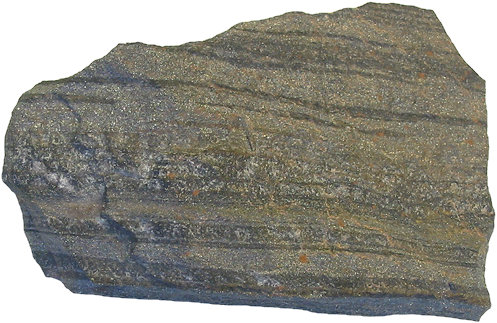
Ore is natural rock or sediment that contains one or more valuable minerals, typically including metals, concentrated above background levels, and that is economically viable to mine and process. Ore grade refers to the concentration of the desired material it contains. The value of the metals or minerals a rock contains must be weighed against the cost of extraction to determine whether it is of sufficiently high grade to be worth mining and is therefore considered an ore. A complex ore is one containing more than one valuable mineral.
Minerals of interest are generally oxides, sulfides, silicates, or native metals such as copper or gold. Ore bodies are formed by a variety of geological processes generally referred to as ore genesis and can be classified based on their deposit type. Ore is extracted from the earth through mining and treated or refined, often via smelting, to extract the valuable metals or minerals. Some ores, depending on their composition, may pose threats to health or surrounding ecosystems.
The word ore is of Anglo-Saxon origin, meaning lump of metal.
In most cases, an ore does not consist entirely of a single mineral, but is mixed with other valuable minerals and with unwanted or valueless rocks and minerals. The part of an ore that is not economically desirable and that cannot be avoided in mining is known as gangue. The valuable ore minerals are separated from the gangue minerals by froth flotation, gravity concentration, electric or magnetic methods, and other operations known collectively as mineral processing or ore dressing.
Mineral processing consists of first liberation, to free the ore from the gangue, and concentration to separate the desired mineral(s) from it. Once processed, the gangue is known as tailings, which are useless but potentially harmful materials produced in great quantity, especially from lower grade deposits.
An ore deposit is an economically significant accumulation of minerals within a host rock. This is distinct from a mineral resource in that it is a mineral deposit occurring in high enough concentration to be economically viable. An ore deposit is one occurrence of a particular ore type. Most ore deposits are named according to their location, or after a discoverer (e.g. the Kambalda nickel shoots are named after drillers), or after some whimsy, a historical figure, a prominent person, a city or town from which the owner came, something from mythology (such as the name of a god or goddess) or the code name of the resource company which found it (e.g. MKD-5 was the in-house name for the Mount Keith nickel sulphide deposit).
Ore deposits are classified according to various criteria developed via the study of economic geology, or ore genesis. The following is a general categorization of the main ore deposit types:
Magmatic deposits are ones which originate directly from magma
Hub AI
Ore AI simulator
(@Ore_simulator)
Ore
Ore is natural rock or sediment that contains one or more valuable minerals, typically including metals, concentrated above background levels, and that is economically viable to mine and process. Ore grade refers to the concentration of the desired material it contains. The value of the metals or minerals a rock contains must be weighed against the cost of extraction to determine whether it is of sufficiently high grade to be worth mining and is therefore considered an ore. A complex ore is one containing more than one valuable mineral.
Minerals of interest are generally oxides, sulfides, silicates, or native metals such as copper or gold. Ore bodies are formed by a variety of geological processes generally referred to as ore genesis and can be classified based on their deposit type. Ore is extracted from the earth through mining and treated or refined, often via smelting, to extract the valuable metals or minerals. Some ores, depending on their composition, may pose threats to health or surrounding ecosystems.
The word ore is of Anglo-Saxon origin, meaning lump of metal.
In most cases, an ore does not consist entirely of a single mineral, but is mixed with other valuable minerals and with unwanted or valueless rocks and minerals. The part of an ore that is not economically desirable and that cannot be avoided in mining is known as gangue. The valuable ore minerals are separated from the gangue minerals by froth flotation, gravity concentration, electric or magnetic methods, and other operations known collectively as mineral processing or ore dressing.
Mineral processing consists of first liberation, to free the ore from the gangue, and concentration to separate the desired mineral(s) from it. Once processed, the gangue is known as tailings, which are useless but potentially harmful materials produced in great quantity, especially from lower grade deposits.
An ore deposit is an economically significant accumulation of minerals within a host rock. This is distinct from a mineral resource in that it is a mineral deposit occurring in high enough concentration to be economically viable. An ore deposit is one occurrence of a particular ore type. Most ore deposits are named according to their location, or after a discoverer (e.g. the Kambalda nickel shoots are named after drillers), or after some whimsy, a historical figure, a prominent person, a city or town from which the owner came, something from mythology (such as the name of a god or goddess) or the code name of the resource company which found it (e.g. MKD-5 was the in-house name for the Mount Keith nickel sulphide deposit).
Ore deposits are classified according to various criteria developed via the study of economic geology, or ore genesis. The following is a general categorization of the main ore deposit types:
Magmatic deposits are ones which originate directly from magma
Recent media