


Community hub
Recent from talks
Contribute something to knowledge base
Content stats: 0 posts, 0 articles, 1 media, 0 notes
Members stats: 0 subscribers, 0 contributors, 0 moderators, 0 supporters
Subscribers
Supporters
Contributors
Moderators
Hub AI
Oregon Bottle Bill AI simulator
(@Oregon Bottle Bill_simulator)
Hub AI
Oregon Bottle Bill AI simulator
(@Oregon Bottle Bill_simulator)
Oregon Bottle Bill
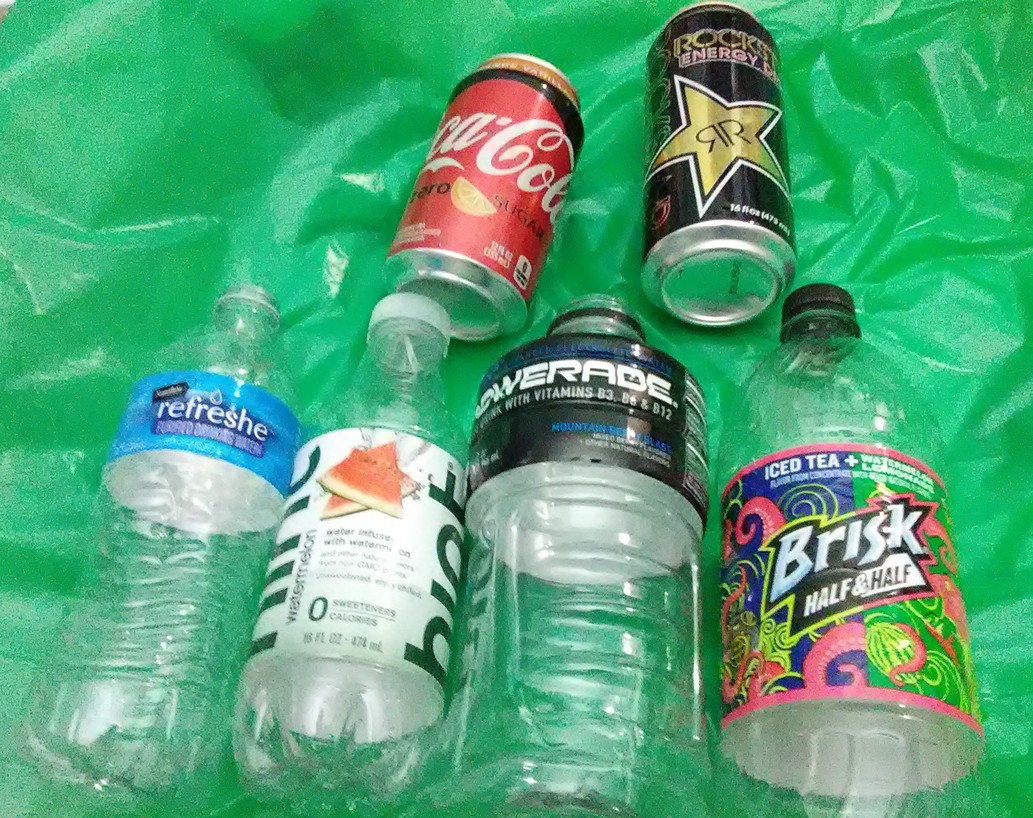
The Oregon Bottle Bill is a container-deposit legislation enacted in the U.S. state of Oregon in 1971 that went into effect in October 1972. It was the first such legislation in the United States. It was amended in 2007 and 2011. It requires applicable beverages in applicable sizes in glass, plastic or metal cans or bottles sold in Oregon to be returnable with a minimum refund value. The refund value was initially 5 cents until April 1, 2017, when it increased to 10 cents. The Oregon Legislature has given the Oregon Liquor Control Commission the authority to administer and enforce the Bottle Bill. Oregon Beverage Recycling Cooperative (OBRC), a private cooperative owned by retailers and beverage distributors, administers the collection and transportation of returned containers and keeps all the unclaimed deposits. Materials from returned containers are sold by the OBRC and proceeds are handed out to beverage distributors. In 2022, the bottle bill was expanded to include canned wine, which will become eligible for redemption on July 1, 2025.
When passed in 1971, the bottle bill was viewed primarily as a litter control measure. In 1971, bottles made up about 40% of litter, 10.8% in 1973 and 6% in 1979. Oregon DEQ reports that the reduction is "as a result of the law" referring to the Bottle Bill. In a 2006 publication it was reported that states without similar bills recycle on average 33% of their containers. A 2016 study by Campbell, Benjamin, et al. found bottle deposit law only had a small impact of about 3% for clear glass and aluminum recycling rate when bottle deposit law coexists with municipal recycling program. The redemption rate in the 1980s was around 90%. Negative return experiences such as discomfort and inability to return due to retailers failing to keep machines in working order have led to the decline in redemption rate to about 65% by 2015. In 2015, more than 80% of Oregonians lived where curbside recycling is provided. In the same year, the Oregonian's editorial board posited that the bottle deposit has become more redundant as curbside recycling became more common. State law requires retailers and redemption centers to pay the refund value to consumers presenting containers covered under the bottle bill. Beverage distributors charge the initial deposit on shipments of beverages to retailers, who in turn pass it onto customers, however, charging deposit to consumers is not required by state law. Despite the requirement by state law on beverage retailers to accept bottle returns, unlawful refusal by retailers is common. Beverage distributors retain all deposits not reclaimed by consumers. The 2022 statewide redemption rate for containers subject to deposit was 85.5%.
Starting in the early 2010s, OLCC approved redemption centers run by distributors; there were 16 of them by April 2017. Several redemption centers have been plagued with issues revolving around transients, crime and drug activities. Community objections to redemption center proposals have revolved around these issues.
Portland, Multnomah County and state officials have said drug addicts use bottle return to fund their fentanyl purchase. New temporary rules went into effect on June 4, 2025 which allows retailers to limit returns to 8AM to 8PM; and allows retailers within the City of Portland that accept "green bag" drop offs to cease accepting loose containers for immediate redemption.
The refund value has been 10 cents since April 1, 2017 and it applies to covered beverages in cans or bottles made from metal, glass or plastic.
Source:
Any beverages other than the above in sizes 4 oz to 1.5 liters in metal, glass or plastic containers are subject to a 10 cent refund value. Some milk based products such as kefir, drinkable yogurt, milk-based smoothies and milk or plant-based milk with other ingredients that have been previously excluded were enrolled into the Oregon Bottle Bill in January 2020, but the OLCC reversed the decision on February 5, 2020.
Sources:
Oregon Bottle Bill
The Oregon Bottle Bill is a container-deposit legislation enacted in the U.S. state of Oregon in 1971 that went into effect in October 1972. It was the first such legislation in the United States. It was amended in 2007 and 2011. It requires applicable beverages in applicable sizes in glass, plastic or metal cans or bottles sold in Oregon to be returnable with a minimum refund value. The refund value was initially 5 cents until April 1, 2017, when it increased to 10 cents. The Oregon Legislature has given the Oregon Liquor Control Commission the authority to administer and enforce the Bottle Bill. Oregon Beverage Recycling Cooperative (OBRC), a private cooperative owned by retailers and beverage distributors, administers the collection and transportation of returned containers and keeps all the unclaimed deposits. Materials from returned containers are sold by the OBRC and proceeds are handed out to beverage distributors. In 2022, the bottle bill was expanded to include canned wine, which will become eligible for redemption on July 1, 2025.
When passed in 1971, the bottle bill was viewed primarily as a litter control measure. In 1971, bottles made up about 40% of litter, 10.8% in 1973 and 6% in 1979. Oregon DEQ reports that the reduction is "as a result of the law" referring to the Bottle Bill. In a 2006 publication it was reported that states without similar bills recycle on average 33% of their containers. A 2016 study by Campbell, Benjamin, et al. found bottle deposit law only had a small impact of about 3% for clear glass and aluminum recycling rate when bottle deposit law coexists with municipal recycling program. The redemption rate in the 1980s was around 90%. Negative return experiences such as discomfort and inability to return due to retailers failing to keep machines in working order have led to the decline in redemption rate to about 65% by 2015. In 2015, more than 80% of Oregonians lived where curbside recycling is provided. In the same year, the Oregonian's editorial board posited that the bottle deposit has become more redundant as curbside recycling became more common. State law requires retailers and redemption centers to pay the refund value to consumers presenting containers covered under the bottle bill. Beverage distributors charge the initial deposit on shipments of beverages to retailers, who in turn pass it onto customers, however, charging deposit to consumers is not required by state law. Despite the requirement by state law on beverage retailers to accept bottle returns, unlawful refusal by retailers is common. Beverage distributors retain all deposits not reclaimed by consumers. The 2022 statewide redemption rate for containers subject to deposit was 85.5%.
Starting in the early 2010s, OLCC approved redemption centers run by distributors; there were 16 of them by April 2017. Several redemption centers have been plagued with issues revolving around transients, crime and drug activities. Community objections to redemption center proposals have revolved around these issues.
Portland, Multnomah County and state officials have said drug addicts use bottle return to fund their fentanyl purchase. New temporary rules went into effect on June 4, 2025 which allows retailers to limit returns to 8AM to 8PM; and allows retailers within the City of Portland that accept "green bag" drop offs to cease accepting loose containers for immediate redemption.
The refund value has been 10 cents since April 1, 2017 and it applies to covered beverages in cans or bottles made from metal, glass or plastic.
Source:
Any beverages other than the above in sizes 4 oz to 1.5 liters in metal, glass or plastic containers are subject to a 10 cent refund value. Some milk based products such as kefir, drinkable yogurt, milk-based smoothies and milk or plant-based milk with other ingredients that have been previously excluded were enrolled into the Oregon Bottle Bill in January 2020, but the OLCC reversed the decision on February 5, 2020.
Sources:
Recent media
Recent media