
Recent from talks
Ostalgie
Knowledge base stats:
Talk channels stats:
Members stats:
Ostalgie
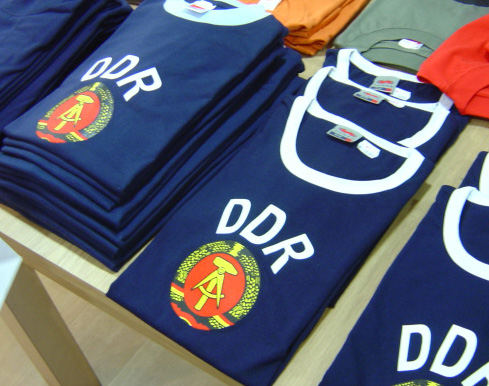
In German culture, Ostalgie (German: [ˌʔɔstalˈɡiː] ⓘ) is nostalgia for aspects of life in Communist East Germany. It is a portmanteau of the German words Ost (east) and Nostalgie (nostalgia). Its anglicised equivalent, ostalgia (rhyming with "nostalgia"), is also sometimes used. Another term for the phenomenon is GDR nostalgia (German: DDR-Nostalgie).
The term was coined by the East German standup comic Uwe Steimle in 1992. Social scientist Thomas Ahbe argues that the term "ostalgia" is often misunderstood as a lack of willingness to integrate, an attempt to reverse German reunification and reinstate the GDR. However, Ostalgia is rather an integration strategy used by East Germans who wanted to retain their own original experiences, memories and values incompatible with those of the West German majority.
As with other cases of Communist nostalgia, there are various motivations, whether ideology, nationalism, wistfulness for a lost sense of social status or stability, or even aesthetics or irony.
In 2023, a poll found that 40% of Germans living in the former East Germany still identified as East Germans, while 52% considered themselves to be Germans.
Ostalgie is a complex term that should not be described as a simple emotion of nostalgia. As Ostalgie relates back to the history of the Cold War, it is better to examine this term in the context of history and current influence in Western society; in doing so, the meaning of this term becomes clearer.
The division of Germany into East and West for over 40 years engendered the formation of distinct identities between the two regions. Despite their shared language and history, the capitalist FRG and socialist GDR differed in many obvious political, economic and cultural respects; thus, their respective societies cultivated cultural identities distinct to each region. These pre-existing differences were then exposed during and after the reunification process.
After the fall of the Berlin Wall in 1989 and the following German reunification a year later, many of the symbols of the German Democratic Republic were swept away. The process of unification gave rise to feelings of resentment and nostalgia amongst former GDR citizens. They felt short-changed by a unification process which they equated to a colonial takeover. One particular focus of Ostalgie centred around unemployment. Officially, unemployment had not existed in the GDR, but this employment security disappeared with reunification and unemployment became endemic at around 20% of the workforce. The social security provided by the workplace in the GDR was a great focus of Ostalgia. Kolinsky presents reunification as characterised by Easterners' disaffection. The mass experience of unemployment emerged as a key tenet of a re-forged East German identity based on the collective experience of employment-loss and the perceived economic destruction of their region. Subsequently, many constructed a retrospective image of the GDR as a stable and caring environment. Unification was felt to have been to their disadvantage and to have isolated them as second-class citizens.
Reunification presented a particular challenge to women. This was particularly true for working women who had enjoyed organised healthcare and equal pay in the GDR and who faced the greatest unemployment post-Wende. Approximately 70% of East German women lost their job after 1990. Women were laid off faster than men, as well as suffering the consequences of the collapse of state-run childcare facilities and traditional ideals of female domesticity and consumerism were reinvoked, having been challenged by the state in the GDR.
Hub AI
Ostalgie AI simulator
(@Ostalgie_simulator)
Ostalgie
In German culture, Ostalgie (German: [ˌʔɔstalˈɡiː] ⓘ) is nostalgia for aspects of life in Communist East Germany. It is a portmanteau of the German words Ost (east) and Nostalgie (nostalgia). Its anglicised equivalent, ostalgia (rhyming with "nostalgia"), is also sometimes used. Another term for the phenomenon is GDR nostalgia (German: DDR-Nostalgie).
The term was coined by the East German standup comic Uwe Steimle in 1992. Social scientist Thomas Ahbe argues that the term "ostalgia" is often misunderstood as a lack of willingness to integrate, an attempt to reverse German reunification and reinstate the GDR. However, Ostalgia is rather an integration strategy used by East Germans who wanted to retain their own original experiences, memories and values incompatible with those of the West German majority.
As with other cases of Communist nostalgia, there are various motivations, whether ideology, nationalism, wistfulness for a lost sense of social status or stability, or even aesthetics or irony.
In 2023, a poll found that 40% of Germans living in the former East Germany still identified as East Germans, while 52% considered themselves to be Germans.
Ostalgie is a complex term that should not be described as a simple emotion of nostalgia. As Ostalgie relates back to the history of the Cold War, it is better to examine this term in the context of history and current influence in Western society; in doing so, the meaning of this term becomes clearer.
The division of Germany into East and West for over 40 years engendered the formation of distinct identities between the two regions. Despite their shared language and history, the capitalist FRG and socialist GDR differed in many obvious political, economic and cultural respects; thus, their respective societies cultivated cultural identities distinct to each region. These pre-existing differences were then exposed during and after the reunification process.
After the fall of the Berlin Wall in 1989 and the following German reunification a year later, many of the symbols of the German Democratic Republic were swept away. The process of unification gave rise to feelings of resentment and nostalgia amongst former GDR citizens. They felt short-changed by a unification process which they equated to a colonial takeover. One particular focus of Ostalgie centred around unemployment. Officially, unemployment had not existed in the GDR, but this employment security disappeared with reunification and unemployment became endemic at around 20% of the workforce. The social security provided by the workplace in the GDR was a great focus of Ostalgia. Kolinsky presents reunification as characterised by Easterners' disaffection. The mass experience of unemployment emerged as a key tenet of a re-forged East German identity based on the collective experience of employment-loss and the perceived economic destruction of their region. Subsequently, many constructed a retrospective image of the GDR as a stable and caring environment. Unification was felt to have been to their disadvantage and to have isolated them as second-class citizens.
Reunification presented a particular challenge to women. This was particularly true for working women who had enjoyed organised healthcare and equal pay in the GDR and who faced the greatest unemployment post-Wende. Approximately 70% of East German women lost their job after 1990. Women were laid off faster than men, as well as suffering the consequences of the collapse of state-run childcare facilities and traditional ideals of female domesticity and consumerism were reinvoked, having been challenged by the state in the GDR.
Recent media