Hubbry Logo
Otto LoewiOtto LoewiMain
Open search
Otto Loewi
Community hub
Otto Loewi
logo
8 pages, 0 posts
0 subscribers
Be the first to start a discussion here.
Otto Loewi
Otto Loewi
from Wikipedia

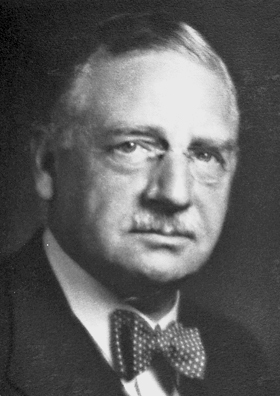
Otto Loewi (German: [ˈɔtoː ˈløːvi] ; 3 June 1873 – 25 December 1961)[4] was a German-born pharmacologist and psychobiologist who discovered the role of acetylcholine as an endogenous neurotransmitter. For this discovery, he was awarded the Nobel Prize in Physiology or Medicine in 1936, which he shared with Sir Henry Dale, who was a lifelong friend that helped to inspire the neurotransmitter experiment.[5] Loewi met Dale in 1902 when spending some months in Ernest Starling's laboratory at University College, London.

Key Information

Biography

[edit]

Loewi was born in Frankfurt, Germany on June 3, 1873, in a Jewish family. He went to study medicine at the University of Strasbourg, Germany (now part of France) in 1891, where he attended courses by famous professors Gustav Schwalbe, Oswald Schmiedeberg, and Bernhard Naunyn among others. He received his medical doctoral degree in 1896. He also was a member of the fraternity Burschenschaft Germania Strassburg.[6]

Subsequently, he worked with Martin Freund at Goethe University of Frankfurt and with Franz Hofmeister in Strasbourg.[7] From 1897 to 1898, he served as an assistant to Carl von Noorden, clinician at the City Hospital in Frankfurt. Soon, however, after seeing the high mortality in countless cases of far-advanced tuberculosis and pneumonia, left without any treatment because of lack of therapy, he decided to drop his intention to become a clinician and instead to carry out research in basic medical science, in particular pharmacology. In 1898, he became an assistant of Professor Hans Horst Meyer, the renowned pharmacologist at the University of Marburg. During his first years in Marburg, Loewi's studies were in the field of metabolism. As a result of his work on the action of phlorhizin, a glucoside provoking glycosuria, and another one on nuclein metabolism in man, he was appointed «Privatdozent» (lecturer) in 1900. Two years later he published his paper «Über Eiweisssynthese im Tierkörper» (on protein synthesis in the animal body), proving that animals are able to rebuild their proteins from their degradation products, the amino acids – an essential discovery with regard to nutrition.[6]

Sir Henry Dale and Otto Loewi

In 1902, Loewi was a guest researcher in Ernest Starling's laboratory in London, where he met his lifelong friend Henry Dale.

In 1903, he accepted an appointment at the University of Graz in Austria, where he would remain until being forced out of the country in 1938. In 1905, Loewi became Associate Professor at Meyer's laboratory and received Austrian citizenship. In 1909 he was appointed to the Chair of Pharmacology in Graz. He had also been a professor at the University of Vienna.[8]

He married Guida Goldschmiedt (1889-1958) in 1908. They had three sons and a daughter. He was the last Jew hired by the University between 1903 and the end of the war.

In 1921, Loewi investigated how vital organs respond to chemical and electrical stimulation. He also established their relative dependence on epinephrine for proper function. Consequently, he learnt how nerve impulses are transmitted by chemical messengers. The first chemical neurotransmitter that he identified was acetylcholine.

After being arrested, along with two of his sons, on the night of the German invasion of Austria, March 11, 1938, Loewi was released after three months on condition that he "voluntarily" relinquish all his possessions, including his research, to the Nazis. He arrived to Britain in September 1938 and shortly afterwards he was offered a visiting professorship at the Université libre de Bruxelles via the Francqui Foundation.[9]

After teaching one semester in the first half of 1939 and going on vacation in England he didn't return to Brussels in September due to the outbreak of World War II. Loewi worked at the Nuffield Institute for Medical Research affiliated with Oxford before accepting an offer of a tenured research professor position at the New York University College of Medicine. He arrived to the US in June 1940 and was joined by his wife only in early 1941 (she wasn't allowed to leave earlier).[10]

In 1946, he became a naturalized citizen of the United States. In 1954, he became a Foreign Member of the Royal Society.[4] He died in New York City on December 25, 1961.

Shortly after Loewi's death in late 1961, his youngest son bestowed the gold Nobel medal on the Royal Society in London. He gave the Nobel diploma to the University of Graz in Austria in 1983, where it currently resides, along with a bronze copy of a bust of Loewi. The original of the bust is at the Marine Biological Laboratory in Woods Hole, Massachusetts, Loewi's summer home from his arrival in the US until his death.[6]

Research

[edit]
In his most famous experiment, Loewi took fluid from one frog heart and applied it to another, slowing the second heart and showing that synaptic signaling used chemical messengers.
The Nobel Prize diploma of Otto Loewi, housed at the University of Graz

Before Loewi's experiments, it was unclear whether signaling across the synapse was bioelectrical or chemical. While pharmacology experiments had established that physiological responses such as muscle contraction could be induced by chemical application, there was no evidence that cells released chemical substances to cause these responses.[5] On the contrary, researchers had shown that physiological responses could be caused by applying an electrical impulse, which suggested that electrical transmission may be the only mode of endogenous signaling. In the early 20th century the controversy of whether cells used chemical or electrical transmission divided even the most prominent scientists.[5]

Loewi's famous experiment, published in 1921, largely answered this question. He dissected out of frogs two beating hearts: one with the vagus nerve which controls heart rate attached, the other heart on its own. Both hearts were bathed in a saline solution (i.e. Ringer's solution). By electrically stimulating the vagus nerve, Loewi made the first heart beat slower. Then, Loewi took some of the liquid bathing the first heart and applied it to the second heart. The application of the liquid made the second heart also beat slower, proving that some soluble chemical released by the vagus nerve was controlling the heart rate. He called the unknown chemical Vagusstoff, naming it after the nerve and the German word for substance. It was later found that this chemical corresponded to acetylcholine. His experiment was iconic because it was the first to demonstrate the endogenous release of a chemical substance that could cause a response in the absence of electrical stimulation. It paved the way for the understanding that the electrical signaling event (action potential) causes a chemical event (release of neurotransmitter from synapses) that is ultimately the effector on the tissue.

Loewi's investigations "On an augmentation of adrenaline release by cocaine" and "On the connection between digitalis and the action of calcium" stimulated a considerable body of research in the years following their publication.

He also clarified two mechanisms of therapeutic importance: the blockade and the augmentation of nerve action by certain drugs.

Loewi is also known for the means by which the idea for his experiment came to him. On Easter Saturday 1921, he dreamed of an experiment that would prove once and for all that transmission of nerve impulses was chemical, not electrical. He woke up, scribbled the experiment onto a scrap of paper on his night-stand, and went back to sleep.

The next morning, he found, to his horror, that he couldn't read his midnight scribbles. That day, he said, was the longest day of his life, as he could not remember his dream. That night, however, he had the same dream. This time, he immediately went to his lab to perform the experiment.[11] From that point on, the consensus was that the Nobel was not a matter of "if" but of "when."

Thirteen years later, Loewi was awarded the Nobel Prize in Physiology or Medicine, which he shared with Sir Henry Hallett Dale.[12][13]

Loewi's mydriatic test

[edit]

Loewi observed that by removing the pancreas from dogs, it gave them an experimental form of diabetes, which led to a change of the response of the eye to adrenaline. This compound in normal dogs has no effect, but in the dogs without a pancreas the pupil dilated.[14] This test involves instilling repeated doses of 1:1000 adrenaline solution into the eye and looking for pupillary dilation.[15] Surgeons used this as a diagnostic test for acute pancreatitis, which was based on Loewi's observation of such a phenomenon in dogs that had had their pancreas removed. The usefulness of this test was reported in a case series of two patients; it was, as expected, negative in a case involving carcinoma of the bile duct, but positive in a case of pancreatitis.[16] The effectiveness of this test was subsequently investigated.[17] The mechanism of action of this phenomenon is unclear, but has been attributed to "a functional toxic disturbance of the sympathetic post-ganglionic neuron innervating the iris".[18]

Awards and honours

[edit]

See also

[edit]

References

[edit]
[edit]
Revisions and contributorsEdit on WikipediaRead on Wikipedia
from Grokipedia
Otto Loewi (3 June 1873 – 25 December 1961) was a German-born and physiologist who provided experimental evidence for the chemical transmission of nerve impulses, identifying as the first endogenous through his 1921 heart experiments. Born in am Main to a prosperous , Loewi initially studied before switching to , earning his MD from the in 1896 under Oswald Schmiedeberg, a pioneer in . After research positions in and , he was appointed professor of at the in 1909, where he remained until the Nazi era. His breakthrough came on Easter Sunday 1921, when, inspired by a dream, he stimulated the of one isolated heart, collected the perfusate, and applied it to a second heart, observing slowed beating that confirmed a chemical "Vagusstoff" rather than purely electrical signaling. Loewi's findings, later identified as , revolutionized by establishing chemical synaptic transmission, earning him the 1936 Nobel Prize in Physiology or Medicine, shared with for complementary pharmacological evidence. Facing persecution as a Jew under the in 1938, Loewi was imprisoned by the but released after transferring his Nobel funds to Nazi control; he then emigrated to the , joining as a research professor until his death. His work laid foundational principles for understanding function and influenced subsequent research.

Early Life and Education

Family Background and Childhood

Otto Loewi was born on June 3, 1873, in Frankfurt-am-Main, , into a Jewish family of means. His father, Jacob (or Jakob) Loewi, was a successful wine , while his mother was Anna Willstätter (or Willstaedter). The family's prosperity in trade afforded Loewi a privileged upbringing, though specific details on siblings remain sparsely documented in primary accounts, with some records indicating at least two sisters. From an early age, Loewi displayed a contemplative disposition, receiving a emphasizing Latin and Greek. He harbored ambitions to pursue at university, reflecting an initial aversion to the practical sciences favored by his parents, who instead steered him toward for its stability and social standing. This familial influence, rooted in the pragmatic ethos of 19th-century Jewish merchant families in , shaped his early path despite his artistic inclinations.

Medical Training and Influences

Loewi commenced his medical studies in 1891 at the before transferring to the Kaiser Wilhelm University in , where he spent most of his student years except for the third, completing his degree in 1896. His approach to coursework was irregular; he frequently skipped lectures to pursue interests in and , reflecting his initial reluctance toward , which his parents had imposed over his preference for studying art. He barely passed his examinations, yet his dissertation addressed a topic in proposed by Oswald Schmiedeberg, the esteemed professor regarded as the founder of modern . Schmiedeberg's guidance proved pivotal, steering Loewi toward experimental rather than clinical practice, an influence reinforced by his concurrent biochemical training under Franz Hofmeister in . Following graduation, Loewi served as an intern in the medical clinic at Frankfurt's city hospital under Carl von Noorden, where frustrations with limited therapeutic efficacy—particularly in metabolic disorders—further propelled him from bedside to laboratory research on drug actions and . These early exposures, combined with Schmiedeberg's emphasis on precise physiological experimentation, shaped Loewi's lifelong focus on the mechanisms of pharmacological agents in biological systems, laying the groundwork for his later discoveries.

Early Scientific Contributions

Research on Protein Metabolism

Loewi's initial investigations into protein metabolism occurred during his six-year tenure (1898–1904) at the University of Marburg under pharmacologist Hans Meyer, where he focused on metabolic processes including glucose and nitrogen balance in animals. In a landmark 1902 study, Loewi provided the first experimental evidence that mammals could synthesize proteins de novo from , achieving nitrogen equilibrium solely through amino acid supplementation without intact proteins in the diet. This involved controlled feeding experiments on dogs, where he monitored urinary and body weight to confirm net protein , overturning prior assumptions that protein reconstruction required pre-formed protein fragments. The findings, detailed in his publication Über Eiweiss-synthese im Tierkörper ("On Protein Synthesis in the Animal Body"), represented a foundational advance in understanding intermediary metabolism, as no prior researcher had successfully demonstrated this synthesis quantitatively before 1901. Loewi's approach emphasized precise balance studies, highlighting the kidney's role in handling and laying groundwork for later isotopic tracer methods in research.

Initial Work in Pharmacology and Autonomic Nervous System

In 1898, Otto Loewi transitioned from clinical practice to experimental pharmacology by joining Hans Meyer's laboratory at the University of Marburg, where he initially investigated metabolic processes, including the effects of phlorhizin—a glucoside that induces glycosuria—on glucose handling. His early work demonstrated that organisms could reconstruct proteins from amino acids, establishing a foundational understanding of nutritional synthesis published in 1902. These studies laid groundwork for examining drug interactions with physiological systems, emphasizing quantitative responses to pharmacological agents. Loewi's research increasingly targeted drug effects on the , particularly how substances modulated -mediated responses. He found that low doses of enhanced the contractile responses of biological tissues to either direct sympathetic or administration of exogenous epinephrine, suggesting cocaine's role in amplifying adrenergic signaling without altering baseline conduction. Complementary experiments revealed epinephrine's capacity to induce , linking autonomic activation to metabolic shifts via sympathetic pathways. He also probed diuretic mechanisms, analyzing how ions and compounds influenced renal function under autonomic influence, which highlighted differential sensitivities in effector organs. By 1908, Loewi had been appointed professor of at the , where he expanded these inquiries into the isolated frog heart preparation, scrutinizing vagal and sympathetic nerve effects on cardiac rhythm and contractility. This period involved testing various alkaloids and ions to dissect inhibitory versus excitatory autonomic transmissions, revealing inconsistencies in electrical transmission theories and foreshadowing chemical mediation hypotheses—ideas he discussed with contemporaries like Henry Dale during visits to English laboratories in 1902 and 1903. Such findings underscored the specificity of pharmacological blockade and potentiation in autonomic effectors, contributing to early differentiation of sympathetic and parasympathetic actions.

Discovery of Chemical Transmission of Nerve Impulses

The 1921 Frog Heart Experiment

In 1921, Otto Loewi conducted a pivotal experiment to test whether nerve impulses to the heart were transmitted chemically or electrically, inspired by a dream on the night preceding Easter Sunday. He isolated two frog hearts in separate perfusion chambers filled with Ringer's solution, one with the vagus nerve intact and the other denervated. Electrical stimulation of the vagus nerve in the first heart caused a marked slowing of the heartbeat and reduction in contraction amplitude, with the inhibitory effect persisting briefly after stimulation ceased. The perfusate from this stimulated heart, collected after vagus nerve activation, was then transferred to the second, denervated heart, which exhibited identical inhibitory effects—a decreased rate and force of contraction. In contrast, perfusate from the first heart without prior vagus stimulation had no such effect on the second heart, ruling out baseline fluid components as the cause. Loewi termed the active inhibitory substance released into the perfusate "Vagusstoff," hypothesizing it as a chemical diffused from endings to cardiac tissue. This demonstrated humoral transmission of the vagus 's inhibitory signal, challenging the prevailing electrical transmission . Complementary tests with sympathetic produced an acceleratory substance in the perfusate, further supporting chemical mediation for both branches of the . The results were published in , providing empirical evidence for chemical .

Characterization of Vagusstoff as Acetylcholine

Following the 1921 frog heart experiments that isolated Vagusstoff as the inhibitory substance released by vagus nerve stimulation, Otto Loewi initiated pharmacological assays to determine its chemical identity. In collaboration with Ernst Navratil, Loewi demonstrated in 1926 that the physiological effects of Vagusstoff—such as cardiac inhibition and contraction—were pharmacologically identical to those of , a compound previously synthesized and studied for its parasympathomimetic actions. Key evidence included the observation that both Vagusstoff and were potentiated equally by the (eserine), which prolonged their inhibitory effects on the perfused frog heart by preventing enzymatic breakdown. Loewi and Navratil further showed that Vagusstoff, like , was rapidly hydrolyzed by blood esterases, yielding choline and acetic acid upon , and that its activity was blocked by atropine, a . These parallels led them to propose that Vagusstoff was an ester of choline, specifically , marking the first linkage of a endogenous nerve-released substance to a known chemical transmitter. Subsequent confirmatory experiments by Loewi involved injecting directly into the perfusate of donor hearts, replicating Vagusstoff's transfer effects, and quantifying dose-response similarities under controlled stimulation frequencies (e.g., 10-20 Hz vagal impulses yielding equivalent inhibition to 1:10^7 to 1:10^8 M solutions). In 1929, independent validation by Henry Dale and Harold Dudley, who extracted from mammalian splenic extracts and matched its properties to Loewi's Vagusstoff, solidified the identification, though Loewi's prior pharmacological profiling provided the foundational characterization. This work established as the first verified , underpinning chemical synaptic transmission.

Extensions: Mydriatic Test and Nerve Regeneration

Loewi extended his investigations into chemical by developing a diagnostic test based on pupillary responses to epinephrine, known as Loewi's mydriatic test. In experiments with dogs, he observed that surgical removal of the , inducing an experimental form of diabetes mellitus, resulted in exaggerated pupillary dilation () upon instillation of epinephrine hydrochloride into the conjunctival sac, whereas normal dogs exhibited minimal or no such response. This phenomenon was linked to pancreatic insufficiency, potentially due to altered autonomic balance or insulin deficiency affecting sympathetic sensitivity, and the test was subsequently applied clinically to detect or chronic pancreatic dysfunction by monitoring the degree of after epinephrine application. Building on the identification of vagusstoff as , Loewi and his collaborators, including Engelhart, explored regeneration in the context of parasympathetic transmission using the innervating the iris and . Following degeneration of the , vanished from the denervated iris and , abolishing the light-induced pupillary constriction () even under stimulation. As regeneration commenced, reemerged in trace amounts, insufficient for in response to light alone but detectable and potentiated by eserine, an inhibitor that prevents , thereby restoring the constrictive response. These findings confirmed that the neurotransmitter's presence and functional release depend on intact fibers, providing for the specificity of chemical signaling in regenerated parasympathetic pathways.

Academic Career and Institutional Roles

Professorship at University of Graz

In 1909, Otto Loewi was appointed full professor and chair of the Department of at the (Karl-Franzens-Universität), succeeding the previous incumbent who had departed for in 1908. This position marked a significant advancement in his academic career, following his role as under Hans Meyer in , and he retained the chair until 1938 amid Austria's annexation by . As department head, Loewi directed the pharmacological institute, overseeing teaching and research in areas such as function and drug effects on isolated organs. Loewi's lectures at earned him a reputation as an engaging and dynamic educator, emphasizing practical demonstrations and physiological principles over rote , which contrasted with more traditional approaches in German-speaking academia at the time. His tenure facilitated the integration of experimental into the curriculum, attracting students and fostering a research-oriented environment despite initial faculty resistance to his external appointment from . Under his leadership, the department grew modestly, with Loewi personally funding some equipment due to limited institutional resources, enabling key experiments on nerve-mediated responses in hearts and other preparations. The professorship provided Loewi with institutional stability during a period of prolific output, including foundational studies on effects published in the 1910s and 1920s, though his work increasingly intersected with interdisciplinary . By the mid-1930s, political pressures began eroding his position, culminating in his in 1938 following the , after which his assets were seized and he was dismissed under anti-Semitic policies targeting Jewish academics.

Research Environment and Collaborations

Otto Loewi directed the Department of at the from 1909 to 1938, creating a research environment centered on experimental and . His laboratory employed classical techniques such as organ and stimulation, enabling studies on and, later, -impulse transmission. These setups, often using preparations, allowed for controlled observations of autonomic effects despite the modest resources of an Austrian university department in the . Loewi worked with a dedicated group of assistants whose efforts supported key publications. In his 1936 Nobel lecture, he credited E. Navratil, W. Witanowski, and E. Engelhart for their contributions to the research program. Navratil collaborated with Loewi on experiments demonstrating that Vagusstoff acted as an ester of choline, published in 1926, which advanced the chemical characterization of the substance. Additional co-workers, including those studying sympathetic transmission like Engelhart, extended Loewi's investigations into adrenergic mechanisms during . The group also included figures such as Hellauer, involved in work on regeneration. This collaborative framework produced multiple papers elucidating the dual chemical mediation of impulses. Beyond local assistants, Loewi's laboratory hosted international visitors, particularly from the , fostering exchanges that enriched studies on the . His earlier interactions with researchers like Henry Dale and influenced the lab's approach, emphasizing rigorous pharmacological testing of humoral agents.

Impact of Political Upheaval

Nazi Era Persecution and Arrest

Following the on March 12, 1938, which incorporated into , Otto Loewi, a professor of Jewish descent at the , faced immediate professional and personal persecution under the regime's antisemitic policies. As a Jew born to a Frankfurt merchant family, Loewi was dismissed from his pharmacology chair, a position he had held since 1909, in accordance with the Nazis' racial laws targeting Jewish academics and professionals. On the night of , 1938—the eve of the formal annexation—Loewi was arrested along with his two younger sons by Nazi authorities in and placed in "," a for detention of perceived enemies, particularly . This arrest reflected the rapid implementation of measures against prominent Jewish figures in academia, aimed at neutralizing potential opposition and seizing assets. Loewi's imprisonment lasted several weeks, during which he endured harsh conditions typical of early Nazi detentions, including physical mistreatment. He was released in late April 1938 only after agreeing to emigrate from Austria within two months and transferring his 1936 Nobel Prize winnings—deposited in a Swedish bank—to Nazi-controlled accounts, a coerced financial extortion that stripped him of significant resources. International protests from scientists, amplified at events like the Zurich physics congress, contributed to pressure for his release but did not prevent the asset forfeiture.

Emigration to England and the United States

Following the on March 12, 1938, which incorporated into , Otto Loewi, of Jewish descent, faced immediate persecution as a prominent academic. He and his two younger sons were arrested by the in shortly thereafter and held in , amid broader purges targeting Jewish intellectuals and Nobel laureates. To secure his release and permission to emigrate, Loewi was compelled to relinquish control of his share of the 1936 funds, which the Nazi regime confiscated as a condition for allowing his departure; this amounted to approximately 200,000 Swiss francs, transferred to the . Released after several weeks of imprisonment, he departed on September 28, 1938, initially traveling to before reaching , where he sought refuge with his Nobel co-recipient, , in . In , Loewi resided with Dale for several months, benefiting from the hospitality and professional networks of the British physiological community, though his stateless status and the intensifying European conflict limited his research opportunities. As escalated, particularly after the fall of in June 1940, Loewi relocated to the that same year, arriving to take up a position as a research professor at the College of Medicine, where he could resume pharmacological investigations under more stable conditions. This emigration severed Loewi's ties to his native , where his laboratory and library had been appropriated by the Nazis, and marked a pivotal shift in his toward American institutions, culminating in his as a U.S. citizen in 1946.

Later and Personal Life

Post-Emigration Research and Teaching

Following his arrival in the United States in 1940, Loewi accepted an appointment as Research Professor of at the College of Medicine, where he remained until his retirement in 1955. In this role, he resumed experimental work on topics from his pre-emigration career, including the physiological actions of and related vagal mechanisms, despite Austrian authorities having conditioned his exit on abstaining from scientific activity abroad. These efforts focused on refining empirical validations of chemical synaptic transmission rather than initiating novel paradigms, with Loewi increasingly serving as a reviewer and conceptual guide for emerging researchers. Loewi also contributed to teaching and mentorship at NYU, lecturing on and to medical students and trainees, which fostered a cohort of American pharmacologists and neuroscientists. He became a naturalized U.S. citizen on November 25, 1946, enabling fuller integration into the academic environment. His output emphasized consolidation of prior findings through critical analysis, underscoring the causal role of neurotransmitters in nerve-impulse propagation amid growing acceptance of humoral theories.

Death and Personal Reflections

Otto Loewi died on December 25, 1961, in his apartment at the age of 88, following a lively discussion after which he fell silent and passed away peacefully. His remains were cremated, with ashes interred in a churchyard adjacent to the Marine Biological Laboratory in , in accordance with his expressed wishes in August 1962. The was not publicly specified, consistent with natural decline in advanced age. Throughout his life, Loewi maintained diverse interests beyond , encompassing , , , mountain climbing, and human fellowship, which enriched his scientific pursuits and reflected a balanced . He viewed scientific discovery as a confluence of preparation and , as illustrated by his account of inspiring his 1921 vagusstoff experiment: "The night before Easter Sunday of that year (1920) I awoke, turned on the light, and jotted down a few notes on a tiny slip of thin ." This underscores his belief in insight complementing rigorous . Loewi also displayed wry humor regarding scientific methodology, quipping, "A is a substance which, if injected into a , produces a ," highlighting the publication pressures inherent in . In later reflections, Loewi expressed a theistic orientation to existence, distant from formal yet infused with broader spiritual contemplation, shaped by limited in his youth. His emigration experiences under Nazi persecution did not embitter him; instead, he adapted resiliently, becoming a U.S. citizen in 1946 and continuing research at until a 1958 limited mobility, though he persisted with summer visits to Woods Hole. These elements portray a figure who integrated intellectual curiosity with personal amid adversity.

Recognition and Legacy

Nobel Prize and Other Awards

Otto Loewi shared the 1936 in Physiology or Medicine with Sir Henry Hallett Dale for their discoveries relating to the chemical transmission of nerve impulses. Loewi's key contribution involved experiments on frog hearts that identified a substance, dubbed "Vagusstoff," released by the to inhibit cardiac activity, which was later confirmed as ; Dale's parallel work on sympathetic transmission complemented this finding. The Nobel Committee recognized these efforts as establishing the chemical basis of neurotransmission, overturning prevailing electrical theories. Due to Loewi's arrest by the Nazis in 1938 and the subsequent confiscation of the prize money, he did not receive the funds until after , when they were restored through international efforts. He donated the recovered sum to the to support scientific research. In addition to the Nobel, Loewi received the Physiology Prize from the Royal Academy of Sciences of , the Lieben Prize from the Academy of , and the Cameron Prize from the in 1944. He was also awarded honorary degrees by , , the , and the University of , and elected a Foreign Member of the Royal Society in 1954.

Influence on Modern Neuroscience and Pharmacology

Otto Loewi's 1921 experiments demonstrating the release of a , later identified as , from stimulated provided the first empirical evidence for chemical synaptic transmission, fundamentally altering the prevailing view that neural communication occurred solely through electrical impulses. This breakthrough, validated by subsequent work identifying 's role in parasympathetic signaling, established the paradigm that underpins modern . By proving that impulses trigger the liberation of specific humoral agents capable of mimicking neural effects on target organs, Loewi's findings shifted toward investigating molecular mechanisms of synaptic function, paving the way for discoveries of additional such as norepinephrine and their involvement in both peripheral and central nervous systems. In neuroscience, Loewi's validation of chemical transmission influenced studies on synaptic plasticity, neuromodulation, and neural circuit dynamics, informing models of learning, memory, and disorders like epilepsy and schizophrenia where cholinergic imbalances play a role. The recognition of releasable chemical messengers enabled quantitative analyses of synaptic vesicle dynamics and receptor kinetics, contributing to advancements in electrophysiology and optogenetics that probe neurotransmitter release in vivo. Loewi's identification of acetylcholine as a key mediator spurred pharmacological developments targeting the system, including inhibitors like neostigmine for and donepezil for , which enhance signaling to alleviate symptoms of neurodegeneration. agents, such as atropine derivatives used in and treatment, and agonists like for , derive directly from understandings of acetylcholine's receptor interactions elucidated post-Loewi. These interventions, rooted in the chemical transmission hypothesis, exemplify how Loewi's work facilitated receptor subtype classification (muscarinic and nicotinic) and rational drug design for autonomic and disorders.

Scientific Debates and Criticisms

Initial Skepticism Toward Chemical Transmission Hypothesis

Prior to Otto Loewi's 1921 experiments, the prevailing view in physiology held that nerve impulses were transmitted to effector organs, such as the heart, through direct electrical conduction without intermediary chemical agents, a perspective rooted in observations of rapid nerve signaling speeds incompatible with diffusion-based chemical processes. Loewi's demonstration that stimulating the vagus nerve in an isolated frog heart released a diffusible substance—later termed Vagusstoff—that slowed a second heart's rate challenged this orthodoxy, yet elicited widespread doubt due to the entrenched electrical transmission model championed by leading neurophysiologists. A primary source of skepticism stemmed from replication difficulties; numerous attempts to reproduce Loewi's findings, including by Loewi himself, failed under standard conditions, succeeding only under precise setups like sub-zero temperatures to stabilize the labile substance, which undermined claims of robust empirical validity. Critics argued that chemical mediation implied transmission delays too sluggish for the millisecond precision observed in neural events, favoring instead the "sparks" of electrical propagation over "soups" of humoral agents, a debate framed as inherently mechanistic versus biochemical. This resistance persisted among electrophysiologists, who viewed Loewi's autonomic nerve results as anomalous rather than paradigmatic, delaying broader acceptance of chemical synaptic transmission for over a decade. Even Loewi initially harbored reservations about extending the chemical beyond parasympathetic cardiac effects, expressing doubt regarding its applicability to skeletal neuromuscular junctions where electrical appeared stronger. The controversy highlighted tensions between empirical —emphasizing quantifiable substance release—and classical neurophysiology's focus on action potentials, with skeptics demanding irrefutable proof across neural systems before conceding the chemical model's causal primacy. Such , while rigorous, slowed integration of Loewi's findings until corroborative work by Henry Dale identifying as Vagusstoff in 1936 provided chemical specificity and cross-species validation.

Replication Challenges and Empirical Validation

Loewi's 1921 experiment, involving two perfused hearts connected via fluid circulation, demonstrated that on the first heart released a substance ("vagusstoff," later identified as ) that slowed the beat of the second heart, providing initial evidence for chemical . However, subsequent replication attempts, including by Loewi himself, frequently failed, leading to significant skepticism and delaying broader acceptance of the chemical transmission hypothesis. The primary challenge stemmed from seasonal variations in physiology; successful outcomes required winter frogs, as summer frogs exhibited reduced cardiac sensitivity to due to elevated activity and altered muscarinic receptor concentrations, which degraded the substance before observable effects. Additional factors included species-specific differences in endogenous inhibitors like eserine and temperature-dependent degradation of the released substances, complicating consistent reproduction without refined controls. These empirical hurdles fueled criticism from proponents of electrical transmission theories, who highlighted the apparent latency in effects and lack of immediate replicability as against a humoral mechanism. Empirical validation advanced with Loewi's 1926 replications incorporating winter frogs and eserine to inhibit , yielding reliable demonstrations of both inhibitory (vagusstoff) and excitatory (acceleransstoff) effects. Pharmacological confirmation followed in 1929 when Henry Dale and colleagues isolated from animal tissues and verified its identity with Loewi's substance through matching physiological actions and atropine sensitivity. By the 1950s, John Eccles' intracellular recordings falsified pure electrical transmission at synapses, solidifying chemical mediation, with Loewi and Dale sharing the 1936 for these foundational insights. This progression underscored how identifying boundary conditions, such as seasonality, transformed replication failures into refinements that strengthened the theory's empirical foundation.

References

Add your contribution
Related Hubs
User Avatar
No comments yet.