



Community hub
Recent from talks
Knowledge base stats:
Talk channels stats:
Members stats:
Over-the-shoulder shot
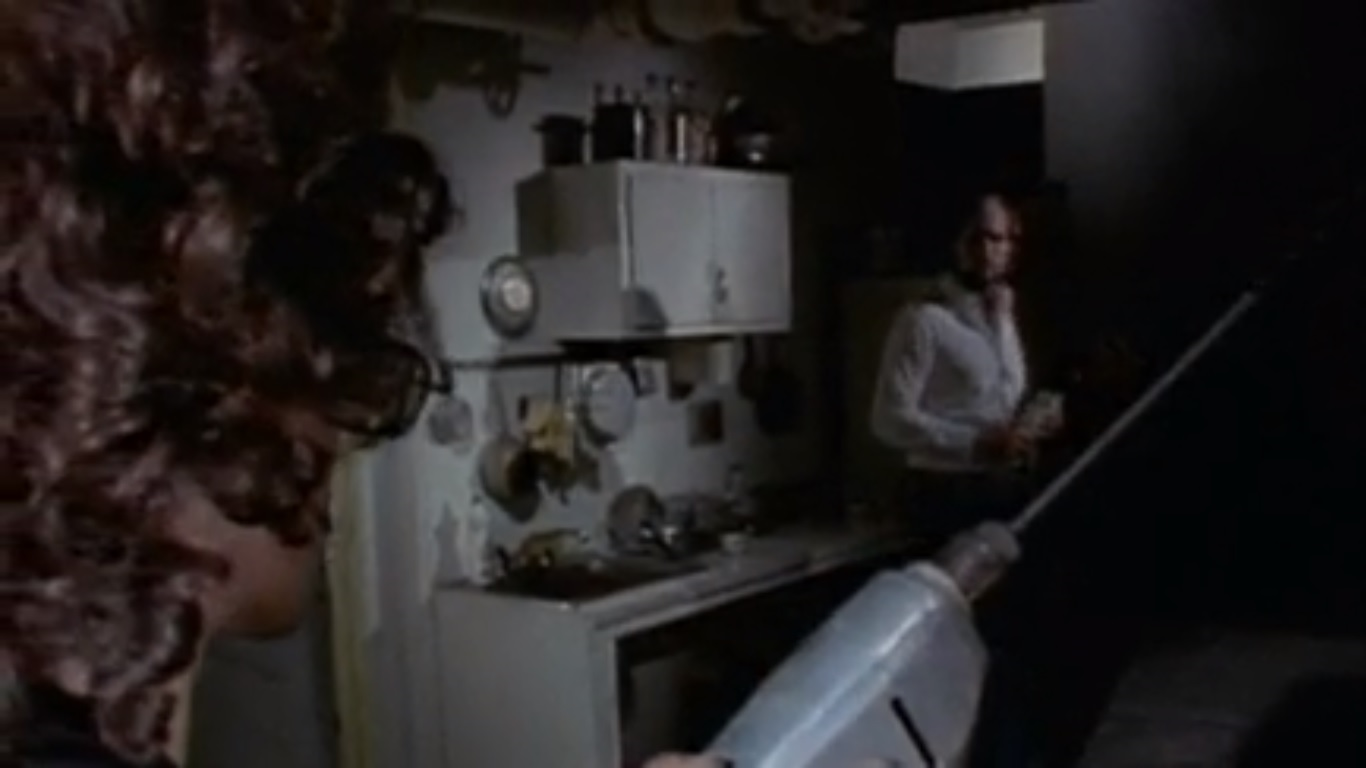
The over-the-shoulder shot (OTS or short over) is a camera angle used in film and television, where the camera is placed above the back of the shoulder and head of a subject. This shot is most commonly used to present conversational back and forth between two subjects. With the camera placed behind one character, the shot then frames the sequence from the perspective of that character. The over-the-shoulder shot is then utilised in a shot-reverse-shot sequence where both subject's OTS perspectives are edited consecutively to create a back and forth interplay, capturing dialogue and reactions. This inclusion of the back of the shoulder allows audiences to understand the spatial relationships between two subjects, while still being able to capture a closer shot of each subject’s facial expression. In film and television, the filmmaker or cinematographer’s choice of an OTS shot’s camera height, the use of focus and lenses affect the way audiences interpret subjects and their relationships to others and space.
The over-the-shoulder angle was employed in numerous artworks before the invention of photography or film making. The art of painting, by the Dutch painter Johannes Vermeer uses the OTS angle and was created between 1666–1668. It is considered one of the earliest appearances of the angle, which is said to include a self-portrait of the artist himself from behind. Similarly, nineteenth-century German romantic painter Caspar David Fredrich's artwork Moonrise over the sea, painted in 1822, depicts three rear facing figures looking out to sea. The OTS perspective captured in the artwork was common amongst Fredrich’s works and allowed audiences to identify with the figures in the painting, as they participated in the same visual experience as the subjects in frame.
In the early years of silent film making, cameras were kept stationary and distant from the action, mirroring the position an audience would be viewing a stage production. The blocking and staging of scenes in early film was heavily influenced by theatrical conventions. For example, "cheating out", which meant to face outward towards an audience more than would be natural. This technique was utilised by filmmakers to position both subjects towards the camera, during a conversational scene, in order to capture the front and side profiles of both subjects, rather than turning away from the camera.
By the early 20th century, films had evolved from static one shot takes to longer form films that utilised multiple camera angles and multiple shots within a scene and setting. James Williamson’s Attack on a China Mission Station, made in 1900, used the first reverse angle cut in film history. With the introduction of cutting and multiple shots being used for one scene, actors no longer had to "cheat out" towards the camera. Instead, the subjects could face one another and the filmmaker could capture conversation in two reverse over-the-shoulder shots from both subject’s perspectives. The technological improvements in cameras also meant they were smaller, lighter, could be moved far closer to subjects and have a greater range in controlling light, exposure and focus.
An OTS is composed, when used to capture dialogue, to make the subject facing the camera the shot’s focal point. A conventional OTS shot always has at least three layers of depth: the foreground, middle ground and background. The inclusion of a subject’s shoulder, and often the back of their head in the foreground, adds depth to the frame. Because an object appears bigger when it is closer to the camera than they do when viewed at a greater distance, objects and subjects appear different sizes on screen which increases viewers sense of the depth of the space depicted. This occurs because the filmmaker has placed the subject as an overlapping object along the Z-axis of the frame, the Z-axis meaning the imaginary line that runs from the foreground to the background of a shot.
To capture a turn-taking conversation, this OTS is then flipped to a reverse OTS angle that depicts the other subject’s perspective. Edited together, the interplay of these two shots often depicts a first subjects’ action and a second subject’s corresponding reaction. This sequence of two OTS shots that depict a back and forth between two subjects is called a shot-reverse-shot. Filmmakers aim to ‘match’ the OTS shots within a shot-reverse-shot in order to ensure spatial continuity so audiences quickly understand the physical distance between the two subjects, and their physical distance to the space around them. "Matching" means the two people involved remain on the same sides of the shot. For these shots to ‘match’, filmmakers may take into consideration the 180-degree rule, which dictates that the camera should be kept on one side of an imaginary axis between two characters. Similarly the 30 degree rule is also used, which specifies that if two shots of the same character or object are cut together, the viewpoints must be at least 30 degrees away from each other or entail significantly different shot sizes. This problem can be avoided by inserting a different shot between the two similar shots. Filmmakers also aim to create an eye line match, within conventional OTS shot-reverse sequences, to match the angle of the subject’s eye line with its corresponding position in the next shot. These rules dictate the placement of the camera and their direction to ensure spatial continuity. This tradition of ‘matching’ shots allows viewers to, often unconsciously, cognitively piece together the different camera angles and, with the inclusion of a subjects shoulder, positions the subject’s physical perspective clearly to then interact with the focal subject.
The use of alternating over the shoulder shots contrasts with the use of single person shots during a conversation, with one person shown then the other, then the first, then the second, etc., throughout a conversation. This method does not establish a spatial relationship between the two persons. (In fact, the two speakers in this kind of sequence can be filmed days or months apart because the two actors are not shown together.) The two methods often are combined in a sequence, however.
The over-the-shoulder camera angle is also simulated in third-person shooter video gaming. Within this category of 3D gaming the player’s avatar is visible on screen, as opposed to a first-person shooter game that centres the weapon in the frame and adopts a Point-of-view immersive angle. The OTS angle is utilised in third-person shooter games as a way to allow both game designers and players to further customise the avatar characters and to display a greater range of vision of the surrounding area. This increase in a player’s field of vision allows for clearer close combat and interaction with physical objects in the game space.
Hub AI
Over-the-shoulder shot AI simulator
(@Over-the-shoulder shot_simulator)
Over-the-shoulder shot
The over-the-shoulder shot (OTS or short over) is a camera angle used in film and television, where the camera is placed above the back of the shoulder and head of a subject. This shot is most commonly used to present conversational back and forth between two subjects. With the camera placed behind one character, the shot then frames the sequence from the perspective of that character. The over-the-shoulder shot is then utilised in a shot-reverse-shot sequence where both subject's OTS perspectives are edited consecutively to create a back and forth interplay, capturing dialogue and reactions. This inclusion of the back of the shoulder allows audiences to understand the spatial relationships between two subjects, while still being able to capture a closer shot of each subject’s facial expression. In film and television, the filmmaker or cinematographer’s choice of an OTS shot’s camera height, the use of focus and lenses affect the way audiences interpret subjects and their relationships to others and space.
The over-the-shoulder angle was employed in numerous artworks before the invention of photography or film making. The art of painting, by the Dutch painter Johannes Vermeer uses the OTS angle and was created between 1666–1668. It is considered one of the earliest appearances of the angle, which is said to include a self-portrait of the artist himself from behind. Similarly, nineteenth-century German romantic painter Caspar David Fredrich's artwork Moonrise over the sea, painted in 1822, depicts three rear facing figures looking out to sea. The OTS perspective captured in the artwork was common amongst Fredrich’s works and allowed audiences to identify with the figures in the painting, as they participated in the same visual experience as the subjects in frame.
In the early years of silent film making, cameras were kept stationary and distant from the action, mirroring the position an audience would be viewing a stage production. The blocking and staging of scenes in early film was heavily influenced by theatrical conventions. For example, "cheating out", which meant to face outward towards an audience more than would be natural. This technique was utilised by filmmakers to position both subjects towards the camera, during a conversational scene, in order to capture the front and side profiles of both subjects, rather than turning away from the camera.
By the early 20th century, films had evolved from static one shot takes to longer form films that utilised multiple camera angles and multiple shots within a scene and setting. James Williamson’s Attack on a China Mission Station, made in 1900, used the first reverse angle cut in film history. With the introduction of cutting and multiple shots being used for one scene, actors no longer had to "cheat out" towards the camera. Instead, the subjects could face one another and the filmmaker could capture conversation in two reverse over-the-shoulder shots from both subject’s perspectives. The technological improvements in cameras also meant they were smaller, lighter, could be moved far closer to subjects and have a greater range in controlling light, exposure and focus.
An OTS is composed, when used to capture dialogue, to make the subject facing the camera the shot’s focal point. A conventional OTS shot always has at least three layers of depth: the foreground, middle ground and background. The inclusion of a subject’s shoulder, and often the back of their head in the foreground, adds depth to the frame. Because an object appears bigger when it is closer to the camera than they do when viewed at a greater distance, objects and subjects appear different sizes on screen which increases viewers sense of the depth of the space depicted. This occurs because the filmmaker has placed the subject as an overlapping object along the Z-axis of the frame, the Z-axis meaning the imaginary line that runs from the foreground to the background of a shot.
To capture a turn-taking conversation, this OTS is then flipped to a reverse OTS angle that depicts the other subject’s perspective. Edited together, the interplay of these two shots often depicts a first subjects’ action and a second subject’s corresponding reaction. This sequence of two OTS shots that depict a back and forth between two subjects is called a shot-reverse-shot. Filmmakers aim to ‘match’ the OTS shots within a shot-reverse-shot in order to ensure spatial continuity so audiences quickly understand the physical distance between the two subjects, and their physical distance to the space around them. "Matching" means the two people involved remain on the same sides of the shot. For these shots to ‘match’, filmmakers may take into consideration the 180-degree rule, which dictates that the camera should be kept on one side of an imaginary axis between two characters. Similarly the 30 degree rule is also used, which specifies that if two shots of the same character or object are cut together, the viewpoints must be at least 30 degrees away from each other or entail significantly different shot sizes. This problem can be avoided by inserting a different shot between the two similar shots. Filmmakers also aim to create an eye line match, within conventional OTS shot-reverse sequences, to match the angle of the subject’s eye line with its corresponding position in the next shot. These rules dictate the placement of the camera and their direction to ensure spatial continuity. This tradition of ‘matching’ shots allows viewers to, often unconsciously, cognitively piece together the different camera angles and, with the inclusion of a subjects shoulder, positions the subject’s physical perspective clearly to then interact with the focal subject.
The use of alternating over the shoulder shots contrasts with the use of single person shots during a conversation, with one person shown then the other, then the first, then the second, etc., throughout a conversation. This method does not establish a spatial relationship between the two persons. (In fact, the two speakers in this kind of sequence can be filmed days or months apart because the two actors are not shown together.) The two methods often are combined in a sequence, however.
The over-the-shoulder camera angle is also simulated in third-person shooter video gaming. Within this category of 3D gaming the player’s avatar is visible on screen, as opposed to a first-person shooter game that centres the weapon in the frame and adopts a Point-of-view immersive angle. The OTS angle is utilised in third-person shooter games as a way to allow both game designers and players to further customise the avatar characters and to display a greater range of vision of the surrounding area. This increase in a player’s field of vision allows for clearer close combat and interaction with physical objects in the game space.