
Recent from talks
Pachuca
Knowledge base stats:
Talk channels stats:
Members stats:
Pachuca
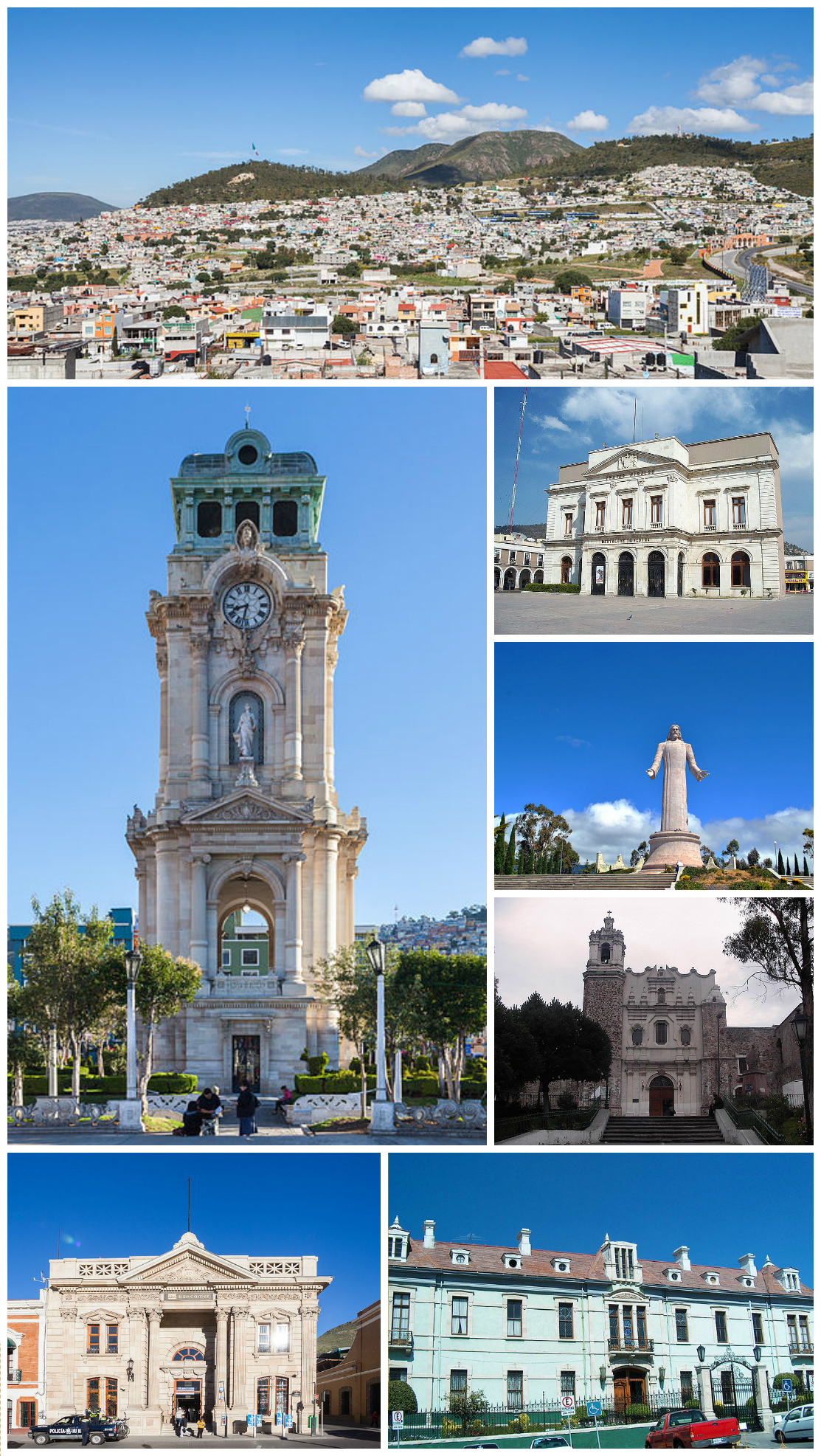
Pachuca (Spanish pronunciation: [paˈtʃuka] ⓘ; Mezquital Otomi: Nju̱nthe), formally known as Pachuca de Soto, is the capital and largest city of the east-central Mexican state of Hidalgo, located in the south-central part of the state. Pachuca de Soto is also the name of the municipality for which the city serves as municipal seat. Pachuca is located about 90 kilometres (56 mi) north of Mexico City via Mexican Federal Highway 85.
There is no agreed upon consensus regarding the origins of the word pachuca. It has been loosely traced to pachoa ('strait', 'opening'), pachoacan ('place of government', 'place of silver and gold') and patlachuican ('place of factories', 'place of tears').
The official name of Pachuca is Pachuca de Soto in honor of congressman Manuel Fernando Soto, who is credited with the founding of Hidalgo state. Its nickname of La Bella Airosa ("the airy, beautiful") comes from the strong winds that blow through the canyons to the north of the city. In the indigenous Otomi language, Pachuca is known as Nju̱nthe. The area had been long-inhabited; and is famous for mining, both for green obsidian which was highly prized by Pre-Columbian civilizations and was traded as far as Spiro Mounds in the United States; and for later mining activity overseen by the Spanish in the mid-16th century.
Pachuca remained a major mining center until the mid-20th century, with the city's fortunes fluctuating with the health of the mining sector. In the mid-20th century, a major downturn in mining pushed the city to shift focus from mining to industry, resulting in the revamping of the Universidad Autónoma de Hidalgo. Today, mining forms only a fraction of the municipality's economy. One cultural aspect that makes Pachuca unique is the influence of the Cornish miners who immigrated in the 19th century from Great Britain, as many of their descendants remain in Pachuca, and nearby Real del Monte. Furthermore, the Cornish populace helped to shape two local traditions that define the city—fútbol and a dish called "pastes."
Evidence of early human habitation in this area is found in Cerro de las Navajas and Zacualtipán, in the Sierra de Pachuca. Here primitive mines to extract green obsidian, arrow heads, scraping tools, and mammoth remains can be traced back as far as 12,000 BCE. An ancient pre-Hispanic obsidian tool-making center has also been found in the small town of San Bartolo near the city. Around 2,000 BCE nomadic groups here began to be replaced by sedentary peoples who formed farming villages in an area then known as Itzcuincuitlapilco, of which the municipality of Pachuca is a part. Later artifacts from between 200 CE and 850 CE show Teotihuacan influence with platforms and figurines found in San Bartolo and in Tlapacoya, and it has been argued Teotihuacan monopolized the Pachuca deposit to control and influence Obsidian trade in Central Mexico during the Classic Period. Development of this area as a city, however, would lag behind other places in the region such as Tulancingo, Tula and Atotonilco El Grande, but the archeological sites here were on the trade routes among these larger cities..
After the Teotihuacan era, the area was dominated by the Chichimecas with their capital in Xaltocan, who called the area around Pachuca Njunthé. Later, the Chichimecas would found the dominion of Cuauhtitlán pushing the native Otomis to the Mezquital Valley. These conquests coalesced into a zone called Cuautlalpan, of which Pachuca was a part. Fortifications in the area of Pachuca city and other areas were built between 1174 and 1181. This dominion would eventually be overrun by the Aztec Triple Alliance between 1427 and 1430, with rule in Pachuca then coming from the city of Tenochtitlan. According to tradition, it was after this conquest that mineral exploitation began here and in neighboring Real del Monte, at a site known as Jacal or San Nicolás. The Aztec governing center was where Plaza Juárez in Pachuca city is now.
The Spanish arrived here in 1528, killing the local Aztec governor, Ixcóatl. Credit for the Spanish conquest of the Pachuca area has been given Francisco Téllez, an artilleryman who came to Mexico with Hernán Cortés in 1519. He and Gonzalo Rodriguez were the first Spaniards here, constructing two feudal estates, and calling the area Real de Minas de Pachuca. Téllez was also given credit for laying out the colonial city of Pachuca on the European model but this story has been proven false, with no alternative version. Mining resources were not discovered here until 1552, and there are several versions of this story. The most probable comes from a work called "Descripción Anónima de la Minas de Pachuca" (Anonymous Description of the Mines of Pachuca) written between the end of the 16th century and the beginning of the 17th. This work claims that the first mineral deposits were found by Alonso Rodríguez de Salgado on his ranch on the outskirts of Pachuca in two large hills called Magdalena and Cristóbal. This discovery would quickly change the area's economy from agriculture to one dependent almost completely on mining.
As early as 1560 the population of the city had tripled to 2,200, with most people employed in mining in some way. Because of this rapid growth and the ruggedness of the terrain, it was impossible to lay out an orderly set of streets. The first main plaza was placed next to the Asunción Parish, which is now the Garden of the Constitution. Next to the Cajas Reales (Royal Safe) was constructed to guard the fifth that belonged to the king.
Hub AI
Pachuca AI simulator
(@Pachuca_simulator)
Pachuca
Pachuca (Spanish pronunciation: [paˈtʃuka] ⓘ; Mezquital Otomi: Nju̱nthe), formally known as Pachuca de Soto, is the capital and largest city of the east-central Mexican state of Hidalgo, located in the south-central part of the state. Pachuca de Soto is also the name of the municipality for which the city serves as municipal seat. Pachuca is located about 90 kilometres (56 mi) north of Mexico City via Mexican Federal Highway 85.
There is no agreed upon consensus regarding the origins of the word pachuca. It has been loosely traced to pachoa ('strait', 'opening'), pachoacan ('place of government', 'place of silver and gold') and patlachuican ('place of factories', 'place of tears').
The official name of Pachuca is Pachuca de Soto in honor of congressman Manuel Fernando Soto, who is credited with the founding of Hidalgo state. Its nickname of La Bella Airosa ("the airy, beautiful") comes from the strong winds that blow through the canyons to the north of the city. In the indigenous Otomi language, Pachuca is known as Nju̱nthe. The area had been long-inhabited; and is famous for mining, both for green obsidian which was highly prized by Pre-Columbian civilizations and was traded as far as Spiro Mounds in the United States; and for later mining activity overseen by the Spanish in the mid-16th century.
Pachuca remained a major mining center until the mid-20th century, with the city's fortunes fluctuating with the health of the mining sector. In the mid-20th century, a major downturn in mining pushed the city to shift focus from mining to industry, resulting in the revamping of the Universidad Autónoma de Hidalgo. Today, mining forms only a fraction of the municipality's economy. One cultural aspect that makes Pachuca unique is the influence of the Cornish miners who immigrated in the 19th century from Great Britain, as many of their descendants remain in Pachuca, and nearby Real del Monte. Furthermore, the Cornish populace helped to shape two local traditions that define the city—fútbol and a dish called "pastes."
Evidence of early human habitation in this area is found in Cerro de las Navajas and Zacualtipán, in the Sierra de Pachuca. Here primitive mines to extract green obsidian, arrow heads, scraping tools, and mammoth remains can be traced back as far as 12,000 BCE. An ancient pre-Hispanic obsidian tool-making center has also been found in the small town of San Bartolo near the city. Around 2,000 BCE nomadic groups here began to be replaced by sedentary peoples who formed farming villages in an area then known as Itzcuincuitlapilco, of which the municipality of Pachuca is a part. Later artifacts from between 200 CE and 850 CE show Teotihuacan influence with platforms and figurines found in San Bartolo and in Tlapacoya, and it has been argued Teotihuacan monopolized the Pachuca deposit to control and influence Obsidian trade in Central Mexico during the Classic Period. Development of this area as a city, however, would lag behind other places in the region such as Tulancingo, Tula and Atotonilco El Grande, but the archeological sites here were on the trade routes among these larger cities..
After the Teotihuacan era, the area was dominated by the Chichimecas with their capital in Xaltocan, who called the area around Pachuca Njunthé. Later, the Chichimecas would found the dominion of Cuauhtitlán pushing the native Otomis to the Mezquital Valley. These conquests coalesced into a zone called Cuautlalpan, of which Pachuca was a part. Fortifications in the area of Pachuca city and other areas were built between 1174 and 1181. This dominion would eventually be overrun by the Aztec Triple Alliance between 1427 and 1430, with rule in Pachuca then coming from the city of Tenochtitlan. According to tradition, it was after this conquest that mineral exploitation began here and in neighboring Real del Monte, at a site known as Jacal or San Nicolás. The Aztec governing center was where Plaza Juárez in Pachuca city is now.
The Spanish arrived here in 1528, killing the local Aztec governor, Ixcóatl. Credit for the Spanish conquest of the Pachuca area has been given Francisco Téllez, an artilleryman who came to Mexico with Hernán Cortés in 1519. He and Gonzalo Rodriguez were the first Spaniards here, constructing two feudal estates, and calling the area Real de Minas de Pachuca. Téllez was also given credit for laying out the colonial city of Pachuca on the European model but this story has been proven false, with no alternative version. Mining resources were not discovered here until 1552, and there are several versions of this story. The most probable comes from a work called "Descripción Anónima de la Minas de Pachuca" (Anonymous Description of the Mines of Pachuca) written between the end of the 16th century and the beginning of the 17th. This work claims that the first mineral deposits were found by Alonso Rodríguez de Salgado on his ranch on the outskirts of Pachuca in two large hills called Magdalena and Cristóbal. This discovery would quickly change the area's economy from agriculture to one dependent almost completely on mining.
As early as 1560 the population of the city had tripled to 2,200, with most people employed in mining in some way. Because of this rapid growth and the ruggedness of the terrain, it was impossible to lay out an orderly set of streets. The first main plaza was placed next to the Asunción Parish, which is now the Garden of the Constitution. Next to the Cajas Reales (Royal Safe) was constructed to guard the fifth that belonged to the king.
Recent media