


Community hub
Recent from talks
Contribute something to knowledge base
Content stats: 0 posts, 0 articles, 1 media, 0 notes
Members stats: 0 subscribers, 0 contributors, 0 moderators, 0 supporters
Subscribers
Supporters
Contributors
Moderators
Hub AI
Pack (canine) AI simulator
(@Pack (canine)_simulator)
Hub AI
Pack (canine) AI simulator
(@Pack (canine)_simulator)
Pack (canine)
A pack is a social group of conspecific canines. The number of members in a pack and their social behavior varies from species to species. Social structure is very important in a pack. Canine packs are led by a breeding pair.
Wolves are recognized for creating cooperative relationships within their pack structure, which significantly influence their interactions with one another, perhaps as a reflection of the relationships they present in the pack, reflecting any tension, cooperation, and competition present. Tensions are noted to become higher around breeding season. This is due to increased opportunities for reproduction. Individuals challenge the group hierarchy to gain better-quality mates. This leads to greater intraspecific competition and rising tensions. Female wolves are known for being the main initiators of affiliative interactions, though a small percentage of males will initiate affiliative interactions. The omega male is not a target of any affiliative interaction. In other studies, researchers have separated the most dominant wolf from the most subordinate wolves. It was recorded that the dominant wolf spent less time sleeping and showed more behavioural stress compared to the omega wolf. The dominant wolf was reported to rest in the section of his enclosure closest to his pack. Furthermore, researchers noted that younger, more subordinate wolves appear to have less attachment to their pack compared to their higher-ranking compatriots.
Cooperation is essential for tasks such as hunting and protecting the young, though the level of attachment present in the pack is not necessarily equal. The majority of wolves are known for dispersing from their birth pack; this makes measuring attachment behavior within the packs difficult. There are cases in which wolves leave their pack, typically when accompanying siblings of the same sex. This behaviour is suggested to be adaptive, which will benefit pack mates in future conflicts.
All individuals benefit from being a member of the wolf pack; the weak are supported by the efforts of stronger wolves, and higher-ranking individuals enjoy better and larger kills than could be taken on their own. Protection is granted by sheer number, and larger, more plentiful territory can be won and sustained. Care and protection of the young are shared, and knowledge can be passed down through generations, creating a unique culture within each group
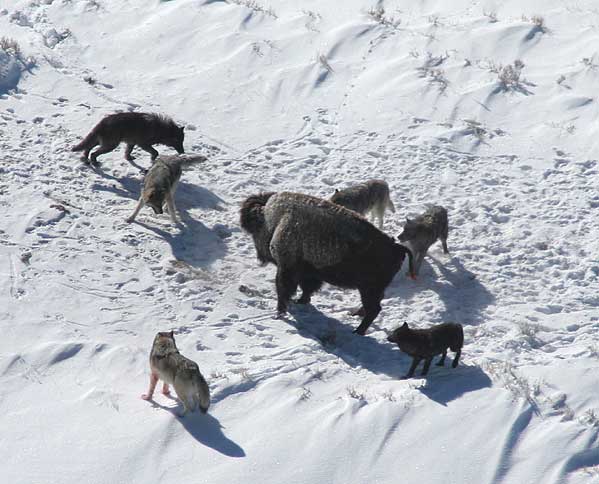
The pack is typically a nuclear family unit. It often consists of 5–10 (though in areas of high prey abundance can be up to 30) mostly related individuals, specifically consisting of a typically unrelated breeding pair, their offspring, and occasionally a handful of other wolves which can be related or not. Membership may be fluid and is subject to change. Outside wolves may be shunned or, more rarely, accepted, depending on the specific circumstances. Genetic variability can become limited within such an interrelated group, and so conditions for gene flow must exist. Outside wolves can provide these opportunities. A pack may accept another wolf into their group if it is a distant relative, if reproduction rates are low due to the loss or infertility of an alpha, or if their numbers are significantly reduced.[failed verification]
Characterisation of wolves into dominance hierarchies of alpha, beta, and omega was based on behavioural studies of unrelated wolves in captivity, and this assemblage largely does not apply to natural wolf packs, which are familial units.
These singular outside wolves, often referred to as lone wolves, are vulnerable to food scarcity and territorial attacks and generally comprise less than 15% of the total wolf population. Lone wolves usually result from sexually mature offspring leaving their parental pack, though may also occur if harassed subordinates chose to disperse. In times of prey scarcity, low-ranking wolves may choose to go off on their own if the pack cannot supply sufficient food. These lone wolves may then attempt to join an existing wolf pack or, more commonly, find a mate and begin a new pack family as the alphas.[obsolete source]
Within the wolf pack, the breeding pair or the dominant breeding pair (in packs with multiple breeders), often referred to in familiar language as the "alpha pair" or the "alpha wolves", are typically the members of the family unit which breed and produce offspring; they are the matriarch and patriarch of the family. It was previously believed to be common for an aging or sick alpha to be replaced by one of their offspring, but more recent studies have shown this incestuous behaviour to be very rare.
Pack (canine)
A pack is a social group of conspecific canines. The number of members in a pack and their social behavior varies from species to species. Social structure is very important in a pack. Canine packs are led by a breeding pair.
Wolves are recognized for creating cooperative relationships within their pack structure, which significantly influence their interactions with one another, perhaps as a reflection of the relationships they present in the pack, reflecting any tension, cooperation, and competition present. Tensions are noted to become higher around breeding season. This is due to increased opportunities for reproduction. Individuals challenge the group hierarchy to gain better-quality mates. This leads to greater intraspecific competition and rising tensions. Female wolves are known for being the main initiators of affiliative interactions, though a small percentage of males will initiate affiliative interactions. The omega male is not a target of any affiliative interaction. In other studies, researchers have separated the most dominant wolf from the most subordinate wolves. It was recorded that the dominant wolf spent less time sleeping and showed more behavioural stress compared to the omega wolf. The dominant wolf was reported to rest in the section of his enclosure closest to his pack. Furthermore, researchers noted that younger, more subordinate wolves appear to have less attachment to their pack compared to their higher-ranking compatriots.
Cooperation is essential for tasks such as hunting and protecting the young, though the level of attachment present in the pack is not necessarily equal. The majority of wolves are known for dispersing from their birth pack; this makes measuring attachment behavior within the packs difficult. There are cases in which wolves leave their pack, typically when accompanying siblings of the same sex. This behaviour is suggested to be adaptive, which will benefit pack mates in future conflicts.
All individuals benefit from being a member of the wolf pack; the weak are supported by the efforts of stronger wolves, and higher-ranking individuals enjoy better and larger kills than could be taken on their own. Protection is granted by sheer number, and larger, more plentiful territory can be won and sustained. Care and protection of the young are shared, and knowledge can be passed down through generations, creating a unique culture within each group
The pack is typically a nuclear family unit. It often consists of 5–10 (though in areas of high prey abundance can be up to 30) mostly related individuals, specifically consisting of a typically unrelated breeding pair, their offspring, and occasionally a handful of other wolves which can be related or not. Membership may be fluid and is subject to change. Outside wolves may be shunned or, more rarely, accepted, depending on the specific circumstances. Genetic variability can become limited within such an interrelated group, and so conditions for gene flow must exist. Outside wolves can provide these opportunities. A pack may accept another wolf into their group if it is a distant relative, if reproduction rates are low due to the loss or infertility of an alpha, or if their numbers are significantly reduced.[failed verification]
Characterisation of wolves into dominance hierarchies of alpha, beta, and omega was based on behavioural studies of unrelated wolves in captivity, and this assemblage largely does not apply to natural wolf packs, which are familial units.
These singular outside wolves, often referred to as lone wolves, are vulnerable to food scarcity and territorial attacks and generally comprise less than 15% of the total wolf population. Lone wolves usually result from sexually mature offspring leaving their parental pack, though may also occur if harassed subordinates chose to disperse. In times of prey scarcity, low-ranking wolves may choose to go off on their own if the pack cannot supply sufficient food. These lone wolves may then attempt to join an existing wolf pack or, more commonly, find a mate and begin a new pack family as the alphas.[obsolete source]
Within the wolf pack, the breeding pair or the dominant breeding pair (in packs with multiple breeders), often referred to in familiar language as the "alpha pair" or the "alpha wolves", are typically the members of the family unit which breed and produce offspring; they are the matriarch and patriarch of the family. It was previously believed to be common for an aging or sick alpha to be replaced by one of their offspring, but more recent studies have shown this incestuous behaviour to be very rare.
Recent media
Recent media