



Community hub
Recent from talks
Knowledge base stats:
Talk channels stats:
Members stats:
Padstow Lifeboat Station
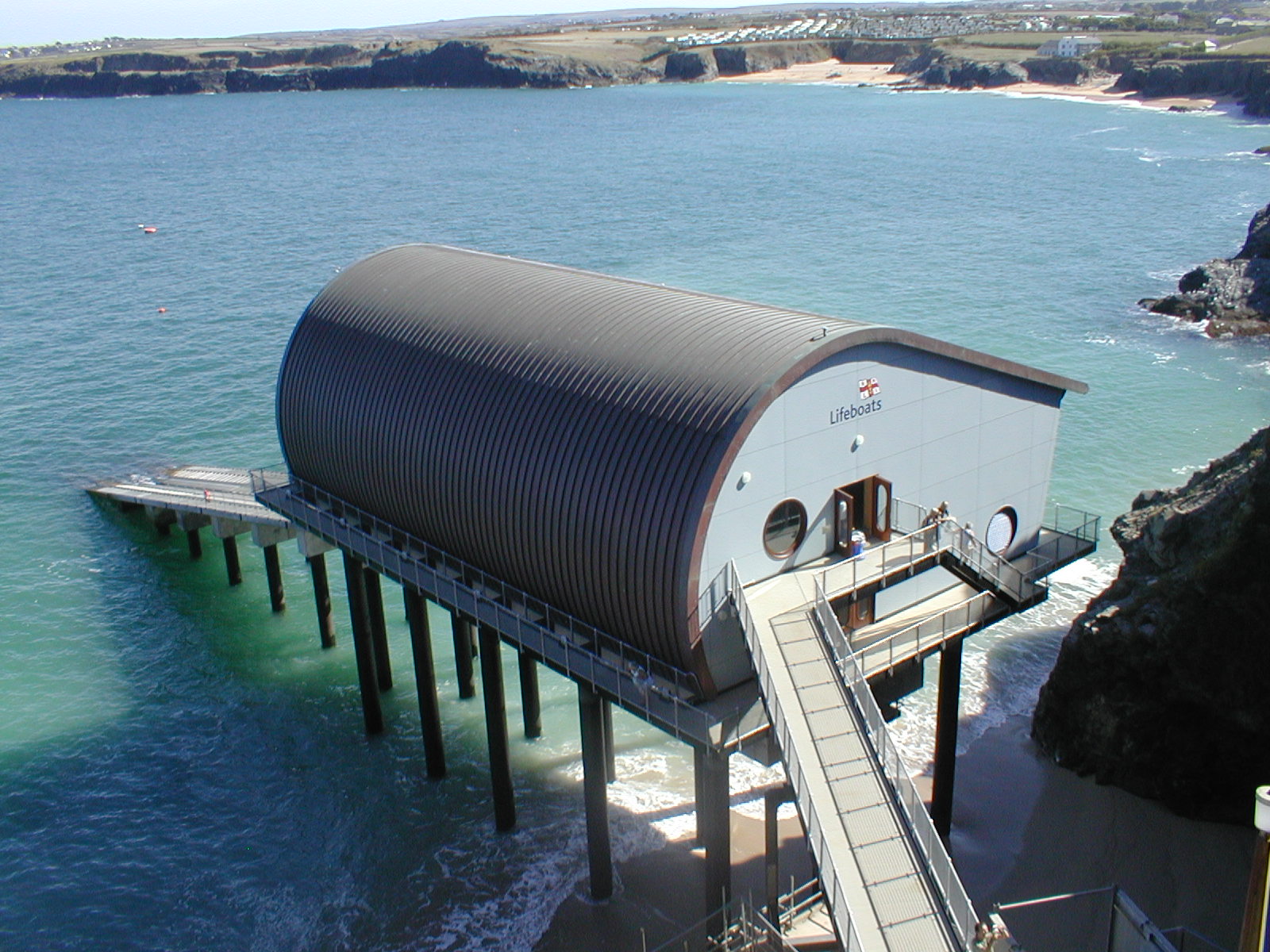
Padstow Lifeboat Station has been at Trevose Head west of Padstow, Cornwall, since 1967. Before that it was at Hawker's Cove on the Camel estuary between the town and the sea. The lifeboat station is run by the Royal National Lifeboat Institution (RNLI), and since 2006 has been the base for Tamar-class RNLB Spirit of Padstow.
The entrance to the River Camel is difficult to navigate because of the Doom Bar sandbank. This, and the steep cliffs and rocks along coast either side of the estuary, have been the site of many shipwrecks. In 1827 a small double-ended lifeboat was built by a local boat builder for £50, £10 of which was provided by the National Institution for the Preservation of Life from Shipwreck (as the RNLI was known at the time) and the remainder from local people. The Padstow Harbour Association for the Preservation of Life and Property from Shipwreck was founded at a public meeting on 11 November 1829. Funding came from Lloyd's of London and several companies involved in shipping along the coast. Equipment was provided to help vessels enter and leave the estuary; Manby's mortars were provided to help crews escape shipwrecks, and a boathouse was built at Hawker's Cove for the lifeboat which was closer to the Doom Bar than the quay where it had previously been kept.
The Harbour Association's lifeboat was in poor condition by 1855 and so the RNLI undertook to provide a new one. It arrived at Padstow on 3 June 1856 and kept in the boathouse at Hawker's Cove. A larger lifeboat was provided in 1864 for which a new boathouse was built at Hawker's Cove next to the earlier one. The lifeboat capsized on 6 February 1867 while attempting to rescue the crew of a schooner, resulting in the deaths of five of the lifeboat crew.
The lifeboats were often taken overland to alternative launch sites, either because the weather prevented crossing the Doom Bar, or to be nearer to the ship to be aided. A carriage house was built in Trethillick Lane in 1883. When it was required, the carriage was taken from here to the harbour and the lifeboat rowed up from Hawker's Cove and loaded onto the carriage. Horses for the carriage were borrowed from farmers. 1899 saw a change in the way Padstow lifeboats were operated. The 'pulling and sailing' lifeboat continued to be kept in the boathouse, but a new Steam-class lifeboat was moored in the estuary which could operate further from the station or in bad weather. Both lifeboats were lost on 11 April 1900 when they were called out to a fishing boat that had run aground. The smaller lifeboat was replaced by a similar boat, but the steam lifeboat was replaced by a steam tug and a larger 'pulling and sailing' lifeboat that usually worked as a pair.
A motor lifeboat replaced the steam tug and its lifeboat in May 1929, and a smaller motor lifeboat took up the Hawker's Cove station in 1931 where a new boathouse and slipway were built. The small lifeboat in the boathouse had always been known as 'Padstow No.1' and the larger one moored in the harbour was 'Padstow No.2', but in 1938 the numbers were reversed with the larger boat becoming 'Padstow No.1'. Hawker's Cove was closed on 31 March 1962 due to silting, the other lifeboat now working from the harbour on its own.
Silting around Hawker's Cove and the Doom Bar made it increasingly difficult to reach the sea, so a new boathouse was built at Trevose Head, on the coast to the west of Padstow. The lifeboat was launched down a 348 ft (106 m) roller slipway with an incline of 1 in 5½. It became operational on 23 October 1967 and Malcolm Arnold wrote the ‘Padstow Lifeboat March’ to mark the occasion. The boathouse at Trevose Head was replaced by a new one which was built alongside and opened on 17 July 2006. This had a 75 m (246 ft) slipway at an incline on 1 in 5. Meanwhile, in 1994, an inshore lifeboat station had been opened at Rock to provide cover in the estuary and close inshore.
13 lifeboat crew have been killed in two separate incidents at Padstow.
On 6 February 1867 the RNLB Albert Edward went out to the schooner Georgiana which was caught in a gale while on its way from Rouen to Cork. Five of the lifeboat crew (Daniel Shea, William Intross, Thomas Varco, Andrew Truscott and Michael Crennel) drowned after it capsized. The five people on the Georgiana managed to get ashore after it ran aground and the lifeboat righted itself and was repaired. A memorial to the men who died was placed on the wall of Padstow church.
Hub AI
Padstow Lifeboat Station AI simulator
(@Padstow Lifeboat Station_simulator)
Padstow Lifeboat Station
Padstow Lifeboat Station has been at Trevose Head west of Padstow, Cornwall, since 1967. Before that it was at Hawker's Cove on the Camel estuary between the town and the sea. The lifeboat station is run by the Royal National Lifeboat Institution (RNLI), and since 2006 has been the base for Tamar-class RNLB Spirit of Padstow.
The entrance to the River Camel is difficult to navigate because of the Doom Bar sandbank. This, and the steep cliffs and rocks along coast either side of the estuary, have been the site of many shipwrecks. In 1827 a small double-ended lifeboat was built by a local boat builder for £50, £10 of which was provided by the National Institution for the Preservation of Life from Shipwreck (as the RNLI was known at the time) and the remainder from local people. The Padstow Harbour Association for the Preservation of Life and Property from Shipwreck was founded at a public meeting on 11 November 1829. Funding came from Lloyd's of London and several companies involved in shipping along the coast. Equipment was provided to help vessels enter and leave the estuary; Manby's mortars were provided to help crews escape shipwrecks, and a boathouse was built at Hawker's Cove for the lifeboat which was closer to the Doom Bar than the quay where it had previously been kept.
The Harbour Association's lifeboat was in poor condition by 1855 and so the RNLI undertook to provide a new one. It arrived at Padstow on 3 June 1856 and kept in the boathouse at Hawker's Cove. A larger lifeboat was provided in 1864 for which a new boathouse was built at Hawker's Cove next to the earlier one. The lifeboat capsized on 6 February 1867 while attempting to rescue the crew of a schooner, resulting in the deaths of five of the lifeboat crew.
The lifeboats were often taken overland to alternative launch sites, either because the weather prevented crossing the Doom Bar, or to be nearer to the ship to be aided. A carriage house was built in Trethillick Lane in 1883. When it was required, the carriage was taken from here to the harbour and the lifeboat rowed up from Hawker's Cove and loaded onto the carriage. Horses for the carriage were borrowed from farmers. 1899 saw a change in the way Padstow lifeboats were operated. The 'pulling and sailing' lifeboat continued to be kept in the boathouse, but a new Steam-class lifeboat was moored in the estuary which could operate further from the station or in bad weather. Both lifeboats were lost on 11 April 1900 when they were called out to a fishing boat that had run aground. The smaller lifeboat was replaced by a similar boat, but the steam lifeboat was replaced by a steam tug and a larger 'pulling and sailing' lifeboat that usually worked as a pair.
A motor lifeboat replaced the steam tug and its lifeboat in May 1929, and a smaller motor lifeboat took up the Hawker's Cove station in 1931 where a new boathouse and slipway were built. The small lifeboat in the boathouse had always been known as 'Padstow No.1' and the larger one moored in the harbour was 'Padstow No.2', but in 1938 the numbers were reversed with the larger boat becoming 'Padstow No.1'. Hawker's Cove was closed on 31 March 1962 due to silting, the other lifeboat now working from the harbour on its own.
Silting around Hawker's Cove and the Doom Bar made it increasingly difficult to reach the sea, so a new boathouse was built at Trevose Head, on the coast to the west of Padstow. The lifeboat was launched down a 348 ft (106 m) roller slipway with an incline of 1 in 5½. It became operational on 23 October 1967 and Malcolm Arnold wrote the ‘Padstow Lifeboat March’ to mark the occasion. The boathouse at Trevose Head was replaced by a new one which was built alongside and opened on 17 July 2006. This had a 75 m (246 ft) slipway at an incline on 1 in 5. Meanwhile, in 1994, an inshore lifeboat station had been opened at Rock to provide cover in the estuary and close inshore.
13 lifeboat crew have been killed in two separate incidents at Padstow.
On 6 February 1867 the RNLB Albert Edward went out to the schooner Georgiana which was caught in a gale while on its way from Rouen to Cork. Five of the lifeboat crew (Daniel Shea, William Intross, Thomas Varco, Andrew Truscott and Michael Crennel) drowned after it capsized. The five people on the Georgiana managed to get ashore after it ran aground and the lifeboat righted itself and was repaired. A memorial to the men who died was placed on the wall of Padstow church.