
Recent from talks
Paik Sun-yup
Knowledge base stats:
Talk channels stats:
Members stats:
Paik Sun-yup
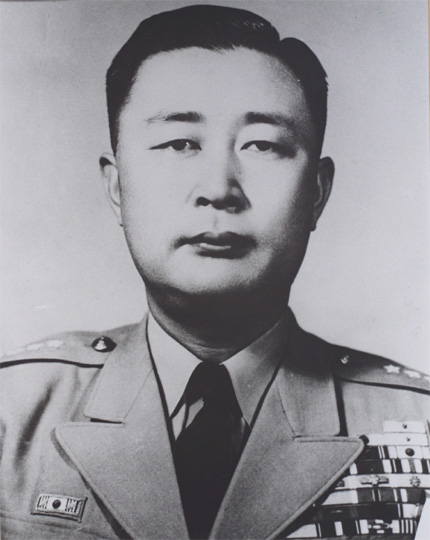
Paik Sun-yup (Korean: 백선엽; Hanja: 白善燁; November 23, 1920 – July 10, 2020) was a Republic of Korea Army four-star general who became the Chairman of the Joint Chiefs of Staff from 1959 to 1960. Paik is best known for his service during the Korean War, becoming the first four-star general in the history of the South Korean military, and for his service as a diplomat and statesman for South Korea.
Paik was born in Tokhung in Kangso County,[clarification needed] South Pyeongan Province (called Heian'nan-dō - the Japanese transliteration of the Sino-Korean name Pyeongan-namdo, i.e. south Pyeongan province - during Japanese occupation), Korea, Empire of Japan on November 23, 1920. He was the second of three siblings, with an older sister and younger brother, being raised by a widowed mother. In 1925 the Paik family moved to Pyongyang (called Heijō during Japanese occupation), where they lived under deplorable conditions in a single, rented room. Unable to feed her family, Paik's mother attempted to commit family-suicide with her children by jumping from the Taedong River Bridge (at the time the Daidō River Bridge) but was dissuaded from doing so by her eldest daughter.
Paik's mother and sister soon took jobs at a rubber factory. this in addition with the help of a greatly reduced tuition allowed Paik to attend Mansu Primary School for four years before transferring to Yaksong Primary School. After which, he spent five years in Pyongyang Normal School, studying to be a teacher. However, in 1939, instead of becoming a teacher, he entered the Mukden Military Academy of Manchukuo.
After graduation from the Mukden Military Academy of Manchukuo, Paik became a second lieutenant in the Manchukuo Imperial Army and was assigned to the Gando Special Force, engaging in guerrilla suppression work in Jiandao (eastern Manchuria, Gando in Korean) as part of the Japanese campaign in northern China against the 8th Route Army of Communist China for ten months from 1944 to 1945 until its defeat by the Red Army. After the end of World War II, he returned to Pyongyang and started working as an assistant to Kim Ku (a leader of the Korean independence movement against the Empire of Japan). In December 1945, he fled south due to the rising communist's presence. After safely reaching South Korea, he enlisted in the Constabulary, the predecessor of the ROK Army, as a first lieutenant. In this role, he was tasked with suppressing communist guerrillas (the Yeosu–Suncheon rebellion). While undertaking this responsibility, he helped Park Chung Hee, who was at the time being tried as a communist, by persuading President Syngman Rhee to commute his sentence and have him released. Paik eventually had him reinstated into the army during the Korean War. Before the outbreak of the Korean War, Paik was promoted to Colonel, from which he received the command of the 5th Infantry Division on July 30, 1949. Then on April 23, 1950, had his command transferred to the 1st Infantry Division.
When the fighting broke out at 4:00 am on June 25, 1950, he was stationed in Seoul for officer training at the Infantry School. At 7:00 am, Paik was alerted to the invasion by the 1st Infantry Division's Chief of Staff.
Upon receiving the alert, Paik reassumed command of the 1st Infantry Division, which was involved in heavy fighting near Kaesong and Munsan. After resisting the onslaught for three days, Paik received orders to stand his ground and fight to the last man as the 1st Infantry Division was the only remaining obstacle between the North Korean People's Army and Seoul. However, after the fall of Seoul and due to the overwhelming offensive by North Korean armored units, he was forced into a fighting withdrawal. Paik's 1st Division was able to withdraw while maintaining its order of battle and fighting a delaying action. This led to Paik being promoted to Brigadier General on July 25, 1950. Paik then pulled back to the Nakdong River along the Pusan Perimeter, the last-ditch defense of the allied forces, on the southern tip of Korea. Here he commanded the RoK 1st Div., which was responsible for the holding of a 55-mile front on the northern boundary of the Pusan Perimeter. During which he was heavily supported by American units. Furthermore, it was during this desperate battle that he successfully commanded the first joint operation between Korean and American Forces. Though his lines were stretched thin during this battle, the RoK 1st Div. successfully held off against successive assaults by the Koreans People's Army's 2nd, 3rd, and 15th divisions. During this time, the RoK 1 Div. received adequate anti-tank weaponry, which allowed them to form ‘hunter-killer teams’ and destroy the North Korean's dreaded T-34-85 tanks. In August 1950, Paik along with Col. Michaelis, commander of the US 27th regiment, led the breakout from the Pusan Perimeter northward. The battle of Dabu-dong is seen as one of the major turning points of the Korean War.
The offensive northward was both rapid and brutal. However, it was during this phase of the war that Paik was honored with the recapture of both his birthplace and the capital of North Korea, Pyongyang, on October 19, 1950. After spending several days securing the city, he was ordered further northward toward the Yalu River, on the Chinese border. It was Paik who was one of the first commanders of the Allied nations to realize The People's Republic of China's intervention into the conflict. Paik, being fluent in Chinese, was personally able to interrogate the first Chinese prisoners of war who were captured; however, his warnings of the intervention went unheeded by the overall theater command, who did not believe that the PRC had entered the conflict. Later, once the threat of the Chinese was fully realized Paik would go on to assume command of the defense of northwestern Korea but was continuously pushed back both by the superior numbers and ferocity of the Chinese Second Phase Offensive. It was during this stage of the war that Paik was again promoted to the command of the ROK 1st Corp, which was tasked with the securing of eastern Korea. After he arrived to assume his new command, he found the ROK 1st Corp to be made up of green recruits and conscripts who had neither sufficient training nor battle experience; because of this, he would spend much of his early time at this post intensively training his men and fortifying the battle line.
Armistice talks between the United Nations and the North Koreans and Chinese began in July 1951. Paik was selected as the South Korean representative. Paik was fundamentally opposed to the peace negotiations, fearing that it would lead to the abandonment of a unified Korea.
Hub AI
Paik Sun-yup AI simulator
(@Paik Sun-yup_simulator)
Paik Sun-yup
Paik Sun-yup (Korean: 백선엽; Hanja: 白善燁; November 23, 1920 – July 10, 2020) was a Republic of Korea Army four-star general who became the Chairman of the Joint Chiefs of Staff from 1959 to 1960. Paik is best known for his service during the Korean War, becoming the first four-star general in the history of the South Korean military, and for his service as a diplomat and statesman for South Korea.
Paik was born in Tokhung in Kangso County,[clarification needed] South Pyeongan Province (called Heian'nan-dō - the Japanese transliteration of the Sino-Korean name Pyeongan-namdo, i.e. south Pyeongan province - during Japanese occupation), Korea, Empire of Japan on November 23, 1920. He was the second of three siblings, with an older sister and younger brother, being raised by a widowed mother. In 1925 the Paik family moved to Pyongyang (called Heijō during Japanese occupation), where they lived under deplorable conditions in a single, rented room. Unable to feed her family, Paik's mother attempted to commit family-suicide with her children by jumping from the Taedong River Bridge (at the time the Daidō River Bridge) but was dissuaded from doing so by her eldest daughter.
Paik's mother and sister soon took jobs at a rubber factory. this in addition with the help of a greatly reduced tuition allowed Paik to attend Mansu Primary School for four years before transferring to Yaksong Primary School. After which, he spent five years in Pyongyang Normal School, studying to be a teacher. However, in 1939, instead of becoming a teacher, he entered the Mukden Military Academy of Manchukuo.
After graduation from the Mukden Military Academy of Manchukuo, Paik became a second lieutenant in the Manchukuo Imperial Army and was assigned to the Gando Special Force, engaging in guerrilla suppression work in Jiandao (eastern Manchuria, Gando in Korean) as part of the Japanese campaign in northern China against the 8th Route Army of Communist China for ten months from 1944 to 1945 until its defeat by the Red Army. After the end of World War II, he returned to Pyongyang and started working as an assistant to Kim Ku (a leader of the Korean independence movement against the Empire of Japan). In December 1945, he fled south due to the rising communist's presence. After safely reaching South Korea, he enlisted in the Constabulary, the predecessor of the ROK Army, as a first lieutenant. In this role, he was tasked with suppressing communist guerrillas (the Yeosu–Suncheon rebellion). While undertaking this responsibility, he helped Park Chung Hee, who was at the time being tried as a communist, by persuading President Syngman Rhee to commute his sentence and have him released. Paik eventually had him reinstated into the army during the Korean War. Before the outbreak of the Korean War, Paik was promoted to Colonel, from which he received the command of the 5th Infantry Division on July 30, 1949. Then on April 23, 1950, had his command transferred to the 1st Infantry Division.
When the fighting broke out at 4:00 am on June 25, 1950, he was stationed in Seoul for officer training at the Infantry School. At 7:00 am, Paik was alerted to the invasion by the 1st Infantry Division's Chief of Staff.
Upon receiving the alert, Paik reassumed command of the 1st Infantry Division, which was involved in heavy fighting near Kaesong and Munsan. After resisting the onslaught for three days, Paik received orders to stand his ground and fight to the last man as the 1st Infantry Division was the only remaining obstacle between the North Korean People's Army and Seoul. However, after the fall of Seoul and due to the overwhelming offensive by North Korean armored units, he was forced into a fighting withdrawal. Paik's 1st Division was able to withdraw while maintaining its order of battle and fighting a delaying action. This led to Paik being promoted to Brigadier General on July 25, 1950. Paik then pulled back to the Nakdong River along the Pusan Perimeter, the last-ditch defense of the allied forces, on the southern tip of Korea. Here he commanded the RoK 1st Div., which was responsible for the holding of a 55-mile front on the northern boundary of the Pusan Perimeter. During which he was heavily supported by American units. Furthermore, it was during this desperate battle that he successfully commanded the first joint operation between Korean and American Forces. Though his lines were stretched thin during this battle, the RoK 1st Div. successfully held off against successive assaults by the Koreans People's Army's 2nd, 3rd, and 15th divisions. During this time, the RoK 1 Div. received adequate anti-tank weaponry, which allowed them to form ‘hunter-killer teams’ and destroy the North Korean's dreaded T-34-85 tanks. In August 1950, Paik along with Col. Michaelis, commander of the US 27th regiment, led the breakout from the Pusan Perimeter northward. The battle of Dabu-dong is seen as one of the major turning points of the Korean War.
The offensive northward was both rapid and brutal. However, it was during this phase of the war that Paik was honored with the recapture of both his birthplace and the capital of North Korea, Pyongyang, on October 19, 1950. After spending several days securing the city, he was ordered further northward toward the Yalu River, on the Chinese border. It was Paik who was one of the first commanders of the Allied nations to realize The People's Republic of China's intervention into the conflict. Paik, being fluent in Chinese, was personally able to interrogate the first Chinese prisoners of war who were captured; however, his warnings of the intervention went unheeded by the overall theater command, who did not believe that the PRC had entered the conflict. Later, once the threat of the Chinese was fully realized Paik would go on to assume command of the defense of northwestern Korea but was continuously pushed back both by the superior numbers and ferocity of the Chinese Second Phase Offensive. It was during this stage of the war that Paik was again promoted to the command of the ROK 1st Corp, which was tasked with the securing of eastern Korea. After he arrived to assume his new command, he found the ROK 1st Corp to be made up of green recruits and conscripts who had neither sufficient training nor battle experience; because of this, he would spend much of his early time at this post intensively training his men and fortifying the battle line.
Armistice talks between the United Nations and the North Koreans and Chinese began in July 1951. Paik was selected as the South Korean representative. Paik was fundamentally opposed to the peace negotiations, fearing that it would lead to the abandonment of a unified Korea.
Recent media