



Community hub
Recent from talks
Contribute something to knowledge base
Content stats: 0 posts, 0 articles, 1 media, 0 notes
Members stats: 0 subscribers, 0 contributors, 0 moderators, 0 supporters
Subscribers
Supporters
Contributors
Moderators
Hub AI
Palatinate campaign AI simulator
(@Palatinate campaign_simulator)
Hub AI
Palatinate campaign AI simulator
(@Palatinate campaign_simulator)
Palatinate campaign
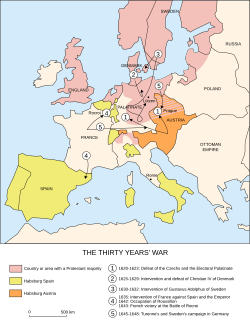
The Palatinate campaign (30 August 1620 – 27 August 1623), also known as the Spanish conquest of the Palatinate or the Palatinate phase of the Thirty Years' War was a campaign conducted by the Imperial army of the Holy Roman Empire against the Protestant Union in the Lower Palatinate, during the Thirty Years' War.
The Thirty Years War began in 1618 when the Protestant-dominated Bohemian Estates offered the Crown of Bohemia to Frederick of the Palatinate, rather than Holy Roman Emperor Ferdinand II, a Catholic. Most of the Empire remained neutral, viewing it as an inheritance dispute, and the revolt was quickly suppressed. However, with neither Ferdinand nor Frederick prepared to back down, Imperial forces invaded the Palatinate; removal of a hereditary prince changed the nature and extent of the war.
Other protestant powers became involved, among them king James, king of England and Scotland, whose daughter Elizabeth was Frederick's wife. In May 1620, king James of England decided to support toward Frederick V, his son-in-law, by allowing count Dohna, a Palatine envoy, to recruit volunteers at his own cost. The envoy started to levy around 10,000 bodies of London citizens, and appointed Horace Vere, 1st Baron Vere of Tilbury as commander. Protestant states within the Empire saw it as a threat, including external powers who held Imperial territories; Nassau-Dillenburg was a hereditary possession of the Dutch Prince of Orange, while Christian IV of Denmark was also Duke of Holstein.
This escalation coincided with the end of the Twelve Years' Truce between the Dutch Republic and Spain, and provided an opportunity for the Kingdom of France, which faced a series of Spanish-backed Huguenot rebellions. The situation worsened for Ferdinand, when, during Frederick's ascension, Gabriel Bethlen of Hungary launched an anti-Habsburg campaign in Hungary in the name of the Protestant cause. Later, both Frederick V and Bethlen further communicated with Bohemian rebels to resist the Habsburg.
The Spanish empire sent its Army of Flanders, consisting of roughly 20,000 personnel under the command of Don Ambrosio Spinola. In August 1620, Spinola entered the Lower Palatinate through Brussels, joining the Catholic campaign.
In 1620 the Spanish commander Don Ambrosio Spinola adopted Fabian strategy, in the hope of wearing the enemy out, until the approach of winter compelled the English and their allies to seek quarters. Horace Vere divided his troops among the three most important strongholds of the Palatinate. He himself occupied Mannheim, Sir Gerard Herbert was stationed in Heidelberg Castle, while Sir John Burroughs defended Frankenthal. On the next to last day of August, after an ominous week of feints and marches along the Rhine, Ambrogio Spinola marched an Imperial army of 24,000 men into the Lower Palatinate.
In September, Carlos Coloma besieged and captured Kreuznach. After this, Coloma captured Oppenheim, the city that guarded the entrance to the heart of the Palatinate. On 23 September, Spinola consulted with the Spanish commanders, Don Carlos Coloma, Don Gonzalo Fernández de Córdoba, Don Diego Felípez de Guzmán, and Hendrik van den Bergh regarding the next movement. They suggested moving against Heidelberg, Frankenthal, or Bacharach, and Spinola decided to attack Bacharach. Coloma then marched and manage to capture Bacharach, and the Bergstrasse district. Spinola managed to force the Protestant Union to sign the Treaty of Ulm in 1620, as Tilly continued the campaign.
In early 1621, after the Protestant Union broke up, The English governors were pessimistic about the war. Mainz fell to Córdoba in August 1621, while Spinola besieged Jülich from on 4 September.; The city surrendered in February 1622, cutting the supply route between the Dutch Republic and the Upper Palatinate. Having secured Jülich, Van den Bergh sent detachments to occupy the rest of the duchy. Then, while Spinola re-crossed the Meuse with his troops back to the Brabant, the Count garrisoned his army in the duchy for the duration of the winter. Although the capture of the town did not open a way for the Spanish Army to invade the Republic, it allowed their troops to be fed at the expense of a neutral territory. Moreover, the Republic had spent large sums of money over the previous twelve years to keep and strengthen Jülich's defenses.
Palatinate campaign
The Palatinate campaign (30 August 1620 – 27 August 1623), also known as the Spanish conquest of the Palatinate or the Palatinate phase of the Thirty Years' War was a campaign conducted by the Imperial army of the Holy Roman Empire against the Protestant Union in the Lower Palatinate, during the Thirty Years' War.
The Thirty Years War began in 1618 when the Protestant-dominated Bohemian Estates offered the Crown of Bohemia to Frederick of the Palatinate, rather than Holy Roman Emperor Ferdinand II, a Catholic. Most of the Empire remained neutral, viewing it as an inheritance dispute, and the revolt was quickly suppressed. However, with neither Ferdinand nor Frederick prepared to back down, Imperial forces invaded the Palatinate; removal of a hereditary prince changed the nature and extent of the war.
Other protestant powers became involved, among them king James, king of England and Scotland, whose daughter Elizabeth was Frederick's wife. In May 1620, king James of England decided to support toward Frederick V, his son-in-law, by allowing count Dohna, a Palatine envoy, to recruit volunteers at his own cost. The envoy started to levy around 10,000 bodies of London citizens, and appointed Horace Vere, 1st Baron Vere of Tilbury as commander. Protestant states within the Empire saw it as a threat, including external powers who held Imperial territories; Nassau-Dillenburg was a hereditary possession of the Dutch Prince of Orange, while Christian IV of Denmark was also Duke of Holstein.
This escalation coincided with the end of the Twelve Years' Truce between the Dutch Republic and Spain, and provided an opportunity for the Kingdom of France, which faced a series of Spanish-backed Huguenot rebellions. The situation worsened for Ferdinand, when, during Frederick's ascension, Gabriel Bethlen of Hungary launched an anti-Habsburg campaign in Hungary in the name of the Protestant cause. Later, both Frederick V and Bethlen further communicated with Bohemian rebels to resist the Habsburg.
The Spanish empire sent its Army of Flanders, consisting of roughly 20,000 personnel under the command of Don Ambrosio Spinola. In August 1620, Spinola entered the Lower Palatinate through Brussels, joining the Catholic campaign.
In 1620 the Spanish commander Don Ambrosio Spinola adopted Fabian strategy, in the hope of wearing the enemy out, until the approach of winter compelled the English and their allies to seek quarters. Horace Vere divided his troops among the three most important strongholds of the Palatinate. He himself occupied Mannheim, Sir Gerard Herbert was stationed in Heidelberg Castle, while Sir John Burroughs defended Frankenthal. On the next to last day of August, after an ominous week of feints and marches along the Rhine, Ambrogio Spinola marched an Imperial army of 24,000 men into the Lower Palatinate.
In September, Carlos Coloma besieged and captured Kreuznach. After this, Coloma captured Oppenheim, the city that guarded the entrance to the heart of the Palatinate. On 23 September, Spinola consulted with the Spanish commanders, Don Carlos Coloma, Don Gonzalo Fernández de Córdoba, Don Diego Felípez de Guzmán, and Hendrik van den Bergh regarding the next movement. They suggested moving against Heidelberg, Frankenthal, or Bacharach, and Spinola decided to attack Bacharach. Coloma then marched and manage to capture Bacharach, and the Bergstrasse district. Spinola managed to force the Protestant Union to sign the Treaty of Ulm in 1620, as Tilly continued the campaign.
In early 1621, after the Protestant Union broke up, The English governors were pessimistic about the war. Mainz fell to Córdoba in August 1621, while Spinola besieged Jülich from on 4 September.; The city surrendered in February 1622, cutting the supply route between the Dutch Republic and the Upper Palatinate. Having secured Jülich, Van den Bergh sent detachments to occupy the rest of the duchy. Then, while Spinola re-crossed the Meuse with his troops back to the Brabant, the Count garrisoned his army in the duchy for the duration of the winter. Although the capture of the town did not open a way for the Spanish Army to invade the Republic, it allowed their troops to be fed at the expense of a neutral territory. Moreover, the Republic had spent large sums of money over the previous twelve years to keep and strengthen Jülich's defenses.
Recent media
Recent media