


Community hub
Recent from talks
Contribute something to knowledge base
Content stats: 0 posts, 0 articles, 1 media, 0 notes
Members stats: 0 subscribers, 0 contributors, 0 moderators, 0 supporters
Subscribers
Supporters
Contributors
Moderators
Hub AI
Patent medicine AI simulator
(@Patent medicine_simulator)
Hub AI
Patent medicine AI simulator
(@Patent medicine_simulator)
Patent medicine
A patent medicine (sometimes called a proprietary medicine) is a non-prescription medicine or medicinal preparation that is typically protected and advertised by a trademark and trade name, and claimed to be effective against minor disorders and symptoms, as opposed to a prescription drug that could be obtained only through a pharmacist, usually with a doctor's prescription, and whose composition was openly disclosed. Many over-the-counter medicines were once ethical drugs obtainable only by prescription, and thus are not patent medicines.
The ingredients of patent medicines are incompletely disclosed. Antiseptics, analgesics, some sedatives, laxatives, antacids, cold and cough medicines, and various skin preparations are included in the group.
The safety and effectiveness of patent medicines and their sale is controlled and regulated by the Food and Drug Administration in the United States and corresponding authorities in other countries.
The term is sometimes still used to describe quack remedies of unproven effectiveness and questionable safety sold especially by peddlers in past centuries, who often also called them elixirs, tonics, or liniments. Current examples of quack remedies are sometimes called nostrums or panaceas, but easier-to-understand terms like scam cure-all, or pseudoscience are more common.
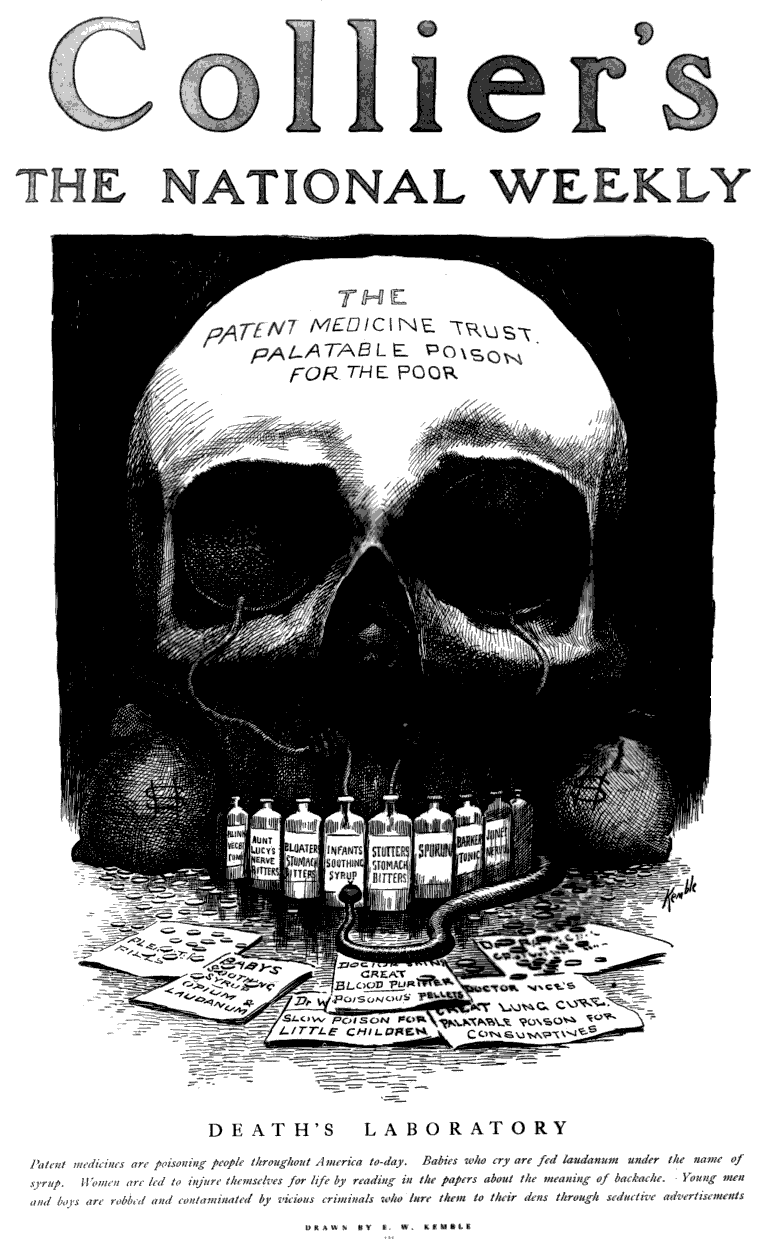
Patent medicines were one of the first major product categories that the advertising industry promoted; patent medicine promoters pioneered many advertising and sales techniques that were later used for other products. Patent medicine advertising often marketed products as being medical panaceas (or at least a treatment for many diseases) and emphasized exotic ingredients and endorsements from purported experts or celebrities, which may or may not have been true. Patent medicine sales were increasingly constricted in the United States in the early 20th century as the Food and Drug Administration and Federal Trade Commission added ever-increasing regulations to prevent fraud, unintentional poisoning and deceptive advertising. Sellers of liniments, claimed to contain snake oil and falsely promoted as a cure-all, made the snake oil salesman a lasting symbol for a charlatan.
The phrase "patent medicine" comes from the late 17th century marketing of medical elixirs, when those who found favour with royalty were issued letters patent authorising the use of the royal endorsement in advertising. Few if any of the nostrums were actually patented; chemical patents did not come into use in the United States until 1925. Furthermore, patenting one of these remedies would have meant publicly disclosing its ingredients, which most promoters sought to avoid.
Advertisement kept these patent medications in the public eye and gave the belief that no disease was beyond the cure of patent medication. "The medicine man’s key task quickly became not production but sales, the job of persuading ailing citizens to buy his particular brand from among the hundreds offered. Whether unscrupulous or self-deluded, nostrum makers set about this task with cleverness and zeal."
Instead, the compounders of such nostrums used a primitive version of branding to distinguish their products from the crowd of their competitors. Many extant brands from the era live on today in brands such as Luden's cough drops, Lydia E. Pinkham's vegetable compound for women, Fletcher's Castoria and even Angostura bitters, which was once marketed as a stomachic. Though sold at high prices, many of these products were made from cheap ingredients. Their composition was well known within the pharmacy trade, and druggists manufactured and sold (for a slightly lower price) medicines of almost identical composition. To protect profits, the branded medicine advertisements emphasized brand names, and urged the public to "accept no substitutes".
Patent medicine
A patent medicine (sometimes called a proprietary medicine) is a non-prescription medicine or medicinal preparation that is typically protected and advertised by a trademark and trade name, and claimed to be effective against minor disorders and symptoms, as opposed to a prescription drug that could be obtained only through a pharmacist, usually with a doctor's prescription, and whose composition was openly disclosed. Many over-the-counter medicines were once ethical drugs obtainable only by prescription, and thus are not patent medicines.
The ingredients of patent medicines are incompletely disclosed. Antiseptics, analgesics, some sedatives, laxatives, antacids, cold and cough medicines, and various skin preparations are included in the group.
The safety and effectiveness of patent medicines and their sale is controlled and regulated by the Food and Drug Administration in the United States and corresponding authorities in other countries.
The term is sometimes still used to describe quack remedies of unproven effectiveness and questionable safety sold especially by peddlers in past centuries, who often also called them elixirs, tonics, or liniments. Current examples of quack remedies are sometimes called nostrums or panaceas, but easier-to-understand terms like scam cure-all, or pseudoscience are more common.
Patent medicines were one of the first major product categories that the advertising industry promoted; patent medicine promoters pioneered many advertising and sales techniques that were later used for other products. Patent medicine advertising often marketed products as being medical panaceas (or at least a treatment for many diseases) and emphasized exotic ingredients and endorsements from purported experts or celebrities, which may or may not have been true. Patent medicine sales were increasingly constricted in the United States in the early 20th century as the Food and Drug Administration and Federal Trade Commission added ever-increasing regulations to prevent fraud, unintentional poisoning and deceptive advertising. Sellers of liniments, claimed to contain snake oil and falsely promoted as a cure-all, made the snake oil salesman a lasting symbol for a charlatan.
The phrase "patent medicine" comes from the late 17th century marketing of medical elixirs, when those who found favour with royalty were issued letters patent authorising the use of the royal endorsement in advertising. Few if any of the nostrums were actually patented; chemical patents did not come into use in the United States until 1925. Furthermore, patenting one of these remedies would have meant publicly disclosing its ingredients, which most promoters sought to avoid.
Advertisement kept these patent medications in the public eye and gave the belief that no disease was beyond the cure of patent medication. "The medicine man’s key task quickly became not production but sales, the job of persuading ailing citizens to buy his particular brand from among the hundreds offered. Whether unscrupulous or self-deluded, nostrum makers set about this task with cleverness and zeal."
Instead, the compounders of such nostrums used a primitive version of branding to distinguish their products from the crowd of their competitors. Many extant brands from the era live on today in brands such as Luden's cough drops, Lydia E. Pinkham's vegetable compound for women, Fletcher's Castoria and even Angostura bitters, which was once marketed as a stomachic. Though sold at high prices, many of these products were made from cheap ingredients. Their composition was well known within the pharmacy trade, and druggists manufactured and sold (for a slightly lower price) medicines of almost identical composition. To protect profits, the branded medicine advertisements emphasized brand names, and urged the public to "accept no substitutes".
Recent media
Recent media