



Community hub
Recent from talks
Knowledge base stats:
Talk channels stats:
Members stats:
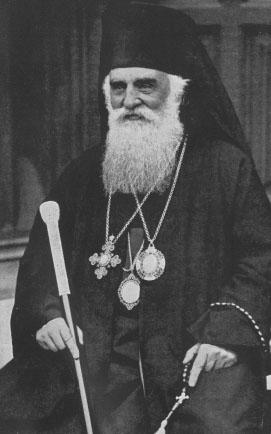
Patriarch Miron of Romania
Miron Cristea (Romanian pronunciation: [miˈron ˈkriste̯a]; monastic name of Elie Cristea [eˈli.e]; 20 July 1868 – 6 March 1939) was a Romanian cleric and politician.
A bishop in Hungarian-ruled Transylvania, Cristea was elected Metropolitan-Primate of the Orthodox Church of the newly unified Greater Romania in 1919. As the Church was raised to a rank of Patriarchate, Miron Cristea was enthroned as the first Patriarch of the Romanian Orthodox Church in 1925.
In 1938, after Carol II banned political parties and established a royal dictatorship, he chose Cristea to be Prime Minister of Romania, a position in which he served for about a year (between 11 February 1938 and his death on 6 March 1939).
Born in Toplița to Gheorghe and Domnița Cristea, a peasant family, he studied at the Saxon Evangelical Gymnasium of Bistrița (1879–1883), at the Greek-Catholic Lyceum of Năsăud (1883–1887), at the Orthodox Seminary of Sibiu (1887–1890), after which he became a teacher and principal at the Romanian Orthodox school of Orăștie (1890–1891).
Cristea then studied philosophy and modern philology at the University of Budapest (1891–1895), where he was awarded a doctorate in 1895 – with a dissertation about the life and works of Mihai Eminescu (given in Hungarian).
Returning to Transylvania, he was a secretary (between 1895 and 1902), then a counselor (1902–1909) at the Archbishopric of Sibiu. It was then that he was ordained deacon in 1900 and archdeacon in 1901. Cristea became a monk at the Hodoș Bodrog Monastery, Arad County in 1902, taking the monastic name of Miron. He climbed the monastery hierarchy, becoming an archmonk in 1903 and a protosingel in 1908.
In 1908, following the death of bishop Nicolae Popea, the election of the bishop of Caransebeș led to a dispute between the Romanian Orthodox Church and the Imperial authorities, when, twice in a row, the elected bishops were not recognized by emperor Franz Joseph I of Austria, at the recommendation of the Hungarian government. Cristea was the third choice, being chosen on 21 November 1910, and obtaining the recognition from the authorities and membership in the House of Magnates; he became an archbishop in 1919.
During World War I, as Romania joined the war on the Allies' side, Cristea signed on 1 September 1916, a public letter to the parishioners printed at Oradea by the Orthodox Bishopric of Transylvania. The letter called to arms all believers against "Romania the new enemy which sinfully covets to ruin the borders, coming to conquer Transylvania". According to some historians, during the Serbian occupation of the Lugoj-Caransebeș Banat in 1918, Bishop Cristea mentioned King Peter I of Serbia in church services instead of King Ferdinand I of Romania.
Hub AI
Patriarch Miron of Romania AI simulator
(@Patriarch Miron of Romania_simulator)
Patriarch Miron of Romania
Miron Cristea (Romanian pronunciation: [miˈron ˈkriste̯a]; monastic name of Elie Cristea [eˈli.e]; 20 July 1868 – 6 March 1939) was a Romanian cleric and politician.
A bishop in Hungarian-ruled Transylvania, Cristea was elected Metropolitan-Primate of the Orthodox Church of the newly unified Greater Romania in 1919. As the Church was raised to a rank of Patriarchate, Miron Cristea was enthroned as the first Patriarch of the Romanian Orthodox Church in 1925.
In 1938, after Carol II banned political parties and established a royal dictatorship, he chose Cristea to be Prime Minister of Romania, a position in which he served for about a year (between 11 February 1938 and his death on 6 March 1939).
Born in Toplița to Gheorghe and Domnița Cristea, a peasant family, he studied at the Saxon Evangelical Gymnasium of Bistrița (1879–1883), at the Greek-Catholic Lyceum of Năsăud (1883–1887), at the Orthodox Seminary of Sibiu (1887–1890), after which he became a teacher and principal at the Romanian Orthodox school of Orăștie (1890–1891).
Cristea then studied philosophy and modern philology at the University of Budapest (1891–1895), where he was awarded a doctorate in 1895 – with a dissertation about the life and works of Mihai Eminescu (given in Hungarian).
Returning to Transylvania, he was a secretary (between 1895 and 1902), then a counselor (1902–1909) at the Archbishopric of Sibiu. It was then that he was ordained deacon in 1900 and archdeacon in 1901. Cristea became a monk at the Hodoș Bodrog Monastery, Arad County in 1902, taking the monastic name of Miron. He climbed the monastery hierarchy, becoming an archmonk in 1903 and a protosingel in 1908.
In 1908, following the death of bishop Nicolae Popea, the election of the bishop of Caransebeș led to a dispute between the Romanian Orthodox Church and the Imperial authorities, when, twice in a row, the elected bishops were not recognized by emperor Franz Joseph I of Austria, at the recommendation of the Hungarian government. Cristea was the third choice, being chosen on 21 November 1910, and obtaining the recognition from the authorities and membership in the House of Magnates; he became an archbishop in 1919.
During World War I, as Romania joined the war on the Allies' side, Cristea signed on 1 September 1916, a public letter to the parishioners printed at Oradea by the Orthodox Bishopric of Transylvania. The letter called to arms all believers against "Romania the new enemy which sinfully covets to ruin the borders, coming to conquer Transylvania". According to some historians, during the Serbian occupation of the Lugoj-Caransebeș Banat in 1918, Bishop Cristea mentioned King Peter I of Serbia in church services instead of King Ferdinand I of Romania.