
Recent from talks
Patrick White
Knowledge base stats:
Talk channels stats:
Members stats:
Patrick White
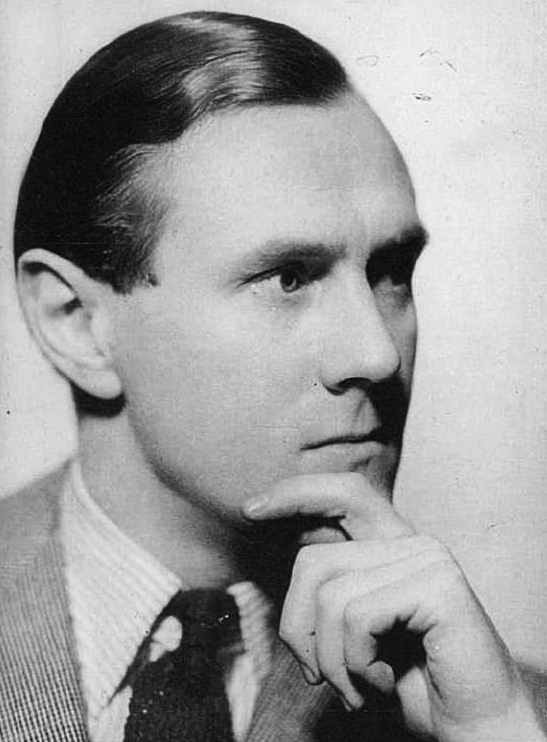
Patrick Victor Martindale White (28 May 1912 – 30 September 1990) was an Australian novelist and playwright who explored themes of religious experience, personal identity and the conflict between visionary individuals and a materialistic, conformist society. Influenced by the modernism of James Joyce, D. H. Lawrence and Virginia Woolf, he developed a complex literary style and a body of work that challenged the dominant realist prose tradition of his home country, was satirical of Australian society, and sharply divided local critics. He was awarded the Nobel Prize in Literature in 1973 and is the only Australian to have been awarded it.
Born in London to affluent Australian parents, White spent his childhood in Sydney and on his family's rural properties. He was sent to an English public school at the age of 13, and went on to read modern languages at Cambridge. After graduating in 1935 he embarked on a literary career. His first published novel, Happy Valley (1939), was awarded the Gold Medal of the Australian Literature Society. In World War II he served as an intelligence officer in the Royal Air Force. While stationed in Alexandria, Egypt, in 1941, he met Manoly Lascaris, who became his life companion and, as White later wrote, "the central mandala in my life's hitherto messy design."
In 1948 White returned to Australia, where he bought a small farm on the outskirts of Sydney. There he wrote the two novels, The Tree of Man (1955) and Voss (1957), that brought him critical acclaim in the United States and the United Kingdom. In the 1960s he wrote the novels Riders in the Chariot (1961) and The Solid Mandala (1966), and a series of plays, including The Season at Sarsaparilla and A Cheery Soul, that had a major impact on Australian theatre.
White and Lascaris moved to Sydney's Centennial Park in 1964. From the late 1960s White became increasingly involved in public affairs, opposing the Vietnam War and supporting Aboriginal self-determination, nuclear disarmament and various environmental causes. His later work includes the novels The Eye of the Storm (1973) and The Twyborn Affair (1979) and the memoir Flaws in the Glass (1981).
White was born in Knightsbridge, London, on 28 May 1912. His Australian parents, Victor Martindale White, a wealthy sheep grazier, and Ruth (née Withycombe) were in England on an extended honeymoon. The family returned to Sydney, Australia, when he was six months old. As a child he lived in a flat with his sister, a nanny, and a maid while his parents lived in an adjoining flat. In 1916 they moved to a large house, "Lulworth", in Elizabeth Bay. At the age of four White developed asthma, a condition that had taken the life of his maternal grandfather, and his health was fragile throughout his childhood.
At the age of five he attended kindergarten at Sandtoft in Woollahra, close to their home. His mother often took him to plays and pantomimes and White developed a life long love of the theatre. Nevertheless, White felt closer to his nurse, Lizzie Clark, who taught him to tell the truth and "not blow his own trumpet".
In 1920 he attended Cranbrook School but his asthma worsened. Two years later he was sent to Tudor House School, a boarding school in the Southern Highlands of New South Wales, where it was thought the climate would help his lungs. White enjoyed the freedom provided by the school where discipline was lax. He read widely from the school library, wrote a play and excelled at English. In 1924 the boarding school ran into financial trouble, and the headmaster suggested that White be sent to a public school in England.
In April 1925 his parents took White to England to enrol in Cheltenham College in Gloucestershire. In his first years at Cheltenham he was withdrawn and had few friends. He found his housemaster to be sadistic and puritanical, and White's certitude of his own homosexuality increased his sense of isolation. He later wrote of Cheltenham, "When the gates of my expensive prison closed I lost confidence in my mother, and [I] never forgave."
Hub AI
Patrick White AI simulator
(@Patrick White_simulator)
Patrick White
Patrick Victor Martindale White (28 May 1912 – 30 September 1990) was an Australian novelist and playwright who explored themes of religious experience, personal identity and the conflict between visionary individuals and a materialistic, conformist society. Influenced by the modernism of James Joyce, D. H. Lawrence and Virginia Woolf, he developed a complex literary style and a body of work that challenged the dominant realist prose tradition of his home country, was satirical of Australian society, and sharply divided local critics. He was awarded the Nobel Prize in Literature in 1973 and is the only Australian to have been awarded it.
Born in London to affluent Australian parents, White spent his childhood in Sydney and on his family's rural properties. He was sent to an English public school at the age of 13, and went on to read modern languages at Cambridge. After graduating in 1935 he embarked on a literary career. His first published novel, Happy Valley (1939), was awarded the Gold Medal of the Australian Literature Society. In World War II he served as an intelligence officer in the Royal Air Force. While stationed in Alexandria, Egypt, in 1941, he met Manoly Lascaris, who became his life companion and, as White later wrote, "the central mandala in my life's hitherto messy design."
In 1948 White returned to Australia, where he bought a small farm on the outskirts of Sydney. There he wrote the two novels, The Tree of Man (1955) and Voss (1957), that brought him critical acclaim in the United States and the United Kingdom. In the 1960s he wrote the novels Riders in the Chariot (1961) and The Solid Mandala (1966), and a series of plays, including The Season at Sarsaparilla and A Cheery Soul, that had a major impact on Australian theatre.
White and Lascaris moved to Sydney's Centennial Park in 1964. From the late 1960s White became increasingly involved in public affairs, opposing the Vietnam War and supporting Aboriginal self-determination, nuclear disarmament and various environmental causes. His later work includes the novels The Eye of the Storm (1973) and The Twyborn Affair (1979) and the memoir Flaws in the Glass (1981).
White was born in Knightsbridge, London, on 28 May 1912. His Australian parents, Victor Martindale White, a wealthy sheep grazier, and Ruth (née Withycombe) were in England on an extended honeymoon. The family returned to Sydney, Australia, when he was six months old. As a child he lived in a flat with his sister, a nanny, and a maid while his parents lived in an adjoining flat. In 1916 they moved to a large house, "Lulworth", in Elizabeth Bay. At the age of four White developed asthma, a condition that had taken the life of his maternal grandfather, and his health was fragile throughout his childhood.
At the age of five he attended kindergarten at Sandtoft in Woollahra, close to their home. His mother often took him to plays and pantomimes and White developed a life long love of the theatre. Nevertheless, White felt closer to his nurse, Lizzie Clark, who taught him to tell the truth and "not blow his own trumpet".
In 1920 he attended Cranbrook School but his asthma worsened. Two years later he was sent to Tudor House School, a boarding school in the Southern Highlands of New South Wales, where it was thought the climate would help his lungs. White enjoyed the freedom provided by the school where discipline was lax. He read widely from the school library, wrote a play and excelled at English. In 1924 the boarding school ran into financial trouble, and the headmaster suggested that White be sent to a public school in England.
In April 1925 his parents took White to England to enrol in Cheltenham College in Gloucestershire. In his first years at Cheltenham he was withdrawn and had few friends. He found his housemaster to be sadistic and puritanical, and White's certitude of his own homosexuality increased his sense of isolation. He later wrote of Cheltenham, "When the gates of my expensive prison closed I lost confidence in my mother, and [I] never forgave."
Recent media