
Recent from talks
Paul Baran
Knowledge base stats:
Talk channels stats:
Members stats:
Paul Baran
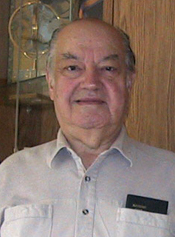
Paul Baran (born Pesach Baran /ˈbærən/; April 29, 1926 – March 26, 2011) was a Polish-American engineer who was a pioneer in the development of computer networks. He was one of the two independent inventors of packet switching, which is today the dominant basis for data communications in computer networks worldwide, and went on to start several companies and develop other technologies that are an essential part of modern digital communication.
He was born in Grodno (then in the Second Polish Republic, and since 1945 part of Belarus) on April 29, 1926. He was the youngest of three children in his Lithuanian Jewish family, with the Yiddish given name "Pesach". His family moved to the United States on May 11, 1928, settling in Boston and later in Philadelphia, where his father, Morris "Moshe" Baran (1884–1979), opened a grocery store. He graduated from Drexel University (then called Drexel Institute of Technology) in 1949, with a degree in electrical engineering. He then joined the Eckert-Mauchly Computer Company, where he did technical work on UNIVAC models, the first brand of commercial computers in the United States. In 1955 he married Evelyn Murphy, moved to Los Angeles, and worked for Hughes Aircraft on radar data processing systems. He obtained his master's degree in engineering from UCLA in 1959, with advisor Gerald Estrin while he took night classes. His thesis was on character recognition. While Baran initially stayed on at UCLA to pursue his doctorate, a heavy travel and work schedule forced him to abandon his doctoral work.
After joining the RAND Corporation in 1959, Baran took on the task, formulated by his boss at RAND, of designing a "survivable" communications system that could maintain communication between end points in the face of damage from nuclear weapons during the Cold War. Then, most American military communications used high-frequency connections, which could be put out of action for many hours by a nuclear attack. Baran decided to automate RAND Director Franklin R. Collbohm's previous work with emergency communication over conventional AM radio networks and showed that a distributed relay node architecture could be survivable. The Rome Air Development Center soon showed that the idea was practicable.
Using the minicomputer technology of the day, Baran and his team developed a simulation suite to test basic connectivity of an array of nodes with varying degrees of linking. That is, a network of n-ary degree of connectivity would have n links per node. The simulation randomly "killed" nodes and subsequently tested the percentage of nodes that remained connected. The result of the simulation revealed that networks in which n ≥ 3 had a significant increase in resilience against even as much as 50% node loss. Baran's insight gained from the simulation was that redundancy was the key. His first work was published as a RAND report in 1960, with more papers generalizing the techniques in the next two years.
After proving survivability, Baran and his team needed to show proof of concept for that design so that it could be built. That involved high-level schematics detailing the operation, construction, and cost of all the components required to construct a network that leveraged the new insight of redundant links. The result was one of the first store-and-forward data layer switching protocols, a link-state/distance vector routing protocol, and an unproved connection-oriented transport protocol. Explicit detail of the designs can be found in the complete series of reports On Distributed Communications, published by RAND in 1964.
The design flew in the face of telephony design of the time by placing inexpensive and unreliable nodes at the center of the network and more intelligent terminating 'multiplexer' devices at the endpoints. In Baran's words, unlike the telephone company's equipment, his design did not require expensive "gold plated" components to be reliable. The Distributed Network that Baran introduced was intended to route around damage. It provided connection to others through many points, not one centralized connection. Fundamental to the scheme was the division of the information into "blocks" before they were sent out across the network. That enabled the data to travel faster and communications lines to be used more efficiently. Each block was sent separately, traveling different paths and rejoining into a whole when they were received at their destination.
After the publication of On Distributed Communications, he presented the findings of his team to a number of audiences, including AT&T engineers (not to be confused with Bell Labs engineers, who at the time provided Paul Baran with the specifications for the first generation of T1 circuit that he used as the links in his network design proposal). In subsequent interviews, Baran mentioned how the AT&T engineers scoffed at his idea of non-dedicated physical circuits for voice communications, at times claiming that Baran simply did not understand how voice telecommunication worked.
Donald Davies, at the National Physical Laboratory in the United Kingdom, also thought of the same idea and implemented a trial network. While Baran used the term "message blocks" for his units of communication, Davies used the term "packets," as it was capable of being translated into languages other than English without compromise. He applied the concept to a general-purpose computer network. Davies's key insight came in the realization that computer network traffic was inherently "bursty" with periods of silence, compared with relatively-constant telephone traffic. It was in fact Davies's work on packet switching, not Baran's, that initially caught the attention of the developers of ARPANET at the Symposium on Operating Systems Principles in October 1967. Baran was happy to acknowledge that Davies had come up with the same idea as him independently. In an e-mail to Davies, he wrote:
Hub AI
Paul Baran AI simulator
(@Paul Baran_simulator)
Paul Baran
Paul Baran (born Pesach Baran /ˈbærən/; April 29, 1926 – March 26, 2011) was a Polish-American engineer who was a pioneer in the development of computer networks. He was one of the two independent inventors of packet switching, which is today the dominant basis for data communications in computer networks worldwide, and went on to start several companies and develop other technologies that are an essential part of modern digital communication.
He was born in Grodno (then in the Second Polish Republic, and since 1945 part of Belarus) on April 29, 1926. He was the youngest of three children in his Lithuanian Jewish family, with the Yiddish given name "Pesach". His family moved to the United States on May 11, 1928, settling in Boston and later in Philadelphia, where his father, Morris "Moshe" Baran (1884–1979), opened a grocery store. He graduated from Drexel University (then called Drexel Institute of Technology) in 1949, with a degree in electrical engineering. He then joined the Eckert-Mauchly Computer Company, where he did technical work on UNIVAC models, the first brand of commercial computers in the United States. In 1955 he married Evelyn Murphy, moved to Los Angeles, and worked for Hughes Aircraft on radar data processing systems. He obtained his master's degree in engineering from UCLA in 1959, with advisor Gerald Estrin while he took night classes. His thesis was on character recognition. While Baran initially stayed on at UCLA to pursue his doctorate, a heavy travel and work schedule forced him to abandon his doctoral work.
After joining the RAND Corporation in 1959, Baran took on the task, formulated by his boss at RAND, of designing a "survivable" communications system that could maintain communication between end points in the face of damage from nuclear weapons during the Cold War. Then, most American military communications used high-frequency connections, which could be put out of action for many hours by a nuclear attack. Baran decided to automate RAND Director Franklin R. Collbohm's previous work with emergency communication over conventional AM radio networks and showed that a distributed relay node architecture could be survivable. The Rome Air Development Center soon showed that the idea was practicable.
Using the minicomputer technology of the day, Baran and his team developed a simulation suite to test basic connectivity of an array of nodes with varying degrees of linking. That is, a network of n-ary degree of connectivity would have n links per node. The simulation randomly "killed" nodes and subsequently tested the percentage of nodes that remained connected. The result of the simulation revealed that networks in which n ≥ 3 had a significant increase in resilience against even as much as 50% node loss. Baran's insight gained from the simulation was that redundancy was the key. His first work was published as a RAND report in 1960, with more papers generalizing the techniques in the next two years.
After proving survivability, Baran and his team needed to show proof of concept for that design so that it could be built. That involved high-level schematics detailing the operation, construction, and cost of all the components required to construct a network that leveraged the new insight of redundant links. The result was one of the first store-and-forward data layer switching protocols, a link-state/distance vector routing protocol, and an unproved connection-oriented transport protocol. Explicit detail of the designs can be found in the complete series of reports On Distributed Communications, published by RAND in 1964.
The design flew in the face of telephony design of the time by placing inexpensive and unreliable nodes at the center of the network and more intelligent terminating 'multiplexer' devices at the endpoints. In Baran's words, unlike the telephone company's equipment, his design did not require expensive "gold plated" components to be reliable. The Distributed Network that Baran introduced was intended to route around damage. It provided connection to others through many points, not one centralized connection. Fundamental to the scheme was the division of the information into "blocks" before they were sent out across the network. That enabled the data to travel faster and communications lines to be used more efficiently. Each block was sent separately, traveling different paths and rejoining into a whole when they were received at their destination.
After the publication of On Distributed Communications, he presented the findings of his team to a number of audiences, including AT&T engineers (not to be confused with Bell Labs engineers, who at the time provided Paul Baran with the specifications for the first generation of T1 circuit that he used as the links in his network design proposal). In subsequent interviews, Baran mentioned how the AT&T engineers scoffed at his idea of non-dedicated physical circuits for voice communications, at times claiming that Baran simply did not understand how voice telecommunication worked.
Donald Davies, at the National Physical Laboratory in the United Kingdom, also thought of the same idea and implemented a trial network. While Baran used the term "message blocks" for his units of communication, Davies used the term "packets," as it was capable of being translated into languages other than English without compromise. He applied the concept to a general-purpose computer network. Davies's key insight came in the realization that computer network traffic was inherently "bursty" with periods of silence, compared with relatively-constant telephone traffic. It was in fact Davies's work on packet switching, not Baran's, that initially caught the attention of the developers of ARPANET at the Symposium on Operating Systems Principles in October 1967. Baran was happy to acknowledge that Davies had come up with the same idea as him independently. In an e-mail to Davies, he wrote:
Recent media