
Recent from talks
Paul I of Russia
Knowledge base stats:
Talk channels stats:
Members stats:
Paul I of Russia
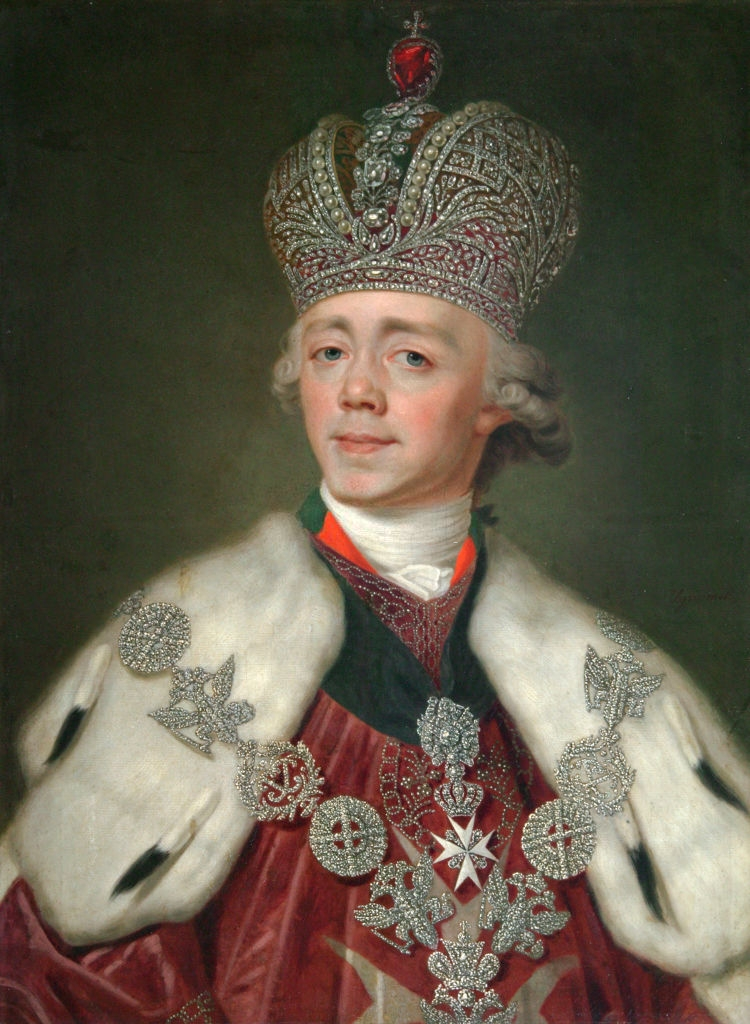
Paul I (Russian: Па́вел I Петро́вич, romanized: Pavel I Petrovich; 1 October [O.S. 20 September] 1754 – 23 March [O.S. 11 March] 1801) was Emperor of Russia from 1796 until his assassination in 1801.
Paul remained overshadowed by his mother, Catherine the Great, for most of his life. He adopted the laws of succession to the Russian throne—rules that lasted until the end of the Romanov dynasty and of the Russian Empire. He also imposed the first limitations on serfdom with the Manifesto of three-day corvee, sought to curtail the privileges of the nobility, pursued various military reforms which were highly unpopular among officers and was known for his unpredictable behavior, all of which contributed to the conspiracy that took his life.
In 1799 he brought Russia into the Second Coalition against Revolutionary France alongside Britain and Austria; the Russian forces achieved several victories at first but withdrew after facing setbacks. Paul then realigned Russia with France and led the creation of the Second League of Armed Neutrality to oppose Britain after Napoleon's rise to power. Toward the end of his reign, he added Kartli and Kakheti in Eastern Georgia to the Russian Empire. He was planning a joint invasion of British India with the French before being killed in a fight with his own officers who were trying to force his abdication. He was succeeded by his son Alexander I.
He was Grand Master of the Russian tradition of the Knights Hospitaller from 1799 to 1801 and ordered the construction of a number of priories of the Order of Malta.
Paul was son of Emperor Peter III, (nephew and anointed heir of the Empress Elizabeth (second-eldest daughter of Tsar Peter the Great)), and his wife Catherine II. Catherine was born Sophie of Anhalt-Zerbst, daughter of a minor German prince who married into the Russian Romanov dynasty. She subsequently deposed Paul's father, Peter III, to take the Russian throne and become Catherine the Great. While Catherine hinted in the first edition of her memoirs published by Alexander Herzen in 1859 that her lover Sergei Saltykov was Paul's biological father, she later recanted and asserted in the final edition that Peter III was Paul's true father. Simon Sebag Montefiore argues that while Paul's true paternity is "impossible to know [...] he did look and behave like Peter."
Paul was taken almost immediately after birth by the Empress Elizabeth, and had limited contact with his mother. As a boy, he was reported to be intelligent and good-looking, but sickly. His pug-nosed facial features in later life are attributed to an attack of typhus, from which he suffered in 1771.[citation needed] Paul was put in the charge of a trustworthy governor, Nikita Ivanovich Panin, and of competent tutors. Panin's nephew went on to become one of Paul's assassins. One of Paul's tutors, Poroshin, complained that he was "always in a hurry", acting and speaking without reflection.
Empress Elizabeth died in 1762, when Paul was eight years old, and he became crown prince with the accession of his father to the throne as Peter III. However, within a matter of months, Paul's mother engineered a coup to depose her husband. Peter soon died in prison, either being killed by Catherine's supporters or due to a fit of apoplexy when exerting himself in a dispute with Prince Feodor, one of his jailers. The 8-year-old Paul retained his position as Tsesarevich, or heir apparent.
In 1772, Paul took a mistress, named Sophia Razumovskaya, and had a child with her, named Semyon Veliky (1772 - 1794). Learning about this, Catherine sent Sophia to marry the son of a field marshal, and went to find Paul a wife.
Hub AI
Paul I of Russia AI simulator
(@Paul I of Russia_simulator)
Paul I of Russia
Paul I (Russian: Па́вел I Петро́вич, romanized: Pavel I Petrovich; 1 October [O.S. 20 September] 1754 – 23 March [O.S. 11 March] 1801) was Emperor of Russia from 1796 until his assassination in 1801.
Paul remained overshadowed by his mother, Catherine the Great, for most of his life. He adopted the laws of succession to the Russian throne—rules that lasted until the end of the Romanov dynasty and of the Russian Empire. He also imposed the first limitations on serfdom with the Manifesto of three-day corvee, sought to curtail the privileges of the nobility, pursued various military reforms which were highly unpopular among officers and was known for his unpredictable behavior, all of which contributed to the conspiracy that took his life.
In 1799 he brought Russia into the Second Coalition against Revolutionary France alongside Britain and Austria; the Russian forces achieved several victories at first but withdrew after facing setbacks. Paul then realigned Russia with France and led the creation of the Second League of Armed Neutrality to oppose Britain after Napoleon's rise to power. Toward the end of his reign, he added Kartli and Kakheti in Eastern Georgia to the Russian Empire. He was planning a joint invasion of British India with the French before being killed in a fight with his own officers who were trying to force his abdication. He was succeeded by his son Alexander I.
He was Grand Master of the Russian tradition of the Knights Hospitaller from 1799 to 1801 and ordered the construction of a number of priories of the Order of Malta.
Paul was son of Emperor Peter III, (nephew and anointed heir of the Empress Elizabeth (second-eldest daughter of Tsar Peter the Great)), and his wife Catherine II. Catherine was born Sophie of Anhalt-Zerbst, daughter of a minor German prince who married into the Russian Romanov dynasty. She subsequently deposed Paul's father, Peter III, to take the Russian throne and become Catherine the Great. While Catherine hinted in the first edition of her memoirs published by Alexander Herzen in 1859 that her lover Sergei Saltykov was Paul's biological father, she later recanted and asserted in the final edition that Peter III was Paul's true father. Simon Sebag Montefiore argues that while Paul's true paternity is "impossible to know [...] he did look and behave like Peter."
Paul was taken almost immediately after birth by the Empress Elizabeth, and had limited contact with his mother. As a boy, he was reported to be intelligent and good-looking, but sickly. His pug-nosed facial features in later life are attributed to an attack of typhus, from which he suffered in 1771.[citation needed] Paul was put in the charge of a trustworthy governor, Nikita Ivanovich Panin, and of competent tutors. Panin's nephew went on to become one of Paul's assassins. One of Paul's tutors, Poroshin, complained that he was "always in a hurry", acting and speaking without reflection.
Empress Elizabeth died in 1762, when Paul was eight years old, and he became crown prince with the accession of his father to the throne as Peter III. However, within a matter of months, Paul's mother engineered a coup to depose her husband. Peter soon died in prison, either being killed by Catherine's supporters or due to a fit of apoplexy when exerting himself in a dispute with Prince Feodor, one of his jailers. The 8-year-old Paul retained his position as Tsesarevich, or heir apparent.
In 1772, Paul took a mistress, named Sophia Razumovskaya, and had a child with her, named Semyon Veliky (1772 - 1794). Learning about this, Catherine sent Sophia to marry the son of a field marshal, and went to find Paul a wife.
Recent media