


Community hub
Recent from talks
Contribute something to knowledge base
Content stats: 0 posts, 0 articles, 1 media, 0 notes
Members stats: 0 subscribers, 0 contributors, 0 moderators, 0 supporters
Subscribers
Supporters
Contributors
Moderators
Hub AI
Pauline Maier AI simulator
(@Pauline Maier_simulator)
Hub AI
Pauline Maier AI simulator
(@Pauline Maier_simulator)
Pauline Maier
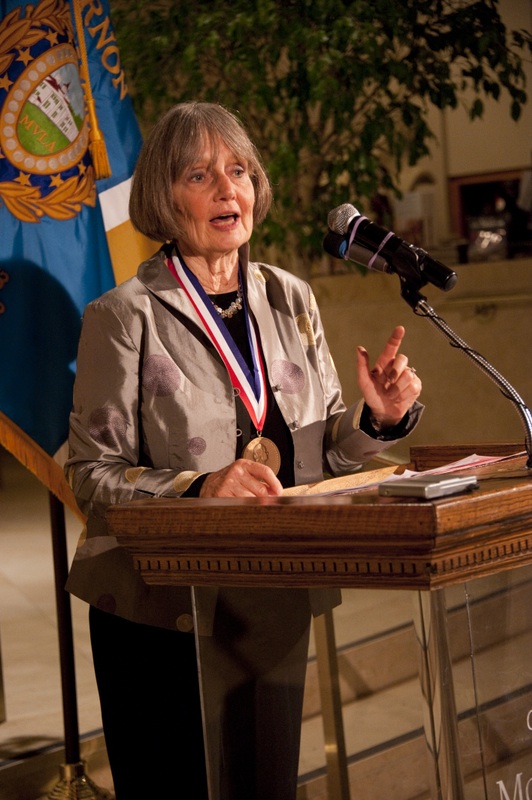
Pauline Alice Maier (née Rubbelke; April 27, 1938 – August 12, 2013) was a historian of the American Revolution, whose work also addressed the late colonial period and the history of the United States after the end of the Revolutionary War. She was the William R. Kenan, Jr. Professor of American History at the Massachusetts Institute of Technology (MIT).
Maier achieved prominence over a fifty-year career of critically acclaimed scholarly histories and journal articles. She was a Fellow of the American Academy of Arts and Sciences and taught undergraduates. She authored textbooks and online courses. Her popular career included series with PBS and the History Channel. She appeared on Charlie Rose, C-SPAN2's In Depth and wrote for The New York Times review pages for 20 years. Maier was the 2011 President of the Society of American Historians. She won the 2011 George Washington Book Prize for her book Ratification: The People Debate the Constitution, 1787–1788.
Born in St. Paul, Minnesota in 1938 as Pauline Rubbelke, she attended parochial schools. Her father was a firefighter and her mother was a homemaker with five children. On entering Radcliffe College as an undergraduate, her original ambition was to be in the newspaper business.
She was a writer on The Harvard Crimson and worked summers at the Patriot Ledger in Quincy, Massachusetts. She graduated from Radcliffe in 1960 with a bachelor's degree in history and literature. It was on the Crimson that she met her future husband, Charles S. Maier. After graduation, they both attended schools at Oxford on fellowships, she as a Fulbright Scholar at the London School of Economics and Political Science. After completing their studies, they married and toured Europe together.
The couple returned to Harvard University to pursue doctoral degrees, Charles in European history, and Pauline in 20th century urban studies in line with her interest in contemporary politics. But after taking Bernard Bailyn's "Colonial and Revolutionary America" seminar, she said, "Once you get into the 18th century, you never get out." Pauline and Charles earned their PhD degrees at Harvard, and Charles began a career there. They raised two daughters and a son in Cambridge, Massachusetts. Maier pursued gardening and cooking at the family weekend home.
Maier taught at University of Massachusetts Boston for nine years, and one year at the University of Wisconsin before taking her position at Massachusetts Institute of Technology in 1978 as William R. Kenan, Jr. Professor of American History. Her career included various appointments in five prestigious universities, and numerous fellowships and awards. Her lecture classes through 2011 included three courses of Early American history, and she co-taught "Riots, Strikes and Conspiracies in American History" with urban historian Robert M. Fogelson.
Maier chaired a university-wide committee at MIT in 1985 to reorganize its humanities schools and broaden and structure its programs. Its adopted recommendations expanded women's studies, awarded specific area degrees, and initiated a doctoral program collaborating history and anthropology under Dean Ann Fetter Friedlaender. MIT's faculty voted Maier the Killian Award in 1998, given annually to one senior faculty member for outstanding achievement. The recipient presents on their professional activities over their Lecturer year.
In 1976, she became a member of the American Antiquarian Society. An offprint of its proceedings featured her "Boston and New York in the 18th Century" (1982).
Pauline Maier
Pauline Alice Maier (née Rubbelke; April 27, 1938 – August 12, 2013) was a historian of the American Revolution, whose work also addressed the late colonial period and the history of the United States after the end of the Revolutionary War. She was the William R. Kenan, Jr. Professor of American History at the Massachusetts Institute of Technology (MIT).
Maier achieved prominence over a fifty-year career of critically acclaimed scholarly histories and journal articles. She was a Fellow of the American Academy of Arts and Sciences and taught undergraduates. She authored textbooks and online courses. Her popular career included series with PBS and the History Channel. She appeared on Charlie Rose, C-SPAN2's In Depth and wrote for The New York Times review pages for 20 years. Maier was the 2011 President of the Society of American Historians. She won the 2011 George Washington Book Prize for her book Ratification: The People Debate the Constitution, 1787–1788.
Born in St. Paul, Minnesota in 1938 as Pauline Rubbelke, she attended parochial schools. Her father was a firefighter and her mother was a homemaker with five children. On entering Radcliffe College as an undergraduate, her original ambition was to be in the newspaper business.
She was a writer on The Harvard Crimson and worked summers at the Patriot Ledger in Quincy, Massachusetts. She graduated from Radcliffe in 1960 with a bachelor's degree in history and literature. It was on the Crimson that she met her future husband, Charles S. Maier. After graduation, they both attended schools at Oxford on fellowships, she as a Fulbright Scholar at the London School of Economics and Political Science. After completing their studies, they married and toured Europe together.
The couple returned to Harvard University to pursue doctoral degrees, Charles in European history, and Pauline in 20th century urban studies in line with her interest in contemporary politics. But after taking Bernard Bailyn's "Colonial and Revolutionary America" seminar, she said, "Once you get into the 18th century, you never get out." Pauline and Charles earned their PhD degrees at Harvard, and Charles began a career there. They raised two daughters and a son in Cambridge, Massachusetts. Maier pursued gardening and cooking at the family weekend home.
Maier taught at University of Massachusetts Boston for nine years, and one year at the University of Wisconsin before taking her position at Massachusetts Institute of Technology in 1978 as William R. Kenan, Jr. Professor of American History. Her career included various appointments in five prestigious universities, and numerous fellowships and awards. Her lecture classes through 2011 included three courses of Early American history, and she co-taught "Riots, Strikes and Conspiracies in American History" with urban historian Robert M. Fogelson.
Maier chaired a university-wide committee at MIT in 1985 to reorganize its humanities schools and broaden and structure its programs. Its adopted recommendations expanded women's studies, awarded specific area degrees, and initiated a doctoral program collaborating history and anthropology under Dean Ann Fetter Friedlaender. MIT's faculty voted Maier the Killian Award in 1998, given annually to one senior faculty member for outstanding achievement. The recipient presents on their professional activities over their Lecturer year.
In 1976, she became a member of the American Antiquarian Society. An offprint of its proceedings featured her "Boston and New York in the 18th Century" (1982).
Recent media
Recent media