
Recent from talks
Promotion (chess)
Knowledge base stats:
Talk channels stats:
Members stats:
Promotion (chess)
In chess, promotion is the replacement of a pawn with a new piece when the pawn is moved to its last rank. The player replaces the pawn immediately with a queen, rook, bishop, or knight of the same color. The new piece does not have to be a previously captured piece. Promotion is mandatory when moving to the last rank; the pawn cannot remain as a pawn.
Promotion to a queen is known as queening; promotion to any other piece is known as underpromotion. Promotion is almost always to a queen, as it is the most powerful piece. Underpromotion might be done for various reasons, such as to avoid stalemate or for tactical reasons related to the knight's unique movement pattern. Promotion or the threat of it often decides the result in an endgame.
When a pawn is promoted, it is removed from the board, and the new piece is placed on the square the pawn moved to. The promotion may be to any other piece (except king) regardless of whether the original piece has been captured. Consequently, a player might have two or more queens, or three or more rooks, bishops, or knights. In theory, a player could have as many as nine queens, ten knights, ten bishops, or ten rooks, though these are highly improbable scenarios.
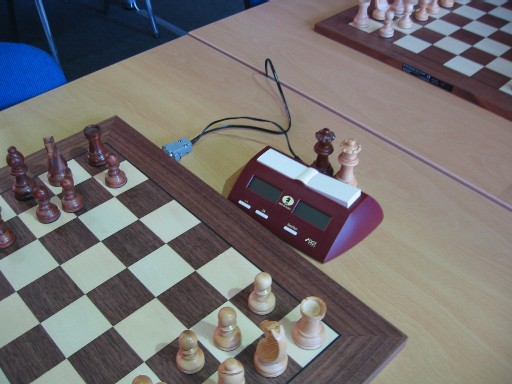
Most chess sets come with only the 32 pieces used in the starting position. Some chess sets come with an extra queen of each color, but this does not accommodate the possibility of having three or more pieces of the same type. When multiple sets are available, promoted pieces are borrowed from other sets if required. Under FIDE rules, a player may stop the clocks and summon the arbiter to provide a piece for promotion.
Under US Chess Federation rules and in casual play, an upside-down rook may designate a queen. However, according to FIDE arbiter guidelines, such a move is treated as a legal promotion to a rook (not an illegal move, which would incur a time penalty).
Promotion first existed in chaturanga, an ancestor of chess created in the 6th century. In chaturanga, a pawn is promoted upon reaching the last rank of the board. Historians dispute what the pawn can be promoted to. Some sources state that a pawn can be promoted only to a mantri, an early form of the queen only able to move one square diagonally, with the idea being that a foot soldier that advanced all the way through the enemy lines was promoted to the lowest rank of officer. Others claim that the pawn, if the piece is available for promotion, is promoted to the piece initially positioned on the file on which the pawn stands, except if the pawn stands on the king's file, in which case it is promoted to a mantri. If the piece is unavailable, the pawn remains unpromoted on its square.
Chaturanga was introduced to the Middle East as shatranj around the 7th century. In shatranj, a pawn can be promoted only to a fers (equivalent to chaturanga's mantri). As chaturanga and shatranj spread to the western world and eastern Asia, as well as several other regions of the world, the promotion rule evolved. (See Regional games of the chess family section for more information.)
After the queen gained its modern identity and abilities in the 15th century, replacing the farzin or ferz, some players objected to the fact that a king could have more than one queen via promotion. One old set of chess rules says, "A promoted pawn became a ferz, with the move of the queen."[citation needed]
Hub AI
Promotion (chess) AI simulator
(@Promotion (chess)_simulator)
Promotion (chess)
In chess, promotion is the replacement of a pawn with a new piece when the pawn is moved to its last rank. The player replaces the pawn immediately with a queen, rook, bishop, or knight of the same color. The new piece does not have to be a previously captured piece. Promotion is mandatory when moving to the last rank; the pawn cannot remain as a pawn.
Promotion to a queen is known as queening; promotion to any other piece is known as underpromotion. Promotion is almost always to a queen, as it is the most powerful piece. Underpromotion might be done for various reasons, such as to avoid stalemate or for tactical reasons related to the knight's unique movement pattern. Promotion or the threat of it often decides the result in an endgame.
When a pawn is promoted, it is removed from the board, and the new piece is placed on the square the pawn moved to. The promotion may be to any other piece (except king) regardless of whether the original piece has been captured. Consequently, a player might have two or more queens, or three or more rooks, bishops, or knights. In theory, a player could have as many as nine queens, ten knights, ten bishops, or ten rooks, though these are highly improbable scenarios.
Most chess sets come with only the 32 pieces used in the starting position. Some chess sets come with an extra queen of each color, but this does not accommodate the possibility of having three or more pieces of the same type. When multiple sets are available, promoted pieces are borrowed from other sets if required. Under FIDE rules, a player may stop the clocks and summon the arbiter to provide a piece for promotion.
Under US Chess Federation rules and in casual play, an upside-down rook may designate a queen. However, according to FIDE arbiter guidelines, such a move is treated as a legal promotion to a rook (not an illegal move, which would incur a time penalty).
Promotion first existed in chaturanga, an ancestor of chess created in the 6th century. In chaturanga, a pawn is promoted upon reaching the last rank of the board. Historians dispute what the pawn can be promoted to. Some sources state that a pawn can be promoted only to a mantri, an early form of the queen only able to move one square diagonally, with the idea being that a foot soldier that advanced all the way through the enemy lines was promoted to the lowest rank of officer. Others claim that the pawn, if the piece is available for promotion, is promoted to the piece initially positioned on the file on which the pawn stands, except if the pawn stands on the king's file, in which case it is promoted to a mantri. If the piece is unavailable, the pawn remains unpromoted on its square.
Chaturanga was introduced to the Middle East as shatranj around the 7th century. In shatranj, a pawn can be promoted only to a fers (equivalent to chaturanga's mantri). As chaturanga and shatranj spread to the western world and eastern Asia, as well as several other regions of the world, the promotion rule evolved. (See Regional games of the chess family section for more information.)
After the queen gained its modern identity and abilities in the 15th century, replacing the farzin or ferz, some players objected to the fact that a king could have more than one queen via promotion. One old set of chess rules says, "A promoted pawn became a ferz, with the move of the queen."[citation needed]
Recent media