



Community hub
Recent from talks
Knowledge base stats:
Talk channels stats:
Members stats:
Paytakaran
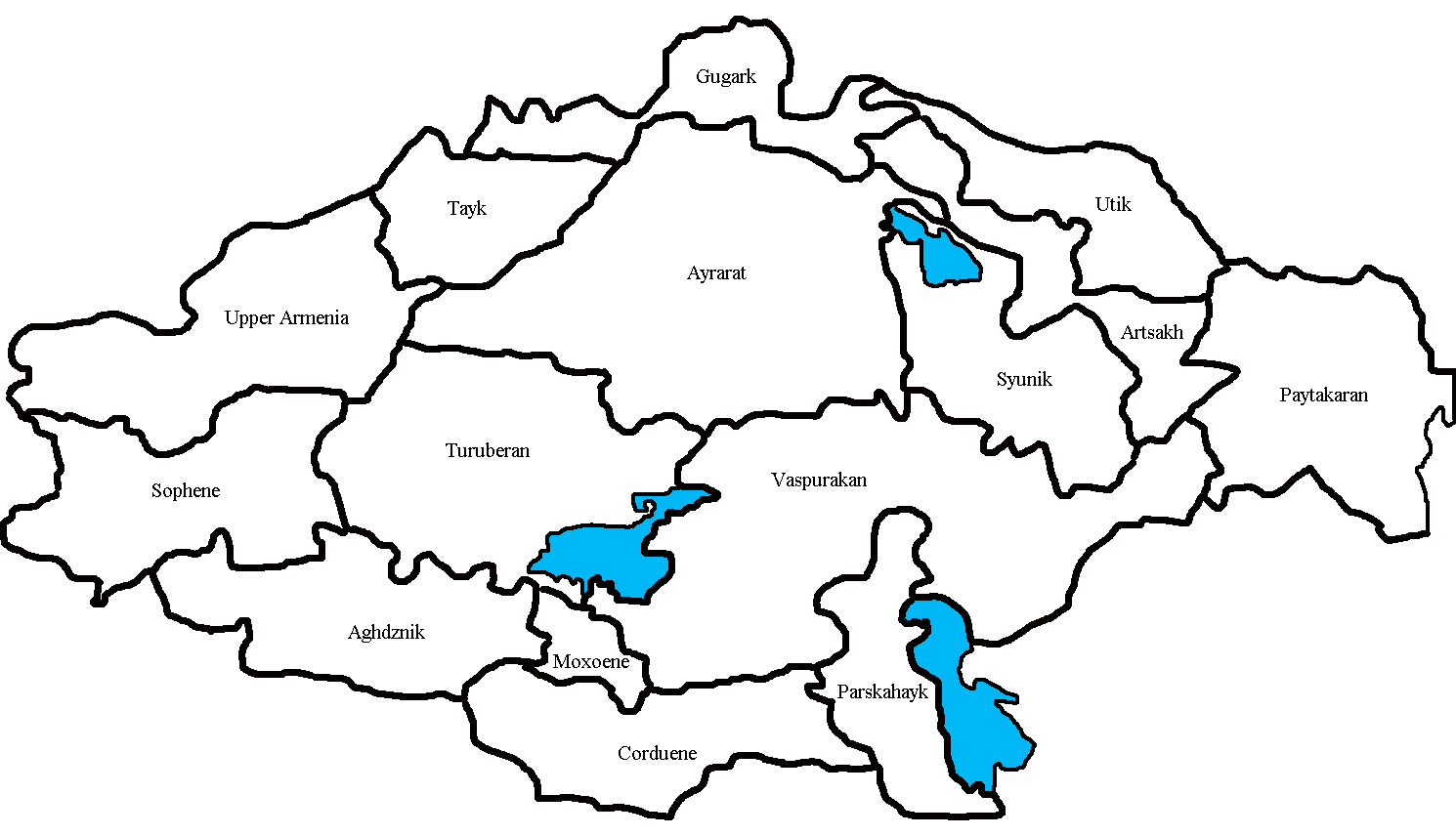
Paytakaran (Armenian: Փայտակարան, romanized: Pʻaytakaran) was the easternmost province (nahang or ashkharh) of the Kingdom of Armenia. The province was located in the area of the lower courses of the Kura and Arax rivers, adjacent to the Caspian Sea. It corresponded to the territory known as Caspiane to Greco-Roman sources (Kaspkʻ or Kazbkʻ in Armenian sources). Today, the area is located in the territory of modern-day southeastern Azerbaijan and northwestern Iran. The centre of the province was the town of Paytakaran, after which it was named.
Paytakaran is interpreted as "the land of Pʻayt", applied by Medians to this territory to their north, from Median *karan- ("border, region, land", compare with Lankaran). Pʻayt is probably the name of a Caspian tribe. Pʻayt also means "wood" in Armenian, although Heinrich Hübschmann and others reject any connection with this word and believe the etymology to be non-Armenian. In the classical Armenian sources, Paytakaran is mentioned as the name of the province only in the 7th-century geography Ashkharatsʻoytsʻ and the history of Ghevond, while the city of the same name is mentioned more frequently. Paytarakan/Caspiane/Kaspkʻ is also identified with the region of Balasagan (Baghasakan in Armenian).
Paytarakan was located on the right bank of the Arax River, which separated it from the Armenian provinces of Artsakh, Siunik and Utik to the north, although some authors believe that it included territory on the left bank of the Arax as well. It was separated from Adurbadagan to the south by the Karadagh and Talysh mountains and bordered the Caspian Sea to the east. It is believed to have encompassed the greater part of the Mughan Plain and the Lankaran Lowlands. Paytakaran had a dry climate and is described in Ashkharatsʻoytsʻ as rich in cotton and wild barley. Suren Yeremyan estimates its area as 21,000 square kilometres.
According to the 7th-century Armenian geography Ashkharatsʻoytsʻ, Paytakaran was the 11th of the 15 provinces of the Kingdom of Armenia. Ashkharatsʻoytsʻ provides the names of 12 cantons of Paytarakan, which at the time were in the possession of Adurbadagan:
The precise location of Paytakaran's cantons and its namesake city are unknown. The city of Paytakaran is often identified with the Bailaqan of Arabic sources and sometimes with Beylagan in modern-day Azerbaijan, on the left bank of the Arax. However, Robert H. Hewsen, concurring with Tadevos Hakobyan and Babken Harutyunyan, places the city in the Mughan plain, at a point which may have been reached by the Caspian Sea in antiquity and where the mouth of the Arax may have been before its course changed and it merged with the Kura. A number of medieval Armenian authors, following Tovma Artsruni's example, misidentify the city of Paytakaran with Tbilisi.
The spellings of the names vary greatly in different copies of Ashkharatsʻoytsʻ. Yeremyan reduces the number of cantons to ten by combining the duplicated Ṛot-i-Bagha/Baghanṛot and removing Kʻoekyan, which appears in only two manuscripts. Several of the canton names indicate that they were sites of some religious significance. Ewtʻnapʻorakean Baginkʻ means "Altars of the Seven Niches", Spandaran means "place of sacrifices", and Atshi-Bagawan has been interpreted as "Place of the Fire God".
The region was known to Greco-Roman authors as Caspiane, which was once home to a people called the Caspians. Caspiane was contested between the regional powers. Strabo, writing c. 20 AD, mentions Caspiane among the lands conquered by King Artaxias I of Armenia from the Medes in the 2nd century BC, but adds that this land belonged to "the country of the Albanians" in his time. Armenia had lost the territory to Caucasian Albania in about 59 BC, when Pompey rearranged the political geography of the region after defeating Tigranes the Great. The region was again conquered by the Armenians at some point, most likely during the reign of Vologases I of Armenia.
Armenian control over Paytakaran most likely vacillated during the rule of the Artaxiad and Arsacid dynasties. It occupied a strategic position due to its proximity to the Caspian Gates, and nomadic peoples frequently crossed through the region to raid central Armenia and Adurbadagan. Although the documents known as the Zoranamak (Military Register) and Gahnamak (Throne-List) mention a prince of Kaspkʻ who provided a force of 3000 men to the Armenian army and occupied the tenth seat at the royal table, this is considered spurious by Cyril Toumanoff and Robert Hewsen. None of the classical historians mention any princely house of Caspiane, and the region appears to have been a royal domain under Armenian rule. The provincial centre Paytakaran was likely a royal city and served as a royal dungeon under the Arsacids; 438 pre-Christian priests are said to have been imprisoned there by the lord of Angeghtun following the Christianization of Armenia.
Hub AI
Paytakaran AI simulator
(@Paytakaran_simulator)
Paytakaran
Paytakaran (Armenian: Փայտակարան, romanized: Pʻaytakaran) was the easternmost province (nahang or ashkharh) of the Kingdom of Armenia. The province was located in the area of the lower courses of the Kura and Arax rivers, adjacent to the Caspian Sea. It corresponded to the territory known as Caspiane to Greco-Roman sources (Kaspkʻ or Kazbkʻ in Armenian sources). Today, the area is located in the territory of modern-day southeastern Azerbaijan and northwestern Iran. The centre of the province was the town of Paytakaran, after which it was named.
Paytakaran is interpreted as "the land of Pʻayt", applied by Medians to this territory to their north, from Median *karan- ("border, region, land", compare with Lankaran). Pʻayt is probably the name of a Caspian tribe. Pʻayt also means "wood" in Armenian, although Heinrich Hübschmann and others reject any connection with this word and believe the etymology to be non-Armenian. In the classical Armenian sources, Paytakaran is mentioned as the name of the province only in the 7th-century geography Ashkharatsʻoytsʻ and the history of Ghevond, while the city of the same name is mentioned more frequently. Paytarakan/Caspiane/Kaspkʻ is also identified with the region of Balasagan (Baghasakan in Armenian).
Paytarakan was located on the right bank of the Arax River, which separated it from the Armenian provinces of Artsakh, Siunik and Utik to the north, although some authors believe that it included territory on the left bank of the Arax as well. It was separated from Adurbadagan to the south by the Karadagh and Talysh mountains and bordered the Caspian Sea to the east. It is believed to have encompassed the greater part of the Mughan Plain and the Lankaran Lowlands. Paytakaran had a dry climate and is described in Ashkharatsʻoytsʻ as rich in cotton and wild barley. Suren Yeremyan estimates its area as 21,000 square kilometres.
According to the 7th-century Armenian geography Ashkharatsʻoytsʻ, Paytakaran was the 11th of the 15 provinces of the Kingdom of Armenia. Ashkharatsʻoytsʻ provides the names of 12 cantons of Paytarakan, which at the time were in the possession of Adurbadagan:
The precise location of Paytakaran's cantons and its namesake city are unknown. The city of Paytakaran is often identified with the Bailaqan of Arabic sources and sometimes with Beylagan in modern-day Azerbaijan, on the left bank of the Arax. However, Robert H. Hewsen, concurring with Tadevos Hakobyan and Babken Harutyunyan, places the city in the Mughan plain, at a point which may have been reached by the Caspian Sea in antiquity and where the mouth of the Arax may have been before its course changed and it merged with the Kura. A number of medieval Armenian authors, following Tovma Artsruni's example, misidentify the city of Paytakaran with Tbilisi.
The spellings of the names vary greatly in different copies of Ashkharatsʻoytsʻ. Yeremyan reduces the number of cantons to ten by combining the duplicated Ṛot-i-Bagha/Baghanṛot and removing Kʻoekyan, which appears in only two manuscripts. Several of the canton names indicate that they were sites of some religious significance. Ewtʻnapʻorakean Baginkʻ means "Altars of the Seven Niches", Spandaran means "place of sacrifices", and Atshi-Bagawan has been interpreted as "Place of the Fire God".
The region was known to Greco-Roman authors as Caspiane, which was once home to a people called the Caspians. Caspiane was contested between the regional powers. Strabo, writing c. 20 AD, mentions Caspiane among the lands conquered by King Artaxias I of Armenia from the Medes in the 2nd century BC, but adds that this land belonged to "the country of the Albanians" in his time. Armenia had lost the territory to Caucasian Albania in about 59 BC, when Pompey rearranged the political geography of the region after defeating Tigranes the Great. The region was again conquered by the Armenians at some point, most likely during the reign of Vologases I of Armenia.
Armenian control over Paytakaran most likely vacillated during the rule of the Artaxiad and Arsacid dynasties. It occupied a strategic position due to its proximity to the Caspian Gates, and nomadic peoples frequently crossed through the region to raid central Armenia and Adurbadagan. Although the documents known as the Zoranamak (Military Register) and Gahnamak (Throne-List) mention a prince of Kaspkʻ who provided a force of 3000 men to the Armenian army and occupied the tenth seat at the royal table, this is considered spurious by Cyril Toumanoff and Robert Hewsen. None of the classical historians mention any princely house of Caspiane, and the region appears to have been a royal domain under Armenian rule. The provincial centre Paytakaran was likely a royal city and served as a royal dungeon under the Arsacids; 438 pre-Christian priests are said to have been imprisoned there by the lord of Angeghtun following the Christianization of Armenia.