
Recent from talks
Pea soup
Knowledge base stats:
Talk channels stats:
Members stats:
Pea soup
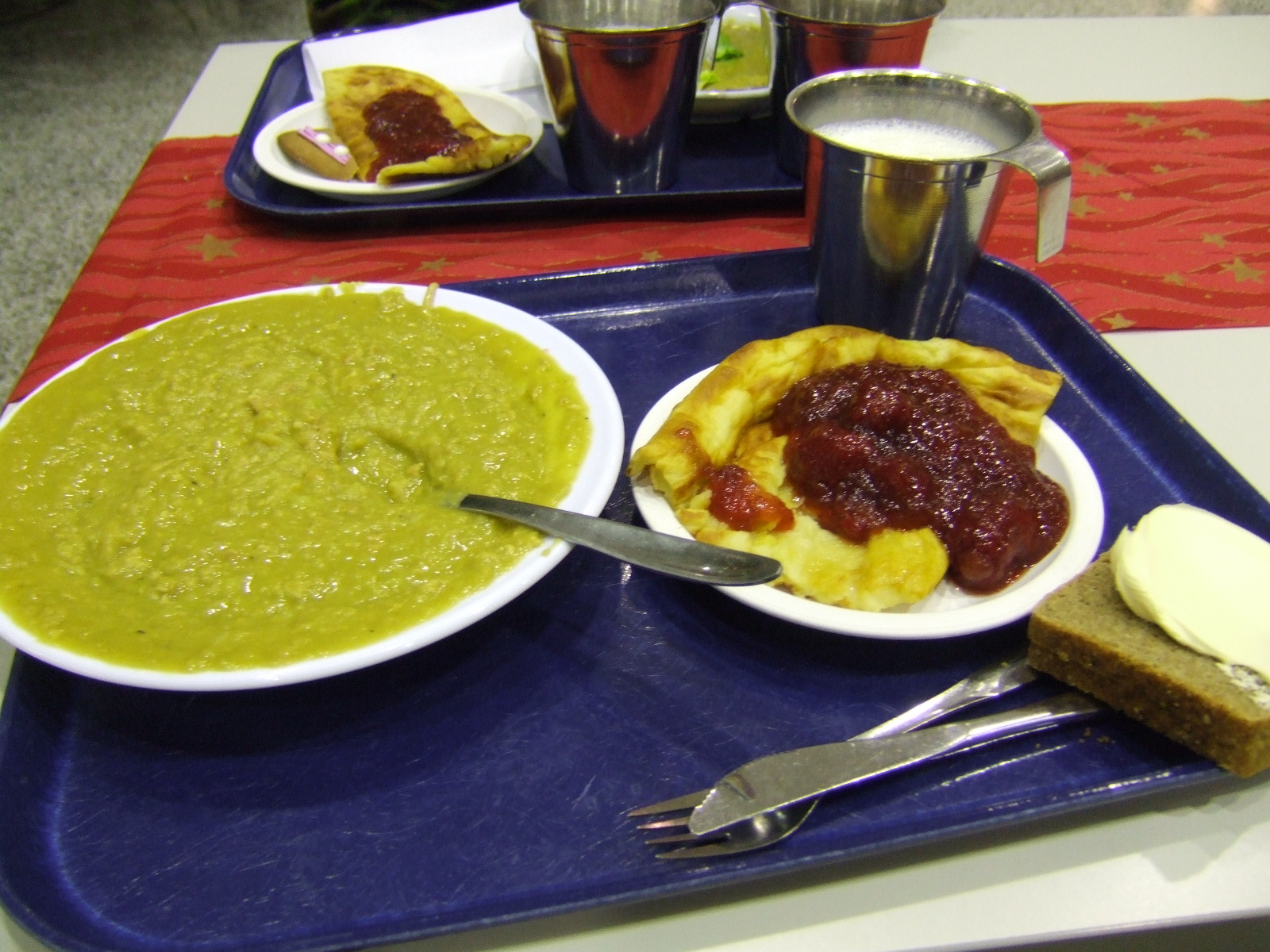
Pea soup or split pea soup is soup made typically from dried peas, such as the split pea. It is, with variations, a part of the cuisine of many cultures. It is most often greyish-green or yellow in color depending on the regional variety of peas used; all are cultivars of Pisum sativum.
Pea soup has been eaten since antiquity; it is mentioned in Aristophanes' The Birds, and according to one source "the Greeks and Romans were cultivating this legume about 500 BC to 400 BC. During that era, vendors in the streets of Athens were selling hot pea soup."
Eating fresh "garden" peas before they were matured was a luxurious innovation of the Early Modern period: by contrast with the coarse, traditional peasant fare of pease pottage (or pease porridge), Potage Saint-Germain, made of fresh peas and other fresh greens braised in light stock and puréed, was an innovation sufficiently refined that it could be served to Louis XIV, after whose court at Château de Saint-Germain-en-Laye it was named (c. 1660–1680).[clarification needed]
The pie floater is an Australian dish particularly common in Adelaide. It consists of a meat pie in a thick pea soup, typically with the addition of tomato sauce. Believed to have been first created in the 1890s, the pie floater gained popularity as a meal sold by South Australian pie carts.
A pie floater commonly consists of a traditional Australian-style meat pie, usually sitting, but sometimes submerged (traditionally upside down) in a bowl of thick pea soup made from blue boiler peas.
A well-known nursery rhyme, the first known written reference of which dates to 1765, speaks of
Pease pudding hot,
Pease pudding cold,
Pease pudding in the pot
Nine days old;
Some like it hot,
Some like it cold,
Some like it in the pot,
Nine days old.
"Pease" is the Middle English singular and plural form of the word "pea"—indeed, "pea" began as a back-formation. Pease pudding was a high-protein, low-cost staple of the diet and, made from easily stored dried peas, was an ideal form of food for sailors, particularly boiled in accompaniment with salt pork which is the origin of pea (and ham) soup. Although pease was replaced as a staple by potatoes during the nineteenth century, the food still remains popular in the national diet in the form of "mushy peas" commonly sold as the typical accompaniment to fish and chips, as well as with meat pies.
Hub AI
Pea soup AI simulator
(@Pea soup_simulator)
Pea soup
Pea soup or split pea soup is soup made typically from dried peas, such as the split pea. It is, with variations, a part of the cuisine of many cultures. It is most often greyish-green or yellow in color depending on the regional variety of peas used; all are cultivars of Pisum sativum.
Pea soup has been eaten since antiquity; it is mentioned in Aristophanes' The Birds, and according to one source "the Greeks and Romans were cultivating this legume about 500 BC to 400 BC. During that era, vendors in the streets of Athens were selling hot pea soup."
Eating fresh "garden" peas before they were matured was a luxurious innovation of the Early Modern period: by contrast with the coarse, traditional peasant fare of pease pottage (or pease porridge), Potage Saint-Germain, made of fresh peas and other fresh greens braised in light stock and puréed, was an innovation sufficiently refined that it could be served to Louis XIV, after whose court at Château de Saint-Germain-en-Laye it was named (c. 1660–1680).[clarification needed]
The pie floater is an Australian dish particularly common in Adelaide. It consists of a meat pie in a thick pea soup, typically with the addition of tomato sauce. Believed to have been first created in the 1890s, the pie floater gained popularity as a meal sold by South Australian pie carts.
A pie floater commonly consists of a traditional Australian-style meat pie, usually sitting, but sometimes submerged (traditionally upside down) in a bowl of thick pea soup made from blue boiler peas.
A well-known nursery rhyme, the first known written reference of which dates to 1765, speaks of
Pease pudding hot,
Pease pudding cold,
Pease pudding in the pot
Nine days old;
Some like it hot,
Some like it cold,
Some like it in the pot,
Nine days old.
"Pease" is the Middle English singular and plural form of the word "pea"—indeed, "pea" began as a back-formation. Pease pudding was a high-protein, low-cost staple of the diet and, made from easily stored dried peas, was an ideal form of food for sailors, particularly boiled in accompaniment with salt pork which is the origin of pea (and ham) soup. Although pease was replaced as a staple by potatoes during the nineteenth century, the food still remains popular in the national diet in the form of "mushy peas" commonly sold as the typical accompaniment to fish and chips, as well as with meat pies.
Recent media