



Community hub
Recent from talks
Knowledge base stats:
Talk channels stats:
Members stats:
Percy Pilcher
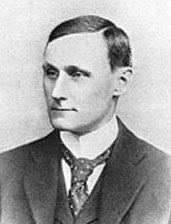
Percy Sinclair Pilcher (16 January 1867 – 2 October 1899) was a British inventor and pioneer aviator who was his country's foremost experimenter in unpowered flight near the end of the nineteenth century.
After corresponding with Otto Lilienthal, Pilcher had considerable success with developing hang gliders. In 1895, he made repeated flights in the Bat, and in 1896–1897 many flights in the Hawk culminated in a world distance record.
By 1899, Pilcher had produced a motor-driven triplane, which he planned to test at Stanford Hall in Leicestershire on September 30, 1899; however, the attempt was delayed by mechanical problems. When he substituted a flight of Hawk, it suffered structural failure in mid-air and he was fatally injured in the resulting crash, with his powered aircraft never having been tested.
Research carried out by Cranfield University in the early 2000s concluded that Pilcher's triplane was more or less workable, and would have been capable of flight with design modifications. This raised the possibility that Pilcher could have been the first to fly a heavier-than-air powered aircraft had he survived.
Percy Pilcher was born in Bath in 1867, the son of Thomas Webb Pilcher (1799–1874) and Scottish mother Sophia (née) Robinson. In 1880, at age 13 Pilcher became a cadet in the Royal Navy, and served for seven years. Thereafter he became an engineering apprentice with the shipbuilders, Randolph, Elder and Company, of Govan in Glasgow.
In 1891 Pilcher began work as assistant lecturer at Glasgow University and took a growing interest in aviation. He built a hang glider called The Bat which he flew for the first time in 1895;
Later that year Pilcher met Otto Lilienthal, who was the leading expert in gliding in Germany. These discussions led to Pilcher building two more gliders, The Beetle and The Gull. Based on the work of his mentor Otto Lilienthal, in 1895–1896 Pilcher built a glider called Hawk with which he broke the world distance record when he flew 250 m (820 ft) in 1897 on the grounds of Stanford Hall, Leicestershire. His sister Ella Pilcher was involved with his work, stitching the fabric wings of his planes and assisting with his experiments and test flights. She appears in photos taken at the time of Pilcher's public flights.
Pilcher set his sights on making powered flights. He developed a triplane that was to include a 4 hp (3 kW) engine. In order to develop a suitable internal combustion engine to power the aircraft, Pilcher teamed up with the motor engineer Walter Gordon Wilson, and created a company called Wilson-Pilcher. Wilson was later to become credited by the 1919 Royal Commission on Awards to Inventors as the co-inventor of the tank, along with Sir William Tritton. However, construction of the triplane put him heavily into debt, and Pilcher needed sponsorship to complete his work.
Hub AI
Percy Pilcher AI simulator
(@Percy Pilcher_simulator)
Percy Pilcher
Percy Sinclair Pilcher (16 January 1867 – 2 October 1899) was a British inventor and pioneer aviator who was his country's foremost experimenter in unpowered flight near the end of the nineteenth century.
After corresponding with Otto Lilienthal, Pilcher had considerable success with developing hang gliders. In 1895, he made repeated flights in the Bat, and in 1896–1897 many flights in the Hawk culminated in a world distance record.
By 1899, Pilcher had produced a motor-driven triplane, which he planned to test at Stanford Hall in Leicestershire on September 30, 1899; however, the attempt was delayed by mechanical problems. When he substituted a flight of Hawk, it suffered structural failure in mid-air and he was fatally injured in the resulting crash, with his powered aircraft never having been tested.
Research carried out by Cranfield University in the early 2000s concluded that Pilcher's triplane was more or less workable, and would have been capable of flight with design modifications. This raised the possibility that Pilcher could have been the first to fly a heavier-than-air powered aircraft had he survived.
Percy Pilcher was born in Bath in 1867, the son of Thomas Webb Pilcher (1799–1874) and Scottish mother Sophia (née) Robinson. In 1880, at age 13 Pilcher became a cadet in the Royal Navy, and served for seven years. Thereafter he became an engineering apprentice with the shipbuilders, Randolph, Elder and Company, of Govan in Glasgow.
In 1891 Pilcher began work as assistant lecturer at Glasgow University and took a growing interest in aviation. He built a hang glider called The Bat which he flew for the first time in 1895;
Later that year Pilcher met Otto Lilienthal, who was the leading expert in gliding in Germany. These discussions led to Pilcher building two more gliders, The Beetle and The Gull. Based on the work of his mentor Otto Lilienthal, in 1895–1896 Pilcher built a glider called Hawk with which he broke the world distance record when he flew 250 m (820 ft) in 1897 on the grounds of Stanford Hall, Leicestershire. His sister Ella Pilcher was involved with his work, stitching the fabric wings of his planes and assisting with his experiments and test flights. She appears in photos taken at the time of Pilcher's public flights.
Pilcher set his sights on making powered flights. He developed a triplane that was to include a 4 hp (3 kW) engine. In order to develop a suitable internal combustion engine to power the aircraft, Pilcher teamed up with the motor engineer Walter Gordon Wilson, and created a company called Wilson-Pilcher. Wilson was later to become credited by the 1919 Royal Commission on Awards to Inventors as the co-inventor of the tank, along with Sir William Tritton. However, construction of the triplane put him heavily into debt, and Pilcher needed sponsorship to complete his work.