


Community hub
Recent from talks
Contribute something to knowledge base
Content stats: 0 posts, 0 articles, 1 media, 0 notes
Members stats: 0 subscribers, 0 contributors, 0 moderators, 0 supporters
Subscribers
Supporters
Contributors
Moderators
Hub AI
Perlin noise AI simulator
(@Perlin noise_simulator)
Hub AI
Perlin noise AI simulator
(@Perlin noise_simulator)
Perlin noise
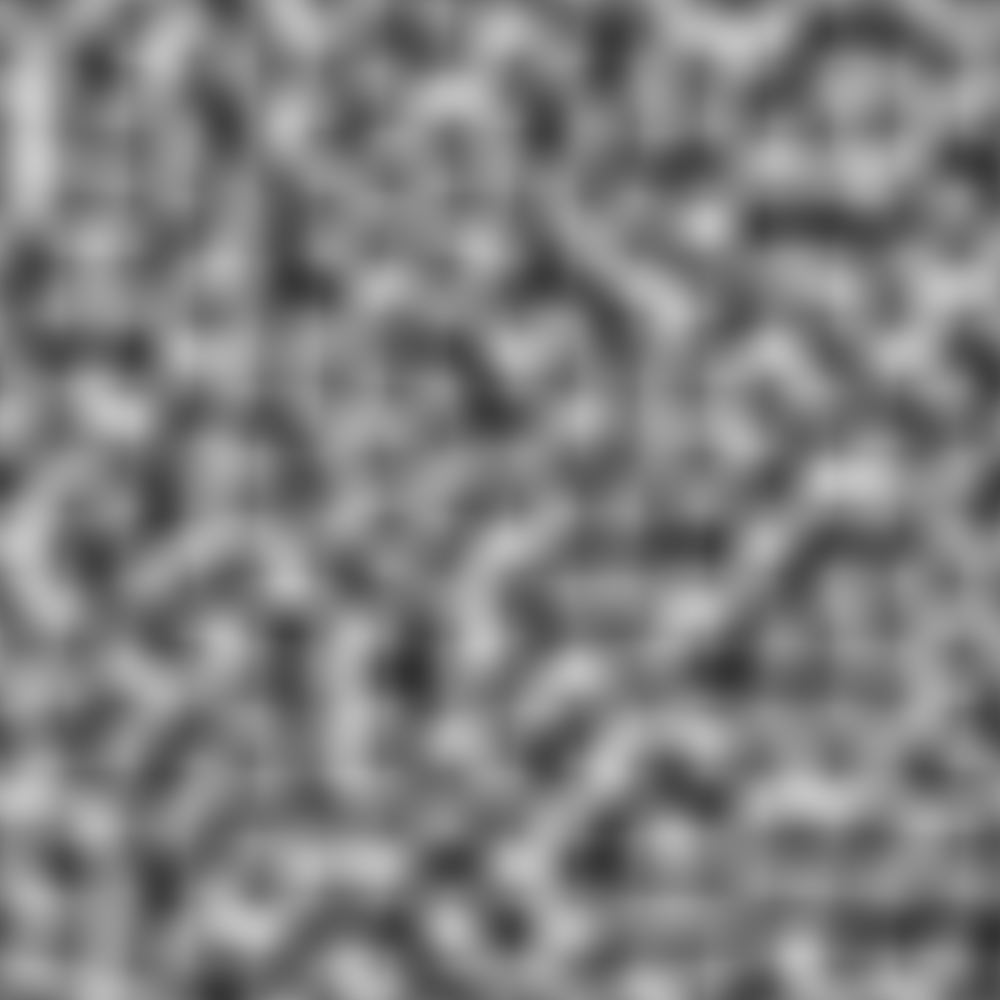
Perlin noise is a type of gradient noise developed by Ken Perlin in 1983. It has many uses, including but not limited to: procedurally generating terrain, applying pseudo-random changes to a variable, and assisting in the creation of image textures. It is most commonly implemented in two, three, or four dimensions, but can be defined for any number of dimensions.
Ken Perlin developed Perlin noise in 1983 as a result of his frustration with the "machine-like" look of computer-generated imagery (CGI) at the time. He formally described his findings in a SIGGRAPH paper in 1985 called "An Image Synthesizer". He developed it after working on Disney's computer animated sci-fi motion picture Tron (1982) for the animation company Mathematical Applications Group (MAGI). In 1997, Perlin was awarded an Academy Award for Technical Achievement for creating the algorithm, the citation for which read:
To Ken Perlin for the development of Perlin Noise, a technique used to produce natural appearing textures on computer generated surfaces for motion picture visual effects. The development of Perlin Noise has allowed computer graphics artists to better represent the complexity of natural phenomena in visual effects for the motion picture industry.
Perlin did not apply for any patents on the algorithm, but in 2001 he was granted a patent for the use of 3D+ implementations of simplex noise for texture synthesis. Simplex noise has the same purpose, but uses a simpler space-filling grid. Simplex noise alleviates some of the problems with Perlin's "classic noise", among them computational complexity and visually-significant directional artifacts.
Perlin noise is a procedural texture primitive, a type of gradient noise used by visual effects artists to increase the appearance of realism in computer graphics. The function has a pseudo-random appearance, yet all of its visual details are the same size.[citation needed] This property allows it to be readily controllable; multiple scaled copies of Perlin noise can be inserted into mathematical expressions to create a great variety of procedural textures. Synthetic textures using Perlin noise are often used in CGI to make computer-generated visual elements – such as object surfaces, fire, smoke, or clouds – appear more natural, by imitating the controlled random appearance of textures in nature.
It is also frequently used to generate textures when memory is extremely limited, such as in demos. Its successors, such as fractal noise and simplex noise, have become nearly ubiquitous in graphics processing units both for real-time graphics and for non-real-time procedural textures in all kinds of computer graphics.
It is frequently used in video games to make procedurally generated terrain that looks natural. The success is in part due to the hierarchical structuring of Perlin noise that mimics naturally occurring hierarchical structures, and therefore also has found to be useful in environmental science applications.
Perlin noise is most commonly implemented as a two-, three- or four-dimensional function, but can be defined for any number of dimensions. An implementation typically involves three steps: defining a grid of random gradient vectors, computing the dot product between the gradient vectors and their offsets, and interpolation between these values.
Perlin noise
Perlin noise is a type of gradient noise developed by Ken Perlin in 1983. It has many uses, including but not limited to: procedurally generating terrain, applying pseudo-random changes to a variable, and assisting in the creation of image textures. It is most commonly implemented in two, three, or four dimensions, but can be defined for any number of dimensions.
Ken Perlin developed Perlin noise in 1983 as a result of his frustration with the "machine-like" look of computer-generated imagery (CGI) at the time. He formally described his findings in a SIGGRAPH paper in 1985 called "An Image Synthesizer". He developed it after working on Disney's computer animated sci-fi motion picture Tron (1982) for the animation company Mathematical Applications Group (MAGI). In 1997, Perlin was awarded an Academy Award for Technical Achievement for creating the algorithm, the citation for which read:
To Ken Perlin for the development of Perlin Noise, a technique used to produce natural appearing textures on computer generated surfaces for motion picture visual effects. The development of Perlin Noise has allowed computer graphics artists to better represent the complexity of natural phenomena in visual effects for the motion picture industry.
Perlin did not apply for any patents on the algorithm, but in 2001 he was granted a patent for the use of 3D+ implementations of simplex noise for texture synthesis. Simplex noise has the same purpose, but uses a simpler space-filling grid. Simplex noise alleviates some of the problems with Perlin's "classic noise", among them computational complexity and visually-significant directional artifacts.
Perlin noise is a procedural texture primitive, a type of gradient noise used by visual effects artists to increase the appearance of realism in computer graphics. The function has a pseudo-random appearance, yet all of its visual details are the same size.[citation needed] This property allows it to be readily controllable; multiple scaled copies of Perlin noise can be inserted into mathematical expressions to create a great variety of procedural textures. Synthetic textures using Perlin noise are often used in CGI to make computer-generated visual elements – such as object surfaces, fire, smoke, or clouds – appear more natural, by imitating the controlled random appearance of textures in nature.
It is also frequently used to generate textures when memory is extremely limited, such as in demos. Its successors, such as fractal noise and simplex noise, have become nearly ubiquitous in graphics processing units both for real-time graphics and for non-real-time procedural textures in all kinds of computer graphics.
It is frequently used in video games to make procedurally generated terrain that looks natural. The success is in part due to the hierarchical structuring of Perlin noise that mimics naturally occurring hierarchical structures, and therefore also has found to be useful in environmental science applications.
Perlin noise is most commonly implemented as a two-, three- or four-dimensional function, but can be defined for any number of dimensions. An implementation typically involves three steps: defining a grid of random gradient vectors, computing the dot product between the gradient vectors and their offsets, and interpolation between these values.
Recent media
Recent media