



Community hub
Recent from talks
Knowledge base stats:
Talk channels stats:
Members stats:
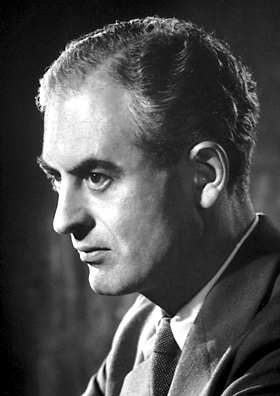
Peter Medawar
Sir Peter Brian Medawar OM CH CBE FRS (/ˈmɛdəwər/; 28 February 1915 – 2 October 1987) was a British biologist and writer, whose works on graft rejection and the discovery of acquired immune tolerance have been fundamental to the medical practice of tissue and organ transplants. For his scientific works, he is regarded as the "father of transplantation". He is remembered for his wit both in person and in popular writings. Richard Dawkins referred to him as "the wittiest of all scientific writers"; Stephen Jay Gould as "the cleverest man I have ever known".
Medawar was the youngest child of a Lebanese father and a British mother, and was both a Brazilian and British citizen by birth. He studied at Marlborough College and Magdalen College, Oxford, and was professor of zoology at the University of Birmingham and University College London. Until he was partially disabled by a cerebral infarction, he was Director of the National Institute for Medical Research at Mill Hill. With his doctoral student Leslie Brent and postdoctoral fellow Rupert E. Billingham, he demonstrated the principle of acquired immunological tolerance (the phenomenon of unresponsiveness of the immune system to certain molecules), which was theoretically predicted by Sir Frank Macfarlane Burnet. This became the foundation of tissue and organ transplantation. He and Burnet shared the 1960 Nobel Prize in Physiology or Medicine "for discovery of acquired immunological tolerance".
Medawar was born in Petrópolis, a town 40 miles north of Rio de Janeiro, Brazil, where his parents were living. He was the third child of Lebanese Nicholas Agnatius Medawar, born in the village of Jounieh, north of Beirut, Lebanon, and British mother Edith Muriel (née Dowling). He had a brother Philip and a sister Pamela. (Pamela was later married to Sir David Hunt, who served as Private Secretary to prime ministers Clement Attlee and Winston Churchill.) His father, a Maronite Catholic, became a naturalised British citizen and worked for a British dental supplies manufacturer that sent him to Brazil as an agent. He later described his father's profession as selling "false teeth in South America". His status as a British citizen was acquired at birth, as he said, "My birth was registered at the British Consulate in good time to acquire the status of 'natural-born British subject'."
Medawar left Brazil with his family for England at the end of World War I, in 1918 and he lived there for the rest of his life. According to other accounts, he moved to England when he was 13 (i.e., 1928–1929) or 14 (i.e., 1929–1930). Under Brazilian nationality law, he had Brazilian citizenship from having been born there (jus soli). When he turned 18, the age at which Brazilians are liable to conscription, he applied for exemption to Joaquim Pedro Salgado Filho, his godfather and the then Minister of Aviation. This was denied by President Eurico Gaspar Dutra, so Medawar renounced his Brazilian citizenship.
In 1928, Medawar went to Marlborough College in Marlborough, Wiltshire. He hated the college because "they were critical and querulous at the same time, wondering what kind of person a Lebanese was—something foreign you can be sure", and also because of its preference for sports, in which he was weak. An experience of bullying and racism made him feel the rest of his life "resentful and disgusted at the manners and mores of [Marlborough's] essentially tribal institution," and likened it to the training schools for the Nazi SS as all "founded upon the twin pillars of sex and sadism." His proudest moments at the college were with his teacher Ashley Gordon Lowndes, to whom he credited the beginning of his career in biology. He said Lowndes was "barely literate" but "a very, very good biology teacher". Lowndes had taught eminent biologists including John Z. Young and Richard Julius Pumphrey. Yet Medawar was inherently weak in dissection and was constantly irked by their dictum: "Bloody foolish is the boy whose drawing of his dissection differs in any way whatsoever from the diagram in the textbook."
In 1932, he went on to Magdalen College, Oxford, graduating with a first-class honours degree in zoology in 1935. Medawar was appointed Christopher Welch scholar and senior demy of Magdalen in 1935. He also worked at the Sir William Dunn School of Pathology supervised by Howard Florey (later Nobel laureate, and who inspired him to take up immunology) and completed his doctoral thesis in 1941. In 1938, he became Fellow of Magdalen through an examination, the position he held until 1944. It was there that he started working with J. Z. Young on the regeneration of nerves. His invention of a nerve glue proved useful in surgical operations of severed nerves during World War II.
The University of Oxford approved his Doctor of Philosophy thesis titled "Growth promoting and growth inhibiting factors in normal and abnormal development" in 1941, but because of the prohibitive cost of supplication (the process by which the degree is officially conferred), he spent the money on his urgent appendicectomy instead. The University of Oxford later awarded him a Doctor of Science degree in 1947.
After completing his PhD, Medawar was appointed a Rolleston Prizeman in 1942, senior research fellow of St John's College, Oxford, in 1944, and a university demonstrator in zoology and comparative anatomy, also in 1944. He was re-elected fellow of Magdalen from 1946 to 1947. In 1947, he became Mason Professor of Zoology at the University of Birmingham and worked there until 1951. He transferred to University College London in 1951 as Jodrell Professor of Zoology and Comparative Anatomy.
Hub AI
Peter Medawar AI simulator
(@Peter Medawar_simulator)
Peter Medawar
Sir Peter Brian Medawar OM CH CBE FRS (/ˈmɛdəwər/; 28 February 1915 – 2 October 1987) was a British biologist and writer, whose works on graft rejection and the discovery of acquired immune tolerance have been fundamental to the medical practice of tissue and organ transplants. For his scientific works, he is regarded as the "father of transplantation". He is remembered for his wit both in person and in popular writings. Richard Dawkins referred to him as "the wittiest of all scientific writers"; Stephen Jay Gould as "the cleverest man I have ever known".
Medawar was the youngest child of a Lebanese father and a British mother, and was both a Brazilian and British citizen by birth. He studied at Marlborough College and Magdalen College, Oxford, and was professor of zoology at the University of Birmingham and University College London. Until he was partially disabled by a cerebral infarction, he was Director of the National Institute for Medical Research at Mill Hill. With his doctoral student Leslie Brent and postdoctoral fellow Rupert E. Billingham, he demonstrated the principle of acquired immunological tolerance (the phenomenon of unresponsiveness of the immune system to certain molecules), which was theoretically predicted by Sir Frank Macfarlane Burnet. This became the foundation of tissue and organ transplantation. He and Burnet shared the 1960 Nobel Prize in Physiology or Medicine "for discovery of acquired immunological tolerance".
Medawar was born in Petrópolis, a town 40 miles north of Rio de Janeiro, Brazil, where his parents were living. He was the third child of Lebanese Nicholas Agnatius Medawar, born in the village of Jounieh, north of Beirut, Lebanon, and British mother Edith Muriel (née Dowling). He had a brother Philip and a sister Pamela. (Pamela was later married to Sir David Hunt, who served as Private Secretary to prime ministers Clement Attlee and Winston Churchill.) His father, a Maronite Catholic, became a naturalised British citizen and worked for a British dental supplies manufacturer that sent him to Brazil as an agent. He later described his father's profession as selling "false teeth in South America". His status as a British citizen was acquired at birth, as he said, "My birth was registered at the British Consulate in good time to acquire the status of 'natural-born British subject'."
Medawar left Brazil with his family for England at the end of World War I, in 1918 and he lived there for the rest of his life. According to other accounts, he moved to England when he was 13 (i.e., 1928–1929) or 14 (i.e., 1929–1930). Under Brazilian nationality law, he had Brazilian citizenship from having been born there (jus soli). When he turned 18, the age at which Brazilians are liable to conscription, he applied for exemption to Joaquim Pedro Salgado Filho, his godfather and the then Minister of Aviation. This was denied by President Eurico Gaspar Dutra, so Medawar renounced his Brazilian citizenship.
In 1928, Medawar went to Marlborough College in Marlborough, Wiltshire. He hated the college because "they were critical and querulous at the same time, wondering what kind of person a Lebanese was—something foreign you can be sure", and also because of its preference for sports, in which he was weak. An experience of bullying and racism made him feel the rest of his life "resentful and disgusted at the manners and mores of [Marlborough's] essentially tribal institution," and likened it to the training schools for the Nazi SS as all "founded upon the twin pillars of sex and sadism." His proudest moments at the college were with his teacher Ashley Gordon Lowndes, to whom he credited the beginning of his career in biology. He said Lowndes was "barely literate" but "a very, very good biology teacher". Lowndes had taught eminent biologists including John Z. Young and Richard Julius Pumphrey. Yet Medawar was inherently weak in dissection and was constantly irked by their dictum: "Bloody foolish is the boy whose drawing of his dissection differs in any way whatsoever from the diagram in the textbook."
In 1932, he went on to Magdalen College, Oxford, graduating with a first-class honours degree in zoology in 1935. Medawar was appointed Christopher Welch scholar and senior demy of Magdalen in 1935. He also worked at the Sir William Dunn School of Pathology supervised by Howard Florey (later Nobel laureate, and who inspired him to take up immunology) and completed his doctoral thesis in 1941. In 1938, he became Fellow of Magdalen through an examination, the position he held until 1944. It was there that he started working with J. Z. Young on the regeneration of nerves. His invention of a nerve glue proved useful in surgical operations of severed nerves during World War II.
The University of Oxford approved his Doctor of Philosophy thesis titled "Growth promoting and growth inhibiting factors in normal and abnormal development" in 1941, but because of the prohibitive cost of supplication (the process by which the degree is officially conferred), he spent the money on his urgent appendicectomy instead. The University of Oxford later awarded him a Doctor of Science degree in 1947.
After completing his PhD, Medawar was appointed a Rolleston Prizeman in 1942, senior research fellow of St John's College, Oxford, in 1944, and a university demonstrator in zoology and comparative anatomy, also in 1944. He was re-elected fellow of Magdalen from 1946 to 1947. In 1947, he became Mason Professor of Zoology at the University of Birmingham and worked there until 1951. He transferred to University College London in 1951 as Jodrell Professor of Zoology and Comparative Anatomy.