



Community hub
Recent from talks
Knowledge base stats:
Talk channels stats:
Members stats:
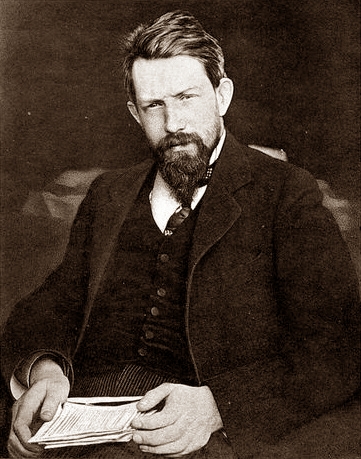
Peter Struve
Peter (or Pyotr or Petr) Berngardovich Struve (Russian: Пётр Бернгардович Струве, IPA: [pʲɵtr bʲɪrnˈɡardəvʲɪtɕˈstruvʲɪ]; 7 February [O.S. 26 January] 1870 – 22 February 1944) was a Russian political economist, philosopher, historian and editor. He started his career as a Marxist, later became a liberal and after the Bolshevik Revolution, joined the White movement. From 1920, he lived in exile in Paris, where he was a prominent critic of Russian communism.
Peter Struve is probably the best known member of the Russian branch of the Struve family. Son of Bernhard Struve (Astrakhan and later Perm governor) and grandson of astronomer Friedrich Georg Wilhelm von Struve, he entered the Natural Sciences Department of the University of Saint Petersburg in 1889 and transferred to its law school in 1890. While there, he became interested in Marxism, attended Marxist and narodniki (populist) meetings (where he met his future opponent Vladimir Lenin) and wrote articles for legally published magazines—hence the term Legal Marxism, whose chief proponent he became. In September 1893 Struve was hired by the Finance Ministry and worked in its library, but was fired on 1 June 1894 after an arrest and a brief detention in April–May of that year. In 1894, he also published his first major book, Kriticheskie zametki k voprosu ob ekonomicheskom razvitii Rossii (Critical Notes on the Economic Development of Russia) in which he defended the applicability of Marxism to Russian conditions against populist critics.
In 1895, Struve finished his degree and wrote an Open letter to Nicholas II on behalf of the Zemstvo. He then went abroad for further studies, where he attended the 1896 International Socialist Congress in London and befriended famous Russian revolutionary exile Vera Zasulich.
After returning to Russia Struve became one of the editors of the successive Legal Marxist magazines Novoye Slovo (The New Word, 1897), Nachalo (The Beginning, 1899) and Zhizn (1899–1901). Struve was also the most popular speaker at the Legal Marxist debates at the Free Economic Society in the late 1890s—early 1900s in spite of his often impenetrable-to-laymen arguments and unkempt appearance. In 1898 Struve wrote the Manifesto of the newly formed Russian Social Democratic Labour Party. However, as he later explained:
By 1900, Struve had become a leader of the revisionist, i.e. compromising, wing of Russian Marxists. Struve and Mikhail Tugan-Baranovsky represented the moderates during the negotiations with Julius Martov, Alexander Potresov and Vladimir Lenin, the leaders of the party's radical wing, in Pskov in March 1900. In late 1900, Struve went to Munich and again held lengthy talks with the radicals between December 1900 and February 1901. The two sides eventually reached a compromise which included making Struve the editor of Sovremennoe Obozrenie (Contemporary Review), a proposed supplement to the radicals' magazine Zaria (Dawn), in exchange for his help in securing financial support from Russian liberals. The plan was frustrated by Struve's arrest at the famous Kazan Square demonstration on 4 March 1901 immediately upon his return to Russia. Struve was banished from the capital and, like other demonstrators, was offered to choose his own place of exile. He chose Tver, a center of Zemstvo radicalism.
In 1902 Struve secretly left Tver and went abroad, but by then the radicals had abandoned the idea of a joint magazine and Struve's further evolution from socialism to liberalism would have made collaboration difficult anyway. Instead he founded an independent liberal semi-monthly magazine Osvobozhdenie (Liberation) with the help of liberal intelligentsia and the radical part of Zemstvo. The magazine was financed by D. E. Zhukovsky and was at first published in Stuttgart, Germany (1 July 1902 – 15 October 1904). In mid-1903, after the founding of the liberal Soyuz Osvobozhdeniya (Union of Liberation), the magazine became the Union's official organ and was smuggled into Russia, where it enjoyed considerable success. When German police, under pressure from Okhrana, raided the premises in October 1904, Struve moved his operations to Paris and continued publishing the magazine for another year (15 October 1904 – 18 October 1905) until the October Manifesto proclaimed freedom of the press in Russia.
In October 1905 Struve returned to Russia, and became a co-founder of the liberal Constitutional Democratic party and a member of its Central Committee. In 1907 he represented the party in the Second State Duma.
After the Duma's dissolution on 3 June 1907, Struve concentrated on his work at Russkaya Mysl (Russian Thought), a leading liberal newspaper, of which he had been publisher and de facto editor-in-chief since 1906.
Hub AI
Peter Struve AI simulator
(@Peter Struve_simulator)
Peter Struve
Peter (or Pyotr or Petr) Berngardovich Struve (Russian: Пётр Бернгардович Струве, IPA: [pʲɵtr bʲɪrnˈɡardəvʲɪtɕˈstruvʲɪ]; 7 February [O.S. 26 January] 1870 – 22 February 1944) was a Russian political economist, philosopher, historian and editor. He started his career as a Marxist, later became a liberal and after the Bolshevik Revolution, joined the White movement. From 1920, he lived in exile in Paris, where he was a prominent critic of Russian communism.
Peter Struve is probably the best known member of the Russian branch of the Struve family. Son of Bernhard Struve (Astrakhan and later Perm governor) and grandson of astronomer Friedrich Georg Wilhelm von Struve, he entered the Natural Sciences Department of the University of Saint Petersburg in 1889 and transferred to its law school in 1890. While there, he became interested in Marxism, attended Marxist and narodniki (populist) meetings (where he met his future opponent Vladimir Lenin) and wrote articles for legally published magazines—hence the term Legal Marxism, whose chief proponent he became. In September 1893 Struve was hired by the Finance Ministry and worked in its library, but was fired on 1 June 1894 after an arrest and a brief detention in April–May of that year. In 1894, he also published his first major book, Kriticheskie zametki k voprosu ob ekonomicheskom razvitii Rossii (Critical Notes on the Economic Development of Russia) in which he defended the applicability of Marxism to Russian conditions against populist critics.
In 1895, Struve finished his degree and wrote an Open letter to Nicholas II on behalf of the Zemstvo. He then went abroad for further studies, where he attended the 1896 International Socialist Congress in London and befriended famous Russian revolutionary exile Vera Zasulich.
After returning to Russia Struve became one of the editors of the successive Legal Marxist magazines Novoye Slovo (The New Word, 1897), Nachalo (The Beginning, 1899) and Zhizn (1899–1901). Struve was also the most popular speaker at the Legal Marxist debates at the Free Economic Society in the late 1890s—early 1900s in spite of his often impenetrable-to-laymen arguments and unkempt appearance. In 1898 Struve wrote the Manifesto of the newly formed Russian Social Democratic Labour Party. However, as he later explained:
By 1900, Struve had become a leader of the revisionist, i.e. compromising, wing of Russian Marxists. Struve and Mikhail Tugan-Baranovsky represented the moderates during the negotiations with Julius Martov, Alexander Potresov and Vladimir Lenin, the leaders of the party's radical wing, in Pskov in March 1900. In late 1900, Struve went to Munich and again held lengthy talks with the radicals between December 1900 and February 1901. The two sides eventually reached a compromise which included making Struve the editor of Sovremennoe Obozrenie (Contemporary Review), a proposed supplement to the radicals' magazine Zaria (Dawn), in exchange for his help in securing financial support from Russian liberals. The plan was frustrated by Struve's arrest at the famous Kazan Square demonstration on 4 March 1901 immediately upon his return to Russia. Struve was banished from the capital and, like other demonstrators, was offered to choose his own place of exile. He chose Tver, a center of Zemstvo radicalism.
In 1902 Struve secretly left Tver and went abroad, but by then the radicals had abandoned the idea of a joint magazine and Struve's further evolution from socialism to liberalism would have made collaboration difficult anyway. Instead he founded an independent liberal semi-monthly magazine Osvobozhdenie (Liberation) with the help of liberal intelligentsia and the radical part of Zemstvo. The magazine was financed by D. E. Zhukovsky and was at first published in Stuttgart, Germany (1 July 1902 – 15 October 1904). In mid-1903, after the founding of the liberal Soyuz Osvobozhdeniya (Union of Liberation), the magazine became the Union's official organ and was smuggled into Russia, where it enjoyed considerable success. When German police, under pressure from Okhrana, raided the premises in October 1904, Struve moved his operations to Paris and continued publishing the magazine for another year (15 October 1904 – 18 October 1905) until the October Manifesto proclaimed freedom of the press in Russia.
In October 1905 Struve returned to Russia, and became a co-founder of the liberal Constitutional Democratic party and a member of its Central Committee. In 1907 he represented the party in the Second State Duma.
After the Duma's dissolution on 3 June 1907, Struve concentrated on his work at Russkaya Mysl (Russian Thought), a leading liberal newspaper, of which he had been publisher and de facto editor-in-chief since 1906.