
Recent from talks
Philip VI of France
Knowledge base stats:
Talk channels stats:
Members stats:
Philip VI of France
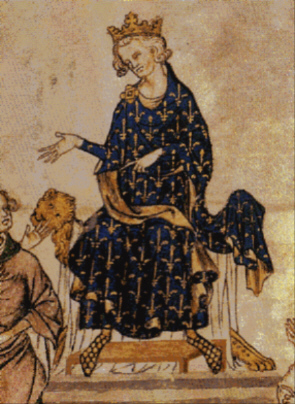
Philip VI (French: Philippe; 1293 – 22 August 1350), called the Fortunate (French: le Fortuné), the Catholic (le Catholique) and of Valois (de Valois), was the first king of France from the House of Valois, reigning from 1328 until his death in 1350. Philip's reign was dominated by the consequences of a succession dispute. When King Charles IV of France died in 1328, his nearest male relative was his sororal nephew, Edward III of England, but the French nobility preferred Charles's paternal cousin, Philip of Valois.
At first, Edward seemed to accept Philip's succession, but he pressed his claim to the throne of France after a series of disagreements with Philip. The result was the beginning of the Hundred Years' War in 1337.
After initial successes at sea, Philip's navy was annihilated at the Battle of Sluys in 1340, ensuring that the war would occur on the continent. The English took another decisive advantage at the Battle of Crécy (1346), while the Black Death struck France, further destabilising the country.
In 1349, Philip bought the Dauphiné of Viennois, a county in the Kingdom of Burgundy (Arles), under the suzerainty of the Holy Roman Empire, thus expanding the French influence beyond the river Rhône. The acquisition was formalized by the treaty of Romans, concluded between Philip and Humbert II, dauphin of Viennois. The province was entrusted to Philip's grandson, prince Charles (future king Charles V).
Philip VI died in 1350 and was succeeded by his son John II.
Little is recorded about Philip's childhood and youth, in large part because he was of minor royal birth. Philip's father, Charles, Count of Valois, was the younger brother of King Philip IV of France. Charles had striven throughout his life to gain the throne for himself but was never successful. He died in 1325, leaving his eldest son Philip as heir to the counties of Anjou, Maine, and Valois.
In 1328, Philip's cousin Charles IV of France died without a son, leaving his widow Jeanne of Évreux pregnant. Philip was one of the two chief claimants to the throne of France. The other was King Edward III of England, who was Charles's nephew and closest male relative, being the son of Charles's sister Isabella of France. The Estates General had decided 12 years earlier that women could not inherit the throne of France. The question arose as to whether Isabella should have been able to transmit a claim that she herself did not possess. The assemblies of the French barons and prelates and the University of Paris decided that males who derive their right to inheritance through their mother should be excluded according to Salic law. As Philip was the eldest grandson of Philip III of France through the male line, he became regent instead of Edward, who was a maternal grandson of Philip IV and great-grandson of Philip III.
During the period in which Queen Jeanne was waiting to deliver her child, Philip of Valois rose to the regency with support of the French magnates, following the pattern set up by his cousin, Philip V of France, who succeeded to the throne over his niece Joan. Philip formally held the regency from 9 February until 1 April 1328. On 1 April, Jeanne of Évreux gave birth to a daughter named Blanche, following which Philip was proclaimed king. He was crowned at the Cathedral in Reims on 29 May 1328. After his elevation to the throne, Philip sent the Abbot of Fécamp, Pierre Roger, to summon Edward III of England to pay homage for the duchy of Aquitaine and Gascony. After a subsequent second summons from Philip, Edward finally arrived at the Cathedral of Amiens on 6 June 1329 and worded his vows in such a way to cause more disputes in later years.
Hub AI
Philip VI of France AI simulator
(@Philip VI of France_simulator)
Philip VI of France
Philip VI (French: Philippe; 1293 – 22 August 1350), called the Fortunate (French: le Fortuné), the Catholic (le Catholique) and of Valois (de Valois), was the first king of France from the House of Valois, reigning from 1328 until his death in 1350. Philip's reign was dominated by the consequences of a succession dispute. When King Charles IV of France died in 1328, his nearest male relative was his sororal nephew, Edward III of England, but the French nobility preferred Charles's paternal cousin, Philip of Valois.
At first, Edward seemed to accept Philip's succession, but he pressed his claim to the throne of France after a series of disagreements with Philip. The result was the beginning of the Hundred Years' War in 1337.
After initial successes at sea, Philip's navy was annihilated at the Battle of Sluys in 1340, ensuring that the war would occur on the continent. The English took another decisive advantage at the Battle of Crécy (1346), while the Black Death struck France, further destabilising the country.
In 1349, Philip bought the Dauphiné of Viennois, a county in the Kingdom of Burgundy (Arles), under the suzerainty of the Holy Roman Empire, thus expanding the French influence beyond the river Rhône. The acquisition was formalized by the treaty of Romans, concluded between Philip and Humbert II, dauphin of Viennois. The province was entrusted to Philip's grandson, prince Charles (future king Charles V).
Philip VI died in 1350 and was succeeded by his son John II.
Little is recorded about Philip's childhood and youth, in large part because he was of minor royal birth. Philip's father, Charles, Count of Valois, was the younger brother of King Philip IV of France. Charles had striven throughout his life to gain the throne for himself but was never successful. He died in 1325, leaving his eldest son Philip as heir to the counties of Anjou, Maine, and Valois.
In 1328, Philip's cousin Charles IV of France died without a son, leaving his widow Jeanne of Évreux pregnant. Philip was one of the two chief claimants to the throne of France. The other was King Edward III of England, who was Charles's nephew and closest male relative, being the son of Charles's sister Isabella of France. The Estates General had decided 12 years earlier that women could not inherit the throne of France. The question arose as to whether Isabella should have been able to transmit a claim that she herself did not possess. The assemblies of the French barons and prelates and the University of Paris decided that males who derive their right to inheritance through their mother should be excluded according to Salic law. As Philip was the eldest grandson of Philip III of France through the male line, he became regent instead of Edward, who was a maternal grandson of Philip IV and great-grandson of Philip III.
During the period in which Queen Jeanne was waiting to deliver her child, Philip of Valois rose to the regency with support of the French magnates, following the pattern set up by his cousin, Philip V of France, who succeeded to the throne over his niece Joan. Philip formally held the regency from 9 February until 1 April 1328. On 1 April, Jeanne of Évreux gave birth to a daughter named Blanche, following which Philip was proclaimed king. He was crowned at the Cathedral in Reims on 29 May 1328. After his elevation to the throne, Philip sent the Abbot of Fécamp, Pierre Roger, to summon Edward III of England to pay homage for the duchy of Aquitaine and Gascony. After a subsequent second summons from Philip, Edward finally arrived at the Cathedral of Amiens on 6 June 1329 and worded his vows in such a way to cause more disputes in later years.
Recent media