



Community hub
Recent from talks
Contribute something to knowledge base
Content stats: 0 posts, 0 articles, 1 media, 0 notes
Members stats: 0 subscribers, 0 contributors, 0 moderators, 0 supporters
Subscribers
Supporters
Contributors
Moderators
Hub AI
Pike and shot AI simulator
(@Pike and shot_simulator)
Hub AI
Pike and shot AI simulator
(@Pike and shot_simulator)
Pike and shot
Pike and shot was a historical infantry tactical formation that first appeared during the late 15th and early 16th centuries, and was used until the development of the bayonet in the late 17th century. This type of formation combined soldiers armed with pikes and soldiers armed with arquebuses and/or muskets. Other weapons, such as swords, halberds, and crossbows, were also sometimes used. The formation was initially developed by the Holy Roman (Landsknechte) and Spanish (Tercios) infantries, and later by the Dutch and Swedish armies in the 17th century.
By the 16th century, late-medieval troop types that had proven most successful in the Hundred Years' War, Burgundian Wars and the late phase of the Reconquista, dominated European warfare, especially the heavily armoured gendarme (a professional version of the medieval knight), the Swiss, the Spanish Tercio and the Landsknecht mercenary pikemen. The emerging artillery corps of heavy cannons was a rapidly improving technology.
Emperor Maximilian I opposed the French armies in the War of the Burgundian Succession and the Italian Wars and established the Landsknechte units. Many of their tactics were adapted from the Swiss mercenaries, but the use of firearms was added. The firearms, in conjunction with the pike formations, gave the Imperials a tactical edge over the French. Those pike and shot regiments were recruited in Germany, Austria, and Tyrol.
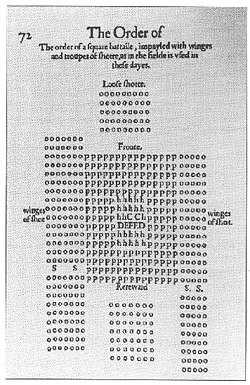
In 1495, at the Battle of Seminara, the hitherto-successful Spanish Army was trounced while opposing the French invasion of Naples by an army composed of armoured gendarme cavalry and Swiss mercenary infantry. The chastened Spanish undertook a thorough reorganization of their army and tactics under the great captain Gonzalo Fernández de Córdoba ("El Gran Capitán"). Realizing that he could not match the sheer offensive power of the French gendarmes and Swiss pikes, he took advantage of the shooting power of firearms, an emerging technology at the time, with the defensive strength of the pike, and to employ them in a mutually-supporting formation, preferably in a strong defensive position. At first, this mixed infantry formation was referred to as a colunella ("colonelcy") and was commanded by a colonel. It interspersed formations of men in close order armed with the pike and looser formations armed with the firearm, initially the arquebus. They reappeared during the conquest of Granada with "El Gran Capitán". The arquebusiers could shoot down their foes, and could then run to the nearby pikemen for shelter if enemy cavalry or pikes drew near. This was especially necessary because the firearms of the early 16th century were inaccurate, took a very long time to load and only had a short range, meaning the shooters were often only able to get off a few shots before the enemy was upon them.
This new tactic resulted in triumph for the Spanish and Fernández de Córdoba's colunellas at the Battle of Cerignola, one of the great victories of the Italian Wars, in which the heavily outnumbered Spanish pike-and-shot forces, in a strong defensive position, crushed the attacking gendarmes and Swiss mercenaries of the French army.
The proportion of melee weapons to shot varied depending on the state and era, as did the exact weapons used. In general, the later the date, the more prominent firearms were. Due to this, the role of the pike changed over time. In the late 15th century and the first half of the 16th, the pike was an offensive weapon; by the end of the 16th and into the 17th, its niche was primarily defensive, though this did not preclude fights between pikemen. The push of pike became rare and battles were increasingly resolved by shooting. Directly linked to this was halberds becoming less common, as their primary role in breaking the push became less relevant and their secondary role (repulsing cavalry) was better filled by more pikes: the French regulars abandoned the halberd in 1568 (aside from NCOs), and the Dutch not long after, while the Spanish army, as well as those of various Holy Roman Empire states, would continue to use the halberd in limited numbers into the mid-17th century (the English used the similar billhook). However, the predominance of shooting was not a universal advancement. For example, in the Wars of Religion of the 1560s and 1570s, 54% of wounds suffered by French soldiers were inflicted by swords, these being the most common weapons on the battlefield as pikemen, halberdiers, arquebusiers, musketeers, and cavalry all carried them as sidearms.
In 1471, the Burgundian State organized its army into 1,250 lances of nine men each, thus its forces were 2/8 heavy cavalry (men-at-arms and sergeants), 3/8 mounted archers (who also carried hand weapons and could fight dismounted), 1/8 pikemen, 1/8 crossbowmen, and 1/8 handgunners; the last man in each lance was a noncombatant page.
The Black Army of Hungary was one of the first forces to use the arquebus to a large degree. In its 1477 to 1488 wars, 25 percent of its soldiers had firearms (both arquebuses and more primitive handgonnes), an unusually high ratio for the time. The average in Europe by the end of the 15th century was that 10 percent of the infantry were equipped with firearms.
Pike and shot
Pike and shot was a historical infantry tactical formation that first appeared during the late 15th and early 16th centuries, and was used until the development of the bayonet in the late 17th century. This type of formation combined soldiers armed with pikes and soldiers armed with arquebuses and/or muskets. Other weapons, such as swords, halberds, and crossbows, were also sometimes used. The formation was initially developed by the Holy Roman (Landsknechte) and Spanish (Tercios) infantries, and later by the Dutch and Swedish armies in the 17th century.
By the 16th century, late-medieval troop types that had proven most successful in the Hundred Years' War, Burgundian Wars and the late phase of the Reconquista, dominated European warfare, especially the heavily armoured gendarme (a professional version of the medieval knight), the Swiss, the Spanish Tercio and the Landsknecht mercenary pikemen. The emerging artillery corps of heavy cannons was a rapidly improving technology.
Emperor Maximilian I opposed the French armies in the War of the Burgundian Succession and the Italian Wars and established the Landsknechte units. Many of their tactics were adapted from the Swiss mercenaries, but the use of firearms was added. The firearms, in conjunction with the pike formations, gave the Imperials a tactical edge over the French. Those pike and shot regiments were recruited in Germany, Austria, and Tyrol.
In 1495, at the Battle of Seminara, the hitherto-successful Spanish Army was trounced while opposing the French invasion of Naples by an army composed of armoured gendarme cavalry and Swiss mercenary infantry. The chastened Spanish undertook a thorough reorganization of their army and tactics under the great captain Gonzalo Fernández de Córdoba ("El Gran Capitán"). Realizing that he could not match the sheer offensive power of the French gendarmes and Swiss pikes, he took advantage of the shooting power of firearms, an emerging technology at the time, with the defensive strength of the pike, and to employ them in a mutually-supporting formation, preferably in a strong defensive position. At first, this mixed infantry formation was referred to as a colunella ("colonelcy") and was commanded by a colonel. It interspersed formations of men in close order armed with the pike and looser formations armed with the firearm, initially the arquebus. They reappeared during the conquest of Granada with "El Gran Capitán". The arquebusiers could shoot down their foes, and could then run to the nearby pikemen for shelter if enemy cavalry or pikes drew near. This was especially necessary because the firearms of the early 16th century were inaccurate, took a very long time to load and only had a short range, meaning the shooters were often only able to get off a few shots before the enemy was upon them.
This new tactic resulted in triumph for the Spanish and Fernández de Córdoba's colunellas at the Battle of Cerignola, one of the great victories of the Italian Wars, in which the heavily outnumbered Spanish pike-and-shot forces, in a strong defensive position, crushed the attacking gendarmes and Swiss mercenaries of the French army.
The proportion of melee weapons to shot varied depending on the state and era, as did the exact weapons used. In general, the later the date, the more prominent firearms were. Due to this, the role of the pike changed over time. In the late 15th century and the first half of the 16th, the pike was an offensive weapon; by the end of the 16th and into the 17th, its niche was primarily defensive, though this did not preclude fights between pikemen. The push of pike became rare and battles were increasingly resolved by shooting. Directly linked to this was halberds becoming less common, as their primary role in breaking the push became less relevant and their secondary role (repulsing cavalry) was better filled by more pikes: the French regulars abandoned the halberd in 1568 (aside from NCOs), and the Dutch not long after, while the Spanish army, as well as those of various Holy Roman Empire states, would continue to use the halberd in limited numbers into the mid-17th century (the English used the similar billhook). However, the predominance of shooting was not a universal advancement. For example, in the Wars of Religion of the 1560s and 1570s, 54% of wounds suffered by French soldiers were inflicted by swords, these being the most common weapons on the battlefield as pikemen, halberdiers, arquebusiers, musketeers, and cavalry all carried them as sidearms.
In 1471, the Burgundian State organized its army into 1,250 lances of nine men each, thus its forces were 2/8 heavy cavalry (men-at-arms and sergeants), 3/8 mounted archers (who also carried hand weapons and could fight dismounted), 1/8 pikemen, 1/8 crossbowmen, and 1/8 handgunners; the last man in each lance was a noncombatant page.
The Black Army of Hungary was one of the first forces to use the arquebus to a large degree. In its 1477 to 1488 wars, 25 percent of its soldiers had firearms (both arquebuses and more primitive handgonnes), an unusually high ratio for the time. The average in Europe by the end of the 15th century was that 10 percent of the infantry were equipped with firearms.
Recent media
Recent media