


Community hub
Recent from talks
Contribute something to knowledge base
Content stats: 0 posts, 0 articles, 1 media, 0 notes
Members stats: 0 subscribers, 0 contributors, 0 moderators, 0 supporters
Subscribers
Supporters
Contributors
Moderators
Hub AI
Pinworm infection AI simulator
(@Pinworm infection_simulator)
Hub AI
Pinworm infection AI simulator
(@Pinworm infection_simulator)
Pinworm infection
Pinworm infection (threadworm infection in the UK), also known as enterobiasis, is a human parasitic disease caused by the pinworm, Enterobius vermicularis. The most common symptom is pruritus ani, or itching in the anal area. The period of time from swallowing eggs to the appearance of new eggs around the anus is 4 to 8 weeks. Some people who are infected do not have symptoms.
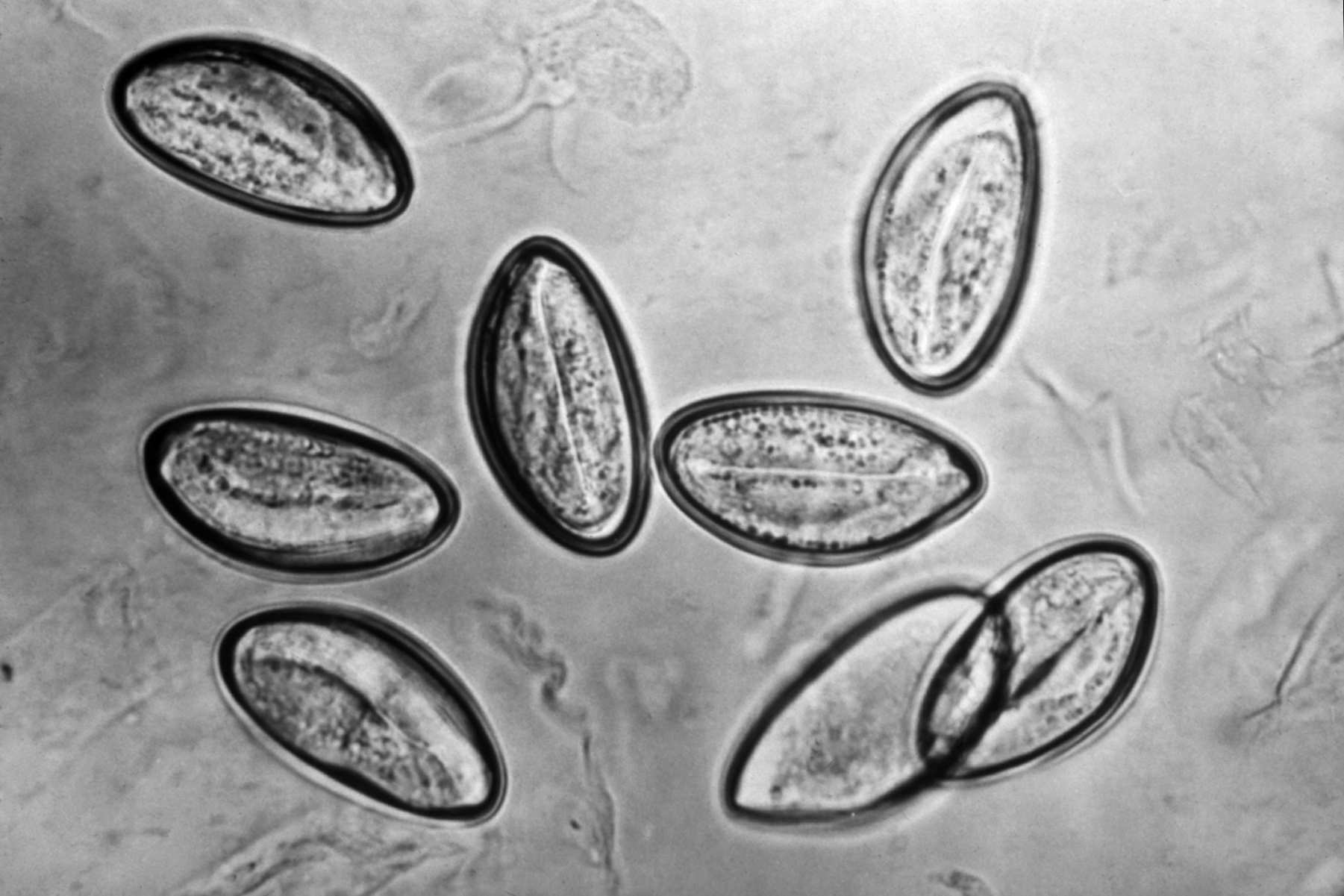
The disease is spread between people by pinworm eggs. The eggs initially occur around the anus and can survive for up to three weeks in the environment. They may be swallowed following contamination of the hands, food, or other articles. Those at risk are those who go to school, live in a health care institution or prison, or take care of people who are infected. Other animals do not spread the disease. Diagnosis is by seeing the worms which are about one centimetre long or the eggs under a microscope.
Treatment is typically with two doses of the medications mebendazole, pyrantel pamoate, or albendazole two weeks apart. Everyone who lives with or takes care of an infected person should be treated at the same time. Washing personal items in hot water after each dose of medication is recommended. Good handwashing, daily bathing in the morning, and daily changing of underwear can help prevent reinfection.
Pinworm infections commonly occur in all parts of the world. They are the most common type of worm infection in Western Europe, Northern Europe and the United States. School-aged children are the most commonly infected. In the United States about 20% of children will develop pinworm at some point. Infection rates among high-risk groups may be as high as 50%. It is not considered a serious disease. Pinworms are believed to have affected humans throughout history.
One-third of individuals with pinworm infection are totally asymptomatic. The main symptoms are itching in and around the anus and perineum. The itching occurs mainly during the night, and is caused by the female pinworms migrating to lay eggs around the anus. Both the migrating females and the clumps of eggs are irritating, as well as the sticky substance that is produced by the worms when the eggs are laid. The intensity of the itching varies, and it can be described as tickling, crawling sensations, or even acute pain. The itching leads to continuously scratching the area around the anus, which can further result in tearing of the skin and complications such as secondary bacterial infections, including bacterial skin inflammation, and hair follicle inflammation. General symptoms are trouble sleeping, and restlessness. A considerable proportion of children experience loss of appetite, weight loss, irritability, emotional instability, and bed wetting.
Pinworms cannot damage the skin, and they do not normally migrate through tissues. However, they may move onto the vulva and into the vagina, from there moving to the external orifice of the uterus, and onwards to the uterine cavity, fallopian tubes, ovaries, and peritoneal cavity. This can cause inflammation of the vulva and vagina. This causes vaginal discharge and itchiness of the vulva. The pinworms can also enter the urethra, and presumably, they carry intestinal bacteria with them. According to Gutierrez (2000), a statistically significant correlation between pinworm infection and urinary tract infections has been shown; however, Burkhart & Burkhart (2005) maintain that the incidence of pinworms as a cause of urinary tract infections remains unknown. One report indicated that 36% of young girls with a urinary tract infection also had pinworms. Painful urination has been associated with pinworm infection. Sometimes, pinworms can be stopped before reaching the vaginal area
The relationship between pinworm infestation and appendicitis (a condition in which the appendix becomes inflamed and filled with pus, causing pain) has been researched, but there is a lack of clear consensus on the matter: While Gutiérrez maintains that there exists a consensus that pinworms do not produce the inflammatory reaction, Cook (1994) states that it is controversial whether pinworms are causatively related to acute appendicitis, and Burkhart & Burkhart (2004) state that pinworm infection causes symptoms of appendicitis to surface.
The cause of a pinworm infection is the worm Enterobius vermicularis. The entire lifecycle – from egg to adult – takes place in the human gastrointestinal tract of a single human host. This process is two to eight weeks.
Pinworm infection
Pinworm infection (threadworm infection in the UK), also known as enterobiasis, is a human parasitic disease caused by the pinworm, Enterobius vermicularis. The most common symptom is pruritus ani, or itching in the anal area. The period of time from swallowing eggs to the appearance of new eggs around the anus is 4 to 8 weeks. Some people who are infected do not have symptoms.
The disease is spread between people by pinworm eggs. The eggs initially occur around the anus and can survive for up to three weeks in the environment. They may be swallowed following contamination of the hands, food, or other articles. Those at risk are those who go to school, live in a health care institution or prison, or take care of people who are infected. Other animals do not spread the disease. Diagnosis is by seeing the worms which are about one centimetre long or the eggs under a microscope.
Treatment is typically with two doses of the medications mebendazole, pyrantel pamoate, or albendazole two weeks apart. Everyone who lives with or takes care of an infected person should be treated at the same time. Washing personal items in hot water after each dose of medication is recommended. Good handwashing, daily bathing in the morning, and daily changing of underwear can help prevent reinfection.
Pinworm infections commonly occur in all parts of the world. They are the most common type of worm infection in Western Europe, Northern Europe and the United States. School-aged children are the most commonly infected. In the United States about 20% of children will develop pinworm at some point. Infection rates among high-risk groups may be as high as 50%. It is not considered a serious disease. Pinworms are believed to have affected humans throughout history.
One-third of individuals with pinworm infection are totally asymptomatic. The main symptoms are itching in and around the anus and perineum. The itching occurs mainly during the night, and is caused by the female pinworms migrating to lay eggs around the anus. Both the migrating females and the clumps of eggs are irritating, as well as the sticky substance that is produced by the worms when the eggs are laid. The intensity of the itching varies, and it can be described as tickling, crawling sensations, or even acute pain. The itching leads to continuously scratching the area around the anus, which can further result in tearing of the skin and complications such as secondary bacterial infections, including bacterial skin inflammation, and hair follicle inflammation. General symptoms are trouble sleeping, and restlessness. A considerable proportion of children experience loss of appetite, weight loss, irritability, emotional instability, and bed wetting.
Pinworms cannot damage the skin, and they do not normally migrate through tissues. However, they may move onto the vulva and into the vagina, from there moving to the external orifice of the uterus, and onwards to the uterine cavity, fallopian tubes, ovaries, and peritoneal cavity. This can cause inflammation of the vulva and vagina. This causes vaginal discharge and itchiness of the vulva. The pinworms can also enter the urethra, and presumably, they carry intestinal bacteria with them. According to Gutierrez (2000), a statistically significant correlation between pinworm infection and urinary tract infections has been shown; however, Burkhart & Burkhart (2005) maintain that the incidence of pinworms as a cause of urinary tract infections remains unknown. One report indicated that 36% of young girls with a urinary tract infection also had pinworms. Painful urination has been associated with pinworm infection. Sometimes, pinworms can be stopped before reaching the vaginal area
The relationship between pinworm infestation and appendicitis (a condition in which the appendix becomes inflamed and filled with pus, causing pain) has been researched, but there is a lack of clear consensus on the matter: While Gutiérrez maintains that there exists a consensus that pinworms do not produce the inflammatory reaction, Cook (1994) states that it is controversial whether pinworms are causatively related to acute appendicitis, and Burkhart & Burkhart (2004) state that pinworm infection causes symptoms of appendicitis to surface.
The cause of a pinworm infection is the worm Enterobius vermicularis. The entire lifecycle – from egg to adult – takes place in the human gastrointestinal tract of a single human host. This process is two to eight weeks.
Recent media
Recent media