Hubbry Logo
DermatitisDermatitisMain
Open search
Dermatitis
Community hub
Dermatitis
logo
8 pages, 0 posts
0 subscribers
Be the first to start a discussion here.
Dermatitis
Dermatitis
from Wikipedia

Dermatitis
Other namesEczema
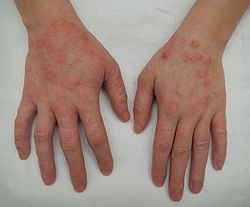
A moderate case of dermatitis of the hands
SpecialtyDermatology
SymptomsItchiness, red skin, rash[1]
ComplicationsSkin infection[2]
CausesAtopic dermatitis, allergic contact dermatitis, irritant contact dermatitis, seborrhoeic dermatitis, stasis dermatitis[1][2]
Diagnostic methodBased on symptom[1]
Differential diagnosisScabies, psoriasis, dermatitis herpetiformis, lichen simplex chronicus[3]
PreventionEssential fatty acids[4]
TreatmentMoisturizers, steroid creams, antihistamines[2][5]
Frequency245 million in 2015[6] (3.34% of world population)

Dermatitis is a term used for different types of skin inflammation, typically characterized by itchiness, redness and a rash.[1] In cases of short duration, there may be small blisters, while in long-term cases the skin may become thickened.[1] The area of skin involved can vary from small to covering the entire body.[1][2] Dermatitis is also called eczema but the same term is often used for the most common type of skin inflammation, atopic dermatitis.[7]

The exact cause of the condition is often unclear.[2] Cases may involve a combination of allergy and poor venous return.[1] The type of dermatitis is generally determined by the person's history and the location of the rash.[1] For example, irritant dermatitis often occurs on the hands of those who frequently get them wet.[1] Allergic contact dermatitis occurs upon exposure to an allergen, causing a hypersensitivity reaction in the skin.[1]

Prevention of atopic dermatitis is typically with essential fatty acids,[4] and may be treated with moisturizers and steroid creams.[5] The steroid creams should generally be of mid-to high strength and used for less than two weeks at a time, as side effects can occur.[8] Antibiotics may be required if there are signs of skin infection.[2] Contact dermatitis is typically treated by avoiding the allergen or irritant.[9][10] Antihistamines may help with sleep and decrease nighttime scratching.[2]

Dermatitis was estimated to affect 245 million people globally in 2015,[6] or 3.34% of the world population. Atopic dermatitis is the most common type and generally starts in childhood.[1][2] In the United States, it affects about 10–30% of people.[2] Contact dermatitis is twice as common in females as in males.[11] Allergic contact dermatitis affects about 7% of people at some point in their lives.[12] Irritant contact dermatitis is common, especially among people with certain occupations; exact rates are unclear.[13]

Terminology

[edit]

The terms dermatitis and eczema are sometimes used synonymously.[1][14] However the term eczema is often used to specifically mean atopic dermatitis (also known as atopic eczema).[15][7] Terminology might also differ according to countries. In some languages, dermatitis and eczema mean the same thing, while in other languages dermatitis implies an acute condition and eczema a chronic one.[16]

Signs and symptoms

[edit]
Dermatitis of the hand

There are several types of dermatitis including atopic dermatitis, contact dermatitis, stasis dermatitis and seborrhoeic dermatitis.[2] Dermatitis symptoms vary with all different forms of the condition. Although every type of dermatitis has different symptoms, there are certain signs that are common for all of them, including redness of the skin, swelling, itching and skin lesions with sometimes oozing and scarring. Also, the area of the skin on which the symptoms appear tends to be different with every type of dermatitis, whether on the neck, wrist, forearm, thigh or ankle.

Although the location may vary, the primary symptom of this condition is itchy skin. More rarely, it may appear on the genital area, such as the vulva or scrotum.[17][18] Symptoms of this type of dermatitis may be very intense and may come and go. Irritant contact dermatitis is usually more painful than itchy.

Although the symptoms of atopic dermatitis vary from person to person, the most common symptoms are dry, itchy, red skin, on light skin. However, this redness does not appear on darker skin and dermatitis can appear darker brown or purple in color.[19] Typical affected skin areas include the folds of the arms, the back of the knees, wrists, face and hands. Perioral dermatitis refers to a red bumpy rash around the mouth.[20]

Dermatitis herpetiformis symptoms include itching, stinging and a burning sensation. Papules and vesicles are commonly present.[21] The small red bumps experienced in this type of dermatitis are usually about 1 cm in size, red in color and may be found symmetrically grouped or distributed on the upper or lower back, buttocks, elbows, knees, neck, shoulders and scalp.

The symptoms of seborrhoeic dermatitis, on the other hand, tend to appear gradually, from dry or greasy scaling of the scalp (dandruff) to scaling of facial areas, sometimes with itching, but without hair loss.[22] In newborns, the condition causes a thick and yellowish scalp rash, often accompanied by a diaper rash. In severe cases, symptoms may appear along the hairline, behind the ears, on the eyebrows, on the bridge of the nose, around the nose, on the chest, and on the upper back.[23]

Complications

[edit]

People with eczema should not receive the smallpox vaccination due to risk of developing eczema vaccinatum, a potentially severe and sometimes fatal complication.[24] Other major health risks for people with dermatitis are viral and bacterial infections because atopic dermatitis patients have deficiencies in their proteins and lipids that have barrier functions along with defects in dendritic cells and as a result are unable to keep foreign invaders out, leading to recurring infections.[25] If left untreated, these infections may be life-threatening, so skin barrier improvement (such as daily moisturizing to minimize transepidermal water loss) and anti-inflammatory therapy are recommended as preventative measures.[25]

Cause

[edit]

The cause of dermatitis is unknown but is presumed to be a combination of genetic and environmental factors.[2] Eczema is not contagious.

Environmental

[edit]

The hygiene hypothesis postulates that the cause of asthma, eczema, and other allergic diseases is an unusually clean environment in childhood which leads to an insufficient human microbiota. It is supported by epidemiologic studies for asthma.[26] The hypothesis states that exposure to bacteria and other immune system modulators is important during development, and missing out on this exposure increases the risk for asthma and allergy.[27] One systematic review of literature on eczema found that urban areas have an increased prevalence of eczema compared to rural areas.[28] While it has been suggested that eczema may sometimes be an allergic reaction to the excrement from house dust mites,[29] with up to 5% of people showing antibodies to the mites,[30] the overall role this plays awaits further corroboration.[31]

Malnutrition

[edit]

Essential fatty acid deficiency results in a dermatitis similar to that seen in zinc or biotin deficiency.[4]

Genetic

[edit]

A number of genes have been associated with eczema, one of which affects production of filaggrin.[5] Genome-wide studies found three new genetic variants associated with eczema: OVOL1, ACTL9 and IL4-KIF3A.[32]

Eczema occurs about three times more frequently in individuals with celiac disease and about two times more frequently in relatives of those with celiac disease, potentially indicating a genetic link between the conditions.[33][34]

Diagnosis

[edit]

Diagnosis of eczema is based mostly on the history and physical examination.[5] In uncertain cases, skin biopsy may be taken for a histopathologic diagnosis of dermatitis.[35] Those with eczema may be especially prone to misdiagnosis of food allergies.[36]

Patch tests are used in the diagnosis of allergic contact dermatitis.[37][38]

Classification

[edit]

The term eczema refers to a set of clinical characteristics. Classification of the underlying diseases has been haphazard with numerous different classification systems, and many synonyms being used to describe the same condition.[39]

A type of dermatitis may be described by location (e.g., hand eczema), by specific appearance (eczema craquele or discoid) or by possible cause (varicose eczema). Further adding to the confusion, many sources use the term eczema interchangeably for the most common type: atopic dermatitis.[27]

The European Academy of Allergology and Clinical Immunology (EAACI) published a position paper in 2001, which simplifies the nomenclature of allergy-related diseases, including atopic and allergic contact eczemas.[40] Non-allergic eczemas are not affected by this proposal.

Histopathologic classification

[edit]

By histopathology, superficial dermatitis (in the epidermis, papillary dermis, and superficial vascular plexus) can basically be classified into either of the following groups:[41]

  • Vesiculobullous lesions
  • Pustular dermatosis
  • Non vesiculobullous, non-pustular
  • With epidermal changes
  • Without epidermal changes. These characteristically have a superficial perivascular inflammatory infiltrate and can be classified by type of cell infiltrate:[41]
  • Lymphocytic (most common)
  • Lymphoeosinophilic
  • Lymphoplasmacytic
  • Mast cell
  • Lymphohistiocytic
  • Neutrophilic

Common types

[edit]

Atopic

[edit]

Atopic dermatitis is an allergic disease believed to have a hereditary component and often runs in families whose members have asthma. Itchy rash is particularly noticeable on the head and scalp, neck, inside of elbows, behind knees, and buttocks. It is very common in developed countries and rising. Irritant contact dermatitis is sometimes misdiagnosed as atopic dermatitis. Stress can cause atopic dermatitis to worsen.[42]

Contact

[edit]

Contact dermatitis is of two types: allergic (resulting from a delayed reaction to an allergen, such as poison ivy, nickel, or Balsam of Peru),[43] and irritant (resulting from direct reaction to a detergent, such as sodium lauryl sulfate, for example).

Some substances act both as allergen and irritants (wet cement, for example). Other substances cause a problem after sunlight exposure, bringing on phototoxic dermatitis. About three-quarters of cases of contact eczema are of the irritant type, which is the most common occupational skin disease. Contact eczema is curable, provided the offending substance can be avoided and its traces removed from one's environment. (ICD-10 L23; L24; L56.1; L56.0)

Seborrhoeic

[edit]

Seborrhoeic dermatitis or seborrheic dermatitis is a condition sometimes classified as a form of eczema that is closely related to dandruff. It causes dry or greasy peeling of the scalp, eyebrows, and face, and sometimes trunk. In newborns, it causes a thick, yellow, crusty scalp rash called cradle cap, which seems related to lack of biotin and is often curable. (ICD-10 L21; L21.0)

There is a connection between seborrheic dermatitis and Malassezia fungus, and antifungals such as anti-dandruff shampoo can be helpful in treating it.[44]

Less common types

[edit]

Dyshidrosis

[edit]

Dyshidrosis (dyshidrotic eczema, pompholyx, vesicular palmoplantar dermatitis) only occurs on palms, soles, and sides of fingers and toes. Tiny opaque bumps called vesicles, thickening, and cracks are accompanied by itching, which gets worse at night. A common type of hand eczema, it worsens in warm weather. (ICD-10 L30.1)

Discoid

[edit]

Discoid eczema (nummular eczema, exudative eczema, microbial eczema) is characterized by round spots of oozing or dry rash, with clear boundaries, often on lower legs. It is usually worse in winter. The cause is unknown, and the condition tends to come and go. (ICD-10 L30.0)

Venous

[edit]

Venous eczema (gravitational eczema, stasis dermatitis, varicose eczema) occurs in people with impaired circulation, varicose veins, and edema, and is particularly common in the ankle area of people over 50. There is redness, scaling, darkening of the skin, and itching. The disorder predisposes to leg ulcers. (ICD-10 I83.1)

Herpetiformis

[edit]

Dermatitis herpetiformis (Duhring's disease) causes an intensely itchy and typically symmetrical rash on arms, thighs, knees, and back. It is directly related to celiac disease, can often be put into remission with an appropriate diet, and tends to get worse at night. (ICD-10 L13.0)

Hyperkeratotic

[edit]

Hyperkeratotic hand dermatitis presents with hyperkeratotic, fissure-prone, erythematous areas of the middle or proximal palm, and the volar surfaces of the fingers may also be involved.[45]: 79 

Neurodermatitis

[edit]

Neurodermatitis (lichen simplex chronicus, localized scratch dermatitis) is an itchy area of thickened, pigmented eczema patch that results from habitual rubbing and scratching. Usually, there is only one spot. Often curable through behaviour modification and anti-inflammatory medication. Prurigo nodularis is a related disorder showing multiple lumps. (ICD-10 L28.0; L28.1)

Autoeczematization

[edit]

Autoeczematization (id reaction, auto sensitization) is an eczematous reaction to an infection with parasites, fungi, bacteria, or viruses. It is completely curable with the clearance of the original infection that caused it. The appearance varies depending on the cause. It always occurs some distance away from the original infection. (ICD-10 L30.2)

Viral

[edit]

There are eczemas overlaid by viral infections (eczema herpeticum or vaccinatum), and eczemas resulting from underlying disease (e.g., lymphoma).

Eczemas originating from ingestion of medications, foods, and chemicals, have not yet been clearly systematized. Other rare eczematous disorders exist in addition to those listed here.

Prevention

[edit]

There have been various studies on the prevention of dermatitis through diet, none of which have proven any positive effect.

Exclusive breastfeeding of infants during at least the first few months may decrease the risk.[46] There is no good evidence that a mother's diet during pregnancy or breastfeeding affects the risk,[46] nor is there evidence that delayed introduction of certain foods is useful.[46] There is tentative evidence that probiotics in infancy may reduce rates but it is insufficient to recommend its use.[47] There is moderate certainty evidence that the use of skin care interventions such as emollients within the first year of life of an infant's life is not effective in preventing eczema.[48] In fact, it may increase the risk of skin infection and of unwanted effects such as allergic reaction to certain moisturizers and a stinging sensation.[48]

Healthy diet

[edit]

There has not been adequate evaluation of changing the diet to reduce eczema.[49][50] There is some evidence that infants with an established egg allergy may have a reduction in symptoms if eggs are eliminated from their diets.[49] Benefits have not been shown for other elimination diets, though the studies are small and poorly executed.[49][50] Establishing that there is a food allergy before dietary change could avoid unnecessary lifestyle changes.[49]

Fatty acids

[edit]

Oils with fatty acids that have been studied to prevent dermatitis include:[51][52]

In the 1950s Arild Hansen showed that infants fed skimmed milk developed essential fatty acid deficiency which was characterized by an increased food intake, poor growth, and a scaly dermatitis, and was cured by the administration of corn oil.

Management

[edit]

There is no known cure for some types of dermatitis, with treatment aiming to control symptoms by reducing inflammation and relieving itching. Contact dermatitis is treated by avoiding what is causing it.

Seborrheic dermatitis is treated with antifungals such as anti-dandruff shampoo.[44]

Lifestyle

[edit]

Bathing once or more a day is recommended, usually for five to ten minutes in warm water.[5][53] Soaps should be avoided, as they tend to strip the skin of natural oils and lead to excessive dryness.[54] The American Academy of Dermatology suggests using a controlled amount of bleach diluted in a bath to help with atopic dermatitis.[55]

People can wear clothing designed to manage the itching, scratching and peeling.[56]

House dust mite reduction and avoidance measures have been studied in low quality trials and have not shown evidence of improving eczema.[57]

Moisturizers

[edit]

Low-quality evidence indicates that moisturizing agents (emollients) may reduce eczema severity and lead to fewer flares.[58] In children, oil–based formulations appear to be better, and water–based formulations are not recommended.[5] It is unclear if moisturizers that contain ceramides are more or less effective than others.[59] Products that contain dyes, perfumes, or peanuts should not be used.[5] Occlusive dressings at night may be useful.[5]

Some moisturizers or barrier creams may reduce irritation in occupational irritant hand dermatitis,[60] a skin disease that can affect people in jobs that regularly come into contact with water, detergents, chemicals or other irritants.[60] Some emollients may reduce the number of flares in people with dermatitis.[58]

Medications

[edit]

Corticosteroids

[edit]

If symptoms are well controlled with moisturizers, steroids may only be required when flares occur.[5] Corticosteroids are effective in controlling and suppressing symptoms in most cases.[61] Once daily use is generally enough.[5] For mild-moderate eczema a weak steroid may be used (e.g., hydrocortisone), while in more severe cases a higher-potency steroid (e.g., clobetasol propionate) may be used. In severe cases, oral or injectable corticosteroids may be used. While these usually bring about rapid improvements, they have greater side effects.

Long term use of topical steroids may result in skin atrophy, stria, and telangiectasia.[5] Their use on delicate skin (face or groin) is therefore typically with caution.[5] They are, however, generally well tolerated.[62] Red burning skin, where the skin turns red upon stopping steroid use, has been reported among adults who use topical steroids at least daily for more than a year.[63]

Antihistamines

[edit]

There is little evidence supporting the use of antihistamine medications for the relief of dermatitis.[5][64] Sedative antihistamines, such as diphenhydramine, may be useful in those who are unable to sleep due to eczema.[5] Second generation antihistamines have minimal evidence of benefit.[65] Of the second generation antihistamines studied, fexofenadine is the only one to show evidence of improvement in itching with minimal side effects.[65]

Immunosuppressants

[edit]
Tacrolimus 0.1%

Topical immunosuppressants like pimecrolimus and tacrolimus may be better in the short term and appear equal to steroids after a year of use.[66] Their use is reasonable in those who do not respond to or are not tolerant of steroids.[67][68] Treatments are typically recommended for short or fixed periods of time rather than indefinitely.[5][69] Tacrolimus 0.1% has generally proved more effective than pimecrolimus, and equal in effect to mid-potency topical steroids.[70] There is no association to increased risk of cancer from topical use of pimecrolimus nor tacrolimus.[69][71]

When eczema is severe and does not respond to other forms of treatment, systemic immunosuppressants are sometimes used. Immunosuppressants can cause significant side effects and some require regular blood tests. The most commonly used are cyclosporin, azathioprine, and methotrexate.

Dupilumab is a new[note 1] medication that improves eczema lesions, especially moderate to severe eczema.[74] Dupilumab, a monoclonal antibody, suppresses inflammation by targeting the interleukin-4 receptor.

Antifungals

[edit]

Antifungals are used in the treatment of seborrheic dermatitis.[44]

Others

[edit]

In September 2021, ruxolitinib cream (Opzelura) was approved by the U.S. Food and Drug Administration (FDA) for the topical treatment of mild to moderate atopic dermatitis.[75] It is a topical Janus kinase inhibitor.[75]

Light therapy

[edit]

Narrowband UVB

[edit]

Atopic dermatitis (AD) may be treated with narrowband UVB,[76] which increases 25-hydroxyvitamin D3 in persons in individuals with AD.[77]

Light therapy using heliotherapy, balneophototherapy, psoralen plus UVA (PUVA therapy), light has tentative support but the quality of the evidence is not very good compared with narrowband UVB and UVA1.[78] UVB is more effective than UVA1 for treatment of atopical dermatitis.[79]

Overexposure to ultraviolet light carries its own risks, particularly that of skin cancer.[80]

Alternative medicine

[edit]

Topical

[edit]

Chiropractic spinal manipulation lacks evidence to support its use for dermatitis.[81] There is little evidence supporting the use of psychological treatments.[82] While dilute bleach baths have been used for infected dermatitis there is little evidence for this practice.[83]

Supplements

[edit]

Prognosis

[edit]

Most cases are well managed with topical treatments and ultraviolet light.[5] About 2% of cases are not.[5] In more than 60% of young children, the condition subsides by adolescence.[5]

Epidemiology

[edit]

Globally dermatitis affected approximately 230 million people as of 2010 (3.5% of the population).[89] Dermatitis is most commonly seen in infancy, with female predominance of eczema presentations occurring during the reproductive period of 15–49 years.[90] In the UK about 20% of children have the condition, while in the United States about 10% are affected.[5]

Although little data on the rates of eczema over time exists prior to the 1940s, the rate of eczema has been found to have increased substantially in the latter half of the 20th century, with eczema in school-aged children being found to increase between the late 1940s and 2000.[91] In the developed world there has been rise in the rate of eczema over time. The incidence and lifetime prevalence of eczema in England has been seen to increase in recent times.[5][92]

Dermatitis affected about 10% of U.S. workers in 2010, representing over 15 million workers with dermatitis. Prevalence rates were higher among females than among males and among those with some college education or a college degree compared to those with a high school diploma or less. Workers employed in healthcare and social assistance industries and life, physical, and social science occupations had the highest rates of reported dermatitis. About 6% of dermatitis cases among U.S. workers were attributed to work by a healthcare professional, indicating that the prevalence rate of work-related dermatitis among workers was at least 0.6%.[93]

Etymology and history

[edit]

from Ancient Greek ἔκζεμα ékzema,[94]
from ἐκζέ-ειν ekzé-ein,
from ἐκ ek 'out' + ζέ-ειν zé-ein 'to boil'

(OED)

The term atopic dermatitis was coined in 1933 by Wise and Sulzberger.[95] Sulfur as a topical treatment for eczema was fashionable in the Victorian and Edwardian eras.[84]

The word dermatitis is from the Greek δέρμα derma 'skin' and -ῖτις -itis 'inflammation' and eczema is from Greek: ἔκζεμα ekzema 'eruption'.[96]

Society and culture

[edit]

Some cosmetics are marketed as hypoallergenic to imply that their use is less likely to lead to an allergic reaction than other products.[97] However, the term hypoallergenic is not regulated,[98] and no research has been done showing that products labeled hypoallergenic are less problematic than any others. In 1977, courts overruled the U.S. Food and Drug Administration's regulation of the use of the term hypoallergenic.[97] In 2019, the European Union released a document about claims made concerning cosmetics,[99] but this was issued as guidance, not a regulation.[100]

Research

[edit]

Monoclonal antibodies are under preliminary research to determine their potential as treatments for atopic dermatitis, with only dupilumab showing evidence of efficacy, as of 2018.[101][102]

Notes

[edit]

References

[edit]
[edit]
Revisions and contributorsEdit on WikipediaRead on Wikipedia
from Grokipedia
Dermatitis is a common inflammatory condition of the skin that causes swelling, redness, itching, and dryness, often manifesting as rashes, blisters, or scaly patches. It encompasses various subtypes, including atopic dermatitis (also known as eczema), contact dermatitis, and seborrheic dermatitis, each triggered by different factors but sharing core symptoms of skin irritation. The condition affects people of all ages and skin types, though it is not contagious and typically resolves with appropriate management, such as avoiding triggers and using topical treatments. Atopic dermatitis, the most prevalent form, is a chronic, relapsing disorder often beginning in childhood, characterized by intense itching and inflamed barriers due to genetic and environmental factors. It impacts up to 20% of children and 3% of adults worldwide, with higher rates in industrialized regions, and is associated with allergies and immune dysregulation. Contact dermatitis arises from direct exposure to irritants or allergens, divided into (from substances like soaps or chemicals damaging the skin barrier) and (an immune-mediated response to sensitizers such as or ). Contact allergies affect approximately 8% of adults, particularly in occupational settings like healthcare or hairdressing, and typically presents as an acute rash that clears within weeks upon trigger avoidance. Seborrheic dermatitis, meanwhile, targets oil-rich areas like the , face, and chest, causing flaky, greasy scales often linked to yeast overgrowth (), stress, or underlying conditions such as or . It is common across all ages, including as in infants, and affects approximately 4% of the population worldwide (as of 2024), with flares influenced by seasonal changes and immune status. Common causes across dermatitis types include , environmental exposures, impaired skin barrier function, and immune system overreactions, while symptoms universally involve pruritus (itching), (redness), and xerosis (dryness), which can lead to complications like secondary infections if scratched. Risk factors encompass family history of allergies, occupational hazards, and comorbidities like or disorders. Management focuses on moisturizing, topical corticosteroids, and identifying triggers, with severe cases potentially requiring systemic therapies or phototherapy. Overall, dermatitis significantly impacts due to its chronic nature and visible effects, underscoring the importance of early diagnosis and personalized care.

Definition and Terminology

Definition

Dermatitis is a broad term encompassing various inflammatory conditions of the skin, primarily characterized by redness, swelling, itching, and cracking of the affected areas, frequently resulting from disruption of the skin's protective barrier. This often manifests as dry, scaly patches or rashes that can ooze or crust over time, reflecting an acute or chronic response to diverse triggers. Although often used interchangeably in casual contexts, eczema represents a specific subset of dermatitis, most notably , whereas is a distinct autoimmune disorder featuring well-demarcated, plaque-like lesions with prominent silvery scaling and less emphasis on intense pruritus. Dermatitis lesions tend to be more irregularly shaped and prone to weeping, contrasting with the thicker, drier plaques typical of . In many forms of dermatitis, particularly atopic and other eczematous types, an impaired epidermal barrier plays a key pathophysiological role, compromising the stratum corneum's integrity and elevating (TEWL), thereby increasing vulnerability to external irritants, allergens, and microbial invasion. This barrier dysfunction initiates a cascade of inflammatory responses, perpetuating dryness and sensitivity across affected subtypes.

Terminology

The term "dermatitis" derives from the Greek roots "derm-" or "derma," meaning or hide, and "-itis," denoting . In medical and lay contexts, "dermatitis" is often used synonymously with "eczema," though eczema more precisely describes a clinical pattern of inflamed, pruritic rather than a specific , while dermatitis encompasses a broader range of inflammatory conditions. The colloquial term "" is a nonspecific lay descriptor for any visible skin eruption, including those caused by dermatitis. Dermatitis is classified into stages based on clinical evolution: the acute stage features vesicles, weeping, and crusting; the subacute stage involves scaling and crusting with reduced exudation; and the chronic stage is characterized by lichenification, thickening, and fissuring due to persistent rubbing or scratching. Dermatitis specifically refers to of the skin, while the broader term "dermatosis" encompasses any skin disorder, including inflammatory conditions like dermatitis and , as well as non-inflammatory or structural disorders like .

Clinical Presentation

Signs and Symptoms

Dermatitis is characterized primarily by intense pruritus, or itching, which often initiates a vicious cycle of that exacerbates damage and perpetuates . This subjective symptom is nearly universal across forms of dermatitis and can significantly impair , prompting repeated mechanical irritation of the affected areas. Observable signs include , or redness, accompanied by leading to swelling, and the formation of vesicles or papules on the skin surface. Excoriations from and scaling due to dryness are common, with the often appearing as dry, flaky patches that may ooze in more severe cases. Distribution patterns vary but frequently involve flexural areas such as the elbows and knees, extensor surfaces, or generalized involvement depending on the underlying type. In acute presentations, the skin may exhibit weeping, crusting, and blistering due to active , while chronic forms show lichenification with thickened, leathery from prolonged rubbing. Associated features encompass xerosis, or excessive dryness, which compromises the barrier, and arising from fissures or cracks in the . For instance, often features a predilection for flexural distributions in children.

Complications

Dermatitis can lead to various infectious complications due to impaired skin barrier function, which facilitates microbial colonization and invasion. Bacterial superinfections are common, particularly with , which colonizes the skin in 60-90% of atopic dermatitis cases and can cause or more severe skin and soft tissue infections. Viral complications include , a disseminated infection that arises in areas of active dermatitis and can be life-threatening if untreated. Fungal superinfections, such as those involving species, may exacerbate dermatitis flares, especially in atopic forms, leading to intensified and pruritus. Chronic dermatitis often results in structural skin changes from repeated scratching or rubbing. Lichenification manifests as thickened, leathery skin with exaggerated skin markings and , commonly seen in longstanding cases. Post-inflammatory occurs as a residual darkening of the skin following resolution of acute lesions, more prominent in individuals with darker skin tones. Systemic effects of dermatitis include disturbances caused by nocturnal itching, which affects up to 60% of children with and impairs overall . In pediatric patients, severe or uncontrolled is associated with linear growth impairment, potentially due to chronic inflammation, nutritional deficits, and disrupted . Psychological complications are significant, with dermatitis linked to higher rates of anxiety and depression stemming from chronic discomfort, visible lesions, and . Adults with have an increased risk of depressive symptoms and psychological distress compared to the general . Rare but severe complications include erythroderma, characterized by widespread affecting over 90% of the body surface, which can lead to fluid loss, thermoregulatory issues, and secondary infections; this is more frequent in severe .

Etiology

Genetic Factors

Dermatitis, particularly atopic dermatitis, exhibits a strong genetic basis, with susceptibility influenced by multiple genes affecting skin barrier function and immune regulation. Loss-of-function mutations in the filaggrin gene (FLG) are among the most significant genetic risk factors, impairing the skin's barrier integrity by reducing the production of filaggrin protein, which is essential for maintaining epidermal hydration and preventing allergen penetration. These mutations confer an increased risk of atopic dermatitis, with an overall odds ratio of approximately 3.12 for carriers compared to non-carriers. Genetic predisposition to also involves variants in genes encoding key cytokines of the Th2 immune pathway, such as IL4 and IL13, which promote characterized by elevated IgE production and activation. For instance, the IL13 130 Gln is associated with a of 2.5 for , enhancing Th2 responses that exacerbate skin inflammation. Inheritance patterns for are predominantly polygenic, involving numerous common variants each contributing modestly to risk, alongside a substantial heritable component evidenced by studies. Monozygotic twins show a concordance rate of 72-86% for , far exceeding the 21-23% in dizygotic twins, underscoring the genetic influence while interactions with environmental factors modulate disease expression. Rare monogenic forms of dermatitis highlight specific genetic mechanisms, such as Netherton syndrome, an autosomal recessive disorder caused by biallelic mutations in the SPINK5 gene, which encodes a inhibitor crucial for skin desquamation and barrier maintenance. These mutations lead to severe erythroderma and ichthyosis-like features resembling dermatitis, often with atopic manifestations.

Environmental Factors

Environmental factors play a significant role in the development and exacerbation of dermatitis by disrupting the skin's and triggering inflammatory responses, often in interaction with individual susceptibility. These external influences include chemical irritants, allergens, climatic conditions, occupational hazards, and nutritional deficiencies, which can lead to conditions such as irritant or . Irritants, such as soaps and detergents, are common environmental triggers that cause by directly damaging the epidermal barrier through repeated exposure. Frequent contact with these substances leads to dryness, , and fissuring, particularly in individuals with pre-existing sensitivity. For instance, water and in cleaning products erode the , increasing and inflammation. Allergens like in jewelry and fragrances in provoke via delayed-type reactions. Exposure to , often through earrings or belt buckles, sensitizes T-cells, resulting in eczematous reactions upon re-exposure, affecting up to 10-20% of the population depending on regional prevalence. Fragrances, present in and lotions, similarly elicit immune responses, with patch testing identifying them as frequent culprits in chronic cases. Climatic conditions, including low humidity and extreme temperatures, exacerbate dermatitis by impairing barrier integrity and promoting dryness. Low relative humidity, common in arid or heated indoor environments, reduces hydration and increases susceptibility to irritants, leading to flares in atopic and . Extreme cold temperatures constrict blood vessels and slow barrier repair, while high heat can induce sweating that further irritates compromised . Occupational exposures to chemicals in sectors like healthcare and heighten dermatitis risk through prolonged contact with irritants and allergens. Healthcare workers face wet work from gloves and disinfectants, contributing to , while involves solvents and metals that cause similar reactions. Hairdressers, for example, experience a of up to 20% for occupational hand dermatitis due to repeated exposure to dyes, bleaches, and shampoos. Malnutrition, particularly deficiencies in and , undermines skin integrity and predisposes individuals to dermatitis-like eruptions. manifests as acrodermatitis with periorificial and acral lesions due to impaired epidermal proliferation and immune function. Essential fatty acid shortages, often in severe , result in scaly, erythematous rashes by disrupting barrier components, compounding vulnerability to environmental insults.

Role of Microbiome

The skin microbiome in atopic dermatitis (AD) is marked by dysbiosis, featuring reduced microbial diversity and a marked overgrowth of Staphylococcus aureus in lesional skin, which correlates with disease severity and barrier impairment. This pathogen dominates up to 90% of lesional sites during flares, outcompeting commensals like Staphylococcus epidermidis and Cutibacterium acnes. S. aureus forms biofilms within eccrine ducts and on the skin surface, promoting persistence, antibiotic resistance, and enhanced release of pro-inflammatory toxins via quorum sensing. The gut-skin axis further implicates microbial ecology in AD pathogenesis, with early-life alterations in gut microbiota increasing atopic risk. Infants developing AD show reduced abundance of beneficial genera such as Bifidobacterium, alongside elevations in Clostridium and Escherichia coli, which disrupt immune maturation and promote Th2-skewed responses. This dysbiosis, often evident by 3-6 months of age, precedes skin manifestations and is influenced by factors like cesarean delivery or antibiotic exposure, heightening AD susceptibility by impairing regulatory T-cell development. Microbial metabolites mediate these effects by modulating immune responses and barrier integrity. (SCFAs), such as butyrate and propionate produced by skin and gut commensals, inhibit signaling to suppress pro-inflammatory cytokines like IL-4 and TNF-α while enhancing proteins for barrier reinforcement. Tryptophan-derived indoles from Bifidobacterium and other symbionts activate the , promoting IL-10 production and dampening Th2 inflammation, whereas reduces these protective signals, amplifying immune dysregulation and degradation in AD lesions. This microbiome-immune interplay interacts briefly with genetic barrier defects to perpetuate disease. In seborrheic dermatitis, the skin is characterized by overgrowth of yeast species, particularly and Malassezia restricta, which hydrolyze sebum into irritant-free fatty acids, triggering inflammatory responses via toll-like receptors and release (e.g., IL-1, IL-6, TNF-α). This fungal , often in oil-rich areas, is accompanied by bacterial shifts, including increased and reduced Cutibacterium, contributing to barrier disruption, elevated pH, and trans-epidermal water loss. Genetic susceptibility and immune factors, such as impaired T-cell responses, exacerbate Malassezia colonization, with prevalence linked to conditions like or . Systematic reviews and metagenomic studies provide evidence that dysbiosis in and gut microbiomes precedes or accompanies AD flares in a majority of cases, with S. aureus dominance often detectable weeks before symptom onset. Recent investigations from 2023-2025 reveal microbiome shifts following biologic therapies, such as , which restore diversity by decreasing S. aureus load and increasing commensals, alongside probiotic interventions targeting the gut-skin axis that alleviate symptoms via SCFA elevation. These findings underscore the therapeutic potential of microbiome modulation, including topical prebiotics and fecal microbiota transplants, to prevent flares and enhance .

Types of Dermatitis

Atopic Dermatitis

Atopic dermatitis, also known as atopic eczema, is a chronic, relapsing inflammatory characterized by intense pruritus and eczematous lesions, often associated with IgE-mediated allergic responses. It represents the most prevalent form of eczema, involving a disrupted barrier and dysregulated immune function that predispose individuals to recurrent flares. Globally, affects approximately 15-20% of children and 2-10% of adults, with prevalence rates reaching up to 20% in pediatric populations in certain regions. The condition is more common in urban environments, where environmental factors such as and changes contribute to higher incidence among both children and adults in industrialized areas. The pathophysiology of features a Th2-skewed , characterized by elevated production of cytokines like interleukin-4, -13, and -31, which drive and barrier dysfunction. Genetic defects in the gene (FLG), which encodes a key protein for epidermal barrier integrity, are particularly prevalent in this subtype, leading to impaired hydration and increased penetration. Clinically, atopic dermatitis typically presents with erythematous, pruritic lesions distributed in flexural areas such as the antecubital and popliteal fossae, particularly in older children and adults, while infants often show involvement of the face and extensor surfaces. It is associated with the atopic march, a progressive sequence where early-onset increases the risk of developing and later in life. Common triggers include food allergens, such as eggs and cow's milk, which exacerbate symptoms in up to 30% of infants with moderate-to-severe disease. In adults, aeroallergens like house dust mites and pollen are frequent precipitants, promoting flares through airborne exposure and sensitization.

Contact Dermatitis

Contact dermatitis is a common inflammatory skin condition resulting from direct contact with external substances, broadly classified into two main subtypes: irritant contact dermatitis (ICD) and allergic contact dermatitis (ACD). ICD, which accounts for approximately 80% of cases, is a non-immunologic response triggered by the direct cytotoxic effects of irritants on the skin barrier, leading to inflammation without prior sensitization. In contrast, ACD is an immunologic reaction mediated by T cells, representing a type IV delayed hypersensitivity response that requires prior exposure to sensitize the immune system. These subtypes differ fundamentally in their mechanisms, with ICD involving innate immune activation and barrier disruption, while ACD depends on adaptive immunity. Epidemiologically, contact dermatitis has a lifetime of approximately 15-20% in the general , with ACD specifically affecting up to 20% of individuals at some point. Occupational exposure contributes significantly, with contact dermatitis comprising 90-95% of occupational skin diseases and affecting an estimated 10-15% of workers in high-risk professions such as healthcare, , and . Women and individuals with a history of atopic conditions are at higher risk, though the condition spans all ages and demographics. The of ACD begins with haptenation, where small-molecular-weight allergens (haptens) penetrate the and bind to proteins, forming immunogenic complexes that are processed by Langerhans cells and presented to naïve T cells in lymph nodes. This phase leads to memory T-cell formation, and upon re-exposure, effector T cells (primarily + and +) infiltrate the , releasing cytokines like IFN-γ to induce the inflammatory response characteristic of delayed , typically manifesting 48-72 hours after contact. ICD, by comparison, bypasses this adaptive process, relying instead on direct release of inflammatory mediators from damaged and innate immune cells. Common allergens in ACD include metals such as , found in jewelry and fasteners; rubber compounds like in gloves; and plant-derived substances, notably from (), which causes severe reactions in sensitized individuals. These agents vary in potency, with being one of the most frequent sensitizers globally, affecting up to 15-20% of women due to jewelry exposure. Clinically, contact dermatitis presents as an eczematous eruption localized to the site of exposure, with acute lesions featuring erythematous plaques, pruritus, and vesicles or bullae filled with clear fluid. Chronic or repeated exposure may lead to lichenification, characterized by thickened, hyperkeratotic with accentuated skin markings due to persistent rubbing or . The distribution often follows patterns like linear streaks from plant contact or hand involvement in occupational cases, distinguishing it from more diffuse forms of dermatitis. may involve patch testing to confirm specific allergens.

Seborrheic Dermatitis

Seborrheic dermatitis is a common chronic inflammatory skin disorder characterized by erythematous, scaly patches primarily affecting areas rich in sebaceous glands, including the , face, and upper trunk. It presents with greasy, yellowish scales and mild to moderate , often accompanied by variable pruritus that is typically less intense than in . In infants, it manifests as , featuring thick, greasy scales on the scalp that usually resolve spontaneously within the first year of life. The involves overgrowth of yeast species, which are lipophilic fungi normally present on the skin, leading to an abnormal and in sebum-rich areas. This fungal proliferation alters skin lipid composition and triggers keratinocyte hyperproliferation, resulting in scaling and irritation. Individual susceptibility factors, such as hyperactivity and immune dysregulation, contribute to the condition's chronic, relapsing nature. Epidemiologically, seborrheic dermatitis affects approximately 4.38% of the global population, with higher prevalence in adults (5.64%) compared to children (3.70%) and neonates (0.23%). It shows bimodal peaks, occurring frequently in infancy and again in adulthood, particularly after age 40. The condition is notably more prevalent in individuals with , where rates can reach 52-59%, and in those with , with prevalence ranging from 30% in early to 85% in advanced AIDS stages. Psychological and environmental factors can exacerbate symptoms, highlighting associations with neurological and immunosuppressive states.

Other Types

Dyshidrotic dermatitis, also known as pompholyx, is characterized by the sudden onset of small, itchy vesicles and blisters on the palms, sides of the fingers, and soles of the feet. It often recurs and may be triggered by stress, although the exact etiology remains multifactorial, including and irritant exposure. This condition accounts for 5-20% of cases but is less prevalent overall. Nummular dermatitis, or discoid eczema, manifests as well-demarcated, coin-shaped (nummular) plaques that are erythematous, scaly, and intensely pruritic, typically on the extremities or trunk. These lesions frequently develop secondary bacterial superinfections due to scratching and skin barrier disruption, exacerbated by dry skin or environmental irritants. Its global prevalence is approximately 0.2% in the general population. Stasis dermatitis, also called venous eczema, primarily affects the lower legs and arises from , leading to , , and eczematous changes like scaling and weeping. Poor circulation causes venous , which impairs and promotes . It has a prevalence of 6-7% among individuals over 50 years old. Dermatitis herpetiformis presents as an intensely pruritic, symmetrical eruption of vesicles and urticarial plaques, often on the elbows, knees, buttocks, and scalp, with characteristic IgA deposits in the dermal papillae on . It is strongly linked to gluten sensitivity and celiac disease, where about 25% of celiac patients develop this manifestation. Neurodermatitis, or , features thickened, leathery (lichenified) plaques resulting from habitual scratching of localized itchy areas, commonly on the neck, wrists, ankles, or genitals. This condition perpetuates an itch-scratch cycle, often initiated by stress or minor trauma. It affects an estimated 5-12% of adults in populations with chronic pruritus, predominantly women aged 30-50. These other types of dermatitis are less common than the primary forms, with prevalences varying from rare (e.g., dermatitis herpetiformis ~0.05%) to more significant in specific groups (e.g., stasis dermatitis 6-7% over age 50), and they often overlap with more common forms like atopic or contact dermatitis.

Diagnosis

Clinical Assessment

Clinical assessment of dermatitis begins with a detailed patient history to identify potential etiologies and patterns. Clinicians inquire about the onset and duration of symptoms, which may be acute, subacute, or chronic, helping to distinguish between types such as irritant contact dermatitis from acute exposures or atopic dermatitis with a relapsing course. Triggers are explored, including environmental factors like allergens, irritants (e.g., soaps, detergents), or stressors, as well as seasonal variations that exacerbate symptoms in up to 70% of atopic cases. Family history is crucial, given the genetic predisposition in conditions like atopic dermatitis, where a positive family history of atopy increases risk by 2-3 fold. Occupational or recreational exposures are documented to uncover contact allergens or irritants, such as nickel in jewelry or rubber chemicals in gloves. The focuses on the distribution and morphology of lesions to guide . Lesions are inspected for primary features like , vesicles, scaling, or lichenification, with distribution patterns aiding differentiation—flexural areas in versus exposed sites in . In , the Hanifin and Rajka criteria are commonly applied, requiring three major features (e.g., pruritus, typical morphology, chronic relapsing course) and at least three minor features (e.g., xerosis, immediate test reactivity) for , with reported sensitivity of 96% and specificity of 94% in validation studies. Secondary changes such as excoriations from scratching or secondary infections are noted, and the exam includes assessing for associated signs like Dennie-Morgan folds or in atopic cases. Patch testing may be briefly considered for suspected during this evaluation. Differential diagnosis is essential to rule out mimics, particularly with its well-demarcated plaques and silvery scales versus the ill-defined of dermatitis, or fungal infections like presenting with annular lesions and central clearing. Other considerations include with burrows and nocturnal pruritus or eruptions with a morbilliform pattern. The clinical assessment integrates these elements to formulate a provisional , emphasizing the pruritic, eczematous nature of dermatitis over other inflammatory dermatoses. Severity is quantified using validated scoring tools to monitor progression and treatment response. For atopic dermatitis, the SCORAD index assesses extent (0-100% body surface), intensity (0-18 points for six items), and subjective symptoms (0-20 points for pruritus and loss), yielding a total score from 0 to 103, where scores >50 indicate severe disease. These tools provide objective measures, with good reliability across clinicians. Referral to a dermatologist is recommended for severe, refractory cases unresponsive to initial topical therapies after 4-6 weeks, widespread involvement affecting >20% , or complications like recurrent infections. Early specialist input is also advised for atypical presentations or suspected systemic associations, such as in erythrodermic variants.

Laboratory and Histopathology

Laboratory investigations in dermatitis primarily serve to support clinical , particularly in cases of atopic or , where specific serological markers can indicate underlying immune dysregulation. In , elevated serum total (IgE) levels are observed in approximately 80% of patients, reflecting Th2-mediated allergic and sensitization to environmental allergens. Specific IgE panels, measuring allergen-specific antibodies, help identify triggers such as food or aeroallergens in extrinsic , aiding in personalized avoidance strategies. Patch testing remains the gold standard for diagnosing , involving the application of standardized extracts to the skin under occlusive patches, typically on the upper back. Readings are performed at 48 hours post-application to detect early reactions and again at 96 hours to capture delayed responses, with positive results graded from mild to vesicular eruptions indicating relevant s. Histopathological examination through reveals characteristic features across dermatitis types, confirming the inflammatory nature of the condition. Acute lesions commonly show , defined as intercellular epidermal leading to vesicle formation, accompanied by a superficial perivascular lymphocytic infiltrate with into the . In chronic dermatitis, acanthosis (epidermal thickening) and predominate alongside persistent lymphocytic infiltration, distinguishing it from acute phases. These findings must correlate with clinical presentation for accurate interpretation. Skin biopsies are indicated in atypical or refractory dermatitis presentations to exclude mimics such as cutaneous lymphoma or infections, or when clinical features suggest overlap with other inflammatory dermatoses. Punch or shave biopsies from lesional skin provide sufficient tissue for routine hematoxylin-eosin staining and, if needed, to assess infiltrate composition. In research settings, advanced via (FLG) gene sequencing identifies loss-of-function mutations associated with impaired skin barrier function and increased susceptibility, particularly in European populations where prevalence reaches 20-30%. These mutations, such as R501X and 2282del4, disrupt processing, leading to reduced natural moisturizing factors and enhanced allergen penetration. Such sequencing informs genotype-phenotype correlations but is not routine in clinical practice.

Prevention

Lifestyle Measures

Adopting gentle skin care routines is fundamental to preventing dermatitis flares by minimizing irritation and preserving the skin barrier. Individuals should use mild, fragrance-free, non-soap cleansers that avoid dyes, alcohols, and harsh chemicals during bathing or showering, as these can strip natural oils and exacerbate dryness. Baths or showers should employ lukewarm water rather than hot, with durations limited to 5-10 minutes to prevent further drying of the skin. Regular moisturizing serves as an adjunct to these practices, helping to lock in hydration immediately after cleansing. For infants at high risk of , daily application of emollients from birth may reduce the incidence by approximately 50%, according to randomized controlled trials. Exclusive for the first 4-6 months may also lower the risk of developing in high-risk children by up to 30%. Choosing appropriate can reduce friction and irritation on affected areas. Opting for loose-fitting garments made from breathable, natural fibers such as is recommended, as these materials are less likely to trap moisture or cause abrasion compared to , , or other synthetics. fabrics, which minimize exposure to potential irritants like dyes or finishes, further support comfort and help avert flare-ups. Modifying the home environment plays a key role in controlling triggers like dryness and allergens. Using a in dry indoor settings maintains relative between 40% and 50%, countering the dehydrating effects of low moisture that can worsen dermatitis symptoms. For dust mite control, encasing mattresses, pillows, and box springs in -proof covers, along with weekly washing of in hot water (at least 130°F or 54°C), effectively reduces populations and exposure, which are common flare inducers. Keeping indoor below 50% through dehumidifiers or ventilation also limits proliferation without overly drying the air. Managing stress is essential, as emotional tension can intensify ing and provoke scratching cycles that damage the skin barrier. Techniques such as mindfulness meditation have demonstrated benefits in reducing perceived intensity and frequency by modulating stress responses and interrupting the urge to scratch. Practices like deep breathing or guided relaxation, integrated into daily routines, support overall skin health by lowering psychological triggers for dermatitis exacerbations. In occupational settings, protective measures are crucial for those exposed to irritants, such as chemicals or wet work. Wearing appropriate s—such as cotton-lined or varieties—when handling potential triggers significantly reduces direct skin contact and the incidence of . Selecting types that avoid allergens like rubber accelerators ensures they do not inadvertently cause new sensitivities. For prevention, identifying and avoiding specific irritants or allergens through patch testing is recommended. For seborrheic dermatitis, maintaining good in oil-rich areas and managing stress may help prevent flares, though evidence is limited.

Dietary Approaches

Dietary approaches to preventing dermatitis focus on nutritional strategies that support and modulate immune responses, particularly in , though evidence is mixed and not routinely recommended in guidelines. Essential fatty acids, such as omega-3 polyunsaturated fatty acids (PUFAs) found in , have been investigated for their properties. Supplementation with omega-3 has shown potential to reduce disease severity in children with , as evidenced by improvements in clinical symptoms and barrier integrity. A (RCT) demonstrated that omega-3 supplementation led to significant reductions in SCORAD scores, a validated measure of severity, compared to . Probiotics, particularly strains of Lactobacillus such as L. rhamnosus, administered during infancy, may lower the risk of developing atopic dermatitis in high-risk children, though results vary and are not conclusive. Meta-analyses of RCTs indicate that early probiotic supplementation can reduce the incidence of eczema by approximately 30-35% in certain subgroups, likely by promoting a balanced gut microbiome that influences immune development and allergic sensitization. This preventive effect is most pronounced when probiotics are given perinatally to mothers and continued in infants, though benefits vary by strain and population, and major guidelines do not recommend routine use. In cases of confirmed food allergies, dietary avoidance of specific triggers is a cornerstone of prevention. For instance, eliminating dairy products in individuals with cow's milk protein can prevent exacerbations of atopic or systemic , as these foods may provoke immune-mediated skin reactions. Such targeted elimination should be guided by allergy testing to avoid unnecessary restrictions. Low serum levels of have been linked to greater severity of , with observational studies showing correlations between deficiency and heightened or barrier dysfunction. Some RCTs suggest supplementation may reduce severity in deficient individuals, but evidence for prevention is limited. is more prevalent in patients and may contribute to impaired skin repair, though RCTs show mixed results for supplementation in mitigating flares, and further research is needed. Overall, while some evidence from RCTs supports adjunctive benefits of these dietary interventions in improving SCORAD scores in high-risk or deficient populations, major guidelines emphasize measures over routine supplementation due to inconsistent results. Adopting an anti-inflammatory diet, such as the Mediterranean style emphasizing whole, fresh foods while limiting processed items, refined sugars, and high-glycemic index foods to control blood sugar, may provide general benefits by reducing inflammation and supporting skin repair in atopic dermatitis; supplementation with omega-3 fatty acids, vitamins, and antioxidants can complement these approaches.

Management

Non-Pharmacological Treatments

Non-pharmacological treatments form the cornerstone of dermatitis , focusing on restoring , alleviating symptoms, and preventing exacerbations without relying on medications. These approaches are particularly emphasized for mild to moderate cases and as adjuncts in more severe presentations, aiming to reduce , itching, and risk through physical and behavioral interventions. Emollients and moisturizers are essential for maintaining hydration and repairing the defective epidermal barrier in dermatitis, especially . Ceramide-based formulations, which mimic the 's natural , have demonstrated superior efficacy in restoring barrier integrity compared to standard petrolatum-based products. Clinical trials indicate that applying these emollients twice daily can prolong the time to flare-ups and significantly decrease the requirement for topical corticosteroids, with one reporting up to a 50% reduction in steroid usage among participants using proactive emollient therapy. This approach not only hydrates the but also reduces , leading to improved symptom control and quality of life. Wet wrap therapy involves applying emollients or dilute topical agents followed by occlusive damp dressings over affected areas, particularly during acute flares of severe dermatitis. This method enhances penetration of hydrating agents, provides a cooling effect to soothe pruritus, and promotes rapid symptom relief, with studies showing an average 71% reduction in eczema severity scores within days of initiation. Evidence from cohort studies supports its use for short-term control in moderate to severe cases, noting sustained improvement for up to a month post-treatment, though it requires careful monitoring to avoid maceration or secondary infections. Bathing therapies, such as dilute baths, offer a targeted strategy for prevention in dermatitis prone to bacterial , like overgrowth. Prepared by adding half a of household to a full standard of lukewarm water (approximately 0.005% concentration), these baths are recommended 2-3 times weekly for 10 minutes, followed by thorough rinsing and emollient application. Meta-analyses indicate that baths can reduce disease severity, though recent reviews find no additional benefit over plain water baths; they may exert effects rather than direct action, making them a safe option for recurrently infected cases. Behavioral interventions, including (HRT), address the itch-scratch cycle that perpetuates dermatitis lesions. HRT teaches awareness of scratching triggers, competing response techniques (e.g., clenching fists or applying pressure), and relaxation strategies, typically delivered in 6-8 sessions by trained therapists. Randomized controlled trials demonstrate that HRT significantly lowers scratching frequency and improves skin status, with one study reporting notable reductions in pruritus and lesion severity after 3 weeks when combined with standard . Overall, these non-pharmacological strategies have been shown in multiple trials to halve the need for corticosteroids by enhancing and breaking maladaptive behaviors.

Pharmacological Interventions

Pharmacological interventions for dermatitis primarily involve topical and systemic agents aimed at reducing , , and microbial overgrowth, with treatment selection guided by severity, type, and factors. Topical corticosteroids remain the cornerstone for managing acute flares across various dermatitis types, including atopic and , due to their potent anti-inflammatory effects. Low-potency options like (1%) are preferred for sensitive areas such as the face and regions to minimize side effects like skin , while mid- to high-potency agents such as betamethasone or are used for thicker skin areas in moderate-to-severe cases. Long-term use is limited to intermittent application to avoid adverse effects, with clinical guidelines recommending the lowest effective potency for the shortest duration. Calcineurin inhibitors, such as (0.03% or 0.1% ointment) and (1% cream), offer steroid-sparing alternatives for maintenance therapy in , particularly on the face and eyelids where corticosteroids pose higher risks. These agents inhibit T-cell activation, reducing without causing thinning, and are effective for both short- and long-term control in moderate cases. For seborrheic dermatitis, topical antifungals like (2% shampoo or cream) target yeast overgrowth, leading to significant improvement in scaling and when applied twice weekly. (1% shampoo) provides similar efficacy and is often used as an adjunct to corticosteroids for involvement. Systemic therapies are reserved for severe, refractory dermatitis unresponsive to topicals. Antihistamines, particularly sedating H1 blockers like hydroxyzine (25-50 mg at bedtime), alleviate nocturnal itch and improve sleep in , though evidence for broad benefits is limited. Immunosuppressants such as cyclosporine (3-5 mg/kg/day orally) are effective for short-term control in severe , achieving substantial symptom reduction within 2-4 weeks, but require monitoring for renal toxicity and due to . Biologic therapies have transformed management of moderate-to-severe . , an interleukin-4 and -13 inhibitor, was approved by the FDA in 2017 and demonstrates sustained clearance in up to 40% of patients at 52 weeks when administered subcutaneously (300 mg every two weeks). Tralokinumab, another IL-13 blocker approved in 2021, similarly reduces disease severity with a favorable safety profile for long-term use. Topical (JAK) inhibitors like cream (1.5%), approved in 2021, provide rapid relief and improvement in non-immunocompromised patients aged 12 and older. Recent advancements from 2023 to 2025 include additional targeted therapies. Oral JAK inhibitors such as (100-200 mg daily, approved 2021) and (15-30 mg daily, approved 2021) offer high efficacy, with studies showing up to 60-70% reduction in flare rates during maintenance compared to . (IL-13 inhibitor, approved 2023) and nemolizumab (IL-31 inhibitor for , approved 2024) further expand options for biologic-naive patients. cream (1%, Vtama), an agonist approved by the FDA in December 2024 for mild to severe in adults and children aged 2 years and older, offers once-daily application with efficacy in reducing and . cream (0.05%, Zoryve) was approved in October 2025 for in children aged 2 to 5 years. Delgocitinib cream (20 mg/g, Anzupgo), a topical JAK inhibitor, was approved in July 2025 for chronic in adults, providing an option for irritant or variants. For seborrheic dermatitis, foam (0.3%, a PDE4 inhibitor approved 2023) effectively clears and body lesions with once-daily application. These agents prioritize and pathways for precise . topicals like licorice extract may serve as adjuncts in mild cases, though evidence is preliminary.

Light Therapy and Alternatives

Light therapy, particularly narrowband ultraviolet B (NB-UVB) phototherapy, serves as an established non-pharmacological option for managing moderate to severe , often inducing remission through its anti-inflammatory effects on the skin. Administered typically three times per week for several weeks, NB-UVB has demonstrated efficacy in achieving significant symptom reduction, with studies reporting remission rates around 70-80% in responsive patients, alongside a favorable safety profile for short-term use. For cases resistant to NB-UVB or topical therapies, plus A (PUVA) photochemotherapy may be employed, involving oral or topical followed by UVA exposure two to three times weekly, which has shown marked improvement in by modulating immune responses. Complementary alternatives to include topical botanicals, such as licorice extract (Glycyrrhiza glabra), which exhibits properties due to compounds like glycyrrhetinic acid, reducing , , and ing in mild when applied as a 2% . represents another adjunctive approach, with systematic reviews indicating potential benefits in alleviating and severity through modulation of reactions, though evidence remains limited by small sample sizes and methodological inconsistencies. Nutritional supplements offer further alternatives, particularly vitamin D supplementation for individuals with confirmed deficiency, as meta-analyses have linked low serum levels to worsened severity, with targeted dosing improving clinical scores via enhanced skin barrier function and immune regulation. Evening primrose oil, rich in gamma-linolenic acid, has yielded mixed results in randomized controlled trials, with some showing modest reductions in and pruritus, while larger reviews conclude it performs no better than overall. Despite these benefits, risks associated with include premature skin aging, such as wrinkling and dryness from cumulative UV exposure, alongside a potential long-term increase in non-melanoma risk. alternatives carry concerns for herb-drug interactions, including licorice extract's potential to potentiate effects or alter balance when combined with systemic medications. Evidence gaps persist for most alternatives, as they often lack large-scale, high-quality randomized trials, limiting their recommendation to mild cases or as adjuncts to conventional care, with benefits most evident in targeted, deficient populations.

Prognosis

Outcomes and Factors

The short-term outcomes of dermatitis vary by type but are generally favorable with prompt treatment initiation. For , approximately 80% of patients with moderate-to-severe disease achieve a clinically meaningful response, such as a 75% improvement in the Eczema Area and Severity Index (EASI-75), within 16 weeks of systemic therapies like . Topical corticosteroids and inhibitors also yield rapid improvement in mild cases within 2-4 weeks, reducing symptoms like pruritus and . In the long term, the disease course varies; for , many cases of childhood onset improve or resolve by . Studies indicate that 50-70% of affected children experience significant remission by age 12-16, though persistence into adulthood occurs in approximately 20-40% of cases, often with fluctuating severity. Factors such as disease onset after infancy and milder initial presentation correlate with higher remission rates, while severe or persistent childhood symptoms increase the likelihood of lifelong disease. Prognostic factors play a key role in determining resolution or persistence. Early intervention with emollients and anti-inflammatory treatments can help prevent flares and support , and consistent adherence to is associated with better control and reduced flares. Genetic predispositions, including loss-of-function mutations in the (FLG) gene, confer a poorer , predisposing individuals to earlier onset, greater severity, and prolonged into adulthood. For other types, contact dermatitis typically has an excellent prognosis, resolving completely within weeks to months upon avoidance of the irritant or . Seborrheic dermatitis follows a chronic, relapsing course but can be effectively controlled with ongoing topical treatments, with good long-term outcomes in most cases. Atopic dermatitis substantially impairs quality of life, as measured by the (DLQI), a validated 10-item assessing the impact on daily activities, symptoms, and emotional over the past week. Scores range from 0 (no impairment) to 30 (severe impairment), with moderate-to-severe often yielding DLQI scores above 10, indicating significant burden comparable to other chronic conditions like . Mortality directly attributable to dermatitis is rare, with overall rates remaining low even in severe cases. However, secondary bacterial or viral infections, such as those complicating , can lead to life-threatening complications in vulnerable populations, including infants or immunocompromised individuals, though effective treatments have reduced associated fatality to under 1%.

Epidemiology

Global Prevalence

Dermatitis encompasses several inflammatory skin conditions, with (AD) being the most prevalent form globally. Contact dermatitis affects approximately 20% of people over their lifetime, while seborrheic dermatitis impacts 1-10% of the . Recent estimates from the Global Burden of Disease (GBD) Study 2021 indicate that AD affected approximately 129 million people worldwide in 2021, up from 107 million in 1990, representing a significant portion of the overall dermatitis burden. This highlights the condition's widespread impact, though age-standardized rates have slightly decreased. Prevalence varies markedly by age and region, with AD affecting 15-30% of children and 2-10% of adults globally. In industrialized nations, rates are notably higher; for instance, up to 20% of children experience AD, compared to around 5% in rural areas of . The condition is rising in developing countries, where urbanization contributes to increased incidence, as observed in regions like , , and . The economic burden of underscores its global scale, with annual costs in the United States estimated at approximately $5.3 billion as of 2015, covering direct medical expenses and indirect losses such as productivity impacts. Total cases increased by 20% from 1990 to 2021, while age-standardized prevalence rates slightly decreased, per GBD data. Dermatitis exhibits distinct patterns across age groups, with predominantly manifesting in infancy and childhood, while tends to peak in adulthood. Approximately 90% of cases onset before the age of 5 years, often beginning between 2 and 6 months of life, reflecting the condition's strong association with early-life immune and barrier dysfunction. In contrast, shows a higher incidence among adults, particularly those aged 45 to 65 years, where occupational and environmental exposures accumulate over time. Sex-based differences are notable in , where females experience higher rates, largely attributable to greater use of and personal care products containing allergens such as fragrances and preservatives. For , prevalence is generally similar between sexes, though some studies indicate a slight female predominance in adulthood, potentially linked to hormonal influences rather than inherent disease disparities. Ethnic variations influence susceptibility, with showing a 1.7-fold higher compared to white individuals, driven in part by variants in barrier-related genes such as filaggrin-2 (FLG2), which are associated with more persistent disease. These genetic factors highlight how ancestry-specific mutations in barrier proteins contribute to elevated in certain populations. plays a critical role, as urban poor communities face heightened dermatitis rates due to increased environmental exposures like and allergens, alongside disparities in healthcare access that exacerbate disease management. Lower socioeconomic conditions correlate with urban rates up to 25%, compared to 15% in rural areas, underscoring the impact of substandard living environments. Climate change contributes to rising cases of in regions, where elevated temperatures and amplify barrier disruption and exposure to irritants like sweat and pollutants. This environmental shift particularly affects vulnerable populations in areas with high climatic hazards, such as coastal .

History

Etymology

The term "dermatitis" derives from the Greek roots derma (δέρμα), meaning "," and -itis (-ῖτις), denoting "," forming a compound word that literally translates to " of the ." This medical Latin first appeared in English in the mid-19th century, with etymonline.com citing 1851, reflecting the era's growing systematic classification of cutaneous disorders. In ancient and medieval texts, similar skin conditions were described using broader, less specific terms, such as "tetter," an word (from Proto-Germanic *tetraz) applied to various eruptive diseases characterized by scaly, itchy rashes, including what modern recognizes as eczema or ringworm. Biblical references, such as in Leviticus 13, employed "tetter" or equivalents to denote scaly eruptions as signs of ritual impurity, highlighting early cultural associations of such afflictions with contagion or . The modern adoption of "dermatitis" aligned with advancements in during the early , particularly through the work of English physician Robert Willan, who in 1817 (via his collaborator Thomas Bateman) applied related terminology to eczematous conditions in his seminal classification of skin diseases. A closely related term, "eczema," often used interchangeably in historical contexts with certain forms of dermatitis, originates from the Greek verb ekzein (ἐκζέω), meaning "to boil over" or "to erupt," evoking the blistering and vesicular appearance of affected skin. This etymology underscores the descriptive nature of early medical nomenclature for inflammatory dermatoses.

Historical Milestones

The earliest descriptions of dermatitis-like conditions date back to ancient civilizations. Around 400 BCE, the Greek physician , often regarded as the father of modern medicine, documented chronically itchy, dry, and scaly skin rashes, attributing them to imbalances in bodily humors such as bile or phlegm. These observations laid foundational groundwork for recognizing pruritic dermatoses, though treatments remained rudimentary, involving herbal poultices and dietary adjustments. Similarly, ancient Egyptian texts like the from over 3,000 years ago described inflamed skin lesions treated with mixtures of onions, milk, and salt, indicating early empirical approaches to managing such conditions. In the , advancements in brought more systematic classification. Ferdinand von Hebra, a pioneering Viennese dermatologist, in the 1850s and 1860s, classified skin diseases based on pathological , distinguishing eczema as a distinct entity characterized by vesicular and exudative lesions, separate from other pruritic conditions like his described "constitutional prurigo." This histopathological approach revolutionized dermatological taxonomy and emphasized eczema's inflammatory nature. Concurrently, Alexander Ogston's identification of in 1880 from abscesses and wound infections highlighted the role of secondary microbial infections in exacerbating dermatitis, influencing and practices in treatment. The marked transformative milestones in both understanding and therapy. In 1933, dermatologists Fred Wise and Marion Sulzberger introduced the term "" to describe an inherited, allergen-associated form of eczema, shifting focus toward immunological and genetic factors over purely external irritants. The isolation of in 1948 by Edward Kendall and colleagues, initially for , rapidly extended to ; by the early 1950s, topical applications dramatically improved eczema management by suppressing , establishing corticosteroids as a cornerstone therapy. Genetic insights advanced further in 2006 with the discovery of loss-of-function mutations in the (FLG) gene by Frances J.D. Smith, W.H. Irwin McLean, and colleagues, linking impaired skin barrier function to susceptibility and explaining its association with . In the 2010s, clinical trials of , a targeting IL-4 and IL-13 pathways, demonstrated significant efficacy in moderate-to-severe cases, paving the way for biologic therapies and underscoring the cytokine-driven pathogenesis. Building on this, the 2020s saw further therapeutic advancements, including FDA approvals of (JAK) inhibitors such as and in 2021 for moderate-to-severe , and IL-13 inhibitor in 2022, expanding targeted systemic options for patients unresponsive to topicals. Historically, research emphasized atopic and allergic mechanisms, with comparatively less exploration of the skin microbiome's role until the late .

Research

Current Studies

Recent studies have advanced understanding of the immunological mechanisms underlying , particularly the roles of Th2 and Th17 pathways in driving . highlights the Th2 pathway's dominance through cytokines like IL-4 and IL-13, alongside Th17 involvement via IL-17, with varying co-expression of Th1 modules in different subsets. New monoclonal antibodies target these pathways more precisely; for instance, galvokimig, a bispecific antibody inhibiting both Th2 (IL-13) and Th17 (IL-17A/F) signaling, demonstrated efficacy in a 2025 phase 1 trial for moderate-to-severe , achieving significant improvements in disease severity scores. Similarly, nemolizumab, targeting IL-31 (linked to Th2/Th17-driven ), completed phase 3 trials in 2024 showing reduced pruritus and skin lesions, while OX40-OX40L inhibitors advanced to phase 3, addressing co-stimulatory signals in Th2 activation. Microbiome-focused trials have explored interventions to modulate skin and dysbiosis in . A 2024 and of randomized controlled trials on topical reported substantial reductions in SCORAD scores, with individual studies showing up to 56% improvement in severity compared to after 4 weeks, alongside decreased colonization. Oral supplementation also yielded benefits; a 2025 found significant lowering of disease severity (mean difference in SCORAD: -12.3 points) and improved quality-of-life scores in adults, attributing effects to immune modulation via the gut-skin axis. A 2024 consensus further endorsed as for managing flares, particularly strains in moderate-to-severe cases. Genetic research has identified over 100 susceptibility loci for through large-scale genome-wide association studies (GWAS). A 2024 multi-ancestry pinpointed 101 genomic loci associated with the condition, including 15 novel ones, explaining approximately 30% of and highlighting shared with other allergic diseases. These findings emphasize epidermal barrier genes (e.g., FLG) and immune pathways, with ancestry-specific loci emerging in African-descent populations, such as two new linked to higher risk. Epidemiological updates from 2023 to 2025 have linked post-COVID-19 to increased flares and new-onset disease. A 2023 large reported a higher incidence of following SARS-CoV-2 , with adjusted hazard ratios indicating elevated risk persisting up to six months post-recovery. Subsequent 2025 analyses found that 30-43% of patients experienced flares within one month of , often necessitating treatment escalation, potentially due to viral-induced immune dysregulation. Research on other dermatitis types has also progressed. In , 2025 studies highlight emerging allergens like (MI) in consumer products, with updated patch testing guidelines emphasizing early identification to prevent occupational exposures; prevalence remains around 20% in screened populations. For seborrheic dermatitis, recent genomic profiling reveals distinct immune polarization from , involving Th1/Th17 skewing and interactions, while clinical trials of topical foam (0.3%) demonstrate efficacy in reducing scalp and facial symptoms in adults. These developments address prior gaps in pre-2020 data by incorporating updated global burden assessments. The 2024 Global Report on ranks the condition as the leading skin by disability-adjusted life-years (DALYs) and 15th among non-fatal diseases, with rising in children and adolescents. A 2025 Global Burden of trend analysis confirmed a 20% increase in cases since 1990, underscoring the need for targeted interventions in high-burden regions, with current estimates indicating over 200 million people affected worldwide as of 2021.

Future Directions

Research into microbiome therapeutics for dermatitis is advancing toward engineered bacteria designed to repair the skin barrier. These approaches involve modifying commensal skin microbes, such as Roseomonas mucosa, to colonize the and produce anti-inflammatory compounds that restore barrier integrity in (AD) patients. A phase 1 randomized evaluating a commensal microbe for bacteriotherapy in AD demonstrated safety and preliminary efficacy in reducing colonization and improving symptoms, with ongoing expansions into phase 2 studies anticipated by late 2025. Future multimodal therapies targeting both and gut microbiomes could address underlying more comprehensively, potentially preventing flares through sustained microbial balance. Personalized medicine in dermatitis is poised to leverage artificial intelligence (AI) for risk prediction by integrating genetic and microbiome data. AI models trained on multi-omics datasets, including genomic variants and microbial profiles, can forecast AD susceptibility and treatment responses with high accuracy, enabling tailored interventions such as targeted probiotics or gene-specific therapies. For instance, machine learning classifiers analyzing skin lesion transcriptomes and microbiome compositions have achieved up to 90% accuracy in predicting AD risk from early-life samples. Interpretable AI tools using techniques like SHAP values further identify key gut flora dysregulations associated with AD progression, guiding precision strategies that account for individual variability. Novel biologics targeting interleukin-31 (IL-31) represent a promising avenue for alleviating in dermatitis, with expanded approvals on the horizon. Nemolizumab, an , received FDA approval in December 2024 for patients 12 years and older with moderate-to-severe AD when added to topical therapies, showing significant pruritus reduction; ongoing phase 3 trials are evaluating its use in younger children (ages 2-11) and combination regimens, with regulatory approvals expected in 2026 for broader pediatric indications. These inhibitors address the neuroimmune pathway directly, potentially transforming management for refractory cases where current therapies fall short. Preventive vaccines and early-life interventions offer hope for curtailing onset. Neonatal with Calmette-Guérin (BCG) has been linked to an 11-12% reduction in eczema incidence through age 5, by modulating immune responses and enhancing skin barrier development via epigenetic changes. Emerging tailored vaccines targeting staphylococcal toxins, which exacerbate AD flares, are in preclinical stages and could provide prophylactic protection in high-risk infants by neutralizing bacterial superantigens during critical windows of immune maturation. Key challenges in advancing dermatitis research include integrating impacts and ensuring equity access. Rising temperatures and pollutants are projected to worsen AD severity by disrupting and increasing exposure, necessitating studies on adaptive therapies for climate-vulnerable populations. Disparities in access to biologics and interventions persist across socioeconomic and racial lines, with pharmacoequity initiatives advocating for policy reforms to subsidize costs and expand diversity. Addressing these gaps through inclusive research frameworks will be essential for equitable future innovations.

References

  1. https://.ncbi.nlm.nih.gov/25925336/
Add your contribution
Related Hubs
User Avatar
No comments yet.