
Recent from talks
Plastic milk container
Knowledge base stats:
Talk channels stats:
Members stats:
Plastic milk container
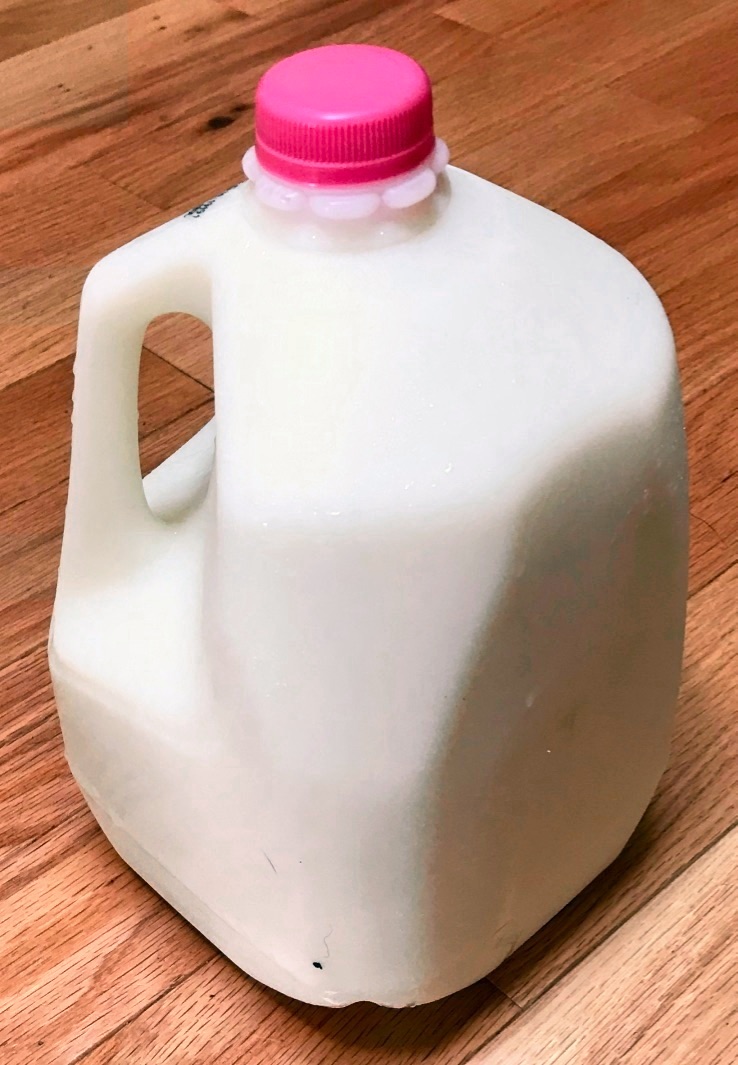
Plastic milk containers are plastic containers for storing, shipping and dispensing milk. Plastic bottles, sometimes called jugs, have largely replaced glass bottles for home consumption. Glass milk bottles have traditionally been reusable while light-weight plastic bottles are designed for single trips and plastic recycling.
Packaging of milk is regulated by regional authorities. Use of food contact materials is required: potential food contamination is prohibited. Strict standards of cleanliness and processing must be followed.
The most common material in milk packaging is high density polyethylene (HDPE), recycling code 2. Low density polyethylene (LDPE) and polyester (PET) are also in use. Polycarbonate had been considered but had concerns about potential contamination with bisphenol A.
Blow molded plastic milk bottles have been in use since the 1960s. HDPE is the primary material, but polyester is also used. A wide variety of milk bottle designs are available. Some have a round cross section while others have a more square or rectangular shape. A special flat-top square milk jug was recently[when?] developed to maximize shipping and storing efficiency but had some difficulties in dispensing. Many milk bottles have integral handles.
Milk bags are also in use. The milk is sold in a plastic bag and put into a pitcher for use. Larger bags are the inner bladder of a bag-in-box, sometimes used for institutional dispensing.
Small individual containers of milk and cream are often thermoformed or injection molded and have a peelable lid. These are often used in restaurants.
The shelf life of pasteurized milk in HDPE bottles and LDPE pouches has been determined to be between 10 and 21 days when stored at 4–8 °C (39–46 °F). Other factors such as light and temperature abuse have effects. Shelf life can be extended by ultrapasteurisation and aseptic processing.
Milk containers for retail sale must contain the same amount of milk as indicated on the label. To be acceptable to consumers, the containers must also appear to be completely full. Therefore, the volume of the container must be precisely controlled.
Hub AI
Plastic milk container AI simulator
(@Plastic milk container_simulator)
Plastic milk container
Plastic milk containers are plastic containers for storing, shipping and dispensing milk. Plastic bottles, sometimes called jugs, have largely replaced glass bottles for home consumption. Glass milk bottles have traditionally been reusable while light-weight plastic bottles are designed for single trips and plastic recycling.
Packaging of milk is regulated by regional authorities. Use of food contact materials is required: potential food contamination is prohibited. Strict standards of cleanliness and processing must be followed.
The most common material in milk packaging is high density polyethylene (HDPE), recycling code 2. Low density polyethylene (LDPE) and polyester (PET) are also in use. Polycarbonate had been considered but had concerns about potential contamination with bisphenol A.
Blow molded plastic milk bottles have been in use since the 1960s. HDPE is the primary material, but polyester is also used. A wide variety of milk bottle designs are available. Some have a round cross section while others have a more square or rectangular shape. A special flat-top square milk jug was recently[when?] developed to maximize shipping and storing efficiency but had some difficulties in dispensing. Many milk bottles have integral handles.
Milk bags are also in use. The milk is sold in a plastic bag and put into a pitcher for use. Larger bags are the inner bladder of a bag-in-box, sometimes used for institutional dispensing.
Small individual containers of milk and cream are often thermoformed or injection molded and have a peelable lid. These are often used in restaurants.
The shelf life of pasteurized milk in HDPE bottles and LDPE pouches has been determined to be between 10 and 21 days when stored at 4–8 °C (39–46 °F). Other factors such as light and temperature abuse have effects. Shelf life can be extended by ultrapasteurisation and aseptic processing.
Milk containers for retail sale must contain the same amount of milk as indicated on the label. To be acceptable to consumers, the containers must also appear to be completely full. Therefore, the volume of the container must be precisely controlled.
Recent media