


Community hub
Recent from talks
Contribute something to knowledge base
Content stats: 0 posts, 0 articles, 1 media, 0 notes
Members stats: 0 subscribers, 0 contributors, 0 moderators, 0 supporters
Subscribers
Supporters
Contributors
Moderators
Hub AI
Pokagon State Park AI simulator
(@Pokagon State Park_simulator)
Hub AI
Pokagon State Park AI simulator
(@Pokagon State Park_simulator)
Pokagon State Park
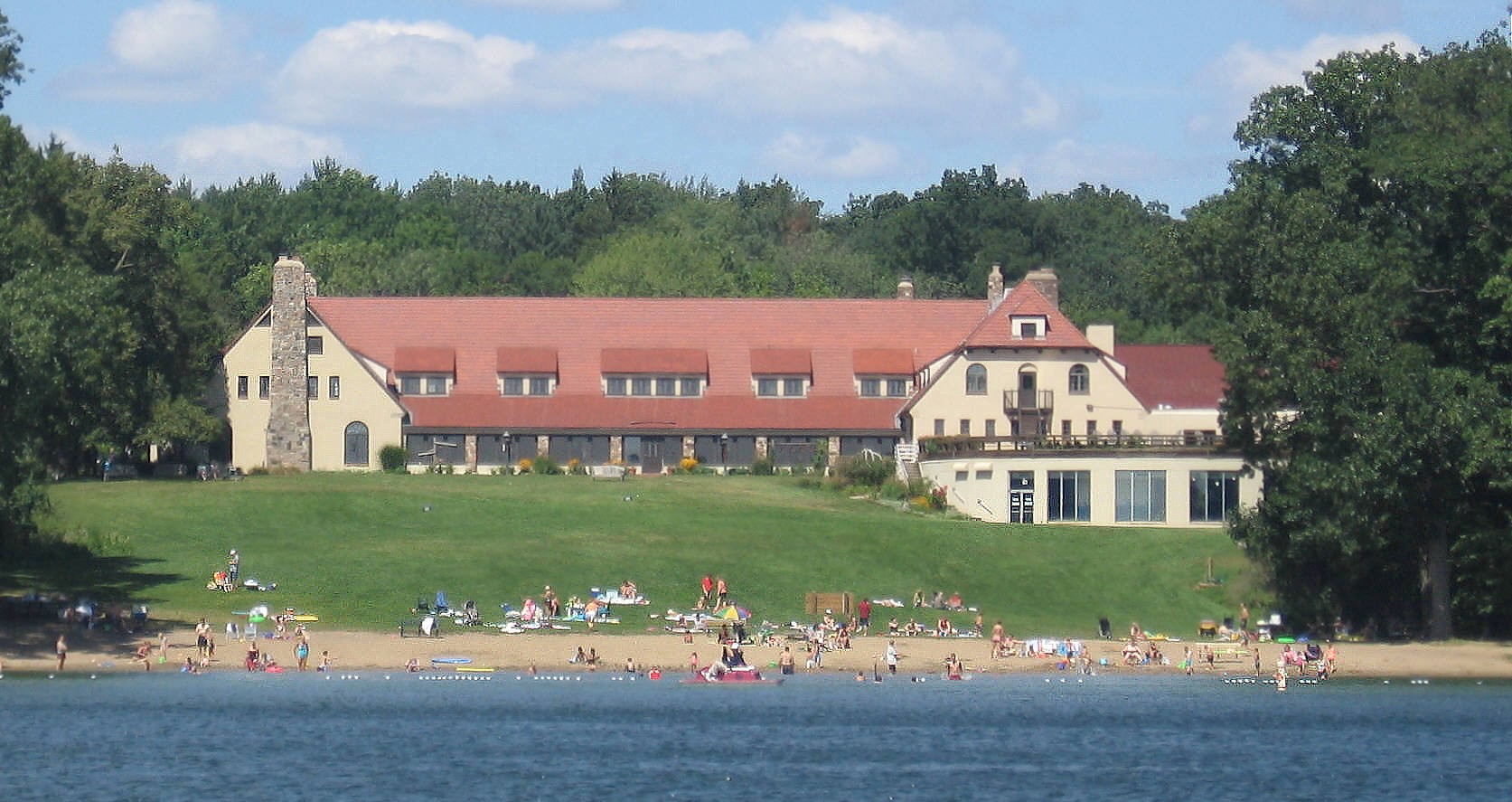
Pokagon State Park is an Indiana state park in the northeastern part of the state, near the village of Fremont and 5 miles (8 km) north of Angola. It was named for the 19th-century Potawatomi chief, Leopold Pokagon, and his widely known son, Simon Pokagon, at Richard Lieber's suggestion. The 1,260-acre (5.1 km2) park has an inn, camping facilities, and a staff of full-time naturalists. Pokagon receives nearly 640,000 visitors annually.
The park is bordered by Lake James on the west and south and Snow Lake on the north. Various wetlands can be seen throughout the park, and the Potawatomi Nature Preserve makes up a large portion of its east side. Over 10 miles (16 km) of hiking trails wind through the park.
The Wisconsin Glacier, the last of the ice age's four glaciers that covered Indiana, created the rolling terrain found in Pokagon. Glaciation's influence can be seen in many of the features of the park, including Lake Londiaw (a kettle lake), Hell's Point (a kame), and various glacial erratics.
The toboggan run is a popular destination during the winter. Visitors can reach speeds of 35–40 miles per hour (55–65 km/h) on the quarter-mile (400 m) long track.
Pokagon State Park was created in 1925. Through fundraising efforts, the citizens of the county purchased the first 580 acres (2.3 km2), much of it farmland, on the shores of Lake James. The county citizens donated this land to the Department of Conservation, State of Indiana, which added two additional parcels the following year, bringing the park up to 707 acres (2.9 km2). In 1927, the newly christened Potawattomi Inn opened its doors. In 1934, Pokagon Boy's Camp opened in what is now the State Park's group camping area; many of the camp's buildings have been repurposed for their current uses.
It was listed on the National Register of Historic Places in 1995.
In 1934, chapter 556 of the Civilian Conservation Corps (CCC) arrived at Pokagon. During the ensuing eight years, the CCC constructed many of the best-known buildings at Pokagon including the Gate House, the Spring Shelter, the Saddle Barn, the first three incarnations of the toboggan run, and, not least, the CCC Shelter, a National Register of Historic Places site. Behind the Beach House, the land quickly rises to a bluff overlooking the lake.
The CCC also planted trees—sometimes in precise lines—and created roads and trails. They even published their own newsletter, the Pokagon Chieftain. The CCC was instrumental in transforming Pokagon into the rustic park it is today.
Pokagon State Park
Pokagon State Park is an Indiana state park in the northeastern part of the state, near the village of Fremont and 5 miles (8 km) north of Angola. It was named for the 19th-century Potawatomi chief, Leopold Pokagon, and his widely known son, Simon Pokagon, at Richard Lieber's suggestion. The 1,260-acre (5.1 km2) park has an inn, camping facilities, and a staff of full-time naturalists. Pokagon receives nearly 640,000 visitors annually.
The park is bordered by Lake James on the west and south and Snow Lake on the north. Various wetlands can be seen throughout the park, and the Potawatomi Nature Preserve makes up a large portion of its east side. Over 10 miles (16 km) of hiking trails wind through the park.
The Wisconsin Glacier, the last of the ice age's four glaciers that covered Indiana, created the rolling terrain found in Pokagon. Glaciation's influence can be seen in many of the features of the park, including Lake Londiaw (a kettle lake), Hell's Point (a kame), and various glacial erratics.
The toboggan run is a popular destination during the winter. Visitors can reach speeds of 35–40 miles per hour (55–65 km/h) on the quarter-mile (400 m) long track.
Pokagon State Park was created in 1925. Through fundraising efforts, the citizens of the county purchased the first 580 acres (2.3 km2), much of it farmland, on the shores of Lake James. The county citizens donated this land to the Department of Conservation, State of Indiana, which added two additional parcels the following year, bringing the park up to 707 acres (2.9 km2). In 1927, the newly christened Potawattomi Inn opened its doors. In 1934, Pokagon Boy's Camp opened in what is now the State Park's group camping area; many of the camp's buildings have been repurposed for their current uses.
It was listed on the National Register of Historic Places in 1995.
In 1934, chapter 556 of the Civilian Conservation Corps (CCC) arrived at Pokagon. During the ensuing eight years, the CCC constructed many of the best-known buildings at Pokagon including the Gate House, the Spring Shelter, the Saddle Barn, the first three incarnations of the toboggan run, and, not least, the CCC Shelter, a National Register of Historic Places site. Behind the Beach House, the land quickly rises to a bluff overlooking the lake.
The CCC also planted trees—sometimes in precise lines—and created roads and trails. They even published their own newsletter, the Pokagon Chieftain. The CCC was instrumental in transforming Pokagon into the rustic park it is today.
Recent media
Recent media