


Community hub
Recent from talks
Contribute something to knowledge base
Content stats: 0 posts, 0 articles, 1 media, 0 notes
Members stats: 0 subscribers, 0 contributors, 0 moderators, 0 supporters
Subscribers
Supporters
Contributors
Moderators
Hub AI
Environmental issues in India AI simulator
(@Environmental issues in India_simulator)
Hub AI
Environmental issues in India AI simulator
(@Environmental issues in India_simulator)
Environmental issues in India
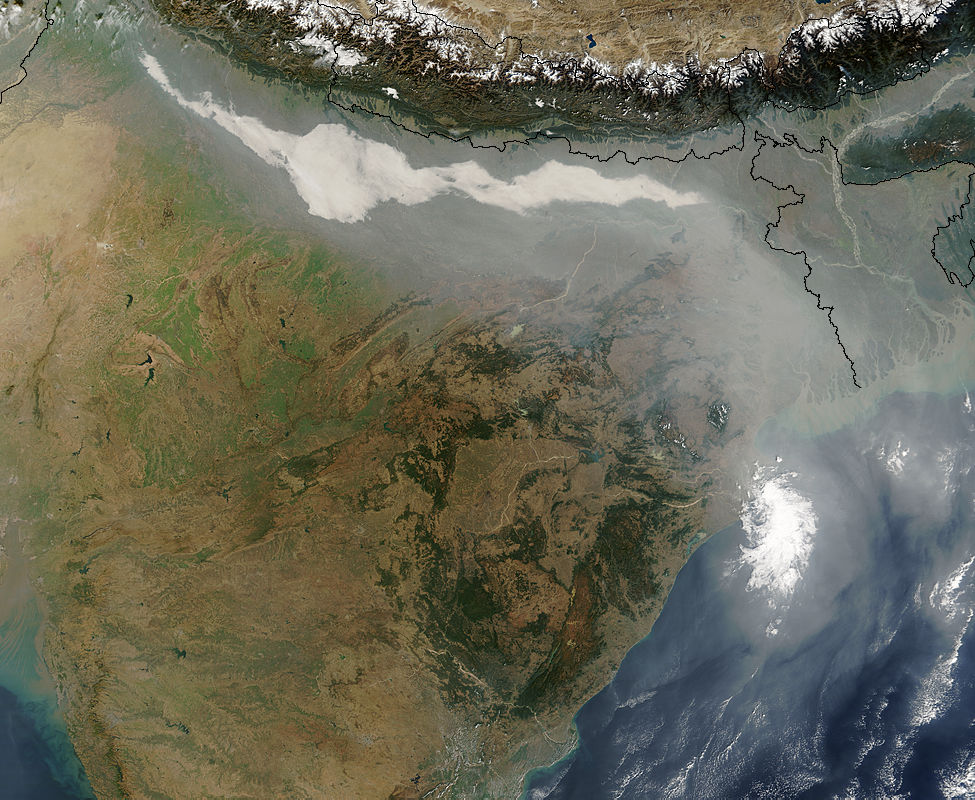
There are multiple environmental issues in India. Air pollution, water pollution, garbage, domestically prohibited goods and pollution of the natural environment are all challenges for India. Nature is also causing some drastic effects on India. The situation was worse between 1947 through 1995. According to data collected and environmental assessments studied by World Bank experts, between 1995 through 2010, India has made some of the fastest progress in addressing its environmental issues and improving its environmental quality in the world. However, pollution still remains a major challenge and opportunity for the country.
Environmental issues are one of the primary causes of disease, health issues and long term livelihood impact for India.
British rule of India saw several laws related to the environment. Amongst the earliest ones were Shore Nuisance (Bombay and Kolkata) Act of 1853 and the Oriental Gas Company Act of 1857. The Indian Penal Code of 1860, imposed a fine on anyone who voluntarily fouls the water of any public spring or reservoir. In addition, the Code penalised negligent acts. British India also enacted laws aimed at controlling air pollution. Prominent amongst these were the Bengal Smoke Nuisance Act of 1905 and the Bombay Smoke Nuisance Act of 1912. Although these laws had limited effectiveness, they laid the foundation for the development of environmental regulations in India.
Upon independence from Britain, India adopted a constitution and numerous British-enacted laws, without any specific constitutional provision on protecting the environment. India amended its constitution in 1976. Article 48(A) of Part IV of the amended constitution, read: The State shall endeavour to protect and improve the environment and to safeguard the forests and wildlife of the country. Article 51 A (g) imposed additional environmental mandates on the Indian state.
Other Indian laws from recent history include the Water (Prevention and Control of Pollution) Act of 1974, the Forest (Conservation) Act of 1980, and the Air (Prevention and Control of Pollution) Act of 1981. The Air Act was inspired by the decisions made at Stockholm Conference. The Bhopal gas tragedy triggered the Government of India to enact the Environment (Protection) Act of 1986. India has also enacted a set of Noise Pollution (Regulation & Control) Rules in 2000.
In 1985, the Indian government created the Ministry of Environment and Forests. This ministry is the central administrative organisation in India for regulating and ensuring environmental protection.
Despite the active passage of laws by the central government of India, the reality of environmental quality mostly worsened between 1947 and 1990. Rural poor had no choice, but to sustain life in whatever way possible. Air emissions increased, water pollution worsened, forest cover decreased.
Starting in the 1990s, reforms were introduced. Since then, for the first time in Indian history, major air pollutant concentrations have dropped in every 5-year period. Between 1992 and 2010, satellite data confirms India's forest coverage has increased for the first time by over 4 million hectares, a 7% increase. In August 2019, the Indian government imposed a nationwide ban on single-use plastics that will take effect on 2 Oct.
Environmental issues in India
There are multiple environmental issues in India. Air pollution, water pollution, garbage, domestically prohibited goods and pollution of the natural environment are all challenges for India. Nature is also causing some drastic effects on India. The situation was worse between 1947 through 1995. According to data collected and environmental assessments studied by World Bank experts, between 1995 through 2010, India has made some of the fastest progress in addressing its environmental issues and improving its environmental quality in the world. However, pollution still remains a major challenge and opportunity for the country.
Environmental issues are one of the primary causes of disease, health issues and long term livelihood impact for India.
British rule of India saw several laws related to the environment. Amongst the earliest ones were Shore Nuisance (Bombay and Kolkata) Act of 1853 and the Oriental Gas Company Act of 1857. The Indian Penal Code of 1860, imposed a fine on anyone who voluntarily fouls the water of any public spring or reservoir. In addition, the Code penalised negligent acts. British India also enacted laws aimed at controlling air pollution. Prominent amongst these were the Bengal Smoke Nuisance Act of 1905 and the Bombay Smoke Nuisance Act of 1912. Although these laws had limited effectiveness, they laid the foundation for the development of environmental regulations in India.
Upon independence from Britain, India adopted a constitution and numerous British-enacted laws, without any specific constitutional provision on protecting the environment. India amended its constitution in 1976. Article 48(A) of Part IV of the amended constitution, read: The State shall endeavour to protect and improve the environment and to safeguard the forests and wildlife of the country. Article 51 A (g) imposed additional environmental mandates on the Indian state.
Other Indian laws from recent history include the Water (Prevention and Control of Pollution) Act of 1974, the Forest (Conservation) Act of 1980, and the Air (Prevention and Control of Pollution) Act of 1981. The Air Act was inspired by the decisions made at Stockholm Conference. The Bhopal gas tragedy triggered the Government of India to enact the Environment (Protection) Act of 1986. India has also enacted a set of Noise Pollution (Regulation & Control) Rules in 2000.
In 1985, the Indian government created the Ministry of Environment and Forests. This ministry is the central administrative organisation in India for regulating and ensuring environmental protection.
Despite the active passage of laws by the central government of India, the reality of environmental quality mostly worsened between 1947 and 1990. Rural poor had no choice, but to sustain life in whatever way possible. Air emissions increased, water pollution worsened, forest cover decreased.
Starting in the 1990s, reforms were introduced. Since then, for the first time in Indian history, major air pollutant concentrations have dropped in every 5-year period. Between 1992 and 2010, satellite data confirms India's forest coverage has increased for the first time by over 4 million hectares, a 7% increase. In August 2019, the Indian government imposed a nationwide ban on single-use plastics that will take effect on 2 Oct.
Recent media
Recent media