


Community hub
Recent from talks
Contribute something to knowledge base
Content stats: 0 posts, 0 articles, 1 media, 0 notes
Members stats: 0 subscribers, 0 contributors, 0 moderators, 0 supporters
Subscribers
Supporters
Contributors
Moderators
Hub AI
Pompeu Fabra AI simulator
(@Pompeu Fabra_simulator)
Hub AI
Pompeu Fabra AI simulator
(@Pompeu Fabra_simulator)
Pompeu Fabra
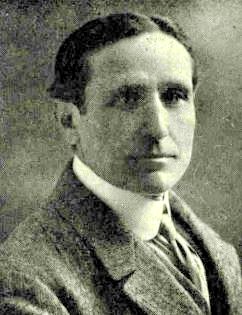
Pompeu Fabra i Poch (Catalan pronunciation: [pumˈpɛw ˈfaβɾə]; 20 February 1868 – 25 December 1948) was a Catalan engineer, linguist, and grammarian. He was the main author of the normative reform of the contemporary Catalan language and is considered the father of modern Catalan grammar. The Pompeu Fabra University in Barcelona is named after him.
Fabra was known as the "wise organizer of the Catalan language" for his pioneering work establishing the modern norms of the language.
The Catalan writer Josep Pla wrote that "Fabra has been the most important Catalan of our time because he is the only citizen of this country, at this time, who, having set out to achieve a specific public and general goal, accomplished it in an explicit and indisputable way."
Pompeu Fabra was born in 1868 at number 32 Carrer de la Mare de Déu de la Salut, in the La Salut neighborhood of the former village of Gràcia, and later lived at 87 Carrer Gran de Gràcia. He was the son of Josep Fabra i Roca and Carolina Poch i Martí. He had twelve siblings and was the youngest of all; however, ten of them died, leaving only him and two sisters.
When he was five years old (1873), the First Spanish Republic was proclaimed in Spain, and his father, a republican, was elected mayor of the village. Although the family moved to Carrer de la Diputació in Barcelona when he was six, Fabra always remembered his Gràcia origins.
His father had a strong influence on him during his childhood and youth, both through early contact with dictionaries and grammars circulating at home, such as the Diccionari de la llengua catalana ab la correspondencia castellana y llatina by Pere Labèrnia and the Gramática de la lengua catalana by Antoni de Bofarull and Adolf Blanch, and through choosing his career path as an engineer, a decision influenced by his father, who unfortunately did not live to see it completed, having died in 1888.
Fabra began studies in industrial engineering, which he gradually combined with a strong self-taught interest in philology. In 1889, he joined as an editor at L'Avenç, which in 1891 published through its editorial the grammar Ensayo de gramática del catalán moderno. This was the first time, using a scientific methodology, that the spoken language was described with careful phonetic transcription.[citation needed]
Together with Joaquim Casas Carbó and Jaume Massó i Torrents, Fabra undertook the second linguistic campaign of L'Avenç, which lasted throughout 1892. It consisted of a series of dense, generally unsigned notes published under the heading «La Reforma Lingüística» starting in the March issue. These articles «provided a theoretical justification for the orthographic changes being gradually adopted». These were the first scientific attempts to systematize the language, which caused heated controversies and formed the outline of the future standardization. In L'Avenç, Pompeu Fabra published articles under the pseudonym Esteve Arnau, to avoid direct confrontation and criticism of real people with established careers at the time, as well as to conceal his participation in a magazine from which he felt ideologically distant.
Pompeu Fabra
Pompeu Fabra i Poch (Catalan pronunciation: [pumˈpɛw ˈfaβɾə]; 20 February 1868 – 25 December 1948) was a Catalan engineer, linguist, and grammarian. He was the main author of the normative reform of the contemporary Catalan language and is considered the father of modern Catalan grammar. The Pompeu Fabra University in Barcelona is named after him.
Fabra was known as the "wise organizer of the Catalan language" for his pioneering work establishing the modern norms of the language.
The Catalan writer Josep Pla wrote that "Fabra has been the most important Catalan of our time because he is the only citizen of this country, at this time, who, having set out to achieve a specific public and general goal, accomplished it in an explicit and indisputable way."
Pompeu Fabra was born in 1868 at number 32 Carrer de la Mare de Déu de la Salut, in the La Salut neighborhood of the former village of Gràcia, and later lived at 87 Carrer Gran de Gràcia. He was the son of Josep Fabra i Roca and Carolina Poch i Martí. He had twelve siblings and was the youngest of all; however, ten of them died, leaving only him and two sisters.
When he was five years old (1873), the First Spanish Republic was proclaimed in Spain, and his father, a republican, was elected mayor of the village. Although the family moved to Carrer de la Diputació in Barcelona when he was six, Fabra always remembered his Gràcia origins.
His father had a strong influence on him during his childhood and youth, both through early contact with dictionaries and grammars circulating at home, such as the Diccionari de la llengua catalana ab la correspondencia castellana y llatina by Pere Labèrnia and the Gramática de la lengua catalana by Antoni de Bofarull and Adolf Blanch, and through choosing his career path as an engineer, a decision influenced by his father, who unfortunately did not live to see it completed, having died in 1888.
Fabra began studies in industrial engineering, which he gradually combined with a strong self-taught interest in philology. In 1889, he joined as an editor at L'Avenç, which in 1891 published through its editorial the grammar Ensayo de gramática del catalán moderno. This was the first time, using a scientific methodology, that the spoken language was described with careful phonetic transcription.[citation needed]
Together with Joaquim Casas Carbó and Jaume Massó i Torrents, Fabra undertook the second linguistic campaign of L'Avenç, which lasted throughout 1892. It consisted of a series of dense, generally unsigned notes published under the heading «La Reforma Lingüística» starting in the March issue. These articles «provided a theoretical justification for the orthographic changes being gradually adopted». These were the first scientific attempts to systematize the language, which caused heated controversies and formed the outline of the future standardization. In L'Avenç, Pompeu Fabra published articles under the pseudonym Esteve Arnau, to avoid direct confrontation and criticism of real people with established careers at the time, as well as to conceal his participation in a magazine from which he felt ideologically distant.
Recent media
Recent media