
Recent from talks
Pontiac LeMans
Knowledge base stats:
Talk channels stats:
Members stats:
Pontiac LeMans
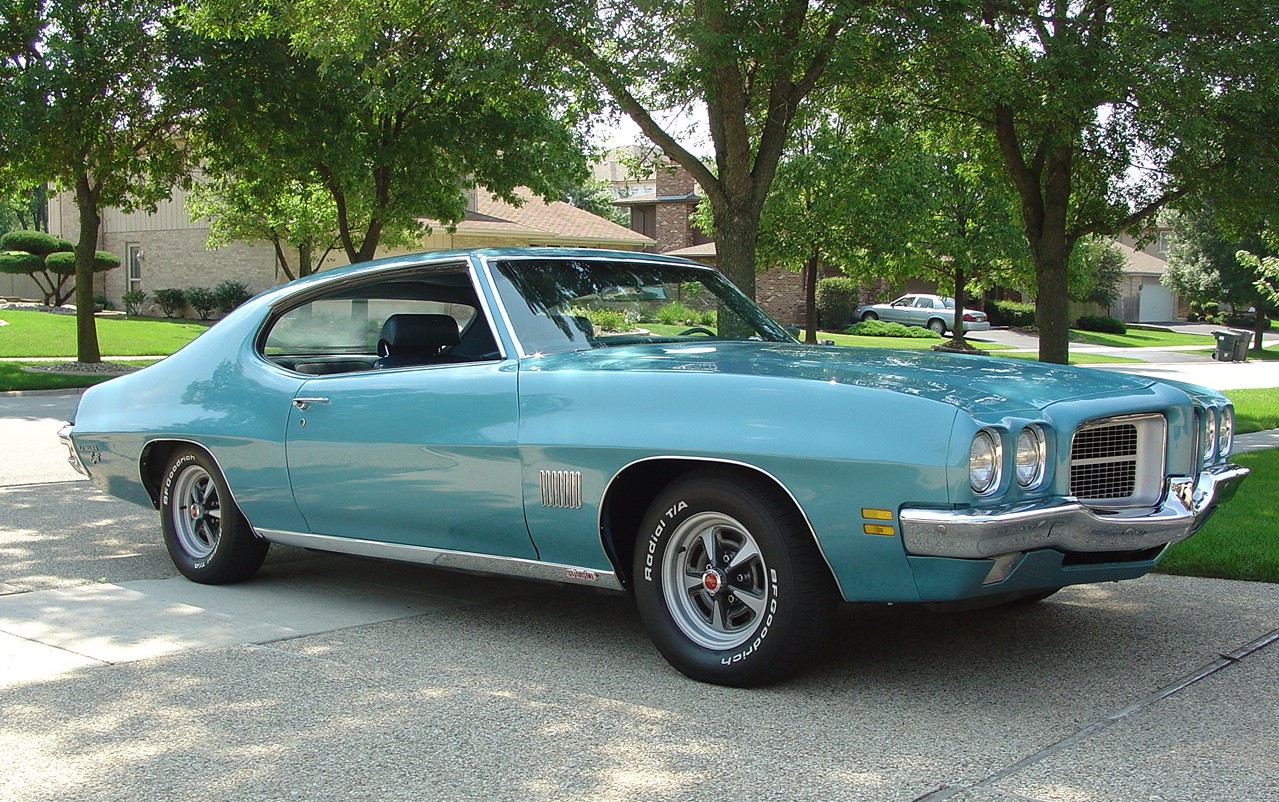
The Pontiac LeMans /ləˈmɑːnz/ is a model name applied to automobiles marketed by Pontiac. The name came from the French city of Le Mans, the site of the 24 Hours of Le Mans, the world's oldest active sports car endurance race that was first held in 1923. Originally a trim upgrade package based on the Tempest, the LeMans became a separate model in 1963.
In its first five generations spanning from 1961 until 1981 (1983 in Canada), the LeMans was a domestic RWD car; the first generation was a compact, with Gens 2-5 intermediates. From 1988 through 1993 the LeMans name was resurrected for a sixth generation, a FWD subcompact badge-engineered version of the Daewoo LeMans manufactured by Daewoo in South Korea.
Pontiac produced some notable GT/performance versions in the RWD models. The 1st generation not only featured a front-engine/rear-transaxle that very nearly resulted in an ideal 50/50 weight distribution, but also included four-wheel independent suspension for nimble handling, and could be ordered with an optional Buick 215 aluminum V8 engine. The Pontiac GTO is credited with popularizing the muscle car market segment of the 1960s, and by many as the first muscle car. The 1970 model year introduced the LeMans GT-37 package. The 1973-75 Grand Am and 1977 Can Am combined luxury with performance features to emulate European coupes, focusing on balancing handling with power.
Toward the end of the 1961 model year, the LeMans was introduced as the top trim package of the compact-sized Pontiac Tempest on GM's new Y body platform. The Tempest LeMans featured sportier and more luxurious features and standard equipment than the Tempest, including different badging and bucket seats. The trim option was available only on the two-door sedan (pillared coupe) body style.
For the 1962 model year, the LeMans remained a trim package that was now also available in the convertible body style, as well as with the 194.5 cu in (3.2 L) inline-four cylinder, 4-barrel carbureted engine. There was no pillarless hardtop body style available in either the Tempest or LeMans.
For 1963, the LeMans name was still used only on two-door coupes and convertibles but now was designated as a separate model in the Pontiac compact car lineup. This was available for one year. The 194.5 cu in (3.2 L) four-cylinder was standard and the 336 cu in (5.5 L) V8 engine was optional.
The Tempest line was changed to an intermediate-sized car on the new GM A platform for the 1964 model year. The LeMans was its own model, as in 1963, and included carpeted lower door panels, a deluxe steering wheel, courtesy lighting, and full wheel covers. For the 1964 model year, a two-door hardtop was added. A new 215 cu in (3.5 L) inline six-cylinder engine was introduced, as well as a redesigned V8 that displaced 326 cu in (5.3 L).
Shortly after the start of the 1964 model year, the LeMans became available with a new performance package designated as the GTO, or 'Gran Turismo Omologato.' The GTO option included a 389 cu in (6.4 L) V8 from the full-sized Pontiac Catalina that produces 325 hp (242 kW) with a four-barrel carburetor or 348 hp (260 kW) in the Tri-Power (three Rochester 2GC two-barrel carburetors) version.
Hub AI
Pontiac LeMans AI simulator
(@Pontiac LeMans_simulator)
Pontiac LeMans
The Pontiac LeMans /ləˈmɑːnz/ is a model name applied to automobiles marketed by Pontiac. The name came from the French city of Le Mans, the site of the 24 Hours of Le Mans, the world's oldest active sports car endurance race that was first held in 1923. Originally a trim upgrade package based on the Tempest, the LeMans became a separate model in 1963.
In its first five generations spanning from 1961 until 1981 (1983 in Canada), the LeMans was a domestic RWD car; the first generation was a compact, with Gens 2-5 intermediates. From 1988 through 1993 the LeMans name was resurrected for a sixth generation, a FWD subcompact badge-engineered version of the Daewoo LeMans manufactured by Daewoo in South Korea.
Pontiac produced some notable GT/performance versions in the RWD models. The 1st generation not only featured a front-engine/rear-transaxle that very nearly resulted in an ideal 50/50 weight distribution, but also included four-wheel independent suspension for nimble handling, and could be ordered with an optional Buick 215 aluminum V8 engine. The Pontiac GTO is credited with popularizing the muscle car market segment of the 1960s, and by many as the first muscle car. The 1970 model year introduced the LeMans GT-37 package. The 1973-75 Grand Am and 1977 Can Am combined luxury with performance features to emulate European coupes, focusing on balancing handling with power.
Toward the end of the 1961 model year, the LeMans was introduced as the top trim package of the compact-sized Pontiac Tempest on GM's new Y body platform. The Tempest LeMans featured sportier and more luxurious features and standard equipment than the Tempest, including different badging and bucket seats. The trim option was available only on the two-door sedan (pillared coupe) body style.
For the 1962 model year, the LeMans remained a trim package that was now also available in the convertible body style, as well as with the 194.5 cu in (3.2 L) inline-four cylinder, 4-barrel carbureted engine. There was no pillarless hardtop body style available in either the Tempest or LeMans.
For 1963, the LeMans name was still used only on two-door coupes and convertibles but now was designated as a separate model in the Pontiac compact car lineup. This was available for one year. The 194.5 cu in (3.2 L) four-cylinder was standard and the 336 cu in (5.5 L) V8 engine was optional.
The Tempest line was changed to an intermediate-sized car on the new GM A platform for the 1964 model year. The LeMans was its own model, as in 1963, and included carpeted lower door panels, a deluxe steering wheel, courtesy lighting, and full wheel covers. For the 1964 model year, a two-door hardtop was added. A new 215 cu in (3.5 L) inline six-cylinder engine was introduced, as well as a redesigned V8 that displaced 326 cu in (5.3 L).
Shortly after the start of the 1964 model year, the LeMans became available with a new performance package designated as the GTO, or 'Gran Turismo Omologato.' The GTO option included a 389 cu in (6.4 L) V8 from the full-sized Pontiac Catalina that produces 325 hp (242 kW) with a four-barrel carburetor or 348 hp (260 kW) in the Tri-Power (three Rochester 2GC two-barrel carburetors) version.
Recent media