


Community hub
Recent from talks
Contribute something to knowledge base
Content stats: 0 posts, 0 articles, 1 media, 0 notes
Members stats: 0 subscribers, 0 contributors, 0 moderators, 0 supporters
Subscribers
Supporters
Contributors
Moderators
Hub AI
Pope Urban VI AI simulator
(@Pope Urban VI_simulator)
Hub AI
Pope Urban VI AI simulator
(@Pope Urban VI_simulator)
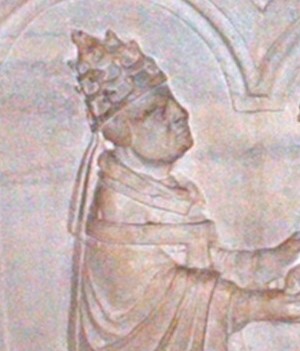
Pope Urban VI
Pope Urban VI (Latin: Urbanus VI; Italian: Urbano VI; c. 1318 – 15 October 1389), born Bartolomeo Prignano (Italian pronunciation: [bartoloˈmɛːo priɲˈɲaːno]), was head of the Catholic Church from 8 April 1378 to his death, in October 1389. He was the last pope elected from outside the College of Cardinals. His pontificate began shortly after the end of the Avignon Papacy. It was marked by immense conflict between rival factions as a part of the Western Schism, with much of Europe, such as France, the Iberian Kingdoms of Castile and Aragon, and Scotland recognizing Clement VII, based in Avignon, as the true pope.
Born in Itri, then part of the Kingdom of Naples, Prignano was a devout monk and learned casuist, trained at Avignon. On 21 March 1364 he was consecrated Archbishop of Acerenza in the Kingdom of Naples. He became Archbishop of Bari in 1377.
Prignano had developed a reputation for simplicity and frugality and a head for business when acting vice-chancellor. He also demonstrated a penchant for learning, and, according to Cristoforo di Piacenza, he had no family allies in an age of nepotism, although once in the papal chair he elevated four cardinal-nephews and sought to place one of them in control of Naples. His great faults undid his virtues: Ludwig von Pastor summed up his character: "He lacked Christian gentleness and charity. He was naturally arbitrary and extremely violent and imprudent, and when he came to deal with the burning ecclesiastical question of the day, that of reform, the consequences were disastrous."
On the death of Gregory XI (27 March 1378), a Roman mob surrounded the conclave to demand a Roman pope be chosen. With the cardinals being under some haste and great pressure to avoid the return of the papal seat to Avignon, Prignano was unanimously chosen Pope on 8 April 1378 as acceptable to the disunited majority of French cardinals, taking the name Urban VI. Not being a cardinal, he was not well known. Immediately following the conclave, most of the cardinals fled Rome before the mob could learn that not a Roman (though not a Frenchman either), but a subject of Queen Joan I of Naples, had been chosen.
Though the coronation was carried out in scrupulous detail, leaving no doubt as to the legitimacy of the new pontiff, the French were not particularly happy with this move and began immediately to conspire against this pope. Urban VI did himself no favors; whereas the cardinals had expected him pliant, he was considered arrogant and angry by many of his contemporaries. Dietrich of Nieheim reported the opinion of the cardinals that his elevation had turned his head, and Froissart, Leonardo Aretino, Tommaso de Acerno and St. Antoninus of Florence recorded similar conclusions.
Immediately following his election, Urban began preaching intemperately to the cardinals (some of whom thought the delirium of power had made Urban mad and unfit for rule), insisting that the business of the Curia should be carried on without gratuities and gifts, forbidding the cardinals to accept annuities from rulers and other lay persons, condemning the luxury of their lives and retinues, and the multiplication of benefices and bishoprics in their hands. Nor would he remove again to Avignon, thus alienating King Charles V of France.
The cardinals were mortally offended. Five months after his election, the French cardinals met at Anagni, inviting Urban, who realized he would be seized, and perhaps slain. In his absence, they issued a manifesto of grievances on 9 August which declared his election invalid since they had been cowed by the mob into electing an Italian. Letters to the missing Italian cardinals followed on 20 August declaring the papal throne vacant (sede vacante). Then at Fondi, secretly supported by the king of France, the French cardinals proceeded to elect Robert of Geneva as pope on 20 September. Robert, a militant cleric who had succeeded Albornoz as commander of the papal troops, took the name Clement VII, beginning the Western Schism, which divided Catholic Christendom until 1417.
Urban was declared excommunicated by the French antipope and was called "the Antichrist", while Catherine of Siena, defending Pope Urban, called the cardinals "devils in human form." Coluccio Salutati identified the political nature of the withdrawal: "Who does not see," the Chancellor openly addressed the French cardinals, "that you seek not the true pope, but opt solely for a Gallic pontiff." Opening rounds of argument were embodied in John of Legnano's defense of the election, De fletu ecclesiæ, written and incrementally revised between 1378 and 1380, which Urban caused to be distributed in multiple copies, and in the numerous rebuttals that soon appeared. Events overtook the rhetoric, however; 26 new cardinals were created in a single day, and by an arbitrary alienation of the estates and property of the church, funds were raised for open war. At the end of May 1379 Clement went to Avignon, where he was more than ever at the mercy of the king of France. Louis I, Duke of Anjou, was granted a phantom kingdom of Adria to be carved out of papal Emilia and Romagna, if he could unseat the pope at Rome.
Pope Urban VI
Pope Urban VI (Latin: Urbanus VI; Italian: Urbano VI; c. 1318 – 15 October 1389), born Bartolomeo Prignano (Italian pronunciation: [bartoloˈmɛːo priɲˈɲaːno]), was head of the Catholic Church from 8 April 1378 to his death, in October 1389. He was the last pope elected from outside the College of Cardinals. His pontificate began shortly after the end of the Avignon Papacy. It was marked by immense conflict between rival factions as a part of the Western Schism, with much of Europe, such as France, the Iberian Kingdoms of Castile and Aragon, and Scotland recognizing Clement VII, based in Avignon, as the true pope.
Born in Itri, then part of the Kingdom of Naples, Prignano was a devout monk and learned casuist, trained at Avignon. On 21 March 1364 he was consecrated Archbishop of Acerenza in the Kingdom of Naples. He became Archbishop of Bari in 1377.
Prignano had developed a reputation for simplicity and frugality and a head for business when acting vice-chancellor. He also demonstrated a penchant for learning, and, according to Cristoforo di Piacenza, he had no family allies in an age of nepotism, although once in the papal chair he elevated four cardinal-nephews and sought to place one of them in control of Naples. His great faults undid his virtues: Ludwig von Pastor summed up his character: "He lacked Christian gentleness and charity. He was naturally arbitrary and extremely violent and imprudent, and when he came to deal with the burning ecclesiastical question of the day, that of reform, the consequences were disastrous."
On the death of Gregory XI (27 March 1378), a Roman mob surrounded the conclave to demand a Roman pope be chosen. With the cardinals being under some haste and great pressure to avoid the return of the papal seat to Avignon, Prignano was unanimously chosen Pope on 8 April 1378 as acceptable to the disunited majority of French cardinals, taking the name Urban VI. Not being a cardinal, he was not well known. Immediately following the conclave, most of the cardinals fled Rome before the mob could learn that not a Roman (though not a Frenchman either), but a subject of Queen Joan I of Naples, had been chosen.
Though the coronation was carried out in scrupulous detail, leaving no doubt as to the legitimacy of the new pontiff, the French were not particularly happy with this move and began immediately to conspire against this pope. Urban VI did himself no favors; whereas the cardinals had expected him pliant, he was considered arrogant and angry by many of his contemporaries. Dietrich of Nieheim reported the opinion of the cardinals that his elevation had turned his head, and Froissart, Leonardo Aretino, Tommaso de Acerno and St. Antoninus of Florence recorded similar conclusions.
Immediately following his election, Urban began preaching intemperately to the cardinals (some of whom thought the delirium of power had made Urban mad and unfit for rule), insisting that the business of the Curia should be carried on without gratuities and gifts, forbidding the cardinals to accept annuities from rulers and other lay persons, condemning the luxury of their lives and retinues, and the multiplication of benefices and bishoprics in their hands. Nor would he remove again to Avignon, thus alienating King Charles V of France.
The cardinals were mortally offended. Five months after his election, the French cardinals met at Anagni, inviting Urban, who realized he would be seized, and perhaps slain. In his absence, they issued a manifesto of grievances on 9 August which declared his election invalid since they had been cowed by the mob into electing an Italian. Letters to the missing Italian cardinals followed on 20 August declaring the papal throne vacant (sede vacante). Then at Fondi, secretly supported by the king of France, the French cardinals proceeded to elect Robert of Geneva as pope on 20 September. Robert, a militant cleric who had succeeded Albornoz as commander of the papal troops, took the name Clement VII, beginning the Western Schism, which divided Catholic Christendom until 1417.
Urban was declared excommunicated by the French antipope and was called "the Antichrist", while Catherine of Siena, defending Pope Urban, called the cardinals "devils in human form." Coluccio Salutati identified the political nature of the withdrawal: "Who does not see," the Chancellor openly addressed the French cardinals, "that you seek not the true pope, but opt solely for a Gallic pontiff." Opening rounds of argument were embodied in John of Legnano's defense of the election, De fletu ecclesiæ, written and incrementally revised between 1378 and 1380, which Urban caused to be distributed in multiple copies, and in the numerous rebuttals that soon appeared. Events overtook the rhetoric, however; 26 new cardinals were created in a single day, and by an arbitrary alienation of the estates and property of the church, funds were raised for open war. At the end of May 1379 Clement went to Avignon, where he was more than ever at the mercy of the king of France. Louis I, Duke of Anjou, was granted a phantom kingdom of Adria to be carved out of papal Emilia and Romagna, if he could unseat the pope at Rome.
Recent media
Recent media