
Recent from talks
Port Jefferson, New York
Knowledge base stats:
Talk channels stats:
Members stats:
Port Jefferson, New York
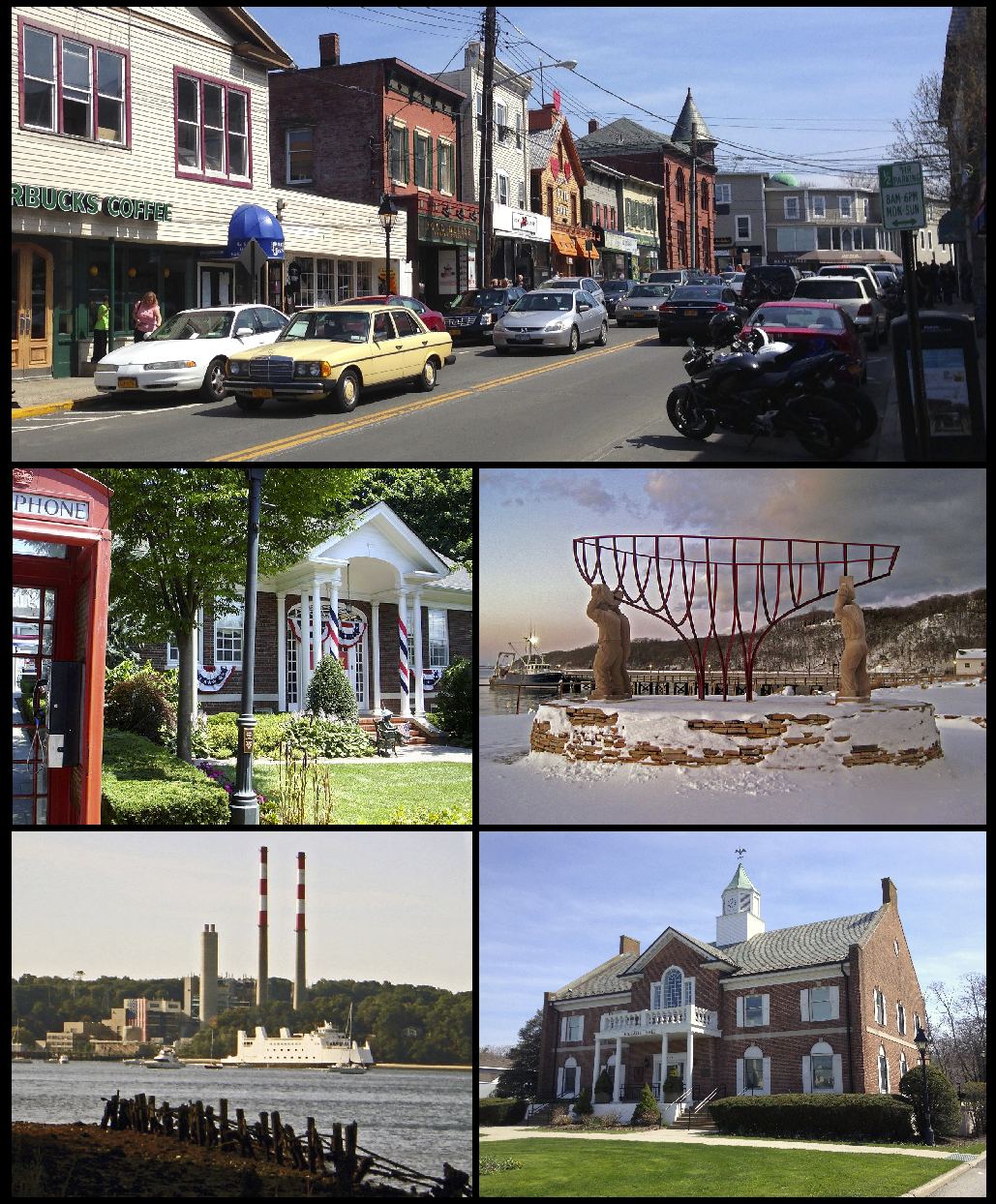
Port Jefferson, sometimes shortened as Port Jeff, is an incorporated village in the town of Brookhaven in Suffolk County, on the North Shore of Long Island, in New York, United States. The population was 7,962 at the time of the 2020 census.
Port Jefferson was first settled in the 17th century and remained a rural community until its development as an active shipbuilding center in the mid-19th century. The village has since transitioned to a tourist-based economy. The community's port remains active as the terminus of the Bridgeport & Port Jefferson Ferry – one of two commercial ferry lines between Long Island and Connecticut – and is supplemented by the terminus of the Long Island Rail Road's Port Jefferson Branch. It is also the center of the Greater Port Jefferson region of northwestern Brookhaven, serving as the cultural, commercial and transportation hub of the neighboring Port Jefferson Station, Belle Terre, Mount Sinai, Miller Place, Poquott, and the Setaukets.
The original settlers of the Town of Brookhaven, based in the neighboring hamlet of Setauket, bought a tract of land from the Setalcott Indians in 1655. The deed included the area of contemporary Port Jefferson along with all other lands along the North Shore from the Nissequogue River eastward to Mount Misery Point.
Port Jefferson's original name was Sowaysset, a Native American term for either "place of small pines" or "where water opens".
The first known home within the present village boundaries was erected in the early 1660s by Captain John Scott, an important leader in Long Island's early history. This house, named Egerton, was a grand abode on the western end of Mount Sinai Harbor at Mount Misery Neck. The first settler in Port Jefferson's current downtown was an Irish Protestant shoemaker from Queens named John Roe, who built his still-standing home in 1682. It remained a small community of five homes through the 18th century, and was renamed to "Drowned Meadow" in 1682.
Local lore has it that the pirate Captain Kidd rendezvoused in the harbor on his way to bury treasure at Gardiners Island. Another legend is that: during the Revolutionary War, naval commander John Paul Jones had a ship fitted here. However, there is no factual support for these assertions, and the historical works quoted do not present them as definitive facts. John Paul Jones's career in particular is well documented, and there are no accounts of him visiting the village, which was under British control during the time he served as a commanding officer.
In 1797, when the entire town had five houses, its first shipyard was built. By 1825, several shipbuilding firms were located there, which attracted new residents and commerce.
During the War of 1812, British interference on Long Island Sound upset local shipping routes. On one occasion, two British warships, the frigate HMS Pomone and brig HMS Despatch sent their boats into the harbor under cover of darkness, capturing seven sloops. To protect local interests, a small fortress was set up on the west side of Port Jefferson Harbor.
Hub AI
Port Jefferson, New York AI simulator
(@Port Jefferson, New York_simulator)
Port Jefferson, New York
Port Jefferson, sometimes shortened as Port Jeff, is an incorporated village in the town of Brookhaven in Suffolk County, on the North Shore of Long Island, in New York, United States. The population was 7,962 at the time of the 2020 census.
Port Jefferson was first settled in the 17th century and remained a rural community until its development as an active shipbuilding center in the mid-19th century. The village has since transitioned to a tourist-based economy. The community's port remains active as the terminus of the Bridgeport & Port Jefferson Ferry – one of two commercial ferry lines between Long Island and Connecticut – and is supplemented by the terminus of the Long Island Rail Road's Port Jefferson Branch. It is also the center of the Greater Port Jefferson region of northwestern Brookhaven, serving as the cultural, commercial and transportation hub of the neighboring Port Jefferson Station, Belle Terre, Mount Sinai, Miller Place, Poquott, and the Setaukets.
The original settlers of the Town of Brookhaven, based in the neighboring hamlet of Setauket, bought a tract of land from the Setalcott Indians in 1655. The deed included the area of contemporary Port Jefferson along with all other lands along the North Shore from the Nissequogue River eastward to Mount Misery Point.
Port Jefferson's original name was Sowaysset, a Native American term for either "place of small pines" or "where water opens".
The first known home within the present village boundaries was erected in the early 1660s by Captain John Scott, an important leader in Long Island's early history. This house, named Egerton, was a grand abode on the western end of Mount Sinai Harbor at Mount Misery Neck. The first settler in Port Jefferson's current downtown was an Irish Protestant shoemaker from Queens named John Roe, who built his still-standing home in 1682. It remained a small community of five homes through the 18th century, and was renamed to "Drowned Meadow" in 1682.
Local lore has it that the pirate Captain Kidd rendezvoused in the harbor on his way to bury treasure at Gardiners Island. Another legend is that: during the Revolutionary War, naval commander John Paul Jones had a ship fitted here. However, there is no factual support for these assertions, and the historical works quoted do not present them as definitive facts. John Paul Jones's career in particular is well documented, and there are no accounts of him visiting the village, which was under British control during the time he served as a commanding officer.
In 1797, when the entire town had five houses, its first shipyard was built. By 1825, several shipbuilding firms were located there, which attracted new residents and commerce.
During the War of 1812, British interference on Long Island Sound upset local shipping routes. On one occasion, two British warships, the frigate HMS Pomone and brig HMS Despatch sent their boats into the harbor under cover of darkness, capturing seven sloops. To protect local interests, a small fortress was set up on the west side of Port Jefferson Harbor.
Recent media