


Community hub
Recent from talks
Contribute something to knowledge base
Content stats: 0 posts, 0 articles, 1 media, 0 notes
Members stats: 0 subscribers, 0 contributors, 0 moderators, 0 supporters
Subscribers
Supporters
Contributors
Moderators
Hub AI
Port security AI simulator
(@Port security_simulator)
Hub AI
Port security AI simulator
(@Port security_simulator)
Port security
Port security is part of a broader definition concerning maritime security. It refers to the defense, law and treaty enforcement, and Counterterrorism activities that fall within the port and maritime domain. It includes the protection of the seaports themselves and the protection and inspection of the cargo moving through the ports. Security risks related to ports often focus on either the physical security of the port, or security risks within the maritime supply chain.
Internationally, port security is governed by rules issued by the International Maritime Organization and its 2002 International Ship and Port Facility Security Code. Additionally, some United States–based programs have become de facto global port security programs, including the Container Security Initiative and the Customs Trade Partnership against Terrorism. However, some businesses argue that port security governance measures are ineffective and costly and that it negatively impacts maritime transport costs.
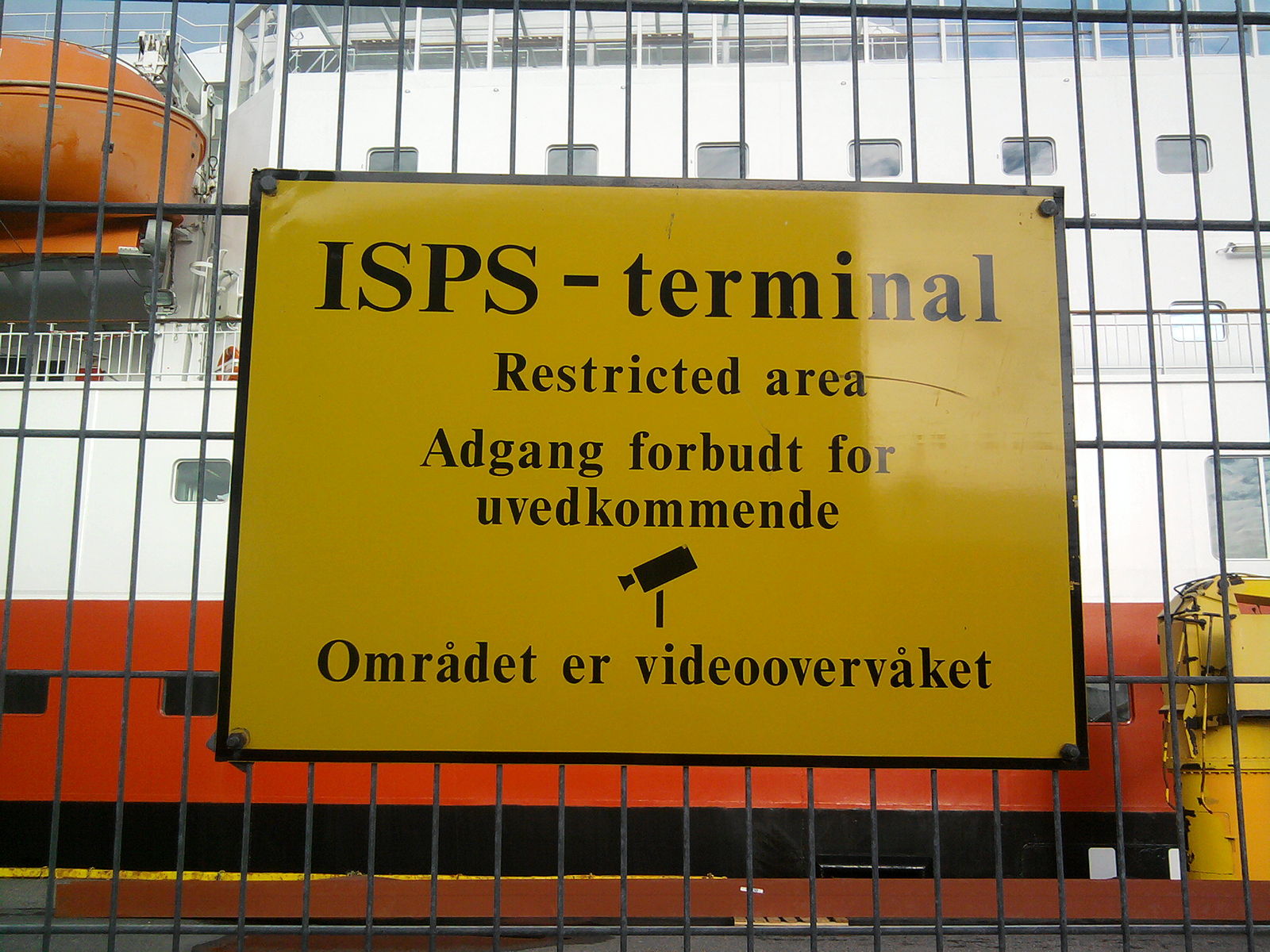
Physical port security involves the risks to the perimeters of the port. Risks to port security involves natural risks such as hurricanes and flooding, man-made risks such as operator error, and weapon risks such as chemical, biological and nuclear material. It also involves adequate security systems within the port, such as security guards, video surveillance and alarm systems.
Physical port security also falls under the umbrella of maritime terrorism. Ports are attractive targets for terrorists because ships and cargoes are fixed in time once they enter the port, which removes the uncertainty in relation to the location of the target.
Apart from physical port security, the port is connected to a larger supply chain. There are various risks along this supply chain that can affect port security, such as explosives attached to the vessel or unwanted passengers on the vessel. Ports are "potential targets of illegal activity which may impact their ability to function as intended, and ports as conduits into and out of national borders and supply chains, which can be exploited in order to introduce or move illegal materials, persons, or activities". That involves increasing the number of vulnerabilities to port security to the supply chain.[citation needed]
Security risk management practices of ports reflect the goal of preparing for the inevitable nature of risk before an event occurs.
Examples of security risk management practices at ports are: employment of a security director, crisis leadership, contingency planning and the use of intelligence. Other measures include physical security barriers, such as CCTV cameras and adequate light at the port in order to ensure that cargo theft does not take place.
Examples of risk management practices within the maritime supply chain include ISPC (International Ship and Port Facility Security Code), CSI (Container Security Initiative) and whole-of-supply chain outcomes, CTPT (Customs-Trade Partnership Against Terrorism). These efforts have been criticised as the use of quantitative and statistical approach to security in the maritime supply chain is argued to overlook low probability, high impact events.
Port security
Port security is part of a broader definition concerning maritime security. It refers to the defense, law and treaty enforcement, and Counterterrorism activities that fall within the port and maritime domain. It includes the protection of the seaports themselves and the protection and inspection of the cargo moving through the ports. Security risks related to ports often focus on either the physical security of the port, or security risks within the maritime supply chain.
Internationally, port security is governed by rules issued by the International Maritime Organization and its 2002 International Ship and Port Facility Security Code. Additionally, some United States–based programs have become de facto global port security programs, including the Container Security Initiative and the Customs Trade Partnership against Terrorism. However, some businesses argue that port security governance measures are ineffective and costly and that it negatively impacts maritime transport costs.
Physical port security involves the risks to the perimeters of the port. Risks to port security involves natural risks such as hurricanes and flooding, man-made risks such as operator error, and weapon risks such as chemical, biological and nuclear material. It also involves adequate security systems within the port, such as security guards, video surveillance and alarm systems.
Physical port security also falls under the umbrella of maritime terrorism. Ports are attractive targets for terrorists because ships and cargoes are fixed in time once they enter the port, which removes the uncertainty in relation to the location of the target.
Apart from physical port security, the port is connected to a larger supply chain. There are various risks along this supply chain that can affect port security, such as explosives attached to the vessel or unwanted passengers on the vessel. Ports are "potential targets of illegal activity which may impact their ability to function as intended, and ports as conduits into and out of national borders and supply chains, which can be exploited in order to introduce or move illegal materials, persons, or activities". That involves increasing the number of vulnerabilities to port security to the supply chain.[citation needed]
Security risk management practices of ports reflect the goal of preparing for the inevitable nature of risk before an event occurs.
Examples of security risk management practices at ports are: employment of a security director, crisis leadership, contingency planning and the use of intelligence. Other measures include physical security barriers, such as CCTV cameras and adequate light at the port in order to ensure that cargo theft does not take place.
Examples of risk management practices within the maritime supply chain include ISPC (International Ship and Port Facility Security Code), CSI (Container Security Initiative) and whole-of-supply chain outcomes, CTPT (Customs-Trade Partnership Against Terrorism). These efforts have been criticised as the use of quantitative and statistical approach to security in the maritime supply chain is argued to overlook low probability, high impact events.
Recent media
Recent media