


Community hub
Recent from talks
Contribute something to knowledge base
Content stats: 0 posts, 0 articles, 1 media, 0 notes
Members stats: 0 subscribers, 0 contributors, 0 moderators, 0 supporters
Subscribers
Supporters
Contributors
Moderators
Hub AI
Portia White AI simulator
(@Portia White_simulator)
Hub AI
Portia White AI simulator
(@Portia White_simulator)
Portia White
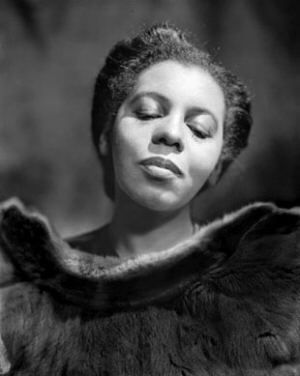
Portia May White (June 24, 1911 – February 13, 1968) was a Canadian contralto, known for becoming the first Black Canadian concert singer to achieve international fame. Growing up as part of her father's church choir in Halifax, Nova Scotia, White competed in local singing competitions as a teenager and later trained at the Halifax Conservatory of Music. In 1941 and 1944, she made her national and international debuts as a singer, receiving critical acclaim for her performances of both classical European music and African-American spirituals. White later completed tours throughout Europe, the Caribbean, and Central and South America.
When vocal difficulties and cancer eventually contributed to her retirement in 1952, White settled in Toronto and subsequently taught young Canadian musicians such as Lorne Greene, Dinah Christie, Don Francks, Robert Goulet and Anne Marie Moss. One of White's final major public appearances was a special command performance for Queen Elizabeth II and Prince Philip in 1964.
White was declared a person of national historic significance by the Government of Canada. Her original supporters in Nova Scotia went on to establish the Nova Scotia Talent Trust, awarding annual arts scholarships to both emerging and established local artists, and the government of Nova Scotia continues to award an annual Portia White Prize. In 2007, White was posthumously awarded a lifetime achievement award by the East Coast Music Association.
Portia May White was born June 24, 1911, in Truro, Nova Scotia, the third of 13 children born to Izie Dora (White) and William Andrew White. Her mother was a descendant of Black Loyalists in Nova Scotia, while her father was the son of former slaves from Virginia; he moved to Canada independently. William attended Acadia University in Nova Scotia, later becoming the first Black Canadian to receive a Doctor of Divinity from Acadia. After the First World War, the White family moved to Halifax, and William became the minister of Cornwallis Street Baptist Church.
Many other members of Portia White's family went on to achieve distinction in Canadian political and cultural life, including her brothers Jack, a noted Canadian labour union leader; Bill, the first Canadian of African heritage to run for political office in Canada; and Lorne, a regular performer for television show Singalong Jubilee. White also became aunt to Senator Donald Oliver and political commentator Sheila White.
Portia White began her musical career at the age of six as a choir member with the Cornwallis Street Baptist Church, where her mother was also the musical director. As White grew older, she became the choir director and assisted with church fundraising by singing on her father's weekly radio show. In an interview later in life, White explained that her love of music and performing had developed early:
Nobody ever told me to sing, I was born singing. I think that if nobody had ever talked to me, I wouldn't be able to communicate in any other way but by singing. I was always bowing in my dreams and singing before people and parading across the stage as a very little girl.
As a teenager, White entered a local singing competition with her sister June, the pair performing an aria from Donizetti's Lucia di Lammermoor. They won first prize. Although White wanted to pursue a singing career, she could not afford professional training at the time.
Portia White
Portia May White (June 24, 1911 – February 13, 1968) was a Canadian contralto, known for becoming the first Black Canadian concert singer to achieve international fame. Growing up as part of her father's church choir in Halifax, Nova Scotia, White competed in local singing competitions as a teenager and later trained at the Halifax Conservatory of Music. In 1941 and 1944, she made her national and international debuts as a singer, receiving critical acclaim for her performances of both classical European music and African-American spirituals. White later completed tours throughout Europe, the Caribbean, and Central and South America.
When vocal difficulties and cancer eventually contributed to her retirement in 1952, White settled in Toronto and subsequently taught young Canadian musicians such as Lorne Greene, Dinah Christie, Don Francks, Robert Goulet and Anne Marie Moss. One of White's final major public appearances was a special command performance for Queen Elizabeth II and Prince Philip in 1964.
White was declared a person of national historic significance by the Government of Canada. Her original supporters in Nova Scotia went on to establish the Nova Scotia Talent Trust, awarding annual arts scholarships to both emerging and established local artists, and the government of Nova Scotia continues to award an annual Portia White Prize. In 2007, White was posthumously awarded a lifetime achievement award by the East Coast Music Association.
Portia May White was born June 24, 1911, in Truro, Nova Scotia, the third of 13 children born to Izie Dora (White) and William Andrew White. Her mother was a descendant of Black Loyalists in Nova Scotia, while her father was the son of former slaves from Virginia; he moved to Canada independently. William attended Acadia University in Nova Scotia, later becoming the first Black Canadian to receive a Doctor of Divinity from Acadia. After the First World War, the White family moved to Halifax, and William became the minister of Cornwallis Street Baptist Church.
Many other members of Portia White's family went on to achieve distinction in Canadian political and cultural life, including her brothers Jack, a noted Canadian labour union leader; Bill, the first Canadian of African heritage to run for political office in Canada; and Lorne, a regular performer for television show Singalong Jubilee. White also became aunt to Senator Donald Oliver and political commentator Sheila White.
Portia White began her musical career at the age of six as a choir member with the Cornwallis Street Baptist Church, where her mother was also the musical director. As White grew older, she became the choir director and assisted with church fundraising by singing on her father's weekly radio show. In an interview later in life, White explained that her love of music and performing had developed early:
Nobody ever told me to sing, I was born singing. I think that if nobody had ever talked to me, I wouldn't be able to communicate in any other way but by singing. I was always bowing in my dreams and singing before people and parading across the stage as a very little girl.
As a teenager, White entered a local singing competition with her sister June, the pair performing an aria from Donizetti's Lucia di Lammermoor. They won first prize. Although White wanted to pursue a singing career, she could not afford professional training at the time.
Recent media
Recent media