
Recent from talks
Amalgam (chemistry)
Knowledge base stats:
Talk channels stats:
Members stats:
Amalgam (chemistry)
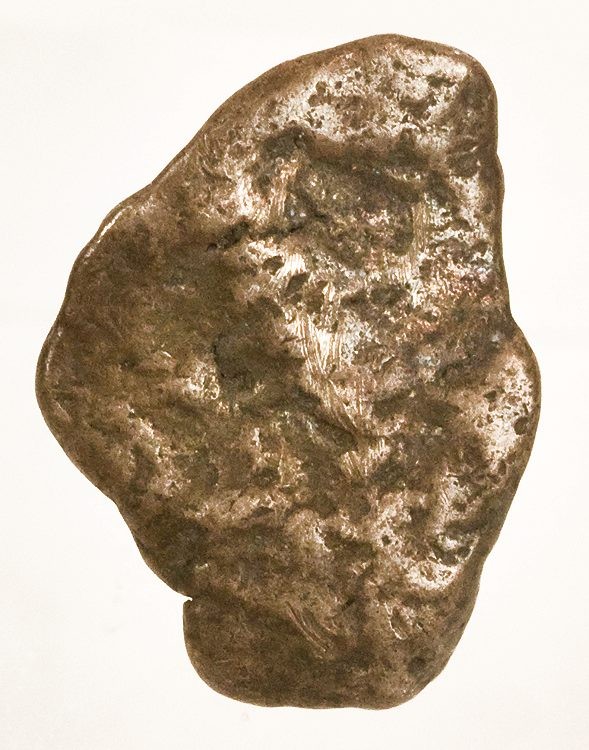
An amalgam is an alloy of mercury with another metal. It may be a liquid, a soft paste or a solid, depending upon the proportion of mercury. These alloys are formed through metallic bonding, with the electrostatic attractive force of the conduction electrons working to bind all the positively charged metal ions together into a crystal lattice structure. Many metals can form amalgams with mercury, with some notable exceptions including iron, platinum, tungsten, and tantalum. Gold-mercury amalgam is used in the extraction of gold from ore, and dental amalgams are made with metals such as silver, copper, indium, tin and zinc.
Mercury is a relatively abundant, naturally occurring element in the Earth. It forms a strong chemical bond with sulfur and is most often found in the form of cinnabar, or mercury sulfide. There are an estimated 600,000 tonnes of cinnabar deposits world-wide, and annual global production is around 6,000 tonnes, as of 2024[update]. Amalgams of silver are found in naturally-occuring minerals, including schachnerite, paraschachnerite, moschellandsbergite, arquerite, and eugenite. Gold amalgams include aurihydrargyrumite and weishanite. Small concretions of calomel, or mercury chloride, are sometimes found in mines. The amalgam mercury telluride, or coloradoite, may be found in small quantities.
Many metals will readily dissolve during contact with mercury at room temperature, and the solubility increases with temperature. The most soluble elements are indium, thallium, cadmium, and cesium. Mercury has a high electronegativity, causing it to form a number of metallic amalgams. These reactions are typically exothermic. The resulting amalgam may be liquid or solid at room temperature, depending on the preponderance of mercury. Lower mass metals are less likely to form amalgams compared to heavier metals. Elements such as platinum, aluminum, and copper are not readily soluble in mercury. Among the least soluble is iron; historically, iron flasks were used for the transport of mercury. Because mercury is a harmful toxin, it requires special handling during amalgam production.
Prior to the invention of electroplating, amalgam gilding was a common technique for gilding metal surfaces. This method was used to gild silver as early as the third to first centuries BC in China. However, the results of amalgam gilding of silver were often less satisfactory than with the similar process with gold usually referred to as fire gilding. The technique of amalgam gilding is still practiced in the Morimoto workshop in Kyoto, Japan.
For the alkali metals, amalgamation is exothermic, and distinct chemical forms can be identified, such as KHg and KHg2. KHg is a gold-coloured compound with a melting point of 178 °C, and KHg2 a silver-coloured compound with a melting point of 278 °C. These amalgams are very sensitive to air and water, but can be worked with under dry nitrogen. The Hg-Hg distance is around 300 picometres, Hg-K around 358 pm.
Phases K5Hg7 and KHg11 are also known; rubidium, strontium and barium undecamercurides are known and isostructural. Sodium amalgam (NaHg2) has a different structure, with the mercury atoms forming hexagonal layers, and the sodium atoms a linear chain which fits into the holes in the hexagonal layers, but the potassium atom is too large for this structure to work in KHg2.
Sodium amalgam is produced as a byproduct of the mercury-cell chloralkali process. It is used as an important reducing agent in organic and inorganic chemistry. With water, it decomposes into concentrated sodium hydroxide solution, hydrogen and mercury, which can then return to the chloralkali process anew. If absolutely water-free alcohol is used instead of water, an alkoxide of sodium is produced instead of the alkali solution.
Aluminium can form an amalgam through a reaction with mercury. Aluminium amalgam may be prepared by either grinding aluminium pellets or wire in mercury, or by allowing aluminium wire or foil to react with a solution of mercuric chloride. This amalgam is used as a reagent to reduce compounds, such as the reduction of imines to amines. The aluminium is the ultimate electron donor, and the mercury serves to mediate the electron transfer. The reaction itself and the waste from it contain mercury, so special safety precautions and disposal methods are needed. As an environmentally friendlier alternative, hydrides or other reducing agents can often be used to accomplish the same synthetic result. Another environmentally friendly alternative is an alloy of aluminium and gallium which similarly renders the aluminium more reactive by preventing it from forming an oxide layer.
Hub AI
Amalgam (chemistry) AI simulator
(@Amalgam (chemistry)_simulator)
Amalgam (chemistry)
An amalgam is an alloy of mercury with another metal. It may be a liquid, a soft paste or a solid, depending upon the proportion of mercury. These alloys are formed through metallic bonding, with the electrostatic attractive force of the conduction electrons working to bind all the positively charged metal ions together into a crystal lattice structure. Many metals can form amalgams with mercury, with some notable exceptions including iron, platinum, tungsten, and tantalum. Gold-mercury amalgam is used in the extraction of gold from ore, and dental amalgams are made with metals such as silver, copper, indium, tin and zinc.
Mercury is a relatively abundant, naturally occurring element in the Earth. It forms a strong chemical bond with sulfur and is most often found in the form of cinnabar, or mercury sulfide. There are an estimated 600,000 tonnes of cinnabar deposits world-wide, and annual global production is around 6,000 tonnes, as of 2024[update]. Amalgams of silver are found in naturally-occuring minerals, including schachnerite, paraschachnerite, moschellandsbergite, arquerite, and eugenite. Gold amalgams include aurihydrargyrumite and weishanite. Small concretions of calomel, or mercury chloride, are sometimes found in mines. The amalgam mercury telluride, or coloradoite, may be found in small quantities.
Many metals will readily dissolve during contact with mercury at room temperature, and the solubility increases with temperature. The most soluble elements are indium, thallium, cadmium, and cesium. Mercury has a high electronegativity, causing it to form a number of metallic amalgams. These reactions are typically exothermic. The resulting amalgam may be liquid or solid at room temperature, depending on the preponderance of mercury. Lower mass metals are less likely to form amalgams compared to heavier metals. Elements such as platinum, aluminum, and copper are not readily soluble in mercury. Among the least soluble is iron; historically, iron flasks were used for the transport of mercury. Because mercury is a harmful toxin, it requires special handling during amalgam production.
Prior to the invention of electroplating, amalgam gilding was a common technique for gilding metal surfaces. This method was used to gild silver as early as the third to first centuries BC in China. However, the results of amalgam gilding of silver were often less satisfactory than with the similar process with gold usually referred to as fire gilding. The technique of amalgam gilding is still practiced in the Morimoto workshop in Kyoto, Japan.
For the alkali metals, amalgamation is exothermic, and distinct chemical forms can be identified, such as KHg and KHg2. KHg is a gold-coloured compound with a melting point of 178 °C, and KHg2 a silver-coloured compound with a melting point of 278 °C. These amalgams are very sensitive to air and water, but can be worked with under dry nitrogen. The Hg-Hg distance is around 300 picometres, Hg-K around 358 pm.
Phases K5Hg7 and KHg11 are also known; rubidium, strontium and barium undecamercurides are known and isostructural. Sodium amalgam (NaHg2) has a different structure, with the mercury atoms forming hexagonal layers, and the sodium atoms a linear chain which fits into the holes in the hexagonal layers, but the potassium atom is too large for this structure to work in KHg2.
Sodium amalgam is produced as a byproduct of the mercury-cell chloralkali process. It is used as an important reducing agent in organic and inorganic chemistry. With water, it decomposes into concentrated sodium hydroxide solution, hydrogen and mercury, which can then return to the chloralkali process anew. If absolutely water-free alcohol is used instead of water, an alkoxide of sodium is produced instead of the alkali solution.
Aluminium can form an amalgam through a reaction with mercury. Aluminium amalgam may be prepared by either grinding aluminium pellets or wire in mercury, or by allowing aluminium wire or foil to react with a solution of mercuric chloride. This amalgam is used as a reagent to reduce compounds, such as the reduction of imines to amines. The aluminium is the ultimate electron donor, and the mercury serves to mediate the electron transfer. The reaction itself and the waste from it contain mercury, so special safety precautions and disposal methods are needed. As an environmentally friendlier alternative, hydrides or other reducing agents can often be used to accomplish the same synthetic result. Another environmentally friendly alternative is an alloy of aluminium and gallium which similarly renders the aluminium more reactive by preventing it from forming an oxide layer.
Recent media