
Recent from talks
Preferred gender pronoun
Knowledge base stats:
Talk channels stats:
Members stats:
Preferred gender pronoun
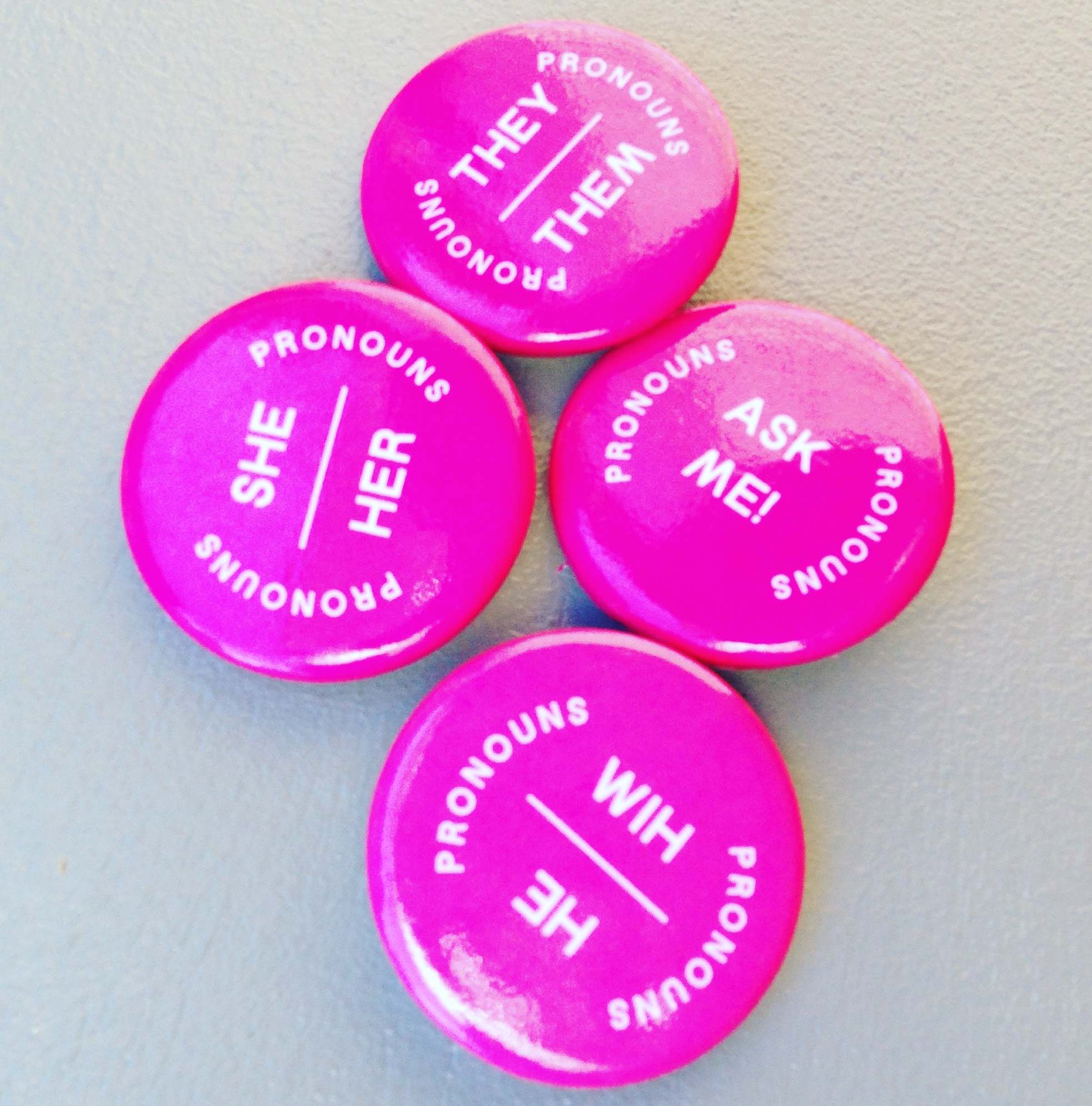
Preferred gender pronouns (also called personal gender pronouns, often abbreviated as PGP) are the set of pronouns (in English, third-person pronouns) that an individual wants others to use to reflect that person's own gender identity. In English, when declaring one's chosen pronouns, a person will often state the subject and object pronouns (e.g., he/him, she/her, they/them), although sometimes, the possessive pronouns are also stated (e.g., she/her/hers, he/him/his, they/them/their/theirs). The pronouns chosen may include neopronouns such as ze and zir.
Preferred personal pronouns were recognized as the word of the year 2019 by the American Dialect Society.
In English, when declaring one's pronouns, a person will often state the subject and object pronouns, for example he/him, she/her, or they/them; sometimes, the possessive pronouns are also stated (she/her/hers, he/him/his, or they/them/their/theirs). A person who uses multiple pronouns (either interchangeably or in different contexts) may list both subject pronouns, for example she/they or they/he.
PGPs have come into use as a way of promoting equity and inclusion for transgender, non-binary and genderqueer people. Their use has been identified by social workers, educators, and medical professionals as both a practical and ethical consideration. Style guides and associations of journalists and health professionals advise use of the pronoun chosen or considered appropriate by the person in question. When dealing with clients or patients, health practitioners are advised to take note of the pronouns used by the individuals themselves, which may involve using different pronouns at different times. This is also extended to the name chosen by the person concerned. LGBTQ advocacy groups also advise using the pronouns and names chosen or considered appropriate by the person concerned. They further recommend avoiding gender confusion when referring to the background of transgender people, such as using a title or rank to avoid a gendered pronoun or name.
The practice of sharing personal gender pronouns has been observed in the LGBT community at least since the early 2000s. By the 2020s, it had become a common practice in social settings and on social media. Social media websites including Twitter, Instagram and LinkedIn have added dedicated pronoun fields for their users' profile pages.
In July 2021, the Pew Research Center reported that 26% of Americans knew someone who preferred pronouns such as they instead of he or she, a rise from 18% in 2018. Some use neopronouns such as xe, ze, ve, tey, and hir.
Some people use more than one set of pronouns, either interchangeably or depending on the situation, and may indicate their personal pronouns as he/they or they/she.
The dean of women at Pomona College, Rachel N. Levin, advised against professors asking students to reveal their PGPs during class introductions, since this could upset those whom the PGP use is supposed to support. The two examples Levin gives include one student who has to confront not passing (in other words, that their gender presentation is not clear to people around them), and another student who does not know which pronouns to request others to use. Christina M. Xiao, a Harvard University student who favored use of PGPs, opposed PGPs being mandatory, saying that making use of PGPs can force people into an uncomfortable situation where they out themselves or feel "incredibly dysphoric".
Hub AI
Preferred gender pronoun AI simulator
(@Preferred gender pronoun_simulator)
Preferred gender pronoun
Preferred gender pronouns (also called personal gender pronouns, often abbreviated as PGP) are the set of pronouns (in English, third-person pronouns) that an individual wants others to use to reflect that person's own gender identity. In English, when declaring one's chosen pronouns, a person will often state the subject and object pronouns (e.g., he/him, she/her, they/them), although sometimes, the possessive pronouns are also stated (e.g., she/her/hers, he/him/his, they/them/their/theirs). The pronouns chosen may include neopronouns such as ze and zir.
Preferred personal pronouns were recognized as the word of the year 2019 by the American Dialect Society.
In English, when declaring one's pronouns, a person will often state the subject and object pronouns, for example he/him, she/her, or they/them; sometimes, the possessive pronouns are also stated (she/her/hers, he/him/his, or they/them/their/theirs). A person who uses multiple pronouns (either interchangeably or in different contexts) may list both subject pronouns, for example she/they or they/he.
PGPs have come into use as a way of promoting equity and inclusion for transgender, non-binary and genderqueer people. Their use has been identified by social workers, educators, and medical professionals as both a practical and ethical consideration. Style guides and associations of journalists and health professionals advise use of the pronoun chosen or considered appropriate by the person in question. When dealing with clients or patients, health practitioners are advised to take note of the pronouns used by the individuals themselves, which may involve using different pronouns at different times. This is also extended to the name chosen by the person concerned. LGBTQ advocacy groups also advise using the pronouns and names chosen or considered appropriate by the person concerned. They further recommend avoiding gender confusion when referring to the background of transgender people, such as using a title or rank to avoid a gendered pronoun or name.
The practice of sharing personal gender pronouns has been observed in the LGBT community at least since the early 2000s. By the 2020s, it had become a common practice in social settings and on social media. Social media websites including Twitter, Instagram and LinkedIn have added dedicated pronoun fields for their users' profile pages.
In July 2021, the Pew Research Center reported that 26% of Americans knew someone who preferred pronouns such as they instead of he or she, a rise from 18% in 2018. Some use neopronouns such as xe, ze, ve, tey, and hir.
Some people use more than one set of pronouns, either interchangeably or depending on the situation, and may indicate their personal pronouns as he/they or they/she.
The dean of women at Pomona College, Rachel N. Levin, advised against professors asking students to reveal their PGPs during class introductions, since this could upset those whom the PGP use is supposed to support. The two examples Levin gives include one student who has to confront not passing (in other words, that their gender presentation is not clear to people around them), and another student who does not know which pronouns to request others to use. Christina M. Xiao, a Harvard University student who favored use of PGPs, opposed PGPs being mandatory, saying that making use of PGPs can force people into an uncomfortable situation where they out themselves or feel "incredibly dysphoric".
Recent media