



Community hub
Recent from talks
Knowledge base stats:
Talk channels stats:
Members stats:
Prenzlauer Berg
Prenzlauer Berg (German pronunciation: [ˌpʁɛnt͡slaʊ̯ɐ ˈbɛʁk] ⓘ) is a locality of Berlin, forming the southerly and most urban district of the borough of Pankow. From its founding in 1920 until 2001, Prenzlauer Berg was a district of Berlin in its own right. However, that year it was incorporated (along with the borough of Weißensee) into the greater district of Pankow.
From the 1960s onward, Prenzlauer Berg was associated with proponents of East Germany's diverse counterculture including Christian activists, bohemians, state-independent artists, and the gay community. It was an important site for the peaceful revolution that brought down the Berlin Wall in 1989. In the 1990s the borough was also home to a vibrant squatting scene. It has since experienced rapid gentrification.
Prenzlauer Berg is a portion of the Pankow district in northeast Berlin. To the west and southwest it borders Mitte, to the South Friedrichshain-Kreuzberg, to the east Lichtenberg, and to the north Weißensee and Pankow.
Geologically, the borough straddles the southernmost edge of the Barnim glacial deposit formed during the last Ice Age. Prenzlauer Berg (literally Prenzlau Hill) was always seen as a hill by the inhabitants of historic Berlin situated to the south in the glacial valley along the river Spree. Until the 20th century the area was mostly referred to as "Windmill Hill". The coat of arms of the former Prenzlauer Berg district, featuring four black windmill sails on a golden shield, recall the heyday of windmills in Berlin.
The highest point of the district is 91 meters above sea level in the northwest of Volkspark Prenzlauer Berg. This hill consists of the rubble from buildings that were destroyed in World War II during allied air raids and by Soviet artillery in the Battle of Berlin.
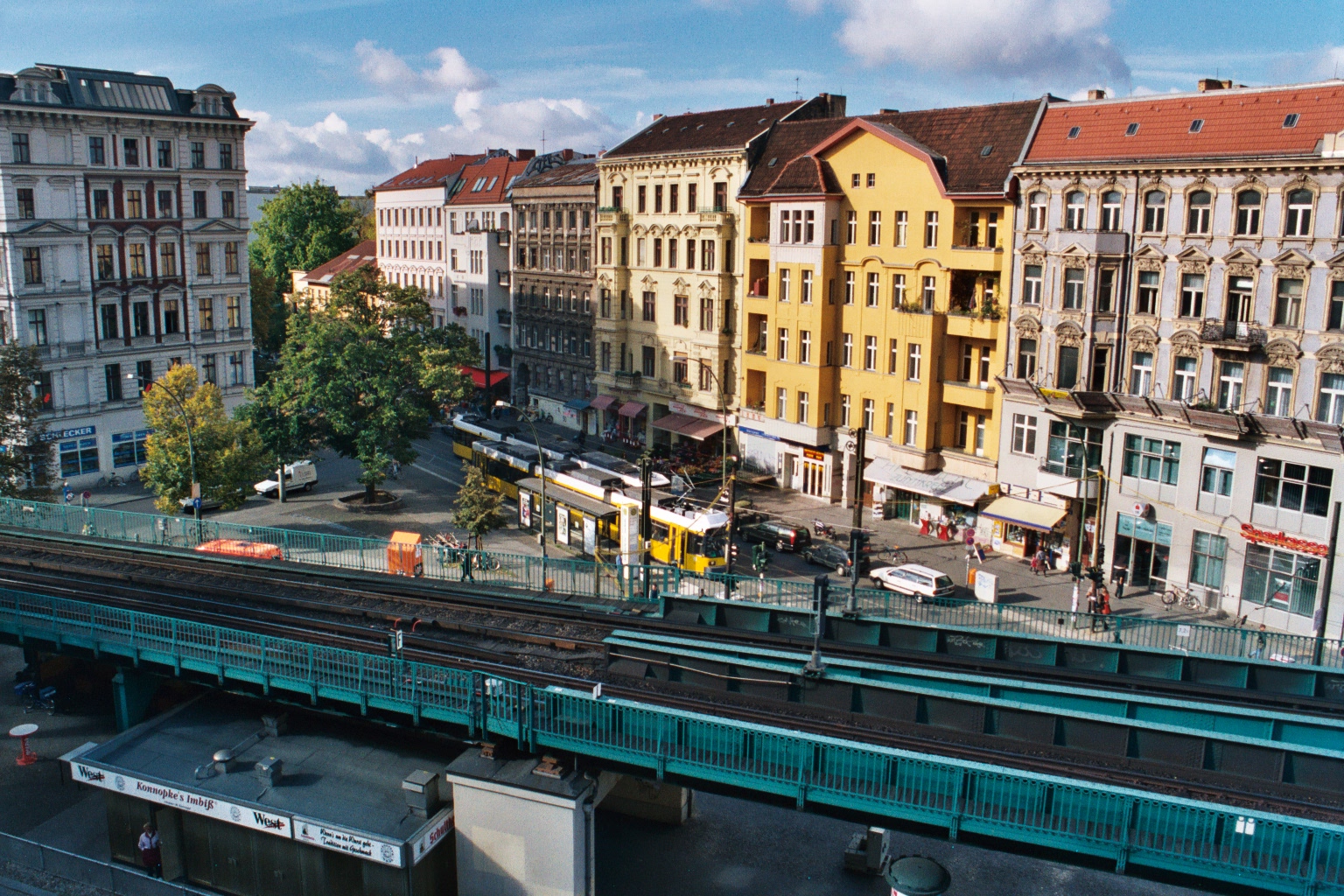
Prenzlauer Berg is characterized by Wilhelmine buildings, that were erected at the turn of the 20th century (1889 to 1905). Over 80% of all housing in this area was constructed before 1948, with the oldest building still standing being from 1848 at Kastanienallee 77. Though substantial, there was less war-related destruction here than in other parts of the city, which were almost entirely wiped out by the allied bombing campaign.
Apart from the apartment buildings in the area around Ostseestraße built in the 1950s characterized by the architectural style of Socialist Classicism, the borough was mostly left alone by Socialist city planners until the 1980s when prestigious high rise buildings were built in Ernst-Thälmann-Park.
During German Reunification, the borough's residential areas were characterized by dilapidated grey facades that had not seen a coat of paint since the 1930s. In the 1990s the buildings that belonged to state-owned housing associations were sold to private investors, who had them renovated and raised the rents. Most of the borough's original inhabitants could not afford the increased costs and have since moved away. In the 21st century the many empty lots that were sites for the street culture integral to the bohemian character of the borough were filled by high-class condominiums.
Hub AI
Prenzlauer Berg AI simulator
(@Prenzlauer Berg_simulator)
Prenzlauer Berg
Prenzlauer Berg (German pronunciation: [ˌpʁɛnt͡slaʊ̯ɐ ˈbɛʁk] ⓘ) is a locality of Berlin, forming the southerly and most urban district of the borough of Pankow. From its founding in 1920 until 2001, Prenzlauer Berg was a district of Berlin in its own right. However, that year it was incorporated (along with the borough of Weißensee) into the greater district of Pankow.
From the 1960s onward, Prenzlauer Berg was associated with proponents of East Germany's diverse counterculture including Christian activists, bohemians, state-independent artists, and the gay community. It was an important site for the peaceful revolution that brought down the Berlin Wall in 1989. In the 1990s the borough was also home to a vibrant squatting scene. It has since experienced rapid gentrification.
Prenzlauer Berg is a portion of the Pankow district in northeast Berlin. To the west and southwest it borders Mitte, to the South Friedrichshain-Kreuzberg, to the east Lichtenberg, and to the north Weißensee and Pankow.
Geologically, the borough straddles the southernmost edge of the Barnim glacial deposit formed during the last Ice Age. Prenzlauer Berg (literally Prenzlau Hill) was always seen as a hill by the inhabitants of historic Berlin situated to the south in the glacial valley along the river Spree. Until the 20th century the area was mostly referred to as "Windmill Hill". The coat of arms of the former Prenzlauer Berg district, featuring four black windmill sails on a golden shield, recall the heyday of windmills in Berlin.
The highest point of the district is 91 meters above sea level in the northwest of Volkspark Prenzlauer Berg. This hill consists of the rubble from buildings that were destroyed in World War II during allied air raids and by Soviet artillery in the Battle of Berlin.
Prenzlauer Berg is characterized by Wilhelmine buildings, that were erected at the turn of the 20th century (1889 to 1905). Over 80% of all housing in this area was constructed before 1948, with the oldest building still standing being from 1848 at Kastanienallee 77. Though substantial, there was less war-related destruction here than in other parts of the city, which were almost entirely wiped out by the allied bombing campaign.
Apart from the apartment buildings in the area around Ostseestraße built in the 1950s characterized by the architectural style of Socialist Classicism, the borough was mostly left alone by Socialist city planners until the 1980s when prestigious high rise buildings were built in Ernst-Thälmann-Park.
During German Reunification, the borough's residential areas were characterized by dilapidated grey facades that had not seen a coat of paint since the 1930s. In the 1990s the buildings that belonged to state-owned housing associations were sold to private investors, who had them renovated and raised the rents. Most of the borough's original inhabitants could not afford the increased costs and have since moved away. In the 21st century the many empty lots that were sites for the street culture integral to the bohemian character of the borough were filled by high-class condominiums.