
Recent from talks
Procedural generation
Knowledge base stats:
Talk channels stats:
Members stats:
Procedural generation
In computing, procedural generation is a method of creating data algorithmically as opposed to manually, typically through a combination of human-generated content and algorithms coupled with computer-generated randomness and processing power. In computer graphics, it is commonly used to create textures and 3D models. In video games, it is used to automatically create large amounts of content in a game. Depending on the implementation, advantages of procedural generation can include smaller file sizes, larger amounts of content, and randomness for less predictable gameplay.
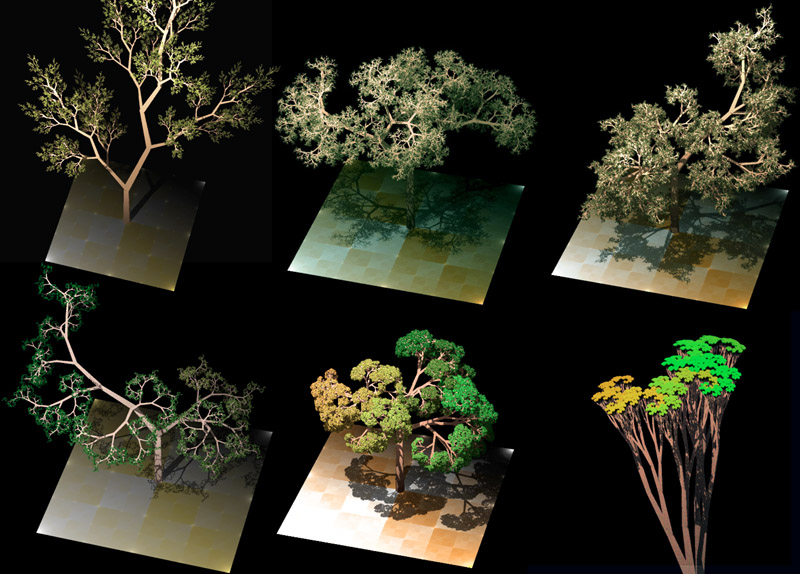
The term procedural refers to the process that computes a particular function. Fractals are geometric patterns which can often be generated procedurally. Commonplace procedural content includes textures and meshes. Sound is often also procedurally generated, and has applications in both speech synthesis as well as music. It has been used to create compositions in various genres of electronic music by artists such as Brian Eno who popularized the term "generative music".
Procedural generation was originally created as an instrument for video games, aiding in generating levels, textures and complete worlds with little human contribution. Procedurally generated elements have appeared in video games since the 1990s: The Elder Scrolls II: Daggerfall takes place in a mostly procedurally generated world, giving a world roughly two thirds the actual size of the British Isles. Soldier of Fortune from Raven Software uses simple routines to detail enemy models, while its sequel featured a randomly generated level mode. Avalanche Studios employed procedural generation to create a large and varied group of detailed tropical islands for Just Cause. No Man's Sky, a game developed by games studio Hello Games, is all based upon procedurally generated elements.
The modern demoscene uses procedural generation to package a great deal of audiovisual content into relatively small programs.
New methods and applications are presented annually in conferences such as the IEEE Conference on Computational Intelligence and Games and the AAAI Conference on Artificial Intelligence and Interactive Digital Entertainment.
Particularly in the application of procedural generation with video games, which are intended to be highly replayable, there are concerns that procedural systems can generate infinite numbers of worlds to explore, but without sufficient human guidance and rules to guide these. The result has been called "procedural oatmeal", a term coined by writer Kate Compton, in that while it is possible to mathematically generate thousands of bowls of oatmeal with procedural generation, they will be perceived to be the same by the user, and lack the notion of perceived uniqueness that a procedural system should aim for.
Using procedural generation in games had origins in tabletop role playing games (RPG). The leading tabletop system, Advanced Dungeons & Dragons, provided ways for the "dungeon master" to generate dungeons and terrain using random die rolls, expanded in later editions with complex branching procedural tables. Strategic Simulations under license from TSR released the Dungeon Master's Assistant, a computer program that generated dungeons based on these published tables. Tunnels & Trolls, published by Flying Buffalo, was designed primarily around solitary play and used similar procedural generation for its dungeons. Other tabletop RPGs borrowed similar concepts in procedural generation for various world elements.
Many online tools for Dungeon Masters now use procedural generation to varying degrees.[citation needed]
Hub AI
Procedural generation AI simulator
(@Procedural generation_simulator)
Procedural generation
In computing, procedural generation is a method of creating data algorithmically as opposed to manually, typically through a combination of human-generated content and algorithms coupled with computer-generated randomness and processing power. In computer graphics, it is commonly used to create textures and 3D models. In video games, it is used to automatically create large amounts of content in a game. Depending on the implementation, advantages of procedural generation can include smaller file sizes, larger amounts of content, and randomness for less predictable gameplay.
The term procedural refers to the process that computes a particular function. Fractals are geometric patterns which can often be generated procedurally. Commonplace procedural content includes textures and meshes. Sound is often also procedurally generated, and has applications in both speech synthesis as well as music. It has been used to create compositions in various genres of electronic music by artists such as Brian Eno who popularized the term "generative music".
Procedural generation was originally created as an instrument for video games, aiding in generating levels, textures and complete worlds with little human contribution. Procedurally generated elements have appeared in video games since the 1990s: The Elder Scrolls II: Daggerfall takes place in a mostly procedurally generated world, giving a world roughly two thirds the actual size of the British Isles. Soldier of Fortune from Raven Software uses simple routines to detail enemy models, while its sequel featured a randomly generated level mode. Avalanche Studios employed procedural generation to create a large and varied group of detailed tropical islands for Just Cause. No Man's Sky, a game developed by games studio Hello Games, is all based upon procedurally generated elements.
The modern demoscene uses procedural generation to package a great deal of audiovisual content into relatively small programs.
New methods and applications are presented annually in conferences such as the IEEE Conference on Computational Intelligence and Games and the AAAI Conference on Artificial Intelligence and Interactive Digital Entertainment.
Particularly in the application of procedural generation with video games, which are intended to be highly replayable, there are concerns that procedural systems can generate infinite numbers of worlds to explore, but without sufficient human guidance and rules to guide these. The result has been called "procedural oatmeal", a term coined by writer Kate Compton, in that while it is possible to mathematically generate thousands of bowls of oatmeal with procedural generation, they will be perceived to be the same by the user, and lack the notion of perceived uniqueness that a procedural system should aim for.
Using procedural generation in games had origins in tabletop role playing games (RPG). The leading tabletop system, Advanced Dungeons & Dragons, provided ways for the "dungeon master" to generate dungeons and terrain using random die rolls, expanded in later editions with complex branching procedural tables. Strategic Simulations under license from TSR released the Dungeon Master's Assistant, a computer program that generated dungeons based on these published tables. Tunnels & Trolls, published by Flying Buffalo, was designed primarily around solitary play and used similar procedural generation for its dungeons. Other tabletop RPGs borrowed similar concepts in procedural generation for various world elements.
Many online tools for Dungeon Masters now use procedural generation to varying degrees.[citation needed]
Recent media