
Recent from talks
Project Wizard
Knowledge base stats:
Talk channels stats:
Members stats:
Project Wizard
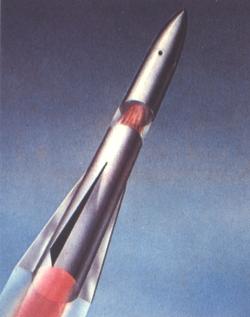
Project Wizard was a Cold War-era anti-ballistic missile system to defend against short and medium-range threats of the V-2 rocket type. It was contracted by the US Army Air Force in March 1946 with the University of Michigan's Aeronautical Research Center (MARC). A similar effort, Project Thumper, started at General Electric.
Early results demonstrated that the task of shooting down missiles appeared to be beyond the state of the art, and both projects were downgraded to long-term technology studies in the summer of 1947. They moved to the US Air Force with that force's creation in fall 1947. Due to budget constraints, Thumper was cancelled in 1949 and its funds re-directed to the GAPA project. Partially due to the perceived threat of Soviet long-range bombers being more serious, and that the systems still appeared to be beyond the state of the art, the Air Force later cancelled Wizard as well. Funds from the Wizard, Thumper and GAPA concepts were all channeled into MX-606, a long-range surface-to-air missile project that eventually emerged in the late 1950s as the CIM-10 Bomarc.
In 1955 the Army announced its intention to develop a new anti-ICBM system based on its Nike systems. The Air Force immediately re-activated Wizard as an entirely new project with Convair and RCA, and later added Lockheed-Raytheon and the Bell Labs-Douglas Aircraft team developing Nike. The Air Force called Wizard the "Top Defense Missile" in 1957. In 1958, with the Army's Nike Zeus system planning to enter testing and Wizard still a paper project, The Pentagon told the Air Force to limit their work to long-range radars. In 1959 the Air Force cancelled Wizard, stating that any ABM system was less cost effective than building more ICBMs. These arguments would also be directed against Zeus, which was cancelled in 1963.
Between 1944 and 1945, about 3,600 German V-2 rockets were fired at allied targets in Europe. Armed with conventional high-explosive warheads, the V-2 had little serious strategic value, but if armed with nuclear weapons they could be significant weapons used against field targets in Europe. On 20 June 1945, the Army Ground Forces Equipment Review Board, or Cook Board, listed the requirement for "High velocity guided missiles...capable of...destroying missiles of the V-2 type, should be developed at the earliest practicable date." In July 1945 the Signal Corps started basic research into two radar systems for ABM use.
By 1 April 1946 Robert P. Patterson, the Secretary of War, had signed off on an ABM. In February 1946 the War Department's Joint Committee on New Weapons and Equipment led by General Joseph Stilwell and generally known as the Stilwell Board was formed to consider the Army's post-war development priorities. On 29 May 1946 they published their report on a "Proposed National Program for Guided Missiles", noting that missiles with "intercontinental ranges of over 3,000 miles and payload sufficient to carry atomic explosive are to be expected." They suggested that defensive measures including anti-missiles should be "accorded priority over all other National Defense projects" and that the system be capable of supersonic speeds and 100,000 yards (91 km) range.
By this time the US Army Air Force (USAAF) had already started work on anti-V-2 weapons. On 4 March 1946 they sent out a contracts to University of Michigan and General Electric for "interceptor weapons for ballistic missile defense". The contracts called for missiles capable of dealing with targets between 60,000 to 500,000 feet (18–152 km) altitude at speeds up to 4,000 miles per hour (6,400 km/h) and maximum range of 100,000 yards (91 km). The contracts were called Project Wizard and Project Thumper, respectively, and in keeping with USAAF project naming policy, given the codes MX-794 and MX-795. The planned missiles were 60 feet (18 m) long and 6 feet (1.8 m) in diameter, with a range of 550 miles (890 km). with speeds of 4,000 to 5,000 mph with a 50 percent kill probability against a V-2.
Early results from Thumper and Wizard suggested that the problem was well beyond the state of the art. V-2's had flight times on the order of 5 minutes, and an attack could be carried out from any point within its approximate 200 miles (320 km) range. Early detection would require large radar systems (Chain Home was used for this purpose during World War II) which would have to calculate the approximate impact point and forward targeting information to an anti-missile battery in time for them to locate the target on their own radars and launch their missiles. Air Materiel Command estimated it would be five to ten years before the long-range radars, highly accurate guidance systems and long-range radar seekers could be developed.
However, they also suggested that these tasks would not be impossible given emerging technologies, especially against long-ranged missiles with longer flight times and higher apogee, which would give the early warning radar more time to track the targets. Accordingly, both projects were downgraded to long-term technology studies in the summer of 1947, allocated $1 million each.
Hub AI
Project Wizard AI simulator
(@Project Wizard_simulator)
Project Wizard
Project Wizard was a Cold War-era anti-ballistic missile system to defend against short and medium-range threats of the V-2 rocket type. It was contracted by the US Army Air Force in March 1946 with the University of Michigan's Aeronautical Research Center (MARC). A similar effort, Project Thumper, started at General Electric.
Early results demonstrated that the task of shooting down missiles appeared to be beyond the state of the art, and both projects were downgraded to long-term technology studies in the summer of 1947. They moved to the US Air Force with that force's creation in fall 1947. Due to budget constraints, Thumper was cancelled in 1949 and its funds re-directed to the GAPA project. Partially due to the perceived threat of Soviet long-range bombers being more serious, and that the systems still appeared to be beyond the state of the art, the Air Force later cancelled Wizard as well. Funds from the Wizard, Thumper and GAPA concepts were all channeled into MX-606, a long-range surface-to-air missile project that eventually emerged in the late 1950s as the CIM-10 Bomarc.
In 1955 the Army announced its intention to develop a new anti-ICBM system based on its Nike systems. The Air Force immediately re-activated Wizard as an entirely new project with Convair and RCA, and later added Lockheed-Raytheon and the Bell Labs-Douglas Aircraft team developing Nike. The Air Force called Wizard the "Top Defense Missile" in 1957. In 1958, with the Army's Nike Zeus system planning to enter testing and Wizard still a paper project, The Pentagon told the Air Force to limit their work to long-range radars. In 1959 the Air Force cancelled Wizard, stating that any ABM system was less cost effective than building more ICBMs. These arguments would also be directed against Zeus, which was cancelled in 1963.
Between 1944 and 1945, about 3,600 German V-2 rockets were fired at allied targets in Europe. Armed with conventional high-explosive warheads, the V-2 had little serious strategic value, but if armed with nuclear weapons they could be significant weapons used against field targets in Europe. On 20 June 1945, the Army Ground Forces Equipment Review Board, or Cook Board, listed the requirement for "High velocity guided missiles...capable of...destroying missiles of the V-2 type, should be developed at the earliest practicable date." In July 1945 the Signal Corps started basic research into two radar systems for ABM use.
By 1 April 1946 Robert P. Patterson, the Secretary of War, had signed off on an ABM. In February 1946 the War Department's Joint Committee on New Weapons and Equipment led by General Joseph Stilwell and generally known as the Stilwell Board was formed to consider the Army's post-war development priorities. On 29 May 1946 they published their report on a "Proposed National Program for Guided Missiles", noting that missiles with "intercontinental ranges of over 3,000 miles and payload sufficient to carry atomic explosive are to be expected." They suggested that defensive measures including anti-missiles should be "accorded priority over all other National Defense projects" and that the system be capable of supersonic speeds and 100,000 yards (91 km) range.
By this time the US Army Air Force (USAAF) had already started work on anti-V-2 weapons. On 4 March 1946 they sent out a contracts to University of Michigan and General Electric for "interceptor weapons for ballistic missile defense". The contracts called for missiles capable of dealing with targets between 60,000 to 500,000 feet (18–152 km) altitude at speeds up to 4,000 miles per hour (6,400 km/h) and maximum range of 100,000 yards (91 km). The contracts were called Project Wizard and Project Thumper, respectively, and in keeping with USAAF project naming policy, given the codes MX-794 and MX-795. The planned missiles were 60 feet (18 m) long and 6 feet (1.8 m) in diameter, with a range of 550 miles (890 km). with speeds of 4,000 to 5,000 mph with a 50 percent kill probability against a V-2.
Early results from Thumper and Wizard suggested that the problem was well beyond the state of the art. V-2's had flight times on the order of 5 minutes, and an attack could be carried out from any point within its approximate 200 miles (320 km) range. Early detection would require large radar systems (Chain Home was used for this purpose during World War II) which would have to calculate the approximate impact point and forward targeting information to an anti-missile battery in time for them to locate the target on their own radars and launch their missiles. Air Materiel Command estimated it would be five to ten years before the long-range radars, highly accurate guidance systems and long-range radar seekers could be developed.
However, they also suggested that these tasks would not be impossible given emerging technologies, especially against long-ranged missiles with longer flight times and higher apogee, which would give the early warning radar more time to track the targets. Accordingly, both projects were downgraded to long-term technology studies in the summer of 1947, allocated $1 million each.
Recent media