



Community hub
Recent from talks
Knowledge base stats:
Talk channels stats:
Members stats:
Prosenjit Chatterjee
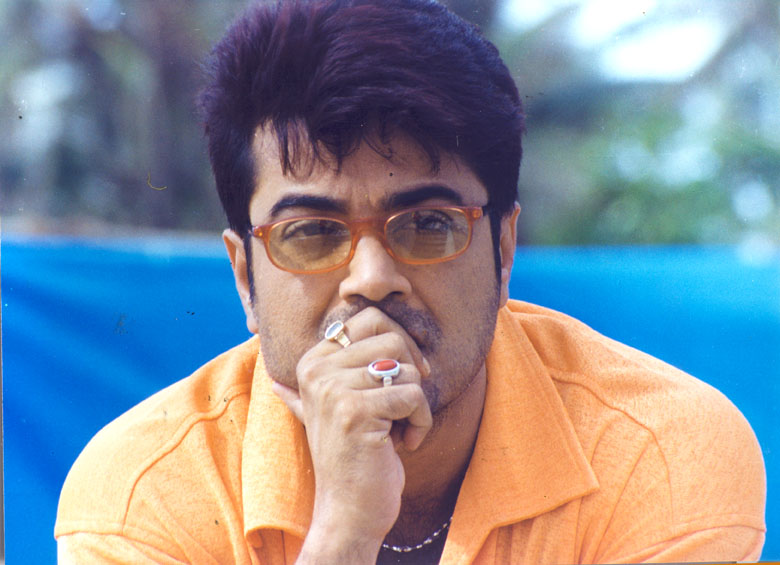
Prosenjit Chatterjee (pronounced [prosenˈdʒit tʃæt̪ːarˈdʒi]; born 30 September 1962) is an Indian actor, director, producer, screenwriter, playback singer and television personality who works primarily in Bengali cinema. Referred to in the media as the "Jyeshthoputro" (Bengali for "The Eldest Son") and "Mr. Industry", through his career spanning over four decades, Prosenjit is widely regarded as one of the most successful and influential actors in the history of Indian cinema. In his cinematic career, he has made over 250 films in Bengali, Hindi and Odia, having numerous accolades, including two National Film Awards, five Filmfare Awards and six BFJA Awards. He was honoured with Mahanayak Samman in 2013, Banga Bibhushan in 2018 and Padma Shri in 2026.
The son of actor Biswajeet Chatterjee, Prosenjit started his career at the age of 5 in Hrishikesh Mukherjee's 1968 Bengali film Chotto Jigyasa, which earned him the BFJA Award for Most Outstanding Work of the Year. After playing a few supporting roles, he progressed to lead role in the romantic drama Duti Pata (1983). Despite having widespread recognition for his portrayal of an unemployed man in Tarun Majumdar's Pathbhola (1986), he reached the height of superstardom with the 1987 blockbuster Amar Sangee. Besides starring in top-grossing romantic films including Chhoto Bou (1988), Jyoti (1988), Aamar Tumi (1989), Amar Prem (1989), Apan Amar Apan (1990), Mandira (1990), Mon Mane Na (1992), Biyer Phool (1996) and Mayar Badhon (1997), he had further box-office hits in action films such as Ora Charjon (1988), Asha O Bhalobasha (1989), Badnam (1990), Sangharsha (1995), Bhai Amar Bhai (1997) and Ranokhetro (1998). He made his directorial debut with Purushottam (1992), which inaugurated the Best Asian Film Award at the Bucheon International Fantastic Film Festival, South Korea. His next Sasurbari Zindabad (2000) became the first Bengali film to have CinemaScope technology, while his portrayal of a volatile police officer in Pratibad (2001) was selected by Forbes India as one of the 25 greatest acting performances of Indian cinema. During this period, Prosenjit gained critical acclaim for his performances as an alcoholic in Devdas (2002), a medical practitioner in Chokher Bali (2003), a disabled person in Dosar (2006), a surveillance specialist in Ami, Yasin Ar Amar Madhubala (2007), a film director in Khela (2008), a film screener in Swapner Din (2008), and a thespian poet in Shob Charitro Kalponik (2009). Dosar earned him National Award in the Special Mention category.
In 2010, Prosenjit transitioned to parallel cinema through Srijit Mukherji's Autograph, for which he was nominated at MIAAC Film Festival, under the Best Actor category. His another author-backed performance came in Moner Manush (2010), the biopic of Lalon, a noted spiritual leader, poet and folk singer of the 19th century Bengal. He got wider appeal for his roles of a troubled father in the sports drama Cholo Paltai (2011), a retired police officer in the psychological thriller Baishe Srabon (2011), a doctor in the political thriller Shanghai (2012), a football coach in the sports drama Lorai (2015), a gangster in the crime drama Zulfiqar (2016), a scientist in the action thriller One (2017), a serial killing specialist in Dawshom Awbotaar (2023), and a businessman in the thriller Ajogyo (2024), and went to earn further recognition in the psychological drama Jaatishwar (2014), erotic thriller Khawto (2015), the romantic drama Praktan (2016), the drama Shankhachil (2016), the National Award-winning dramas Mayurakshi (2017) and Jyeshthoputro (2019), the historical courtroom film Gumnaami (2019), the drama Nirontor (2019), the dark-comedy Kacher Manush (2022), the romantic thriller Kaberi Antardhan (2023), the drama Shesh Pata (2023), the historical actioner Devi Chowdhurani (2025), with expansion to action-adventures in Mishawr Rawhoshyo (2013), Yeti Obhijaan (2017), Kakababur Protyaborton (2021) and Vijaynagar'er Hirey (2026), each ranking among the highest-grossing Bengali films.
Prosenjit lives in Kolkata with his wife, actress Arpita Pal, and their son Trishanjit.
He was previously married to Debashree Roy and Aparna Guha Thakurta. Prosenjit and Aparna have a daughter together, Prerona Chatterjee. In 2015, Prosenjit bought the Bengal Celebrity League cricket team Purulia Panthers.
When Hrishikesh Mukherjee was working on the script of Chotto Jigyasa (1968), collaborating with Biswajeet Chatterjee for the third time, he was apparently impressed by Prosenjit and cast him in the central character of the film. In the film, he played a child who initially struggles to cope with his mother's absence, becoming withdrawn and isolated. Prosenjit won the Most Outstanding Work of the Year Award at the 28th BFJA Awards, for his performance in the film at age six.
Chotto Jigyasa's success led Prosenjit to appear as a child artist in two of his father's films: the first was the Hindi film Rahgir, directed by Tarun Majumdar, and the second was the action thriller Rakta Tilak (1974), which marked his father's directorial debut. In the meanwhile, he continued his education, taking a break from acting.
In 1979, after completing the graduation, he joined Nandikar, one of Bengal's earliest theatre groups, where he used to act for a fee of ₹250. His time with the theatre company shaped Prosenjit's craft and ignited his interest in direction, where Rudraprasad Sengupta had served as his mentor. By this time, his performance was observed by Uttam Kumar, who approached him to star in his home-production Dui Prithibi (1980). In the film, he played the younger version of Kumar's character, and also served as the assistant under director Pijush Basu's supervision. During this time, he made brief appearances in some films including a few uncredited roles, such as Pankhiraj (1980) and Kalankini Kankabati (1981).
Hub AI
Prosenjit Chatterjee AI simulator
(@Prosenjit Chatterjee_simulator)
Prosenjit Chatterjee
Prosenjit Chatterjee (pronounced [prosenˈdʒit tʃæt̪ːarˈdʒi]; born 30 September 1962) is an Indian actor, director, producer, screenwriter, playback singer and television personality who works primarily in Bengali cinema. Referred to in the media as the "Jyeshthoputro" (Bengali for "The Eldest Son") and "Mr. Industry", through his career spanning over four decades, Prosenjit is widely regarded as one of the most successful and influential actors in the history of Indian cinema. In his cinematic career, he has made over 250 films in Bengali, Hindi and Odia, having numerous accolades, including two National Film Awards, five Filmfare Awards and six BFJA Awards. He was honoured with Mahanayak Samman in 2013, Banga Bibhushan in 2018 and Padma Shri in 2026.
The son of actor Biswajeet Chatterjee, Prosenjit started his career at the age of 5 in Hrishikesh Mukherjee's 1968 Bengali film Chotto Jigyasa, which earned him the BFJA Award for Most Outstanding Work of the Year. After playing a few supporting roles, he progressed to lead role in the romantic drama Duti Pata (1983). Despite having widespread recognition for his portrayal of an unemployed man in Tarun Majumdar's Pathbhola (1986), he reached the height of superstardom with the 1987 blockbuster Amar Sangee. Besides starring in top-grossing romantic films including Chhoto Bou (1988), Jyoti (1988), Aamar Tumi (1989), Amar Prem (1989), Apan Amar Apan (1990), Mandira (1990), Mon Mane Na (1992), Biyer Phool (1996) and Mayar Badhon (1997), he had further box-office hits in action films such as Ora Charjon (1988), Asha O Bhalobasha (1989), Badnam (1990), Sangharsha (1995), Bhai Amar Bhai (1997) and Ranokhetro (1998). He made his directorial debut with Purushottam (1992), which inaugurated the Best Asian Film Award at the Bucheon International Fantastic Film Festival, South Korea. His next Sasurbari Zindabad (2000) became the first Bengali film to have CinemaScope technology, while his portrayal of a volatile police officer in Pratibad (2001) was selected by Forbes India as one of the 25 greatest acting performances of Indian cinema. During this period, Prosenjit gained critical acclaim for his performances as an alcoholic in Devdas (2002), a medical practitioner in Chokher Bali (2003), a disabled person in Dosar (2006), a surveillance specialist in Ami, Yasin Ar Amar Madhubala (2007), a film director in Khela (2008), a film screener in Swapner Din (2008), and a thespian poet in Shob Charitro Kalponik (2009). Dosar earned him National Award in the Special Mention category.
In 2010, Prosenjit transitioned to parallel cinema through Srijit Mukherji's Autograph, for which he was nominated at MIAAC Film Festival, under the Best Actor category. His another author-backed performance came in Moner Manush (2010), the biopic of Lalon, a noted spiritual leader, poet and folk singer of the 19th century Bengal. He got wider appeal for his roles of a troubled father in the sports drama Cholo Paltai (2011), a retired police officer in the psychological thriller Baishe Srabon (2011), a doctor in the political thriller Shanghai (2012), a football coach in the sports drama Lorai (2015), a gangster in the crime drama Zulfiqar (2016), a scientist in the action thriller One (2017), a serial killing specialist in Dawshom Awbotaar (2023), and a businessman in the thriller Ajogyo (2024), and went to earn further recognition in the psychological drama Jaatishwar (2014), erotic thriller Khawto (2015), the romantic drama Praktan (2016), the drama Shankhachil (2016), the National Award-winning dramas Mayurakshi (2017) and Jyeshthoputro (2019), the historical courtroom film Gumnaami (2019), the drama Nirontor (2019), the dark-comedy Kacher Manush (2022), the romantic thriller Kaberi Antardhan (2023), the drama Shesh Pata (2023), the historical actioner Devi Chowdhurani (2025), with expansion to action-adventures in Mishawr Rawhoshyo (2013), Yeti Obhijaan (2017), Kakababur Protyaborton (2021) and Vijaynagar'er Hirey (2026), each ranking among the highest-grossing Bengali films.
Prosenjit lives in Kolkata with his wife, actress Arpita Pal, and their son Trishanjit.
He was previously married to Debashree Roy and Aparna Guha Thakurta. Prosenjit and Aparna have a daughter together, Prerona Chatterjee. In 2015, Prosenjit bought the Bengal Celebrity League cricket team Purulia Panthers.
When Hrishikesh Mukherjee was working on the script of Chotto Jigyasa (1968), collaborating with Biswajeet Chatterjee for the third time, he was apparently impressed by Prosenjit and cast him in the central character of the film. In the film, he played a child who initially struggles to cope with his mother's absence, becoming withdrawn and isolated. Prosenjit won the Most Outstanding Work of the Year Award at the 28th BFJA Awards, for his performance in the film at age six.
Chotto Jigyasa's success led Prosenjit to appear as a child artist in two of his father's films: the first was the Hindi film Rahgir, directed by Tarun Majumdar, and the second was the action thriller Rakta Tilak (1974), which marked his father's directorial debut. In the meanwhile, he continued his education, taking a break from acting.
In 1979, after completing the graduation, he joined Nandikar, one of Bengal's earliest theatre groups, where he used to act for a fee of ₹250. His time with the theatre company shaped Prosenjit's craft and ignited his interest in direction, where Rudraprasad Sengupta had served as his mentor. By this time, his performance was observed by Uttam Kumar, who approached him to star in his home-production Dui Prithibi (1980). In the film, he played the younger version of Kumar's character, and also served as the assistant under director Pijush Basu's supervision. During this time, he made brief appearances in some films including a few uncredited roles, such as Pankhiraj (1980) and Kalankini Kankabati (1981).