



Community hub
Recent from talks
Contribute something to knowledge base
Content stats: 0 posts, 0 articles, 1 media, 0 notes
Members stats: 0 subscribers, 0 contributors, 0 moderators, 0 supporters
Subscribers
Supporters
Contributors
Moderators
Hub AI
Edward Seymour, 1st Duke of Somerset AI simulator
(@Edward Seymour, 1st Duke of Somerset_simulator)
Hub AI
Edward Seymour, 1st Duke of Somerset AI simulator
(@Edward Seymour, 1st Duke of Somerset_simulator)
Edward Seymour, 1st Duke of Somerset
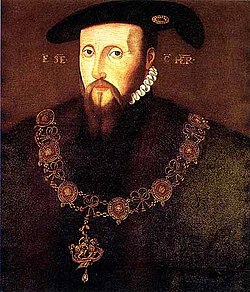
Edward Seymour, 1st Duke of Somerset, 1st Earl of Hertford, 1st Viscount Beauchamp KG, PC (1500 – 22 January 1552) was an English nobleman and politician who served as Lord Protector of England from 1547 to 1549 during the minority of his nephew King Edward VI. He was the eldest surviving brother of Queen Jane Seymour, the third wife of King Henry VIII and mother of King Edward VI.
Seymour grew rapidly in favour with Henry VIII following Jane's marriage to the king in 1536, and was subsequently made Earl of Hertford. On Henry's death in 1547, he was appointed protector by the Regency Council on the accession of the nine-year-old Edward VI. Rewarded with the title Duke of Somerset, Seymour became the effective ruler of England. Somerset continued Henry's military campaign against the Scots and achieved a sound victory at the Battle of Pinkie, but ultimately he was unable to maintain his position in Scotland. Domestically, Somerset pursued further reforms as an extension of the English Reformation, and in 1549 imposed the first Book of Common Prayer through the Act of Uniformity, offering a compromise between Protestant and Roman Catholic teachings. The unpopularity of Somerset's religious measures, along with agrarian grievances, resulted in unrest in England and provoked a series of uprisings (including the Prayer Book Rebellion and Kett's Rebellion). Costly wars and economic mismanagement brought the Crown to financial ruin, further undermining his government.
In October 1549, Somerset was forced out of power and imprisoned in the Tower of London by John Dudley, Earl of Warwick, and a group of privy councillors. He was later released and reconciled with Warwick (now Duke of Northumberland), but in 1551 Northumberland accused him of treason, and he was executed in January 1552. Until the 1970s historians had a highly positive view of Somerset, seeing him as a champion of political liberty and the common people, but since then he has also often been portrayed as an arrogant and inept ruler of the Tudor state.
Edward Seymour was born c. 1500, the son of Sir John Seymour (1474–1536), feudal baron of Hatch Beauchamp in Somerset, by his wife Margery Wentworth, eldest daughter of Sir Henry Wentworth of Nettlestead, Suffolk, and descended from Edward III. In 1514, aged about 14, he received an appointment in the household of Mary Tudor, Queen of France, and was enfant d'honneur at her marriage with Louis XII.
Seymour served in the Duke of Suffolk's campaign in France in 1523, being knighted by the duke on 1 November, and accompanied Cardinal Wolsey on his embassy to France in 1527. Appointed Esquire of the Body to Henry VIII in 1529, he grew in favour with the king, who visited his manor at Elvetham in Hampshire in October 1535. Through his marriage to Catherine Fillol he became the owner of Woodmancote Place, Sussex.
When Seymour's sister, Jane, married King Henry VIII in 1536, Edward was created Viscount Beauchamp on 5 June 1536, and Earl of Hertford on 15 October 1537. He became Warden of the Scottish Marches and continued in royal favour after his sister's death on 24 October 1537.
In 1541, during Henry's absence in the north, Hertford, Thomas Cranmer and Thomas Audley had the chief management of affairs in London. In September 1542 he was appointed Warden of the Scottish Marches, and a few months later Lord High Admiral, a post which he almost immediately relinquished in favour of John Dudley, the future duke of Northumberland. In March 1544 he was made lieutenant-general of the north and instructed to punish the Scots for their repudiation of the treaty of marriage between Prince Edward and the infant Mary, Queen of Scots. He landed at Leith on 3 May 1544, captured and pillaged Edinburgh, and returned by land burning villages and castles along the way.
In July 1544 he was appointed lieutenant of the realm under Catherine Parr, Henry's sixth wife and regent, during Henry's absence at Boulogne, but in August he joined the king and was present at the surrender of the town. In the autumn he was one of the commissioners sent to Flanders to keep Emperor Charles V to the terms of his treaty with England, and in January 1545 he was placed in command at Boulogne, where on the 26th he repelled an attempt of Marshal de Biez to recapture the town. In May he was once more appointed lieutenant-general in the north to avenge the Scottish victory at the Battle of Ancrum Moor; this he did by a savage foray into Scotland in September. He reported that on 16 September 1545 he had "sent forth a good band to the number of 1500 light horsemen in the leading of me [and] Sir Robert Bowes, which from 5 a.m. till 3 p.m., forayed along the waters of Tyvyote and Rowle, 6 or 7 miles beyond Jedburgh, and burnt 14 or 15 towns and a great quantity of all kinds of corn".
Edward Seymour, 1st Duke of Somerset
Edward Seymour, 1st Duke of Somerset, 1st Earl of Hertford, 1st Viscount Beauchamp KG, PC (1500 – 22 January 1552) was an English nobleman and politician who served as Lord Protector of England from 1547 to 1549 during the minority of his nephew King Edward VI. He was the eldest surviving brother of Queen Jane Seymour, the third wife of King Henry VIII and mother of King Edward VI.
Seymour grew rapidly in favour with Henry VIII following Jane's marriage to the king in 1536, and was subsequently made Earl of Hertford. On Henry's death in 1547, he was appointed protector by the Regency Council on the accession of the nine-year-old Edward VI. Rewarded with the title Duke of Somerset, Seymour became the effective ruler of England. Somerset continued Henry's military campaign against the Scots and achieved a sound victory at the Battle of Pinkie, but ultimately he was unable to maintain his position in Scotland. Domestically, Somerset pursued further reforms as an extension of the English Reformation, and in 1549 imposed the first Book of Common Prayer through the Act of Uniformity, offering a compromise between Protestant and Roman Catholic teachings. The unpopularity of Somerset's religious measures, along with agrarian grievances, resulted in unrest in England and provoked a series of uprisings (including the Prayer Book Rebellion and Kett's Rebellion). Costly wars and economic mismanagement brought the Crown to financial ruin, further undermining his government.
In October 1549, Somerset was forced out of power and imprisoned in the Tower of London by John Dudley, Earl of Warwick, and a group of privy councillors. He was later released and reconciled with Warwick (now Duke of Northumberland), but in 1551 Northumberland accused him of treason, and he was executed in January 1552. Until the 1970s historians had a highly positive view of Somerset, seeing him as a champion of political liberty and the common people, but since then he has also often been portrayed as an arrogant and inept ruler of the Tudor state.
Edward Seymour was born c. 1500, the son of Sir John Seymour (1474–1536), feudal baron of Hatch Beauchamp in Somerset, by his wife Margery Wentworth, eldest daughter of Sir Henry Wentworth of Nettlestead, Suffolk, and descended from Edward III. In 1514, aged about 14, he received an appointment in the household of Mary Tudor, Queen of France, and was enfant d'honneur at her marriage with Louis XII.
Seymour served in the Duke of Suffolk's campaign in France in 1523, being knighted by the duke on 1 November, and accompanied Cardinal Wolsey on his embassy to France in 1527. Appointed Esquire of the Body to Henry VIII in 1529, he grew in favour with the king, who visited his manor at Elvetham in Hampshire in October 1535. Through his marriage to Catherine Fillol he became the owner of Woodmancote Place, Sussex.
When Seymour's sister, Jane, married King Henry VIII in 1536, Edward was created Viscount Beauchamp on 5 June 1536, and Earl of Hertford on 15 October 1537. He became Warden of the Scottish Marches and continued in royal favour after his sister's death on 24 October 1537.
In 1541, during Henry's absence in the north, Hertford, Thomas Cranmer and Thomas Audley had the chief management of affairs in London. In September 1542 he was appointed Warden of the Scottish Marches, and a few months later Lord High Admiral, a post which he almost immediately relinquished in favour of John Dudley, the future duke of Northumberland. In March 1544 he was made lieutenant-general of the north and instructed to punish the Scots for their repudiation of the treaty of marriage between Prince Edward and the infant Mary, Queen of Scots. He landed at Leith on 3 May 1544, captured and pillaged Edinburgh, and returned by land burning villages and castles along the way.
In July 1544 he was appointed lieutenant of the realm under Catherine Parr, Henry's sixth wife and regent, during Henry's absence at Boulogne, but in August he joined the king and was present at the surrender of the town. In the autumn he was one of the commissioners sent to Flanders to keep Emperor Charles V to the terms of his treaty with England, and in January 1545 he was placed in command at Boulogne, where on the 26th he repelled an attempt of Marshal de Biez to recapture the town. In May he was once more appointed lieutenant-general in the north to avenge the Scottish victory at the Battle of Ancrum Moor; this he did by a savage foray into Scotland in September. He reported that on 16 September 1545 he had "sent forth a good band to the number of 1500 light horsemen in the leading of me [and] Sir Robert Bowes, which from 5 a.m. till 3 p.m., forayed along the waters of Tyvyote and Rowle, 6 or 7 miles beyond Jedburgh, and burnt 14 or 15 towns and a great quantity of all kinds of corn".
Recent media
Recent media