
Recent from talks
River martin
Knowledge base stats:
Talk channels stats:
Members stats:
River martin
The river martins form a distinctive subfamily Pseudochelidoninae within the swallow and martin bird family Hirundinidae. The two species are the African river martin Pseudochelidon eurystomina, found in the Congo and Gabon, and the white-eyed river martin Pseudochelidon sirintarae, known only from one site in Thailand. These are medium-sized, largely black swallows that have a light buoyant flight and feed on insects caught in the air. They appear to be more terrestrial than other swallows, frequently walking rather than perching, and the white-eyed may be crepuscular. The African species excavates nest holes in sandy ridges in rivers, while the breeding locations and habits of the Asian bird are unknown.
When the African river martin was first discovered in the 19th century, Gustav Hartlaub thought it was a roller, and later authors either placed it in its own family, or with the woodswallows. Study of the anatomy revealed that the species was closest to the swallows and martins, but that it possessed a number of distinctive features, such as its robust legs and feet and stout bill. These indicated that it should be placed in a separate subfamily. The two river martin species are usually considered to belong to a single genus, Pseudochelidon, due to their having a number of structural similarities. However, Brooke proposed that the white-eyed river martin be placed in a separate monotypic genus Eurochelidon.
The African river martin has a restricted distribution; it appears to be locally numerous, although its true status has not been fully investigated. The white-eyed river martin was discovered as recently as 1969 and is only known from specimens and anecdotal evidence – no modern ornithologists have seen the species in the wild, and its breeding grounds are unknown. It may be extinct, although a possible sighting was reported in 2004.
When a specimen of the African river martin from Gabon was first formally described by German zoologist Gustav Hartlaub in 1861, it was not initially identified as a member of the swallow and martin family. Hartlaub placed it with the rollers, and later authors either put it in its own separate family, or with the woodswallows. It was only following study of the anatomy of the species by Lowe that it was determined to be closely related to the swallows and martins, but sufficiently different that it could be placed in a separate subfamily Pseudochelidoninae. The genus name Pseudochelidon comes from the Ancient Greek prefix ψευδο/pseudo, "false", and χελιδων/chelidôn, "swallow", reflecting its distinctiveness from the "true" swallows.
For many years the African river martin was the sole member of its genus and subfamily until the discovery of the white-eyed river martin, Pseudochelidon eurystomina, by Thai ornithologist Kitti Thonglongya in 1968. Although some authorities follow Brooke in placing that species in a separate genus Eurochelidon due to its significant differences from the African species, it remains a member of the same subfamily. Genetic studies confirmed that the two river martins form a distinct clade from the typical swallows in the Hirundininae subfamily.
The river martins are in some ways intermediate between typical swallows and other passerines: they have stout bills, large feet and relatively strong legs, which is unusual in aerial feeders. They also have a large syrinx (vocal organ) and a different bronchial structure. The extent of their differences from other swallows and the wide geographical separation of these two martins suggest that they are relict populations of a group of species that diverged from the main swallow lineage early in its evolutionary history, and they may be the most primitive of the swallows. Like other early hirundine lineages, they nest in burrows, rather than adopted nest holes or mud nests.
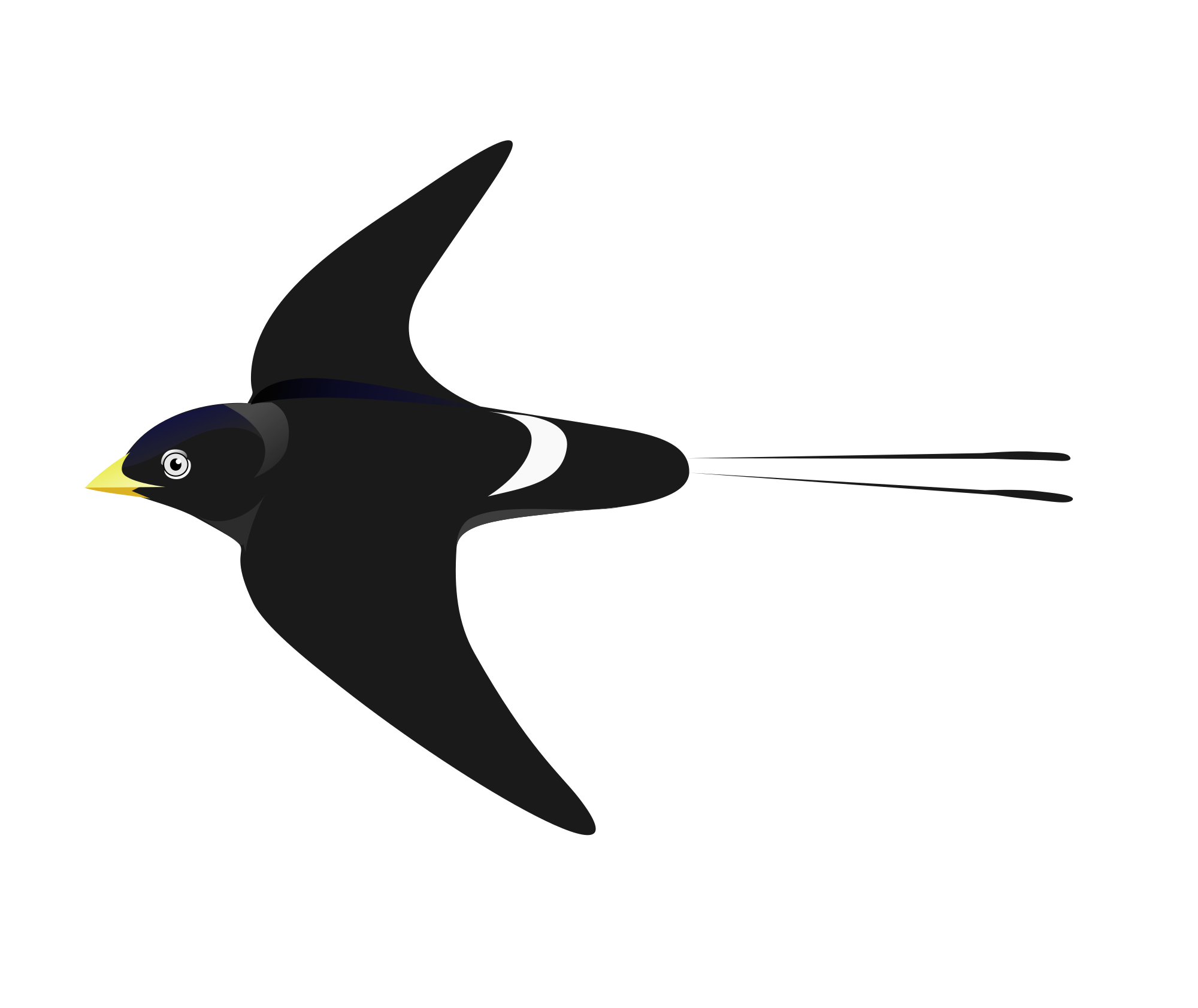
Both species are medium-sized (14–18 cm or 5.5–7.1 in), mainly black-plumaged swallows, unlikely to be confused with any other hirundine in their respective ranges. Adults of both species have large, blue-glossed heads, a green tinge to the body plumage, and brown wings. The sexes are similar in plumage. The white-eyed has elongated outer tail feathers, a whitish rump, a white eye and eye-ring, and a yellow bill. The African has a red eye-ring and bill and lacks a contrasting rump patch or tail streamers. The juveniles of both species are similar to the adults, but with brown heads, and young white-eyeds lack the long tail streamers of the adults.
The African river martin has a chee chee or cheer-cheer-cheer call when it is flying in flocks. It is very vocal during migration, giving harsh gull-like calls, and appears to have a jingling courtship song. No calls have been described for the white-eyed river martin.
Hub AI
River martin AI simulator
(@River martin_simulator)
River martin
The river martins form a distinctive subfamily Pseudochelidoninae within the swallow and martin bird family Hirundinidae. The two species are the African river martin Pseudochelidon eurystomina, found in the Congo and Gabon, and the white-eyed river martin Pseudochelidon sirintarae, known only from one site in Thailand. These are medium-sized, largely black swallows that have a light buoyant flight and feed on insects caught in the air. They appear to be more terrestrial than other swallows, frequently walking rather than perching, and the white-eyed may be crepuscular. The African species excavates nest holes in sandy ridges in rivers, while the breeding locations and habits of the Asian bird are unknown.
When the African river martin was first discovered in the 19th century, Gustav Hartlaub thought it was a roller, and later authors either placed it in its own family, or with the woodswallows. Study of the anatomy revealed that the species was closest to the swallows and martins, but that it possessed a number of distinctive features, such as its robust legs and feet and stout bill. These indicated that it should be placed in a separate subfamily. The two river martin species are usually considered to belong to a single genus, Pseudochelidon, due to their having a number of structural similarities. However, Brooke proposed that the white-eyed river martin be placed in a separate monotypic genus Eurochelidon.
The African river martin has a restricted distribution; it appears to be locally numerous, although its true status has not been fully investigated. The white-eyed river martin was discovered as recently as 1969 and is only known from specimens and anecdotal evidence – no modern ornithologists have seen the species in the wild, and its breeding grounds are unknown. It may be extinct, although a possible sighting was reported in 2004.
When a specimen of the African river martin from Gabon was first formally described by German zoologist Gustav Hartlaub in 1861, it was not initially identified as a member of the swallow and martin family. Hartlaub placed it with the rollers, and later authors either put it in its own separate family, or with the woodswallows. It was only following study of the anatomy of the species by Lowe that it was determined to be closely related to the swallows and martins, but sufficiently different that it could be placed in a separate subfamily Pseudochelidoninae. The genus name Pseudochelidon comes from the Ancient Greek prefix ψευδο/pseudo, "false", and χελιδων/chelidôn, "swallow", reflecting its distinctiveness from the "true" swallows.
For many years the African river martin was the sole member of its genus and subfamily until the discovery of the white-eyed river martin, Pseudochelidon eurystomina, by Thai ornithologist Kitti Thonglongya in 1968. Although some authorities follow Brooke in placing that species in a separate genus Eurochelidon due to its significant differences from the African species, it remains a member of the same subfamily. Genetic studies confirmed that the two river martins form a distinct clade from the typical swallows in the Hirundininae subfamily.
The river martins are in some ways intermediate between typical swallows and other passerines: they have stout bills, large feet and relatively strong legs, which is unusual in aerial feeders. They also have a large syrinx (vocal organ) and a different bronchial structure. The extent of their differences from other swallows and the wide geographical separation of these two martins suggest that they are relict populations of a group of species that diverged from the main swallow lineage early in its evolutionary history, and they may be the most primitive of the swallows. Like other early hirundine lineages, they nest in burrows, rather than adopted nest holes or mud nests.
Both species are medium-sized (14–18 cm or 5.5–7.1 in), mainly black-plumaged swallows, unlikely to be confused with any other hirundine in their respective ranges. Adults of both species have large, blue-glossed heads, a green tinge to the body plumage, and brown wings. The sexes are similar in plumage. The white-eyed has elongated outer tail feathers, a whitish rump, a white eye and eye-ring, and a yellow bill. The African has a red eye-ring and bill and lacks a contrasting rump patch or tail streamers. The juveniles of both species are similar to the adults, but with brown heads, and young white-eyeds lack the long tail streamers of the adults.
The African river martin has a chee chee or cheer-cheer-cheer call when it is flying in flocks. It is very vocal during migration, giving harsh gull-like calls, and appears to have a jingling courtship song. No calls have been described for the white-eyed river martin.
Recent media