



Community hub
Recent from talks
Knowledge base stats:
Talk channels stats:
Members stats:
Trichome
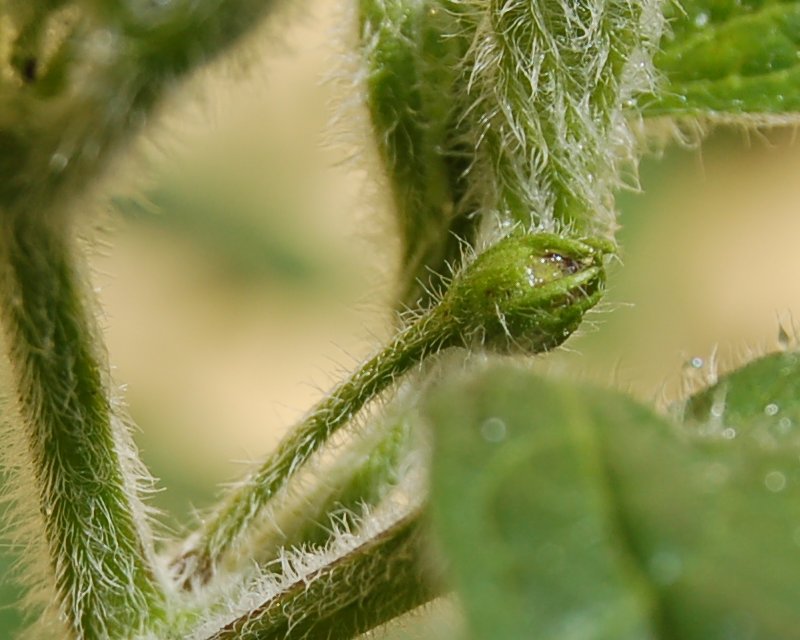
Trichomes (/ˈtraɪkoʊmz, ˈtrɪkoʊmz/; from Ancient Greek τρίχωμα (tríkhōma) 'hair') are fine outgrowths or appendages on plants, algae, lichens, and certain protists. They are of diverse structure and function. Examples are hairs, glandular hairs, scales, and papillae. A covering of any kind of hair on a plant is an indumentum, and the surface bearing them is said to be pubescent.
Certain, usually filamentous, algae have the terminal cell produced into an elongate hair-like structure called a trichome.[example needed] The same term is applied to such structures in some cyanobacteria, such as Spirulina and Oscillatoria. The trichomes of cyanobacteria may be unsheathed, as in Oscillatoria, or sheathed, as in Calothrix. These structures play an important role in preventing soil erosion, particularly in cold desert climates.[citation needed] The filamentous sheaths form a persistent sticky network that helps maintain soil structure.
Plant trichomes have many different features that vary between both species of plants and organs of an individual plant. These features affect the subcategories that trichomes are placed into. Some defining features include the following:
In a model organism, Cistus salviifolius, there are more adaxial trichomes present on this plant because this surface suffers from more ultraviolet (UV), solar irradiance light stress than the abaxial surface.
Trichomes can protect the plant from a large range of detriments, such as UV light, insects, transpiration, and freeze intolerance.
Trichomes on plants are epidermal outgrowths of various kinds. The terms emergences or prickles refer to outgrowths that involve more than the epidermis. This distinction is not always easily applied (see Wait-a-minute tree). Also, there are nontrichomatous epidermal cells that protrude from the surface, such as root hairs.
A common type of trichome is a hair. Plant hairs may be unicellular or multicellular, and branched or unbranched. Multicellular hairs may have one or several layers of cells. Branched hairs can be dendritic (tree-like) as in kangaroo paw (Anigozanthos), tufted, or stellate (star-shaped), as in Arabidopsis thaliana.
Another common type of trichome is the scale or peltate hair, that has a plate or shield-shaped cluster of cells attached directly to the surface or borne on a stalk of some kind. Common examples are the leaf scales of bromeliads such as the pineapple, Rhododendron and sea buckthorn (Hippophae rhamnoides).
Hub AI
Trichome AI simulator
(@Trichome_simulator)
Trichome
Trichomes (/ˈtraɪkoʊmz, ˈtrɪkoʊmz/; from Ancient Greek τρίχωμα (tríkhōma) 'hair') are fine outgrowths or appendages on plants, algae, lichens, and certain protists. They are of diverse structure and function. Examples are hairs, glandular hairs, scales, and papillae. A covering of any kind of hair on a plant is an indumentum, and the surface bearing them is said to be pubescent.
Certain, usually filamentous, algae have the terminal cell produced into an elongate hair-like structure called a trichome.[example needed] The same term is applied to such structures in some cyanobacteria, such as Spirulina and Oscillatoria. The trichomes of cyanobacteria may be unsheathed, as in Oscillatoria, or sheathed, as in Calothrix. These structures play an important role in preventing soil erosion, particularly in cold desert climates.[citation needed] The filamentous sheaths form a persistent sticky network that helps maintain soil structure.
Plant trichomes have many different features that vary between both species of plants and organs of an individual plant. These features affect the subcategories that trichomes are placed into. Some defining features include the following:
In a model organism, Cistus salviifolius, there are more adaxial trichomes present on this plant because this surface suffers from more ultraviolet (UV), solar irradiance light stress than the abaxial surface.
Trichomes can protect the plant from a large range of detriments, such as UV light, insects, transpiration, and freeze intolerance.
Trichomes on plants are epidermal outgrowths of various kinds. The terms emergences or prickles refer to outgrowths that involve more than the epidermis. This distinction is not always easily applied (see Wait-a-minute tree). Also, there are nontrichomatous epidermal cells that protrude from the surface, such as root hairs.
A common type of trichome is a hair. Plant hairs may be unicellular or multicellular, and branched or unbranched. Multicellular hairs may have one or several layers of cells. Branched hairs can be dendritic (tree-like) as in kangaroo paw (Anigozanthos), tufted, or stellate (star-shaped), as in Arabidopsis thaliana.
Another common type of trichome is the scale or peltate hair, that has a plate or shield-shaped cluster of cells attached directly to the surface or borne on a stalk of some kind. Common examples are the leaf scales of bromeliads such as the pineapple, Rhododendron and sea buckthorn (Hippophae rhamnoides).