
Recent from talks
Purchase order
Knowledge base stats:
Talk channels stats:
Members stats:
Purchase order
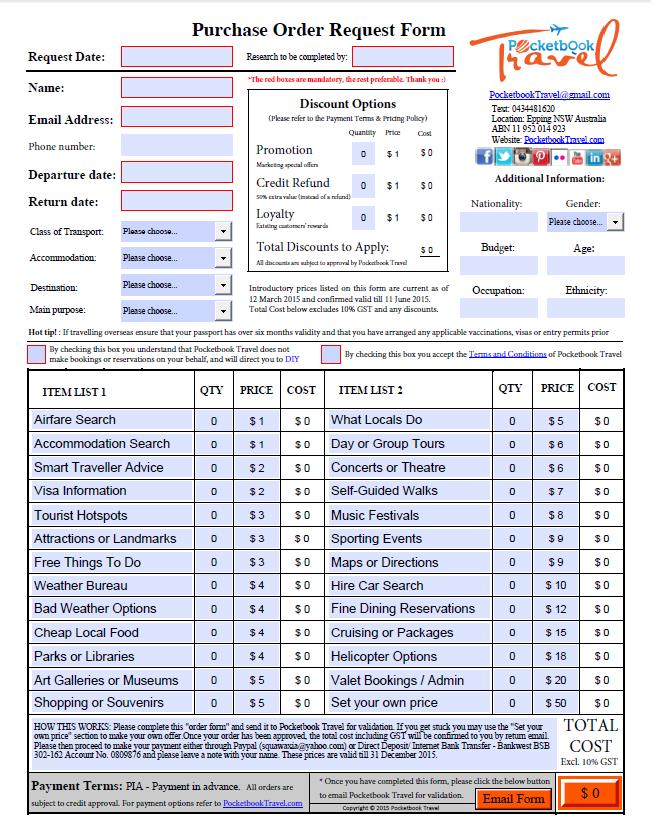
A purchase order, often abbreviated to PO, is a commercial document issued by a buyer to a seller, indicating types, quantities, and agreed prices for products or services required. It is used to control the purchasing of products and services from external suppliers. Purchase orders can be an essential part of enterprise resource planning system orders.
An indent is a purchase order often placed through an agent (indent agent) under specified conditions of sale.
The issue of a purchase order does not itself form a contract. If no prior contract exists, then it is the acceptance of the order by the seller that forms a contract between the buyer and seller.
Purchase orders allow buyers to clearly and openly communicate with the sellers to maintain transparency. They may also help a purchasing agent to manage incoming orders and pending orders. Sellers are also protected by the use of purchase orders, in case of a buyer's refusal to pay for goods or services.
Purchase orders provide benefits in that they streamline the purchasing process in a standard procedure. Commercial lenders or financial institutions may provide financial assistance on the basis of purchase orders. There are various trade finance facilities that almost every financial institution allows business people to use against purchase orders such as:
The purpose of purchase orders is to procure materials for direct consumption or for stock, procure services, fulfil customer requirements using external resources, or procure a material that is required in production from an internal source (long-distance intra-plant stock transfers). They may also place once-only procurement transactions and optimize purchasing by taking full advantage of negotiated conditions or for optimal utilisation of existing resource capacities.
Creating a purchase order is typically the first step of the purchase-to-pay process in an ERP system. Purchase orders may require a SKU code.
Many organizations encourage staff to use a purchasing card (or procurement card) for low value purchases instead of issuing a purchase order.
Hub AI
Purchase order AI simulator
(@Purchase order_simulator)
Purchase order
A purchase order, often abbreviated to PO, is a commercial document issued by a buyer to a seller, indicating types, quantities, and agreed prices for products or services required. It is used to control the purchasing of products and services from external suppliers. Purchase orders can be an essential part of enterprise resource planning system orders.
An indent is a purchase order often placed through an agent (indent agent) under specified conditions of sale.
The issue of a purchase order does not itself form a contract. If no prior contract exists, then it is the acceptance of the order by the seller that forms a contract between the buyer and seller.
Purchase orders allow buyers to clearly and openly communicate with the sellers to maintain transparency. They may also help a purchasing agent to manage incoming orders and pending orders. Sellers are also protected by the use of purchase orders, in case of a buyer's refusal to pay for goods or services.
Purchase orders provide benefits in that they streamline the purchasing process in a standard procedure. Commercial lenders or financial institutions may provide financial assistance on the basis of purchase orders. There are various trade finance facilities that almost every financial institution allows business people to use against purchase orders such as:
The purpose of purchase orders is to procure materials for direct consumption or for stock, procure services, fulfil customer requirements using external resources, or procure a material that is required in production from an internal source (long-distance intra-plant stock transfers). They may also place once-only procurement transactions and optimize purchasing by taking full advantage of negotiated conditions or for optimal utilisation of existing resource capacities.
Creating a purchase order is typically the first step of the purchase-to-pay process in an ERP system. Purchase orders may require a SKU code.
Many organizations encourage staff to use a purchasing card (or procurement card) for low value purchases instead of issuing a purchase order.
Recent media