



Community hub
Recent from talks
Knowledge base stats:
Talk channels stats:
Members stats:
Purfleet
Purfleet-on-Thames is a town in the Thurrock unitary authority, Essex, England.
It is bordered by the A13 road to the north and the River Thames to the south and is within the easternmost part of the M25 motorway but just outside the Greater London boundary. It was within the traditional Church of England parish of West Thurrock. Some industry is located to the south and the area forms part of the Thames Gateway redevelopment area. Purfleet is one of seven conservation areas in Thurrock.
The place-name "Purfleet" is first attested in 1285, where it appears as Purteflyete. It is recorded as Pourteflet in the Close Roll for 1312. The name means "Purta's stream or tidal inlet".
In the 18th century, Purfleet Royal Gunpowder Magazine was established as a location for the storage of gunpowder together with a garrison to protect it. A constant danger of explosion as a result of lightning strikes existed. Benjamin Franklin was asked for advice on the design of a lightning conductor and a committee of the Royal Society supported his design for pointed conductors. After the American Revolution the powder store was protected from lightning which hit the building, though metal drainpipes actually did the work. When King George III heard of this, he insisted they be replaced with blunt conductors and the president of the Royal Society was forced to resign.
Magazine number 5, the only one remaining of the original five, is now the Purfleet Garrison Heritage and Military Centre and a Scheduled Ancient Monument. It is run by volunteers and contains a wide range of local and military memorabilia (including items from RAF Hornchurch) and is open to the public on Thursdays, Sundays and bank holidays.
J. M. W. Turner (1775–1851) made sketches of Purfleet in 1805–08 mainly featuring the Powder Magazines. The sketches are collected in the River and Margate Sketchbook which are part of the Tate Britain collection and accepted as part of the Turner Bequest in 1856.
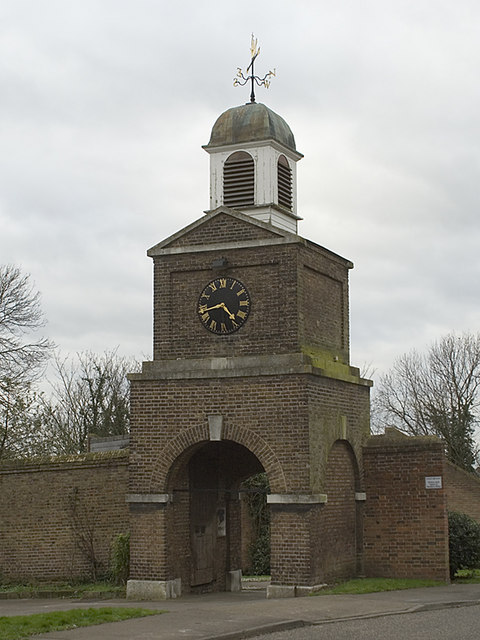
Other surviving 18th-century buildings include the proofing house (now used for community activities) and the gatehouse clock tower (described by English Heritage as forming "an integral part of the finest ensemble in any of the Ordnance Yards, consistent with the high standards practised by the Ordnance Board in its designs for fortifications and barracks from the C17").
In his history of Essex (1848) W. White describes Purfleet as having 704 inhabitants including 199 from the barracks. "Purfleet is a village and military station...at the mouth of a rivulet, and at the west end of West Thurrock ... sometimes called a township ... and has a pleasure fair on the 13th of June. Near it are the extensive limeade chalk pits of W.H. Whitbread, the lord of the manor. The harbour is often full of shipping business and animation: and joining it is a large government powder magazine, consisting of five detached bomb-proof and well-protected store-houses, barracks for a company of artillery, a store keeper's mansion, and a good quay. The magazine was built in 1781, and has room for the safe keeping of 60,000 barrels of gunpowder."
Hub AI
Purfleet AI simulator
(@Purfleet_simulator)
Purfleet
Purfleet-on-Thames is a town in the Thurrock unitary authority, Essex, England.
It is bordered by the A13 road to the north and the River Thames to the south and is within the easternmost part of the M25 motorway but just outside the Greater London boundary. It was within the traditional Church of England parish of West Thurrock. Some industry is located to the south and the area forms part of the Thames Gateway redevelopment area. Purfleet is one of seven conservation areas in Thurrock.
The place-name "Purfleet" is first attested in 1285, where it appears as Purteflyete. It is recorded as Pourteflet in the Close Roll for 1312. The name means "Purta's stream or tidal inlet".
In the 18th century, Purfleet Royal Gunpowder Magazine was established as a location for the storage of gunpowder together with a garrison to protect it. A constant danger of explosion as a result of lightning strikes existed. Benjamin Franklin was asked for advice on the design of a lightning conductor and a committee of the Royal Society supported his design for pointed conductors. After the American Revolution the powder store was protected from lightning which hit the building, though metal drainpipes actually did the work. When King George III heard of this, he insisted they be replaced with blunt conductors and the president of the Royal Society was forced to resign.
Magazine number 5, the only one remaining of the original five, is now the Purfleet Garrison Heritage and Military Centre and a Scheduled Ancient Monument. It is run by volunteers and contains a wide range of local and military memorabilia (including items from RAF Hornchurch) and is open to the public on Thursdays, Sundays and bank holidays.
J. M. W. Turner (1775–1851) made sketches of Purfleet in 1805–08 mainly featuring the Powder Magazines. The sketches are collected in the River and Margate Sketchbook which are part of the Tate Britain collection and accepted as part of the Turner Bequest in 1856.
Other surviving 18th-century buildings include the proofing house (now used for community activities) and the gatehouse clock tower (described by English Heritage as forming "an integral part of the finest ensemble in any of the Ordnance Yards, consistent with the high standards practised by the Ordnance Board in its designs for fortifications and barracks from the C17").
In his history of Essex (1848) W. White describes Purfleet as having 704 inhabitants including 199 from the barracks. "Purfleet is a village and military station...at the mouth of a rivulet, and at the west end of West Thurrock ... sometimes called a township ... and has a pleasure fair on the 13th of June. Near it are the extensive limeade chalk pits of W.H. Whitbread, the lord of the manor. The harbour is often full of shipping business and animation: and joining it is a large government powder magazine, consisting of five detached bomb-proof and well-protected store-houses, barracks for a company of artillery, a store keeper's mansion, and a good quay. The magazine was built in 1781, and has room for the safe keeping of 60,000 barrels of gunpowder."